Texas Homeowner Watches the Yard Flood Waist-Deep After the Neighbor Dams the Drainage Ditch With Rocks — Then Blames It on the ‘Army Corps of Engineers’
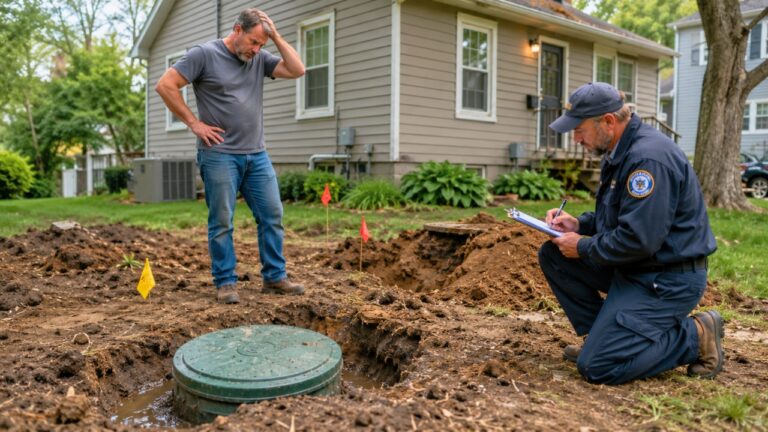
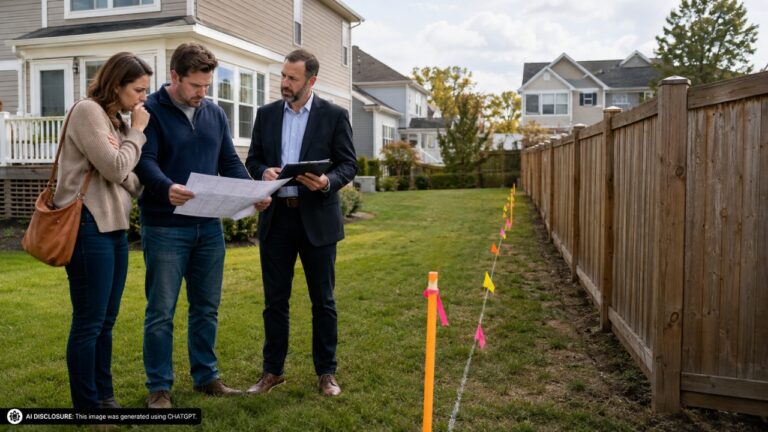
Photo credit: AI-generated image created using ChatGPT. Illustrative only.
The first time the yard turned into a pond, it probably felt like one of those “welcome to Texas weather” moments—messy, temporary, and out of your control. But when the water keeps coming back, and it’s not just ankle-deep but waist-high in spots, it stops being a weather story and starts feeling like something has been changed on purpose.
That’s where one Texas homeowner says they ended up after buying a house last spring, only to discover their property sits alongside a city drainage easement that funnels stormwater through a ditch and across their land. In the original post, they described how a neighbor allegedly blocked the flow right at the fence line using large rocks—then brushed off concerns by claiming the old owner had it built by the “Army Corp of Engineers.”
A ditch that stays dry—until it suddenly matters
On normal days, the drainage ditch doesn’t look like much. The homeowner says it only carries water when it’s actively raining or right after a storm, which is exactly why it can be easy to underestimate. If it’s dry most of the year, it can feel more like a shallow trench than a key piece of infrastructure.
But this isn’t a random swale cutting through the yard. The homeowner says most of the neighborhood’s storm drains appear to feed into this easement, sending runoff across their property before it continues on its path. When that system works, water moves through quickly and disappears down the line.
When it doesn’t work, the whole neighborhood’s runoff can end up parked in one unlucky yard.
Where the water is supposed to go—and where it stops
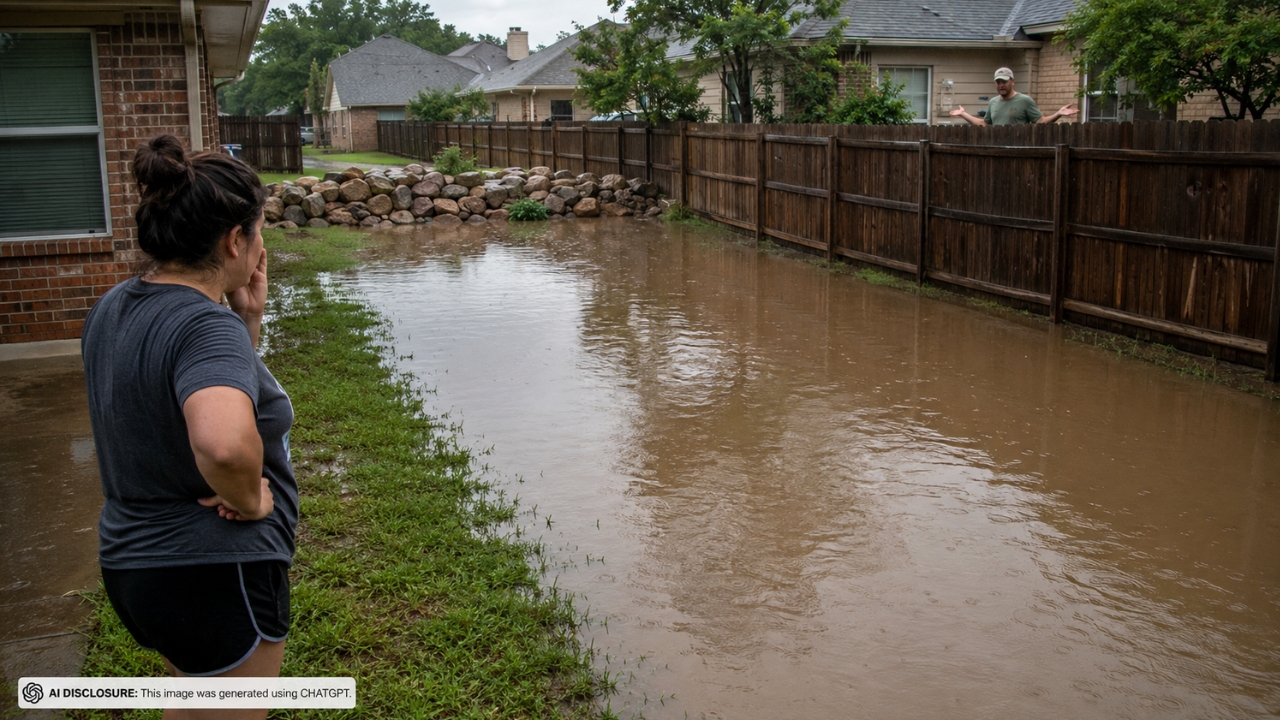
The trouble spot is where the ditch reaches the homeowner’s fence line and meets the neighboring property. According to the post, the neighbor placed large rocks along that fence line, effectively acting like a small dam. The homeowner believes this prevents water from continuing across the low portion of the neighbor’s property.
Beyond the neighbor’s yard, the homeowner says there’s a culvert that runs under the road and drains toward what looks like a creek. In other words, there’s a “downstream” route that appears designed to carry stormwater away.
But with the rocks in place, the water can’t reach it. Instead, it backs up and pools on the homeowner’s side of the fence, turning a chunk of their yard into standing water that can linger for days.
The day it hit waist-deep and stopped feeling normal
Plenty of homeowners have dealt with nuisance puddles after a storm. This wasn’t that. The homeowner described one extreme rain event—after a drought—where the pooled water reached waist height at its deepest point.
That kind of flooding isn’t just inconvenient. It’s the sort of thing that makes you scan your house from the outside, measuring where the water line could reach next time. The homeowner said they’re worried that a future heavy rain could push the backup far enough to threaten the house itself.
Even if the water never touches the foundation, days of saturation can still be punishing: soggy soil, stressed grass and landscaping, increased mosquitoes, and the slow creep of erosion where you least want it.
The neighbor’s explanation: “Army Corp of Engineers”
The homeowner says they tried talking to the neighbor directly, hoping it would be a simple fix—remove the rocks, restore the flow, move on. Instead, they got a wall. The neighbor allegedly had no interest in removing anything and deflected by saying the previous owner had it built by the “Army Corp of Engineers.”
Whether that’s a misunderstanding, a tall tale, or something the neighbor genuinely believes, it didn’t address the immediate reality: water that used to pass through is now stuck.
The homeowner’s frustration is sharpened by how specific the blockage seems. This isn’t a vague grading complaint or a disagreement about “my yard is wet.” It’s a physical barrier placed at the exact point where the ditch meets the fence line.
They also suspected the rock dam could violate Texas Water Code 11.086, which generally deals with diverting or impeding the natural flow of surface water in a way that damages another property. They weren’t sure, though, and asked what options they actually had to get the obstruction removed.
When the city looks—and shrugs
One of the more maddening details: the homeowner says the city came out to inspect and seemed surprised the neighbor had dammed up the fence line. For a minute, that probably felt like validation—finally, an official set of eyes on the obvious problem.
Then came the letdown. The homeowner said the city “basically told us that there is nothing they can do.” No order to remove it. No immediate fix. Just a homeowner staring at a drainage system that appears publicly connected, but privately blocked.
To make it even messier, the homeowner noted that their fence line with the neighbor is also the city limit line. That can turn a simple “call the city” problem into a jurisdictional hot potato, where each side can point at the other and the water keeps rising anyway.
How homeowners tend to react when drainage turns into a property-line fight
When drainage and easements collide with neighbor relationships, people don’t just think about water—they think about proof. In stories like this, the practical instinct is to document everything: photos of the rocks, photos of pooled water during storms, timestamps, and a clear view of where the water would normally exit.
Another common reaction is to figure out what, exactly, the easement allows and who maintains it. A drainage easement can sit on private land while still serving a broader public purpose, and maintenance responsibility can be murky. But the difference between “my ditch” and “the neighborhood’s drainage route” matters when someone blocks it.
And then there’s the personal safety and property protection angle. Flooding that reaches waist height is the kind of detail that makes homeowners think about the next storm as an emergency, not an inconvenience. Even if you’re trying to stay calm and neighborly, repeated flooding has a way of forcing decisions—especially when the fix seems as simple as moving rocks.
For this homeowner, that’s the unresolved tension: they aren’t describing a theoretical risk. They’ve already watched their yard fill up deep enough to change how they think about the next heavy rain. And with the neighbor refusing to budge and the city declining to act, the rocks at the fence line have turned into something bigger than a landscaping choice—one that could decide where the neighborhood’s stormwater goes when the skies open up again.
Like Fix It Homestead’s content? Be sure to follow us.