New York Homeowner Pulls Official Town Plans for Unrelated Tree Work — Then Finds the Tree the Neighbor Fenced Onto Their Side Was Never Actually Theirs
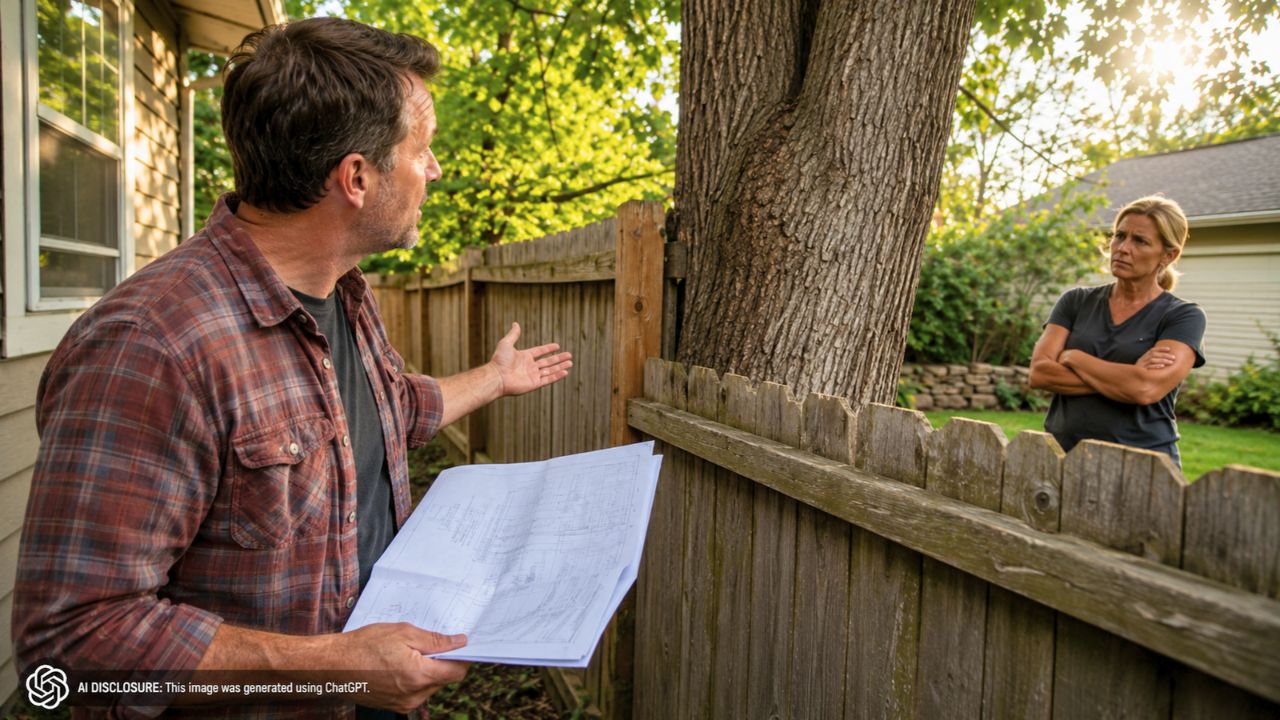
Photo credit: AI-generated image created using ChatGPT. Illustrative only.
It started the way a lot of property-line headaches do: a neighbor seemed confident, had paperwork in hand, and made a change that felt too small to pick a fight over. In this New York case, the change was a fence—placed so a large, mature tree ended up on the neighbor’s side.
The homeowner didn’t think much of it at first. But after pulling official town plans for unrelated tree work, they discovered the tree wasn’t the neighbor’s at all. The details were shared in the original post, where the homeowner asked the question that makes your stomach drop when you realize you’ve let something slide: if the neighbor fenced “your” tree in for long enough, could they eventually own it?
The fence went up, and the paperwork looked convincing
According to the homeowner, the neighbor claimed the big tree sat on the neighbor’s property. To back it up, the neighbor even showed property plans. That’s the kind of moment that short-circuits most people’s instincts—because if someone is holding a diagram, it feels official even when it isn’t.
So the fence went in, wrapping the tree into the neighbor’s yard. The homeowner didn’t push back, partly because the relationship was friendly and partly because the homeowner wasn’t planning to sell anytime soon. In the day-to-day, the exact fence line didn’t feel like an emergency.
But trees aren’t like patio furniture. They’re slow, valuable, and they tend to become the landmark everyone points to when arguing about where a yard “really” starts and ends.
Unrelated tree work triggered an “oh no” discovery
The turning point came when the homeowner had to deal with other tree-related issues and decided to pull official plans from the town. This wasn’t a neighbor-to-neighbor handshake agreement anymore; it was the town file, the thing you expect to match reality.
That’s when the homeowner saw it: the fenced-in tree was actually on their property.
Suddenly, the old moment—the neighbor’s plans, the confident claim, the fence placement—looked different. The homeowner suspected the neighbor’s documents weren’t official, or that the town might have conflicting records on file. Either way, the homeowner was now holding the kind of information that changes the whole tone of a “friendly” fence line.
And because the tree is large, it isn’t just sentimental. Mature trees can add real curb appeal and value. The homeowner’s mind went straight to the future: selling the home, appraisals, disclosures, and the nightmare of a buyer’s survey turning up a boundary fight mid-contract.
The real worry wasn’t the fence—it was time
The homeowner made it clear they weren’t eager to demand the neighbor redo an entire fence. They even floated a compromise: tell the neighbor the tree is actually theirs, let the fence stay for now, and then require it to be moved only if the homeowner decides to sell.
But there’s a catch that makes these disputes so tense: once a fence has been in place, it can start to feel permanent, even if it’s wrong. People garden up to it. They maintain “their” side. They forget the old conversation where someone said, “Yeah, it’s probably fine.” And over time, “probably fine” can morph into “this is how it’s always been.”
That’s what the homeowner was really asking—whether letting the fence sit could mature into a legal claim, something like adverse possession or “squatters rights,” but applied to a slice of yard and a tree rather than a house.
In plain terms, the fear wasn’t that the neighbor would suddenly cut down the tree. The fear was that the homeowner’s long silence could be used later as proof that the neighbor’s ownership should be recognized, especially if a future sale forces everything into the open.
When a tree is involved, the stakes go beyond property lines
A fence dispute is already stressful. Add a big tree and the tension doubles, because trees come with maintenance, risk, and liability questions that don’t stop at the fence pickets.
If a storm drops a limb, who cleans it up? If the tree needs pruning, who hires someone—and who gets sued if a contractor gets hurt? If roots lift a walkway or push into a septic line, who pays? Even if everyone behaves reasonably, the “ownership” question has a way of creeping into every decision.
And for a homeowner who isn’t selling today, it’s easy to treat the fence line as an “eventually” problem. But eventually shows up fast when a buyer’s inspection, survey, or lender requirement forces hard boundaries.
That’s why the homeowner’s discovery felt so loaded. It wasn’t just a misplaced fence. It was a future negotiation they didn’t ask for, sitting there quietly and growing larger every year—like the tree itself.
Commenters pushed the same theme: proof first, feelings second
In responses, the practical tone came through: property claims live and die by documentation. The homeowner already took the first important step by pulling official plans. Many readers in these kinds of discussions tend to encourage going one step further—getting clear, authoritative boundary information—before trying to renegotiate anything face-to-face.
The other repeating theme is that friendly neighbors can stay friendly right up until money enters the chat. A fence move costs time and labor. A mature tree has value. And once someone has treated an area like their yard for years, being told “actually that’s mine” can feel like an accusation even if it’s delivered politely.
So the advice that often bubbles up in these property-line threads is less “go confront them” and more “get your facts lined up, keep records, and don’t rely on informal promises if you’re worried about a future sale.” Not because every neighbor is out to steal land, but because good intentions don’t carry much weight when paperwork is what decides the outcome.
A friendly relationship, a crooked line, and a decision that can’t stay on pause
The homeowner hasn’t brought it up yet, and that hesitation is relatable. Once you tell a neighbor their fence captured your tree, you can’t untell them. Even if you immediately offer, “You can keep it there for now,” you’ve changed the story they tell themselves about their yard.
But the homeowner is also staring at a risk that’s hard to ignore: if they wait too long, they could be trading a mildly awkward conversation today for a much uglier conflict later—one that erupts during a home sale when timelines are tight and everyone is stressed.
For now, the tree is still standing, the fence is still where it is, and the neighbor relationship is still intact. The homeowner’s next move isn’t really about the tree at all. It’s about whether to lock in the truth on paper while things are calm—or roll the dice and hope that a quiet boundary mistake stays quiet forever.
Like Fix It Homestead’s content? Be sure to follow us.