Homeowner Finds a New Neighbor Tore Out a Rose Bush and Trellised Clematis They’d Tended for Years — Then Learns the Backyard Fence Was Never on the Real Property Line Either
Photo credit: AI-generated image created using ChatGPT. Illustrative only.
It started with the unmistakable sound of yard work on the other side of a backyard fence—clippers, hauling, that busy “cleanup” rhythm that usually means a place is getting a fresh start. For one homeowner on a tiny lot, it quickly turned into the sick feeling that something loved was being erased.
In the source post, the homeowner explains they’ve lived in the house for 25 years, and their entire backyard is essentially a deck wrapped by a fence. On the outside of that fence—still on their property—an old clematis vine had been trained along the top trellis for decades, creating privacy and a green canopy they enjoyed, especially as they manage multiple sclerosis.
A deck backyard, a hidden strip of land, and a plant that did the heavy lifting
The layout is the kind that works until it doesn’t: small lot, no real yard, and the deck becomes the outdoor living room. The fence around it wasn’t placed exactly on the property line by a prior owner. Instead, it sat about 12 inches inside the homeowner’s side, leaving a narrow strip of their land outside the fence.
That odd little strip mattered because that’s where the clematis lived—planted long ago, established and substantial, its trunk right against the fence. Over time it was woven through the trellis across the entire fenced-in deck area, functioning like a living privacy screen. The homeowner says they kept it maintained and even had landscapers keeping it “well manicured,” not a wild vine spilling everywhere.
There were also other plantings near that boundary. And there was history, too: the homeowner notes they previously had a friendly relationship with an earlier neighbor, even splitting the cost to remove a holly tree that straddled the line and dropped messy leaves and berries.
The new neighbor’s “cleanup” didn’t stop at their own yard
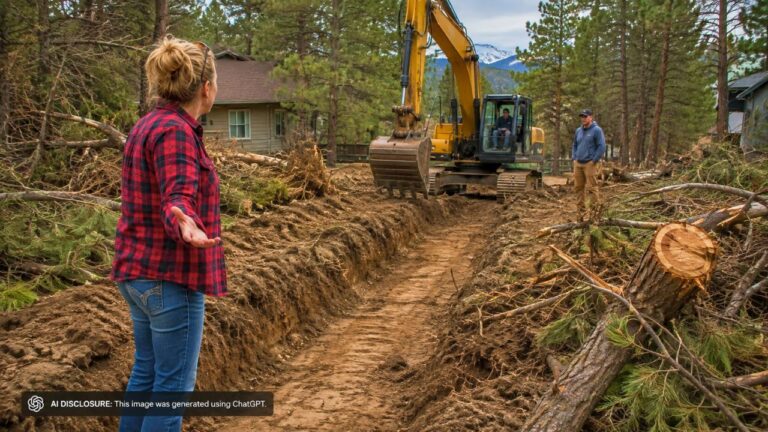
A new owner bought the house behind them. A few months later, landscaping crews showed up to do clearing and cleanup along the back side of the deck fence. From the homeowner’s perspective, it wasn’t just noise—it was an immediate threat to the one part of the property that provided real comfort and privacy.
They went over and warned the crew: do not touch the plantings next to the fence. It’s the kind of direct request many people make when boundaries are about to get tested.
But later, the homeowner says the landscaper told them the neighbor insisted on removing everything anyway after being told some of the plants were “an issue.” The homeowner describes the neighbor’s attitude afterward as dismissive, treating the cleared plantings like “weeds” and brushing off the impact.
When the vine came out, the fence came apart with it
The homeowner’s complaint wasn’t only emotional. It was practical and immediate: privacy disappeared, and the fence was “basically…destroyed” by the removal of the clematis.
Anyone who has lived with mature vines knows how interconnected they can become with a structure. A decades-old clematis trained along a trellis isn’t just a decoration—it’s tension, weight, and woody growth wrapped into the fence line. Pull it out aggressively and you can rip, warp, or destabilize pieces that were never designed to take that kind of force.
Now the deck feels exposed. What used to be a sheltered summer spot became a place the homeowner says they’re devastated to use, especially given their disability and the role that outdoor space played in daily life.
The twist: one plant may have been fair game, but the fence placement changed everything
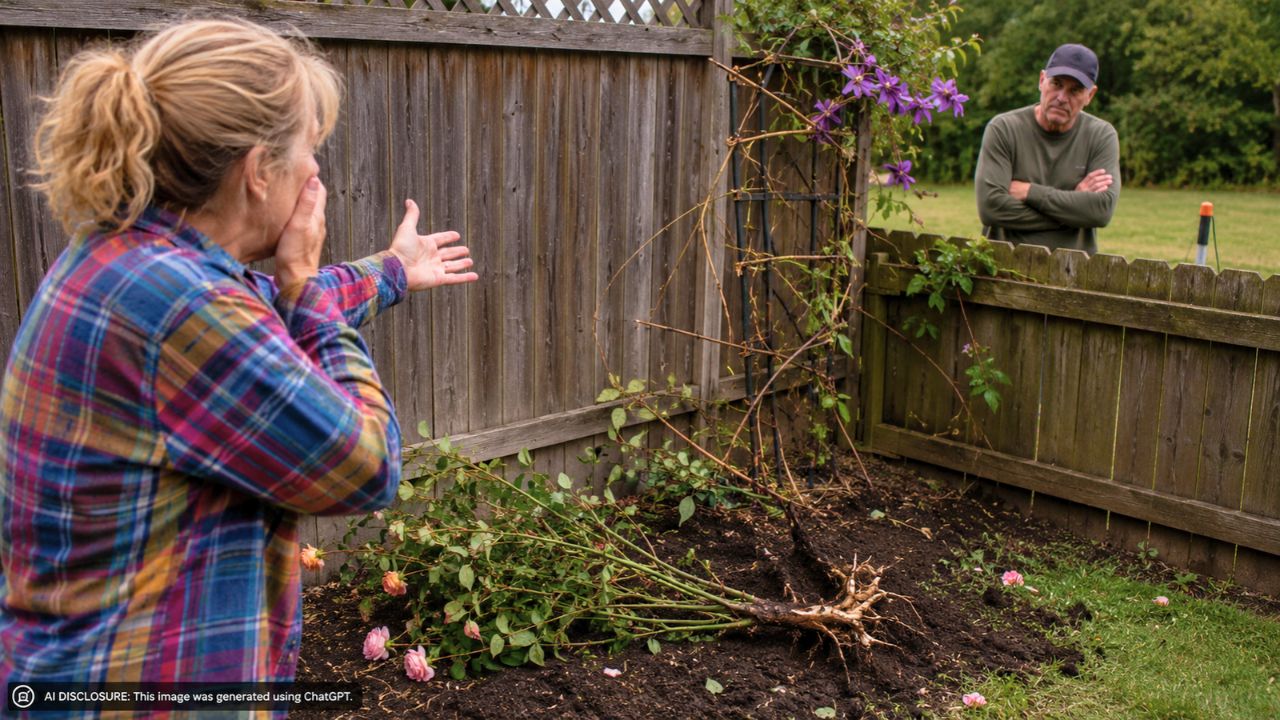
As the homeowner clarified in edits, part of what got readers debating details was the mix of plants involved. The photo, they note, shows a big rose bush that was definitely on the neighbor’s property. On that point, the homeowner concedes the neighbor had the right to remove it, even if it would have been more neighborly to talk first—especially since the homeowner had done all the maintenance and regularly cut it back when it overtook the deck.
The clematis is the core of the dispute. The homeowner says its trunk was against their fence, it was maintained on their trellis, and it was not “out of control.” And crucially, it was planted on the homeowner’s land—the narrow 12-inch strip created by that misplaced fence.
That’s where the fence becomes more than a carpenter’s mistake. It created a visual “line” that didn’t match the legal one, and the homeowner admits they didn’t fix it earlier because the house is 100 years old and the project list is endless. Moving the fence would also have meant destroying the clematis they were trying to protect.
There was also an additional headache: the homeowner says the prior owner made another fence error on the right side, placing the fence onto a different neighbor’s property right against their garage. Now, after the blowup with the new neighbor behind them, the homeowner says they’ll be rectifying it all—moving the fence fully onto their own property and, this time, building it as tall as allowed.
What people pushed for: proof, paperwork, and a clean boundary before anything else
The homeowner added that a survey had been done previously, complete with survey stakes, during the time of the earlier amicable neighbor relationship. That detail matters because so many property-line fights turn into “I think” versus “you think” once the digging starts.
Even without seeing all the comments, the tone of the homeowner’s edits shows what the most practical voices tend to focus on in these cases: whether the plants truly crossed over, what was actually on whose property, and what documentation exists to back it up. There’s a difference between “it’s been that way forever” and “it’s within the lines on a survey.” When contractors are involved, it can also matter whether the homeowner told the crew to stop and whether that warning was ignored.
The homeowner’s own plan reflects that mindset. They’re done relying on a fence that’s in the wrong place and hoping everyone stays polite forever. The new goal is a corrected fence line—clearly theirs, clearly placed, and tall enough to restore the privacy the vine used to provide.
Fixing it now means rebuilding, not just replanting
This isn’t a simple “replace the plant” problem. A decades-old vine trained across a trellis is a long-term project that can’t be bought back in a weekend. And when removal damages the fence, the repair gets bigger and more expensive fast: posts, panels, trellis work, and the labor to do it without creating yet another boundary argument.
It also forces a decision the homeowner avoided for years: correcting old mistakes left by a prior owner. The fence being 12 inches inside their property might have seemed like a harmless quirk when neighbors got along. Once a new owner moved in and decided to clear aggressively, that quirk became a vulnerability.
Now the homeowner is left with a stripped-back view, a damaged fence, and a to-do list that just jumped to the top: reestablish the real property line in wood and hardware, and rebuild the sense of privacy that used to come naturally from living green along the fence.
The hardest part is that none of this started because someone wanted a fight. It started because a new neighbor wanted a clean yard and didn’t treat the narrow space behind the fence as someone else’s carefully tended outdoor room. And in a small-lot home where the deck is the backyard, losing that screen can change how the entire house feels.
Like Fix It Homestead’s content? Be sure to follow us.