Ranchers Find the Fence Their Great-Grandfather Built Seventy-Five Years Ago Isn’t on the Line — Then the Forest Service Indicts Them Both for Felony Theft
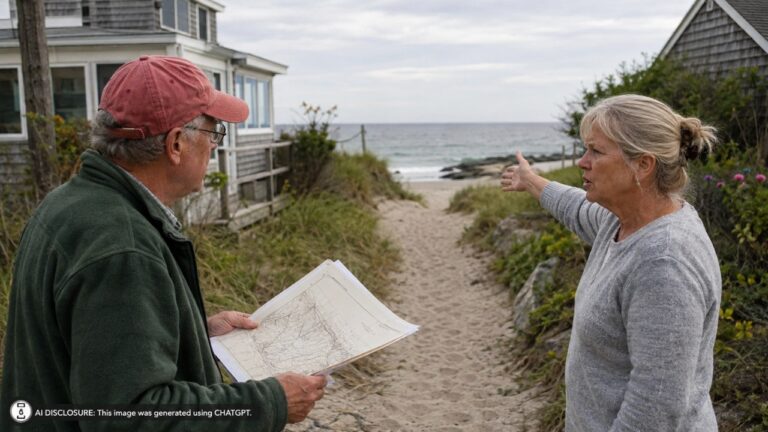
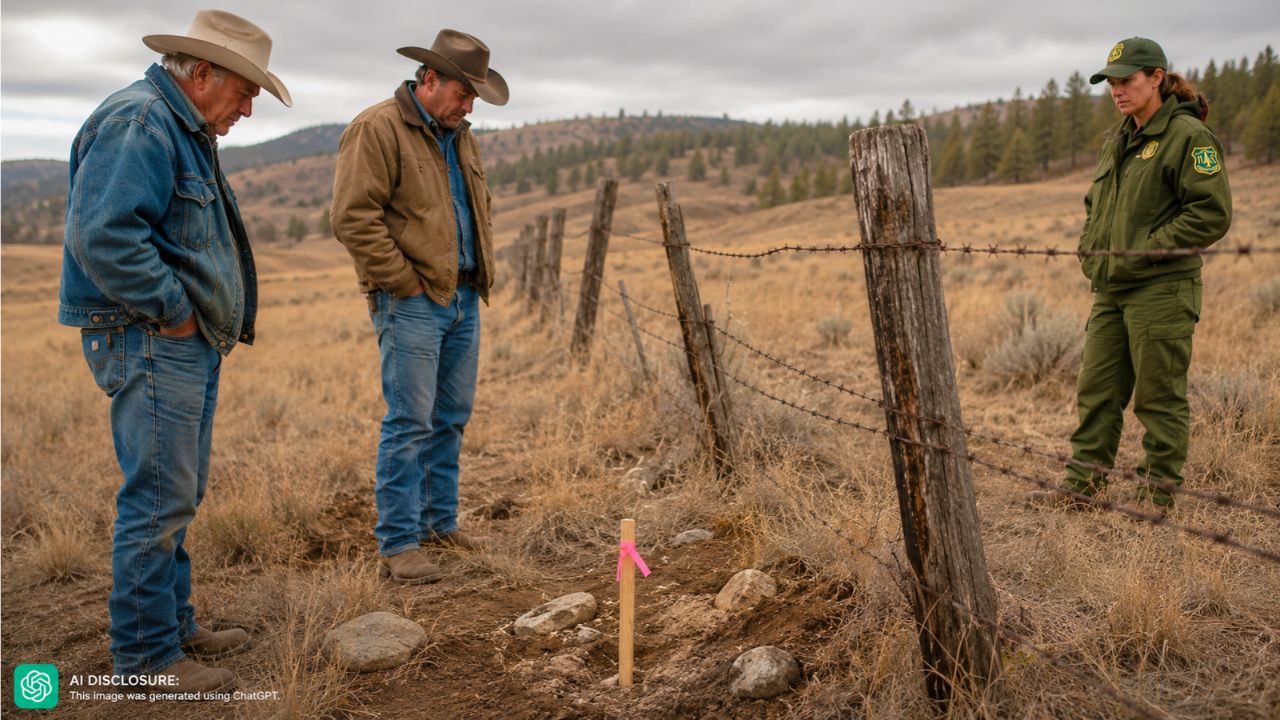
Photo credit: AI-generated image created using ChatGPT. Illustrative only.
On a working ranch outside Caputa, South Dakota, a crooked old fence with weathered posts and barbed wire wasn’t a “project” so much as part of the landscape. It had been there for generations, built by a great-grandfather to keep cattle where they belonged. And for decades, the family treated it like the boundary—because that’s what everyone around them did.
Then, after a complaint about a sign on that fence, the Maude family says federal officers showed up, asked where the line really was, and within months the couple was served with separate felony indictments tied to land use on the wrong side of that same fence. The details come from the source post, which lays out how a routine “fence line question” spiraled into something that threatened the ranch and the family itself.
The first sign was literally a sign
Charles and Heather Maude run a fifth-generation ranch and farm in Pennington County, raising cattle and hogs on about 400 acres near Mount Rushmore. Their private ground sits next to the Buffalo Gap National Grasslands, managed by the U.S. Forest Service.
On Good Friday morning, March 29, 2024, Heather said a neighbor tipped them off that two Forest Service employees were at the house. U.S. Forest Service Special Agent Travis Lunders and Patrol Captain Jeff Summers told them a hunter had complained about a “No Trespassing” sign posted along a stretch of fence that wasn’t on the property line.
The Maudes say they didn’t argue about the sign. They were told to take it down, and they did. But that quick compliance didn’t end the visit—it opened a bigger question: if the fence wasn’t exactly on the line, what else had been treated as “theirs” that technically wasn’t?
A fence built for cattle doesn’t always match a map
The Maudes’ fence isn’t straight, and Heather described it as a practical, old-school build—placed where people could build and maintain it, not where a clean line looks good on paper. They’d used it as the boundary for multiple generations, and Heather said the family had leased ground from the Forest Service for years without anyone challenging how the land near that fence was being managed.
What rattled them early wasn’t only the boundary question. Heather said the officers would have had to cross their private property without permission to access that fenceline. And when Lunders asked them where the boundary was, the answer was basically: “We thought it was the fence.”
Heather said they were willing to figure it out and fix it. At that point, it sounded like a familiar rural headache: somebody finally noticed an old mismatch between fence and survey, and now it needed to be cleaned up.
They tried to solve it like neighbors—until it stopped feeling like that
After that first meeting, the Maudes started doing what property owners do when a line gets questioned: paperwork, records, research. They dug into their agreement with the Forest Service and concluded the mismatch ran both directions—about 25 acres of their private land ended up on the Forest Service side of the fence, and roughly 20 acres of Forest Service land sat on their side.
They also contacted a consultant recommended for cases like this, hoping for a timely resolution. According to Heather, both the Farm Service Agency and the Forest Service had long shown the Maudes as owners of the acres in question, which made the sudden urgency feel confusing.
At a May 1, 2024 meeting with District Ranger Julie Wheeler and Agent Lunders, the Maudes proposed what sounds like a common-sense fix in rural property disputes: trade the pieces so the fence matches ownership—Maudes get the west side, the Forest Service gets the east side—and if the acreages weren’t equal after a proper survey, somebody writes a check for the difference.
Heather said Wheeler told them a survey could take months to a year, and they planned to meet in mid-June to walk the land and see what could be done.
The survey arrived fast, right after the crop went in
Here’s where the timeline gets tight. Heather said that at the May 1 meeting, nobody told them they were doing anything wrong. So they planted a crop on the ground near the Cheyenne River, using a pivot for irrigation through the season.
Then on May 6, just before 5 p.m., they received an email from Lunders saying Forest Service staff would be surveying the property the next day. On May 7, Heather said stakes went in marking what the Forest Service crew believed was its land.
She also noted the stakes were labeled as USDA stakes, and she believed the Bureau of Land Management—under the Department of Interior—handles public land surveys, but she said no BLM survey crew was involved to her knowledge.
To make it more real-world messy, Heather said the crew drove across planted ground, including areas not even in dispute and owned by the Maudes. Wheeler was the only official who acknowledged the crop, Heather said, and indicated they’d likely have a resolution by the time the crop needed to come out. That’s the kind of sentence that sounds reassuring until you realize it isn’t a plan.
From paperwork to felony indictments in about 90 days
After the survey activity, Heather contacted the sheriff to give a heads-up about what was happening and also reached out to congressional representatives. She said U.S. Sen. Mike Rounds’ office found it odd and wanted staff present for future meetings. Heather said once she relayed that to Wheeler, communication stopped.
On June 24, 2024, Heather said Lunders called and said he had paperwork for them. Charles was home alone and asked a neighbor to come over so he wasn’t receiving documents without a witness.
Heather said that paperwork was the moment everything changed: Lunders served them with separate criminal felony indictments. Heather described it as happening “within 90 days,” and she stressed there was no intent to commit a crime—especially, in their view, while they were actively trying to resolve the boundary question.
The felony charges alleged theft of government property tied to roughly 50 acres—about 25 cultivated and 25 grazed—on the boundary of their ranch and the Buffalo Gap National Grasslands. Language cited from the indictment in later commentary described the accusation as knowingly stealing and converting National Grasslands for cultivation and grazing, valued over $1,000, and aiding and abetting each other.
The practical punch in the gut wasn’t just the charge. Heather said they had only a week between being served and their court date, and because they were indicted separately, they needed two attorneys. With the Fourth of July inside that same week, they scrambled. Heather said they pulled together cash from the farm and their meat business, sold a few fall-calving cows, and secured an attorney retainer for her. Charles kept a court-appointed attorney through the indictment hearing.
People didn’t argue about fences—they argued about proof and process
The Maudes’ case drew support from neighbors and national livestock groups. R-CALF USA urged that the charges be dropped, arguing in a press release that the boundary issue stemmed from an imperfect survey conducted over a century ago, not intentional theft, and criticizing the agency’s handling as heavy-handed.
The National Cattlemen’s Beef Association also condemned the prosecution. Locally, their neighbor J.T. Rickenbach told DTN that Charles “has always done things by the book,” and that’s why the indictment shocked people who knew them.
In the way these property disputes tend to go, a lot of outside reaction centered on a simple question: if fences in the West are often built where they work—not where a straight line says they should—why did this one jump straight to criminal court instead of being handled as a boundary correction?
Inside the Maude household, the stress landed in a more immediate place. Heather said they arranged a conservatorship agreement for their children—then 8 and 10—because the couple could have faced jail time if convicted. Explaining that possibility to kids, she said, was one of the hardest weeks they’d ever lived through.
At ground level, it started with a no-trespassing sign and an old fence line people had treated as “good enough” for decades. And it ended—at least for this part of the story—with a family trying to keep a ranch running while staring down felony theft allegations over land they say they were already trying to swap, survey, and straighten out the normal way.
Like Fix It Homestead’s content? Be sure to follow us.