Homeowner Finds the Shared Driveway Sits Inside a Recorded Fifty-Foot Right of Way — Then the Dispute Lands in Delaware’s Court of Chancery
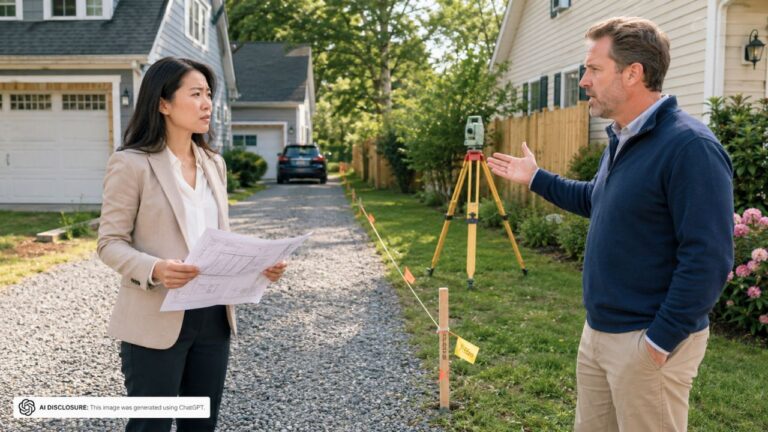
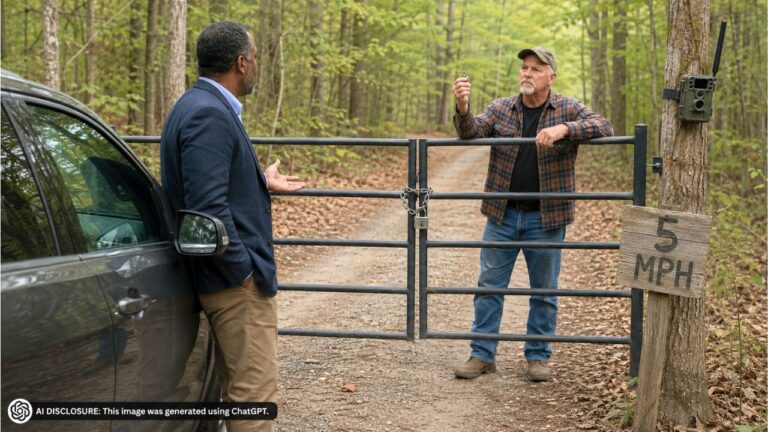
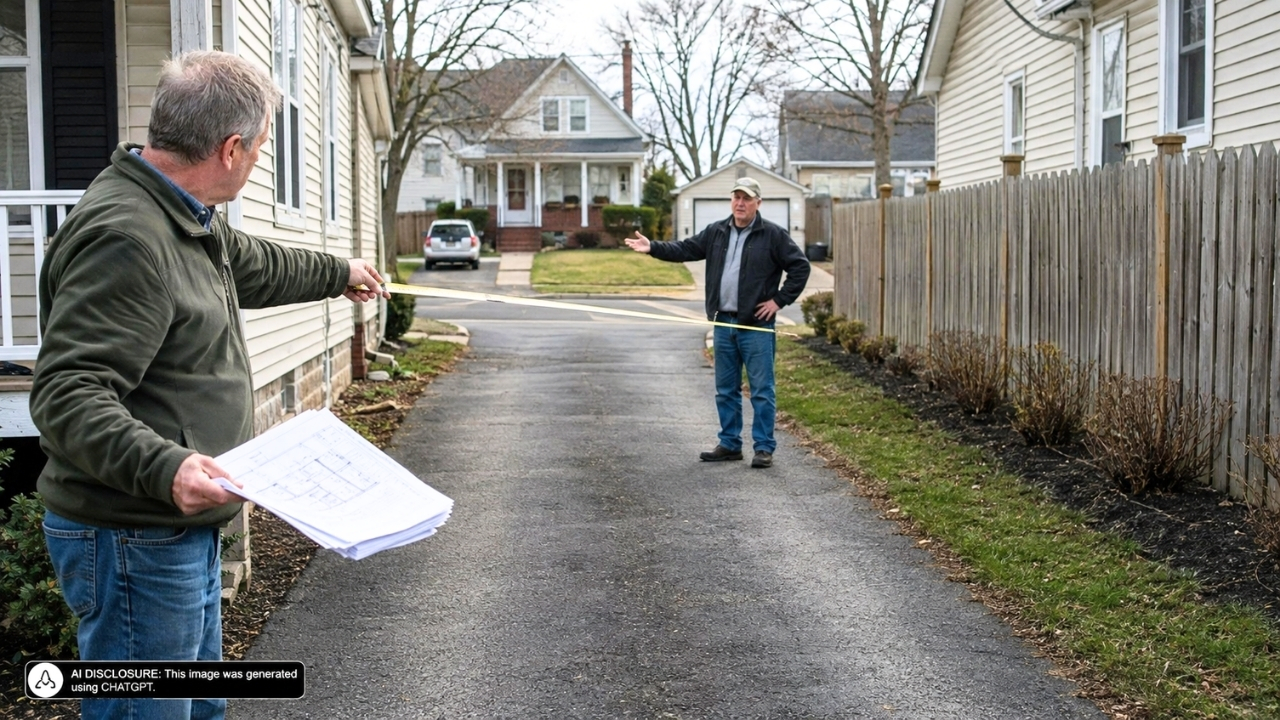
Photo credit: AI-generated image created using ChatGPT. Illustrative only.
Shared driveways are the kind of thing you stop noticing—until the day you’re mad enough to pull out the deed and start measuring. In Dover, Delaware, a homeowner realized the driveway he mostly owned wasn’t just a neighborly “we’ve always done it this way” arrangement. It sat inside a recorded 50-foot right-of-way that gave his neighbor a legal path to the road.
That discovery didn’t calm anything down. It turned into a five-year back-and-forth that eventually landed in the Delaware Court of Chancery, where the judge had to decide whether a written, recorded driveway right could be treated like something temporary. The details are laid out in the discussion.
A driveway you “own” can still be someone else’s way out
Albert Muchille owned the property that contained most of the shared driveway. His neighbor, Chase Bechtol, had a recorded 50-foot right-of-way across Muchille’s land for ingress and egress—basically, the legal right to cross that strip to reach Kenton Road.
On a practical level, this is the kind of setup that can work fine for years. Cars go in and out, the grass grows up on the edges, and everyone pretends the invisible lines don’t exist. But invisible lines are only invisible until somebody feels boxed in, blocked, or disrespected—and then the paperwork becomes the whole fight.
The whole case hinged on one new driveway
Bechtol also had something else: another driveway that sat entirely on his own property. And that second driveway became the lever Muchille tried to use to pry the old easement loose.
Muchille’s argument was straightforward in homeowner terms: if the neighbor already has a direct way to the road on his own land, why should he still get to use the driveway across mine? He asked the court to treat the old access as something that should effectively disappear because it wasn’t “necessary” anymore.
If you’ve ever dealt with a shared access point—one gravel lane, one narrow paved strip, one gate everyone thinks they have a say over—you can probably guess how personal that gets. It’s not just about tires on asphalt. It’s about control.
Delaware’s court drew a hard line: “necessary” isn’t the same as “written”
The Court of Chancery said Muchille’s argument would only work if the easement had been created by necessity in the first place. That’s the kind of easement that exists because a property would otherwise be landlocked, and it can generally end when the necessity disappears.
But this one wasn’t that. The deeds expressly referred to the 50-foot right-of-way. Muchille’s deed said his property was subject to it, and Bechtol’s deed expressly included it. In other words: it was an express easement, spelled out in the documents, not a “we had no other choice at the time” arrangement.
That difference decided the case. An express easement doesn’t just evaporate because the benefited property later gains another driveway. The court emphasized that the easement was granted for ingress and egress, and nothing in the deed limited it to being Bechtol’s only means of access.
The end result: the court ruled the easement remains valid and enforceable, and it quieted Bechtol’s right to keep using that driveway across Muchille’s property as an alternate route to his own land.
Then came the fence, the gate, and the question of “interference”
This wasn’t a polite disagreement over who should pay for gravel. The opinion describes a rough history between the neighbors, including the fact that this case was one of four lawsuits Muchille had filed against Bechtol tied to their disputes. The other three had already been resolved or dismissed elsewhere in Delaware courts.
And like a lot of property-line fights, the tension eventually turned into physical objects on the ground. Muchille put up a fence with a gate across the easement at one point, temporarily blocking Bechtol from using the driveway. By the time the case went to trial, that gate had been removed.
Still, Bechtol wasn’t satisfied. He complained about the remaining fence, which sat only six to eight inches from Bechtol’s own fence, saying it made maintaining the grass more difficult. He asked the court to order Muchille to remove it and to prohibit him from interfering with the easement in the future.
He didn’t get that. The court found the access-blocking gate was already gone, and the remaining fence was outside the 50-foot easement on Muchille’s own property. Even if mowing became a tight squeeze, the judge did not see it as interference with Bechtol’s proper and reasonable use of the driveway for getting in and out.
Neighbors watching the case zeroed in on one thing: the paperwork
When homeowners read about easement disputes, the reactions tend to cluster around the same practical instincts: don’t assume, don’t eyeball it, and don’t rely on what “everyone knows.” If it’s recorded and written into both deeds, it’s not a casual favor you can revoke because the neighbor’s circumstances changed.
This case also shows why driveway disputes so often become fence disputes. Fences feel like a simple fix—something you can do with posts, panels, and a weekend. But if a fence crosses into an easement, even a little, it can be framed as a direct attempt to block someone’s legal access.
Here, the difference between “court orders it removed” and “annoying but allowed” came down to location. The gate that blocked the easement was gone. The remaining fence was outside the easement boundaries. Inches mattered.
No attorney’s fees, but the neighbor still “won”
Bechtol also asked the court to make Muchille pay his attorney’s fees, arguing the repeated litigation amounted to bad faith. The judge declined, saying Delaware’s bad-faith fee-shifting rule requires more egregious conduct than simply losing a case.
Even with the history of multiple lawsuits, the court treated Muchille’s core question—whether the easement should terminate because Bechtol had another driveway—as a legitimate legal issue, just not a winning one. Bechtol did receive ordinary court costs as the prevailing party.
The day-to-day reality after a ruling like this can still feel messy. The easement remains, so the shared driveway remains part of the relationship whether either neighbor likes it or not. Muchille couldn’t erase the right-of-way from the deed, and Bechtol couldn’t get a court order forcing the remaining fence to come down. The line on the plat stays where it’s always been—right in the middle of a place both of them have to live with.
Like Fix It Homestead’s content? Be sure to follow us.