Homeowners Win an Easement Kept Twenty-Five Feet From Their House — Then a Motion Argues the Ruling Created a Public Highway on Private Land
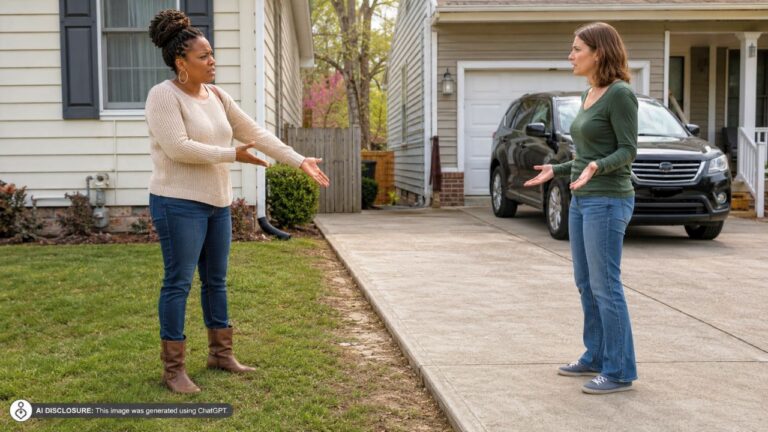
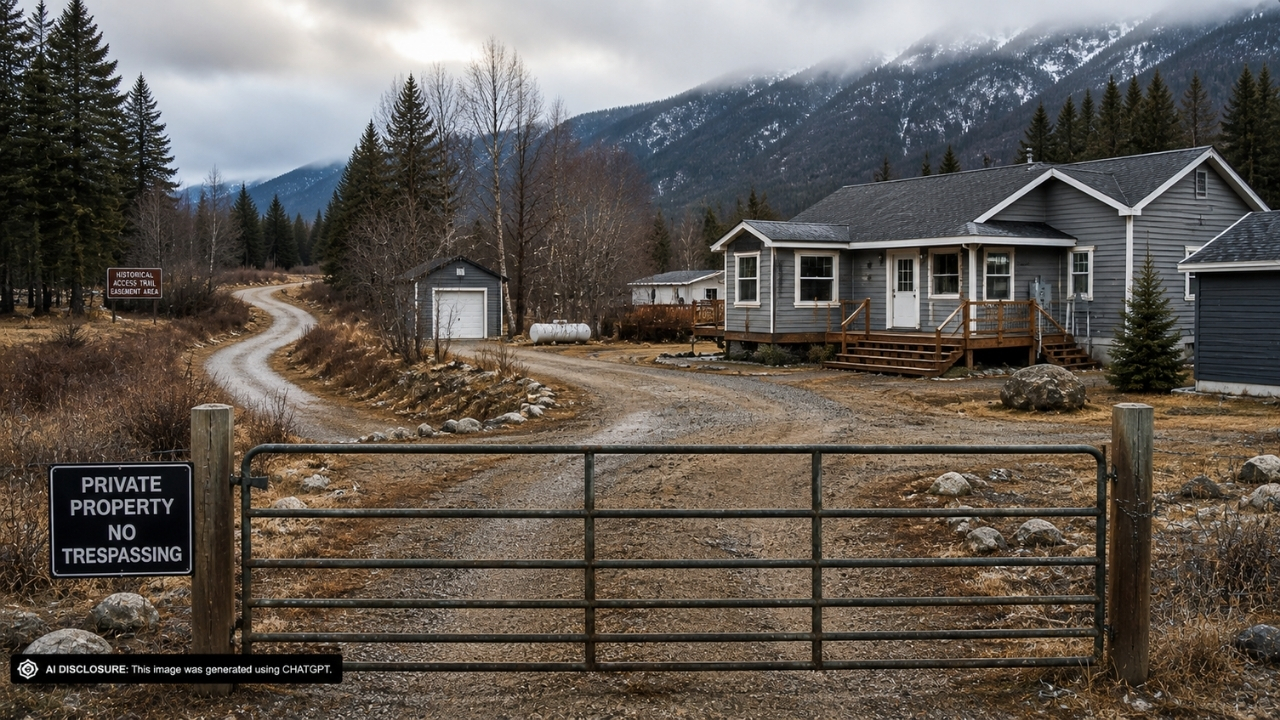
Photo credit: AI-generated image created using ChatGPT. Illustrative only.
Picture building your home, shop, and utility lines exactly where you’ve always treated your yard as “yours,” only to have a neighbor show up years later insisting there’s an old access path running right through it. That’s the kind of slow-burn property drama that turned into a decades-long legal fight in Alaska, and it keeps twisting even after a major win for the homeowners.
In the discussion, the Alaska Supreme Court dealt with a mess that started with a 1966 access agreement for undeveloped land and ended with a home built over part of the historical trail. One court ruling said the easement effectively stopped around 25 feet from the house. Then, on remand, a motion tried to turn that idea into something much bigger—something that looked a lot like a brand-new “road” cutting across private land.
A handshake-era access deal met modern homestead reality
The roots go back to 1966, when adjoining landowners (Henry Jones and Joseph Reid) worked out a license allowing Jones to construct a road across Reid’s land. The key detail: the agreement said that if Reid ever sold his property, it would still be subject to that license.
Fast-forward. The Jigliotti family eventually acquired Jones’s property. Donald and Deborah Bloom bought Reid’s property in 1994—land that still carried the old access arrangement like a quiet footnote in the background.
Then the Blooms started improving their place in a way that will sound familiar to anyone who’s tried to turn raw land into a functioning homesite: home, shop, utilities, water lines, sewer lines, and other improvements. The problem was where those improvements went—right around, and even over, the old access trail the neighboring property had historically used.
The “you can’t drive through my yard” phase lasted years
Beginning in the mid-1990s, the Blooms repeatedly told the Jigliottis they could not drive through their yard along the old trail. It wasn’t just a one-time argument at the property line. The source material describes multiple occasions where the Jigliottis parked and walked the rest of the way instead.
By 2011, the Trust was already using a different way in—a section-line easement—because crossing the Bloom parcel had become so contentious. That’s the part that will ring true for rural homeowners: people don’t go to court the first time a neighbor blocks access. They improvise. They take the long way. They try not to escalate.
But eventually “we’ll just work around it” turns into “we’re losing real access,” and in 2012 the Jigliotti Family Trust sued to establish its right to use the old access trail.
The homeowners won a buffer—but it didn’t mean what the other side wanted
The trial court first ruled that the 1966 license was valid and created an easement appurtenant allowing access across the Bloom property. So the Trust wasn’t imagining the easement; it had legal roots.
But the Blooms had their own powerful fact on the ground: they had openly and continuously occupied part of that easement with their home, outbuildings, and related improvements. The trial court found the Blooms had partially extinguished the easement by prescription—meaning the easement didn’t just get “blocked,” it got legally snuffed out where the occupation was clear and long-running.
The line that stuck in everyone’s mind was the court’s finding that the easement was extinguished once it reached the cleared area around the Bloom residence—no less than about 25 feet from the house. The Alaska Supreme Court affirmed that partial-extinguishment finding in an earlier appeal, treating the easement as ending at the edge of the Blooms’ driveway/curtilage.
So on paper, the homeowners had something a lot of folks would celebrate: the neighbor’s access rights stopped well short of the home zone. No one wants a “right of way” turning into headlights past the bedroom window or strangers driving near the kids’ stuff in the yard.
Then a remand turned into a proposed reroute around the house
After that first Supreme Court decision, the case went back down so the trial judge could enter a formal judgment showing exactly what access rights remained. That’s where the second round of fighting ignited.
On remand, the Trust submitted a proposed route that didn’t simply trace the historical trail up to the point it had been extinguished. Instead, it went around the Blooms’ house—essentially treating the 25-foot buffer like a design constraint and asking the court to lay out a bypass so access could continue.
The trial court accepted that approach and entered a judgment giving the Trust a 60-foot-wide access route that passed by the house while staying more than 25 feet away. If you’re picturing a wide corridor that looks less like “an old trail” and more like “a road right of way,” you’re not alone.
From the homeowners’ point of view, this is where the fear kicks in: you go to court, you win an important limitation, and the follow-up paperwork feels like it quietly transforms into something bigger. The headline-level worry is obvious—if a court-drawn route starts to resemble a public road, what does that do to the privacy and practical use of the land?
The Supreme Court: you can’t invent a new path just to make it work
The Blooms appealed again, and this time the Alaska Supreme Court said the trial judge had misunderstood what the earlier ruling meant. The 25-foot figure wasn’t a green light to redraw the easement somewhere else. It described where the Blooms had already extinguished the existing easement through prescription.
That distinction mattered. The original easement still existed along its historical route until it reached the portion that had been legally extinguished. The court couldn’t simply route a new easement around the house to keep continuous access for the Trust.
The Supreme Court also flagged a practical problem: the judgment entered on remand didn’t even clearly show the historic trail or how the house and curtilage sat in relation to it. Instead, it depicted what amounted to a fully usable access route with no interruption—contradicting the earlier factual finding that part of the easement had been extinguished.
So the Supreme Court vacated the judgment again and sent the case back yet again. Now the trial court has to determine and map the historical access trail, where exactly the home/driveway/outbuildings interrupt it, and how much easement remains versus how much is gone.
The reactions you’d expect: “survey it, map it, and document everything”
This kind of case tends to split homeowners into two immediate camps. One side sees a neighbor trying to revive an access route that’s been functionally dead for years. The other sees a homeowner building improvements over an access path and then treating the blockage as a win.
But the most practical reactions are usually less emotional and more procedural: get the historical route pinned down, insist on a clean plat, and make sure future buyers can understand what they’re purchasing. The Supreme Court’s insistence on mapping—showing the historic route and the interruption—lines up with what property-savvy folks always say in these disputes: if it isn’t clearly drawn, it will come back to haunt the next owner.
There were a couple of side battles too. The Blooms tried to argue again that the 1966 license was invalid, but the Supreme Court wouldn’t reopen that issue under the law-of-the-case doctrine because it had already been decided earlier and not appealed at the right time. And the Trust’s push for attorney’s fees failed because the result was mixed—some access rights recognized, but not the full access it sought.
In the end, the homeowners kept the biggest protection they fought for: the easement doesn’t simply get reborn as a convenient new route skirting the house. But nobody is walking away with a clean, quiet ending either. The next round is about maps, measurements, and the uncomfortable reality that on rural land, yesterday’s trail can collide hard with today’s homestead improvements.
Like Fix It Homestead’s content? Be sure to follow us.