Buyer Under Contract Learns the Neighbor Built a Fence Ten Feet Into the New Property in a Few Evenings — Then He Blusters That the Line “Has Always Been” There and Goes Silent for a Month
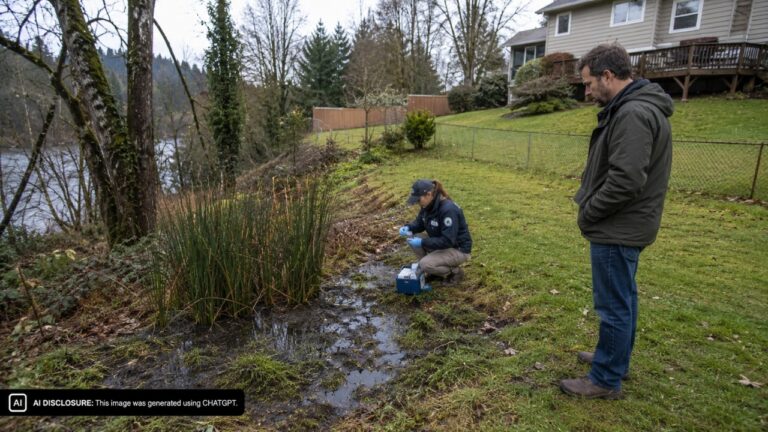
Photo credit: AI-generated image created using ChatGPT. Illustrative only.
Nothing makes a “new place” feel less like home than realizing someone has already started rearranging it—before you even close. That’s where one buyer found himself after noticing a brand-new privacy fence appear in just a few evenings, not along the edge of the yard, but well inside it.
While under contract on a 1.5-acre lot in a township, the buyer watched a neighbor put up fencing that seemed to cut more than ten feet into the property, sealing off a row of bushes in the process. The full story is laid out in the original post, and it reads like the kind of property-line mess that turns a good deal into a long-term headache.
A fence goes up fast when nobody’s living there yet
The timing was the first red flag. The fence wasn’t old, crooked, or half-rotted from years of quiet encroachment. It went up quickly—“in a few evenings”—while the house was still in the buying process.
That put the buyer in a tough spot immediately. The realtor didn’t want to do anything that might jeopardize closing, and the buyer went along with that since the deal on the house was good. It’s the kind of compromise buyers make all the time: handle it after the papers are signed, once you’ve got the keys and the leverage of ownership.
But fences are not like noisy parties or a junky vehicle parked on the street. Once posts are sunk and panels are up, people start treating them like permanent facts. And if the neighbor is bold enough to build first, the new owner is left trying to prove what should have been respected from the start.
The first conversation turned into a dare
After closing, the buyer tried the friendly route. He brought it up casually, the way you do when you’re hoping the other person says, “Oh no, I must have gotten the line wrong,” and offers to fix it without drama.
Instead, the neighbor blustered. He insisted that’s where the property line “has always been,” and then tossed out a challenge: if the buyer wanted to get a survey, then they could talk.
On its face, it sounds almost reasonable—property lines can be confusing, records can be messy, and people do make mistakes. But paired with the speed of the construction and the timing during the contract period, it didn’t land like an honest misunderstanding. It landed like a gamble: force the new owner to spend money and time just to reclaim what’s already theirs.
GIS maps, steel stakes, and that sinking feeling
Like most homeowners who run into a boundary dispute, the buyer did what you can do quickly and cheaply first: he looked at the available mapping tools. He knew GIS data can be off, but what he saw didn’t look like a small error. It appeared to match up “nearly” with a steel stake near the front corner of the property.
That detail matters, because it’s the moment when “maybe I’m mistaken” shifts into “this is probably real.” Ten feet is not a rounding error. Ten feet is a strip of yard you might mow, landscape, plant a windbreak in, or use as access for equipment.
And then came the part that made it feel personal: the neighbor started avoiding him. The buyer wrote that the neighbor had been dodging him for nearly a month. That silence can be louder than any argument, because it suggests the neighbor isn’t eager to compare notes, walk the line together, or find a mutual fix. He’s waiting him out.
The real price tag wasn’t the fence—it was proving the fence is wrong
The buyer’s first instinct was still practical: get a survey, settle it properly, and then deal with the fence. But the quotes he got were coming in at over $2,000, which is a brutal add-on expense right after buying a house.
This is the trap with property-line disputes. The “fix” might be simple—remove panels, pull posts, rebuild on the correct line—but the proof costs real money. And until you have that proof, anything you do can escalate the fight instead of solving it.
The buyer also wanted to stay gracious, at least at the start. He left room for the possibility of an honest mistake, even though he doubted it. That’s a very homeowner mindset: you’re not trying to win a courtroom drama, you’re trying to live next to this person for years without the relationship turning into a cold war.
But every day the fence stayed up also reinforced the neighbor’s story that the line “has always been” there. And the longer it stands, the harder it feels to push back without it becoming a full-blown feud.
Reactions focused on one word: survey
People reading the story honed in on the same point from different angles: arguing from assumptions is a dead end. A precise boundary question needs a precise answer, and the cleanest way to get it is with a survey.
That’s not because surveys are magical. It’s because they create a neutral reference point when two neighbors are staring at the same grass and insisting it means different things. A survey gives you something you can point to without shouting, something you can document, and something that can anchor whatever comes next—whether that’s a calm request, a formal letter, or a more serious escalation.
In other words, the survey isn’t just about moving boards and posts. It’s about ending the neighbor’s ability to shrug and say, “Prove it.”
The buyer took that to heart. In an update, he said the responses convinced him, and he planned to get a survey. He mentioned he might see if there’s an option to have corners located first, but doubted he’d regret the full survey in the long run.
When the survey comes back, the fence becomes a choice
The buyer also made it clear he’s done waiting. Once the survey is in hand, he wants the fence gone. And he framed it in plain terms: either the neighbor can take it out, or his tractor will.
That line captures the emotional pivot that happens in these disputes. Homeowners will bend over backward to be polite—until it feels like someone is taking advantage of them on purpose. A fence planted ten feet into a new owner’s property, built while the house was under contract, isn’t just a boundary mistake. It feels like an attempted land grab.
For now, the story sits in that tense in-between period: one neighbor avoiding contact, the other gathering the documentation needed to force the issue. The next chapter depends on what the survey shows and whether the neighbor decides to cooperate once he can’t hide behind “that’s where it’s always been.” Either way, that strip of yard is no longer just grass and bushes—it’s the first real test of what kind of neighborhood this new homeowner actually bought into.
Like Fix It Homestead’s content? Be sure to follow us.