Homeowners Replace a Broken Back Fence in 2005 — Then a Survey Nine Years Later Shows It Enclosed 900 Square Feet of County Land
Photo credit: AI-generated image created using ChatGPT. Illustrative only
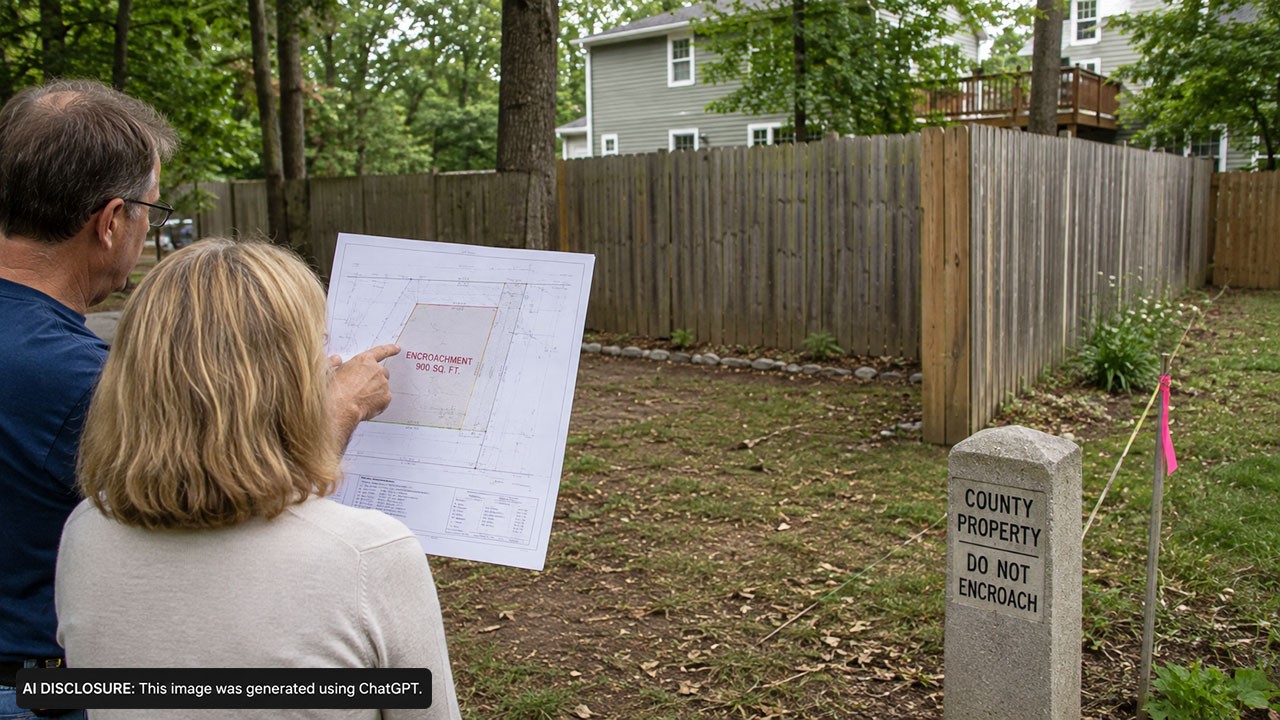
It starts like the most normal first-weekend homeowner project: the back fence is falling apart, the yard feels exposed, and you just want it fixed. In Woodmere, New York, that simple upgrade turned into a years-long headache when a replacement fence ended up enclosing land that wasn’t actually part of the homeowners’ lot—about 900 square feet of county-owned waterfront property, according to the source post.
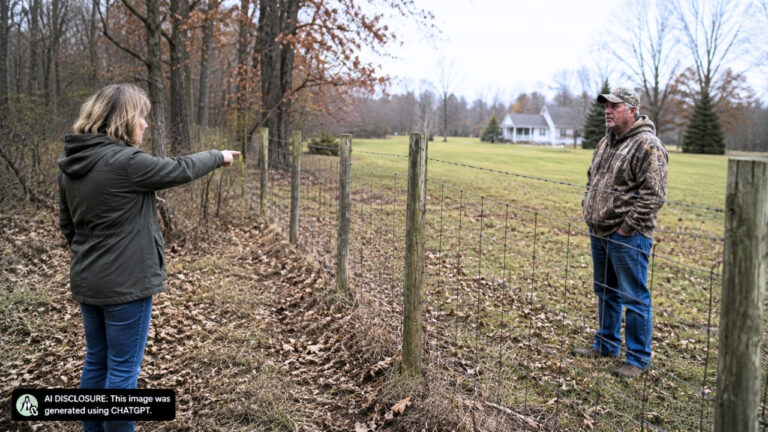
The homeowners bought the house in 2005. The rear of the property backed up to a grassy strip owned by Nassau County next to Motts Creek, and shortly after moving in they replaced a broken rear fence with a new one. It looked like a routine “same fence, same spot” job—until a later survey showed the line was off.
A “simple fence replacement” that quietly moved the backyard
If you’ve ever replaced an old fence, you know the temptation: follow the existing posts, reuse the footprint, don’t overthink it. That’s how a lot of property-line problems are born—nobody is trying to steal anything, they’re trying to get the dog contained and the yard private.
Here, the homeowners’ lot ended at the county’s grassy strip. But the new fence wasn’t placed on the true boundary, and it enclosed a slice of county land behind the home. From the yard, it probably felt like a bonus buffer—extra room between the house and the creek, a little more space for lawn, kids, or storage.
The key detail is that the fence didn’t just sit near the line; it created an “inside” and “outside.” Once that happens, people treat what’s inside like theirs. They mow it, maintain it, and build their routines around it.
Nine years later, the survey changed everything
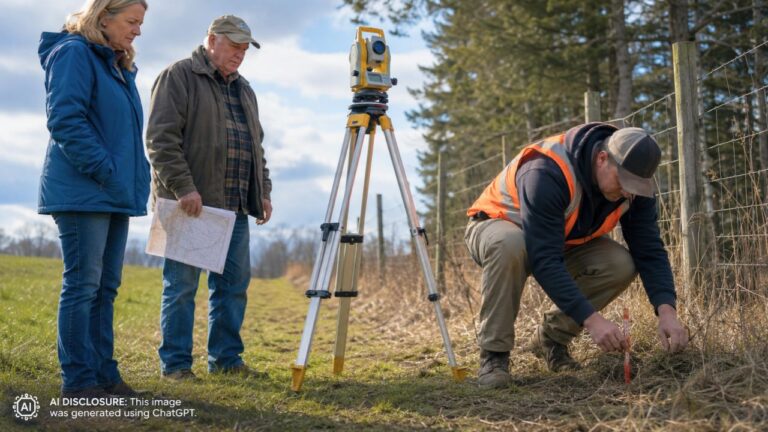
In 2014, the homeowners had a survey done and learned the fenced area included roughly 900 square feet that belonged to Nassau County. That moment is where these stories usually split into two paths: either the fence gets moved, or the owners decide to keep using the area and hope time smooths it over.
They continued using the area. And in 2022, they sued the county asking a court to declare they had acquired the disputed strip through adverse possession—the legal concept that, under certain conditions, long-term possession can ripen into ownership.
At first, they got a win. The trial court granted them summary judgment and declared they had acquired the parcel by adverse possession, while also denying the county’s request for judgment in its favor. That’s the part that would make any homeowner exhale: finally, paperwork catches up to real life.
Then the county appealed, and the air went right back out of the room.
The county’s appeal turned on one brutal fact: they knew
New York’s adverse-possession rules require several things: possession that is hostile under a claim of right, actual, open and notorious, exclusive, and continuous for the statutory period. The idea is that if someone truly acts like the owner for long enough—without permission and in a way the real owner could notice—the law may eventually recognize that reality.
But “claim of right” is where this case fell apart. Since changes to New York law in 2008, “claim of right” requires a reasonable basis for believing the land belongs to the person claiming it. And by 2014, after the survey, the homeowners indisputably knew the strip was not within their deeded property.
That turns continued use into something different. Maintaining a fenced-in area because you reasonably think it’s yours is one thing. Continuing after you’ve been told—by your own survey—that it’s someone else’s land is another. The appeals court found that after 2014, they couldn’t show the reasonable-basis belief they needed.
Timing was also a hard wall. New York requires 10 years of qualifying adverse possession. The homeowners sued in 2022, about eight years after learning the true boundary. So they tried to lean on earlier use, including use by prior owners.
Why “the last owners did it too” didn’t save them
Homeowners hear “adverse possession” and think it’s mostly about the calendar: you’ve used it long enough, so it becomes yours. In reality, courts scrutinize what each owner believed, intended, and transferred.
The homeowners attempted to use “tacking,” a concept that can let a current owner combine their time with a predecessor’s time. But there’s a catch: tacking generally requires proof that the predecessor intended to transfer possession of the extra, undescribed land along with the deeded property.
The appellate court said there was no evidence of that here. Without that intent, you don’t get to stack years like blocks and call it a decade. And the county also produced evidence that the homeowners’ use was permissive—another major problem, because permissive use doesn’t satisfy the “hostile” requirement.
With those points, the appeals court reversed the trial court. Nassau County—not the homeowners—was entitled to summary judgment, and the judgment was ordered declaring the homeowners did not acquire the county property by adverse possession.
The practical homeowner fallout: fences, paperwork, and a yard you can’t assume is yours
This is where the story stops being a courtroom abstract and turns back into real life. If a fence has been sitting in the “wrong” place for years, moving it isn’t just pulling posts. It can mean regrading, reseeding, losing privacy, changing drainage patterns, and having to explain to family why “the backyard got smaller.”
And the worst part is how easy it is to get there. A broken fence gets replaced. The new fence follows the old line. Years pass. Then a survey—often ordered for a refinance, renovation, or simply curiosity—drops a pin in the middle of what you thought was your grass.
Once you have that knowledge in writing, you’re no longer living in a fog. You’re making choices with notice. This case shows that the piece of paper can matter as much as the fence itself.
How people reacted: “Survey first, feelings later”
Property-line stories tend to bring out the same practical instincts: get documentation before you get emotional. Here, the survey was the turning point, but it also became the homeowners’ biggest weakness because it established they knew the land wasn’t theirs years before the 10-year clock could run under the standards that applied.
The other reaction you hear in these disputes is skepticism about “free land” behind a house—especially when the neighboring owner is a government entity. Counties and towns don’t always monitor every grassy strip day-to-day, but when they do assert ownership, they come with records, maps, and the ability to keep litigating longer than a typical household budget can tolerate.
And there’s a quieter takeaway people mention in similar fence dramas: if you discover your fence is off, doing nothing is still a decision. It might feel like you’re maintaining the status quo, but you’re also narrowing your options.
In the end, this wasn’t a story about a flashy renovation gone wrong. It was about a normal fence replacement that accidentally redrew a boundary, and a survey that turned “our backyard” into “county land” overnight. The homeowners tried to make years of use count as ownership, won briefly, and then lost on appeal—leaving that 900-square-foot strip where it legally started, outside their fence line and outside their deed.
Like Fix It Homestead’s content? Be sure to follow us.