Landowner Uses a Driveway Under an Agreement With a Third Owner — Then Alleges the Neighbor Simply Converted the Whole Driveway to His Own Use
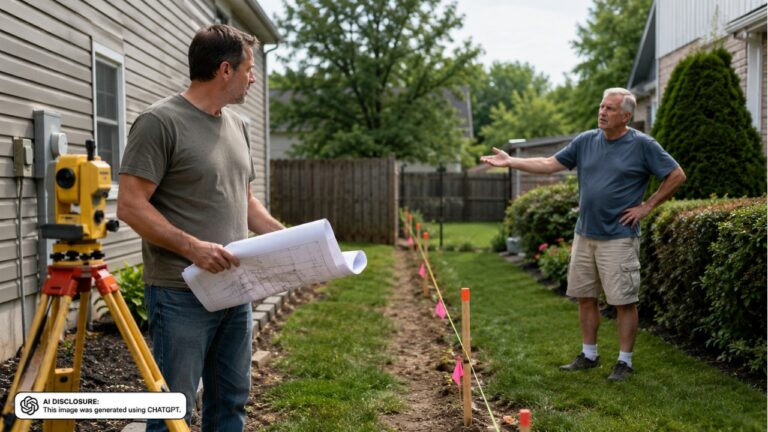
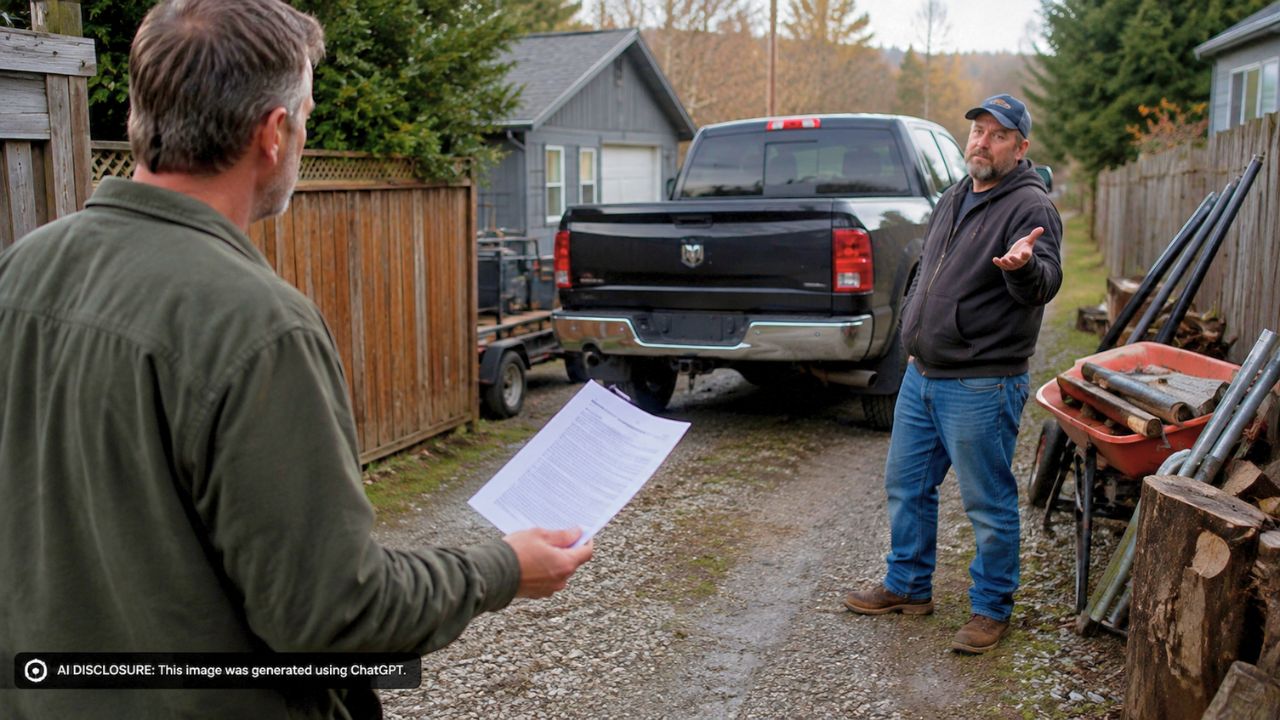
Photo credit: AI-generated image created using ChatGPT. Illustrative only
A shared driveway can feel like the most ordinary thing in the world—right up until someone decides it isn’t shared anymore. In a rural-feeling kind of neighbor dispute that spun into campaign-season mudslinging, an Alabama landowner said he’d been using a driveway for decades under a handshake-style agreement with a third party, only to watch a neighbor treat that access like it suddenly belonged to him.
The details come from the source post involving Norman Horton and David Colvin, a case that mixed property access headaches with social-media accusations and a political blowup. The appeals court didn’t validate most of Horton’s claims—but it did revive two defamation claims after a trial court threw out his entire lawsuit.
Thirty years of “we’ve always used it” met a gate and a lock
Horton said the driveway fight wasn’t new. He alleged he and his businesses had used a driveway for more than 30 years based on an agreement with another landowner, Buddy Skelton. It’s the kind of arrangement plenty of homeowners recognize: no fancy paperwork, just a long-running understanding that everyone treats as settled.
Then, according to Horton’s complaint, Colvin interfered with that access by helping secure permission for—or independently constructing—a gate or fence across the driveway. Horton also alleged the gate was sometimes locked while he or others were using the route, turning a routine way in and out into a recurring point of friction.
If you’ve ever dealt with shared access, you know how fast this gets practical. A locked gate doesn’t just block cars; it blocks deliveries, towing, customers, tenants, contractors, and emergency access. And once the access point becomes a tool in the neighbor relationship, everything else starts to feel less stable too.
The driveway wasn’t just for parking—it was tied to work and income
This wasn’t described as a sleepy residential driveway leading to a single-family home. Horton’s former operations at the property included businesses identified in the court record as Stormins Garage, Stormins Towing Service, and Stormins Wrecker Sales.
That context matters because driveway access in a business setting isn’t a minor convenience. It’s customer traffic, tow trucks coming and going, storage movement, and the constant churn that comes with mechanical and towing work. When access is unpredictable—or controlled by someone else—people stop showing up, vendors avoid the location, and the whole property starts feeling “complicated,” which can be deadly for business.
Horton framed the driveway issue in multiple ways in his lawsuit, including a claim that Colvin “converted” the driveway to his own use. But the appeals court said that specific legal theory didn’t work under Alabama law.
Why the “converted the driveway” claim didn’t survive
In everyday language, people say “he converted it” to mean “he took over something that wasn’t his.” In court, “conversion” is narrower. The Alabama Court of Civil Appeals held that conversion applies to personal property, not real estate or an easement-like right to use land.
So even if Horton felt like the driveway use was being taken away in real time—through a gate, a fence, locks, and pressure—the conversion claim wasn’t the right legal container for it. The court also noted Horton didn’t provide authority showing that a permissive driveway-use agreement could be the subject of conversion.
Horton also appeared to argue that Colvin interfered with the driveway agreement itself. That didn’t get traction on appeal either, because the court said Horton didn’t adequately develop the legal argument needed to treat it as interference with an existing contract. The judges described Horton’s briefing as sounding more like an easement/property-right dispute than a properly presented contract-interference claim.
In plain homeowner terms: the court wasn’t saying driveway access doesn’t matter. It was saying the way it was pleaded—and the specific legal labels used—weren’t enough to keep those driveway-based claims alive.
Then the neighbor dispute jumped the tracks into “meth house” and prostitution-ring accusations
The property tension didn’t stay at the fence line. Horton ran for the Alabama Senate, and he alleged Colvin escalated things publicly—especially online. Horton said Colvin posted on social media asking, “When are you going to do something about the METH HOUSE that you sponsor!!!!”
Horton also alleged that at a political meeting, Colvin made statements linking Horton to a prostitution ring. Horton claimed these remarks interfered with his campaign, harmed his reputation, and cost him political support and an endorsement.
Colvin denied liability but admitted making the social-media comments. He argued the “meth house” remark was true or substantially true, protected opinion or fair comment, and involved a matter of public concern. He also contended Horton was a public figure and would have to prove constitutional malice. In his answer, Colvin claimed Horton owned a rental house in Colvin’s community and that tenants were known to law enforcement for alleged illegal activity and drug use or sales—and that Horton ignored neighborhood concerns.
The trial court dismissed Horton’s entire lawsuit in November 2024 without explaining why. On appeal, that blanket dismissal didn’t hold.
The appeals court let the defamation claims move forward—but not the rest
The Alabama Court of Civil Appeals didn’t decide who was telling the truth. What it did say is that Horton’s allegations were specific enough to survive the “too early to throw it out” stage for two claims: libel over the “meth house” post and slander over the alleged prostitution-ring comments.
On the “meth house” line, the court pointed out that accusing someone of “sponsoring” a meth house could reasonably imply responsibility for or involvement in illegal methamphetamine activity. That’s not automatically harmless hyperbole. Horton alleged the statement was false and published with knowledge of falsity or reckless disregard for truth, and the court said those allegations were enough at the pleading stage—especially because Colvin’s defense was essentially “it’s true,” creating a factual dispute that can’t be resolved just by reading the complaint and answer.
The prostitution-ring allegation survived for similar reasons. Horton didn’t quote the exact words in the complaint, but he alleged a public statement linking him to a prostitution ring, that it was false, and that it caused real-world political damage. The appeals court said that was sufficient to proceed, with the details to be tested later.
But everything else stayed dismissed. That included the driveway conversion claim, the driveway-interference theory as argued, the business-interference claim, a standalone “election interference” claim, and a firearm-related “harassment with display of deadly force” theory.
On the business-interference claim, Horton alleged that prospective clients Jeremy and Dhyana Bolin were touring the Stormins property with their grandchildren in January 2024 when Colvin discharged a large-caliber firearm nearby. Horton said it was unclear whether Colvin was firing directly toward them, and Horton himself wasn’t present. The court said Horton didn’t plead that Colvin knew about the prospective business relationship, or that the gunfire actually caused the Bolins not to buy or lease—gaps that were fatal to that claim as written.
And on the firearm-related theory, the appeals court emphasized Alabama doesn’t recognize a general civil tort simply called harassment, and Horton’s pleading didn’t properly develop other recognized claims. Because Horton wasn’t present during the alleged shooting, he also couldn’t claim he was placed in fear by it or suffered distress from witnessing it.
The most practical “commenter” takeaway: paperwork and proof beat vibes
This case reads like a textbook example of how property problems get worse when they’re built on informal permissions and years of routine instead of clean documentation. Horton described decades of driveway use under an agreement with a third owner—but once a gate shows up, the next arguments tend to be: Who owns what? Who gave permission? What exactly was agreed to? And can you prove it?
It also shows the hard reality of court: labels matter. Calling something “conversion” because it feels like a takeover may not match the legal tool available, and an argument that feels obvious in real life can fail if it isn’t presented the way the law requires.
The appeals court ultimately affirmed in part, reversed in part, and remanded. Horton’s defamation claims go back to the Dale Circuit Court, while the driveway-related and other claims remain dismissed.
Meanwhile, the underlying homeowner problem doesn’t magically disappear when a case narrows. If a gate can cut off access one day and swing open the next, the stress isn’t theoretical—it’s every trip in and out, every visitor who can’t find a way through, and every neighbor interaction that starts with the same question: “So who does this driveway belong to now?”
Like Fix It Homestead’s content? Be sure to follow us.
- Man Says He Found Out the Fence He Paid For Wasn’t Actually on His Property
- Woman Says Her Neighbor Started Taking Mulch From Her Delivery Pile Before She Could Even Spread It
- I made Joanna Gaines’s Friendsgiving casserole and here is what I would keep
- What Caliber Works Best for Groundhogs, Armadillos, and Other Digging Pests?