Neighboring Landowners Watch the City Weigh Letting Owners Build a Driveway on a Public Right-of-Way — Then the Appeals Court Reverses and Sends It Back
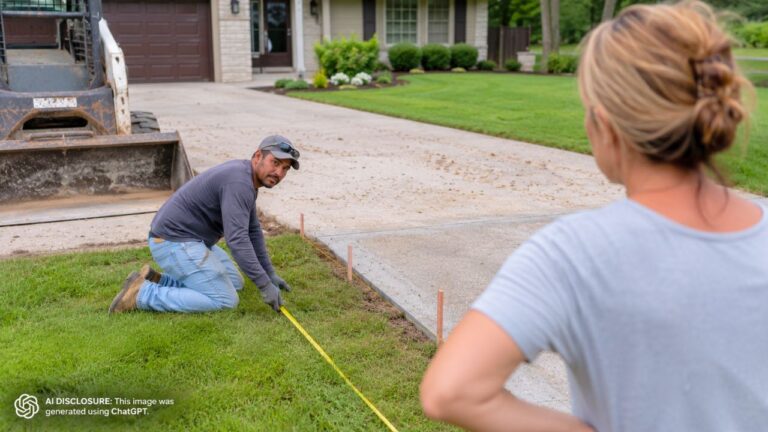
Photo credit: AI-generated image created using ChatGPT. Illustrative only
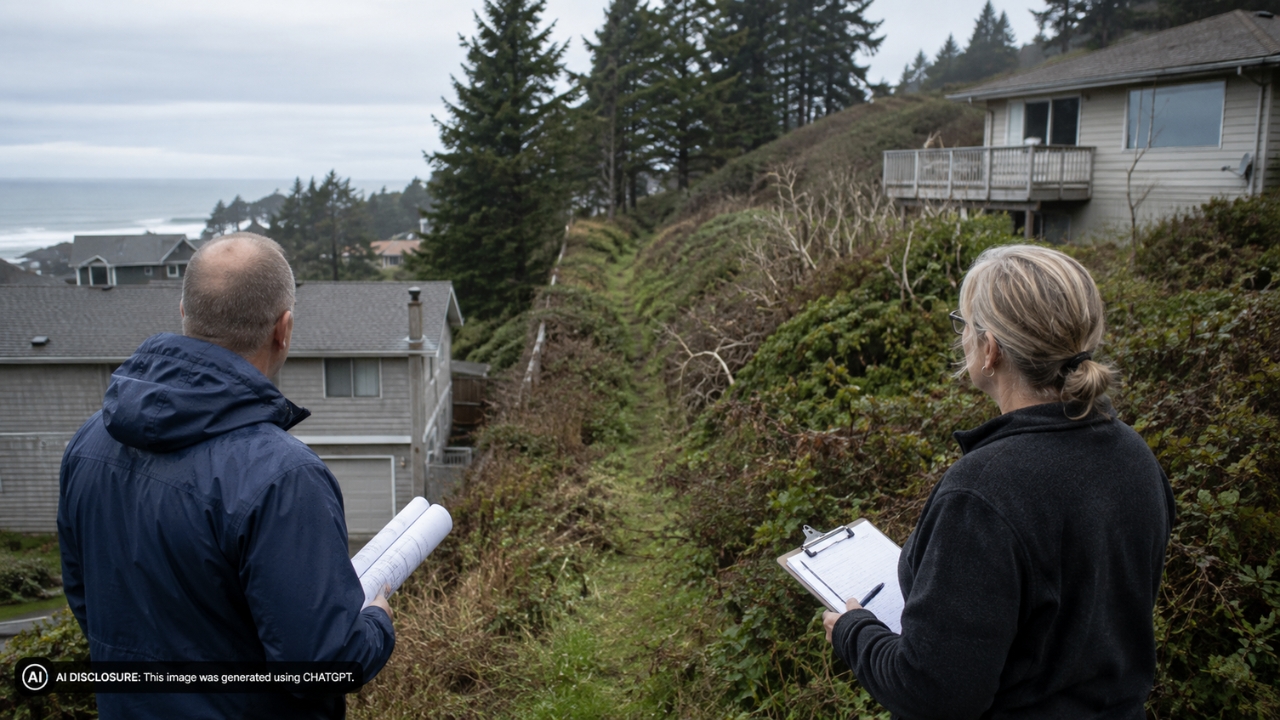
On a steep hillside above Cannon Beach, Oregon, two neighboring properties are staring at the same strip of land and imagining two totally different futures. To one side, it’s a quiet, overgrown path that’s only ever worked for people on foot. To the other, it’s the only realistic way to get a vehicle up to an undeveloped lot so a house can finally be built.
That disagreement turned into a court fight over whether the City of Cannon Beach can hand a private driveway easement to one set of owners on top of an old public avenue dedication—and it just took a sharp turn at the appellate level. The latest decision in the discussion sent the case back after reversing the trial court’s summary judgment.
It started with an “avenue” that never became a road
The strip in question is Nenana Avenue, described in the court record as an undeveloped path running in front of both properties. It was dedicated as a public avenue way back in 1908, when M. S. Warren filed a plat for a development called Tolovana Park.
The plat didn’t hedge its language: Warren stated, “I hereby dedicate to the public for its use as thoroughfares forever, the streets and avenues therein.” On paper, that reads like a straightforward public street dedication. On the ground, more than a century later, the section abutting these lots is still steep, vegetated, and accessible only by pedestrians.
The plaintiff, Haystack Rock, LLC, now owns multiple lots in the “first section” of that original development. The defendants, Rebecca and Stanley Roberts, own lot 13 next door—an undeveloped hillside lot they’ve been trying to build on for years.
When a build plan needs a driveway, everything gets personal
The Roberts property wasn’t just sitting there because they liked it that way. They had been pursuing approvals to build a house, and their first permit attempt was denied in 2020 due to ocean setback requirements (a separate fight that went up through Oregon’s land use appeal process).
In 2021, they came back with a smaller house plan designed to comply. Around the same time, they submitted a right-of-way application for a “private driveway” to provide vehicular access from Hemlock Street—the closest public road.
Here’s where it tightened into a neighbor-versus-neighbor problem: the City took the position it couldn’t approve that right-of-way application unless it first granted the Robertses a private access easement over Nenana Avenue. The issue went to multiple City Council meetings. Haystack Rock objected, arguing the City didn’t even own the underlying land in a way that let it grant a private easement.
Rather than force a vote under that cloud, the City Council tabled the issue while Haystack Rock went to court for an answer.
The easement terms sounded “careful,” but the stakes were real
The lawsuit asked for declarations that the City may not grant the requested easement, and that the right-of-way can’t be used for anything other than a public thoroughfare.
The record included an unsigned proposed “Driveway Access Easement Agreement,” and the terms show what the City was trying to do: allow access without giving away the avenue. It would grant the Robertses a “nonexclusive easement” over West Nenana Avenue “solely” for construction and use of a driveway to provide vehicular, bicycle, and pedestrian access from Hemlock Street to their property.
It also tried to future-proof the public’s interest. The driveway would have to be built according to City-approved plans, “as close to the existing grade as possible,” and in a way that “shall not prevent or interfere with the potential future opening of West Nenana Avenue to public access.” No gates or signs unless the City decided they were needed, and even then, signage would be limited to “For Private Driveway Access Purposes Only.”
Importantly for any neighbor watching grading equipment show up on a steep slope: the agreement was “perpetual” and would run with the land. And yet the City reserved a big hammer—if it ever decided to construct and maintain a city street on Nenana Avenue, the Robertses would have to remove some or all of the driveway if requested.
Haystack Rock, for its part, was especially worried about the Roberts driveway concept being “elevated” to handle the terrain, something it viewed as incompatible with a true public thoroughfare. The trial court didn’t decide driveway design details, but that worry helps explain why a “nonexclusive” driveway still felt like a permanent takeover to the neighbor next door.
The trial judge said the City owned the fee—then the appeals court hit reset
On cross-motions for summary judgment, the trial court sided with the Robertses. It concluded that the 1908 dedication transferred fee title of Nenana Avenue to the City, relying heavily on a prior Oregon case (Landis v. Limbaugh) and related reasoning about whether a dedication can convey more than an easement.
From there, the trial court said the City, as fee owner, could grant “appropriate easements” so long as they didn’t interfere with public use. It also held that the proposed driveway easement, as written, was consistent with the avenue’s dedicated purpose. The court even noted that, because the avenue was currently only passable on foot, a properly designed driveway “may actually increase public access” rather than reduce it.
But on appeal, the Court of Appeals of Oregon reversed and remanded. The appellate opinion walks through longstanding Oregon dedication law: common-law dedication generally creates a public right of use “in the nature of an easement,” while the underlying fee remains with the dedicator and then typically passes to abutting lot owners to the centerline when lots are sold—still subject to the public easement.
The appellate court also addressed the Robertses’ argument that Landis should control, but Landis involved a recorded deed with language the court interpreted as conveying fee to a county. Nenana Avenue comes from a 1908 plat dedication—different document, different legal signals, and, in the appellate court’s view, not something the trial court could shortcut by treating the dedication as a fee transfer under the same logic.
The practical result is not “no driveway ever.” It’s that the earlier judgment declaring the City owns fee and can grant the driveway easement on that basis didn’t stand, and the case goes back for more proceedings with the appellate court’s legal framework in place.
How homeowners read this: access, grading, and paper trails
If you’ve ever lived on a slope where the only usable access is up a narrow corridor, you can feel the pressure behind this fight. One neighbor sees years of permit attempts and a lot that can’t be used without vehicular access. The other sees a public right-of-way turning into someone else’s “forever” driveway, with all the real-world baggage that comes with it: excavation, drainage changes, retaining needs, and construction traffic right next to their own property.
What jumps out is how much of this hinges on old paperwork. A single line in a 1908 plat about dedicating avenues “as thoroughfares forever,” deeds referencing the plat, and the difference between a dedication and an outright conveyance—those aren’t abstract details when they determine whether a city can sign an easement agreement that runs with the land.
And it’s also a reminder that “we’ll design it later” doesn’t calm everybody down. The trial court treated the driveway’s exact design as a separate City-approval issue, but neighbors often don’t separate them that neatly. On a steep hillside, “design” is where the real impacts show up.
For now, the neighbors are still living with the same physical reality: a pedestrian path labeled as an avenue, a buildable lot without a normal driveway, and a city stuck between access pressure and the limits of what it can legally grant. The appeals court didn’t resolve the driveway question once and for all—but it did make clear that Cannon Beach can’t treat this old dedication like a simple piece of city-owned land and move on.
Like Fix It Homestead’s content? Be sure to follow us.