Homeowner Notices the Neighbor’s New Shed Built Right on the Property Line — Then He Blames a Drainage Ditch and Offers a Lowball Buyout
Photo credit: AI-generated image created using ChatGPT. Illustrative only.
You can live with a lot when it comes to neighbors—loud weekends, mismatched fences, the occasional questionable lawn ornament. But it’s hard to ignore a brand-new shed suddenly looming just a foot off your back fence, especially when it feels like it’s been planted to win a boundary argument before anyone even has the chance to have one.
That’s exactly what one homeowner described in the original post: a screened-in backyard with trees and a 6-foot fence, and then, out of nowhere, a 10×15 shed sitting so close it was basically part of the view from the deck. The neighbor’s explanation was drainage. The homeowner’s worry was the property line—and what a future survey might expose.
A backyard that already felt private—until it didn’t
The layout sounded pretty standard: two backyards meet, a fence marks the divide, and trees on both sides keep things from feeling too close. Even in winter, there was enough screening that day-to-day life stayed comfortably separate.
Then the homeowner’s youngest daughter delivered the kind of casual sentence that instantly raises your blood pressure: the neighbors put up a shed right up against the back fence. When he stepped onto the deck to look, he saw what she meant—an “ugly” 10×15 shed, about a foot off his fence line, suddenly dominating the space.
That’s the moment a lot of homeowners recognize: it’s not just about aesthetics. It’s about what it signals. If someone builds right up to a line, they’re either ignoring the rules, assuming you won’t push back, or trying to lock in a “this is how it is now” reality.
The neighbor’s explanation: slope, a ditch, and “no other place”
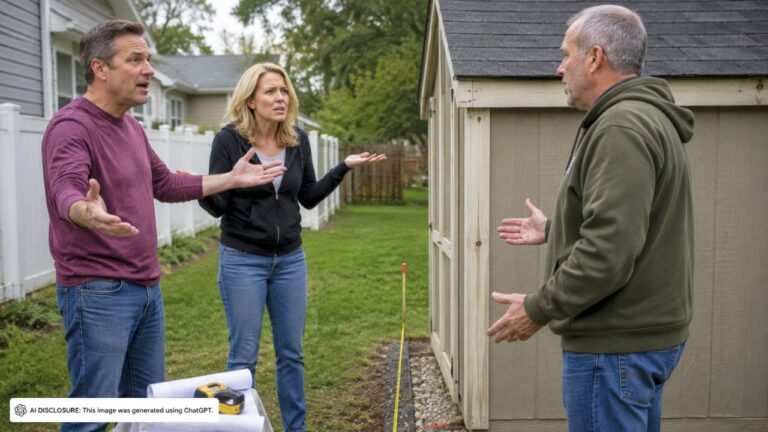
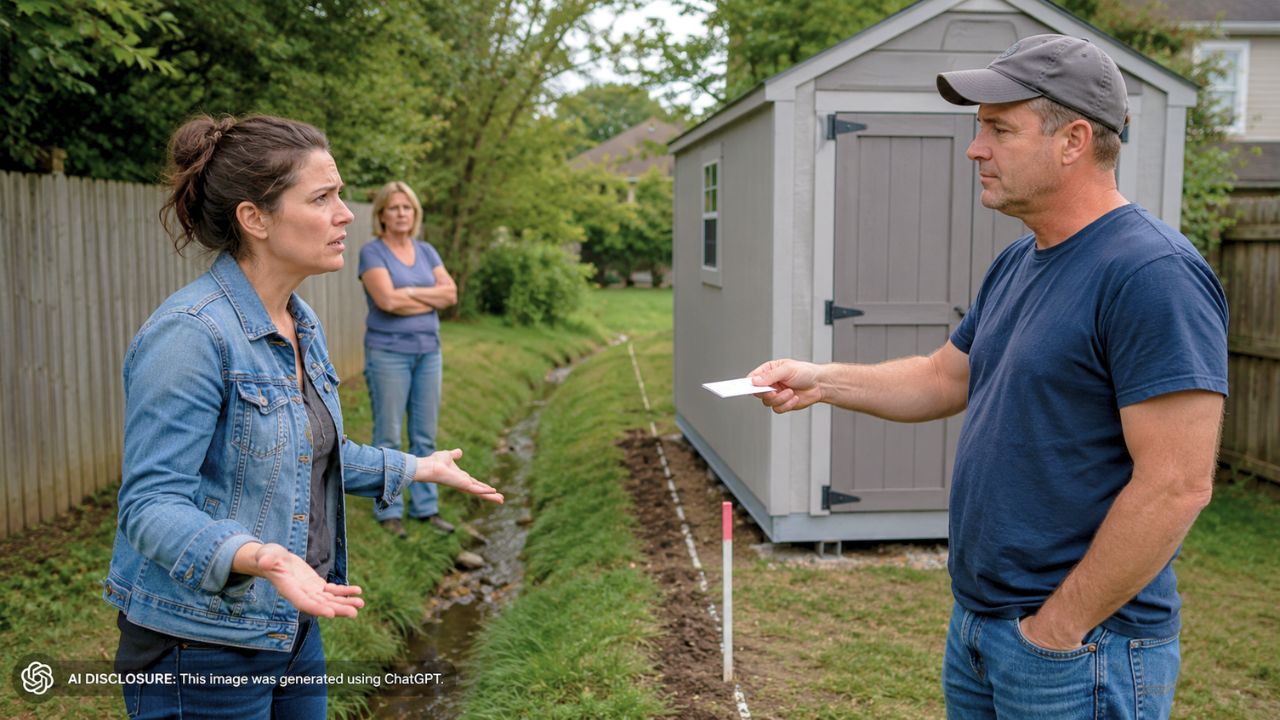
The homeowner called the neighbor and asked what was going on. The neighbor said he’d come over to talk. Face-to-face, the homeowner got straight to the point: the shed was right on the property line, and he believed it was supposed to be set back—something like 10 feet.
He also made a request that was pretty reasonable on its face: move it back so it wasn’t so in-your-face when they sat on their deck. He wasn’t just thinking about today’s annoyance, either. He worried that if they ever sold and a survey happened, the shed placement could turn into a problem that delays a sale or turns into a disclosure headache.
The neighbor’s defense was practical, at least on paper. He blamed the slope of his yard and a drainage ditch, insisting that this spot was the only place the shed could go. If you’ve lived around tricky grading or water flow, you know how often “drainage” gets used as the all-purpose excuse for doing something aggressive near a boundary.
The low offer that changed the mood instantly
Then the neighbor offered what he likely thought was a tidy fix: he’d buy a slice of the homeowner’s property to make the placement legitimate. The number he floated was $900.
That’s where the story stops being a quiet disagreement and becomes a hard negotiation. Because when someone builds first and offers to pay later, the dollar figure isn’t just a price—it’s a measure of how seriously they take the impact on you. And in this case, the homeowner’s wife was not impressed.
She’d known the neighbor a long time and already had a negative opinion of him. When she came outside, she jumped in immediately and reframed the whole conversation: if he wanted land to solve his shed problem, the price was $2,200—because that’s what the refrigerator model she wanted cost.
“Move it or pay up” becomes the real choice
The homeowner’s wife didn’t just name a higher number. She also laid out leverage. If the neighbor didn’t like the price, she could call zoning enforcement and let the shed placement become his problem through official channels—meaning potential orders to move it or fines until he complied.
And she added another detail that matters in real-world property line adjustments: he would pay for the surveying and for filing the property line adjustment. That’s not a small thing. Surveys cost money, and paperwork takes time. But if the neighbor was the one who created the problem by building where he shouldn’t have, it makes sense that he should bear the cost of making it right.
In the end, the neighbor agreed. The homeowner summed it up simply: that’s how his neighbor ended up buying his wife a brand-new, fancy refrigerator—because the shed was too close to the line and the neighbor wanted to legitimize it after the fact.
The practical stakes behind a “petty” win
It’s an entertaining outcome, sure, but the homeowner’s earlier worry is the part that will sound familiar to anyone who’s owned property for a while. Structures near (or on) a boundary can create a mess that shows up at the worst possible time: refinancing, selling, or dealing with storm damage when insurance starts asking questions.
A shed that’s in the wrong place isn’t just ugly. It can complicate fence repairs, limit access for maintenance, and set off years of minor disputes—especially if either side needs to replace the fence line, trim trees, or deal with drainage changes. And if a survey later shows an encroachment, it can become expensive and emotional fast.
The wife’s approach basically forced the issue into one of two lanes: either the neighbor moved the shed to comply with whatever setback applied, or he paid enough to make the new reality feel worth it, while also covering the documentation needed to keep it clean.
Reactions focused on value, leverage, and the cost of being “nice”
After the story gained attention, the homeowner added an update responding to people who assumed he sold the land too cheaply. He argued the opposite. Based on a nearby lot for sale and his own lot size, he estimated that the square footage he sold—96 square feet—could have been worth roughly $528 using that comparison.
Instead, he said he sold it for $2,200. In other words, the neighbor didn’t get a bargain; he paid a premium to avoid enforcement and to keep his shed where he’d already put it.
That’s the part homeowners tend to agree on in principle, even if they’d handle it differently: once a neighbor builds first and negotiates second, the “being nice” discount often disappears. The price isn’t just land. It’s the inconvenience, the view impact, the risk, and the fact that you’re now the one adjusting your property rights to clean up someone else’s choice.
In the end, the shed stayed, the paperwork got handled on the neighbor’s dime, and a shiny new refrigerator rolled into the homeowners’ kitchen. The backyard view still wasn’t improved, but the boundary problem got converted into something documented and paid for—without leaving the homeowners holding the bag the next time a surveyor’s stake hits the ground.
Like Fix It Homestead’s content? Be sure to follow us.