Homeowner Files an Affidavit Claiming Exclusive Possession of the Private Road to the Neighbors’ Back Gates — Then a Jury Disbelieves Her and Statutory Damages Follow
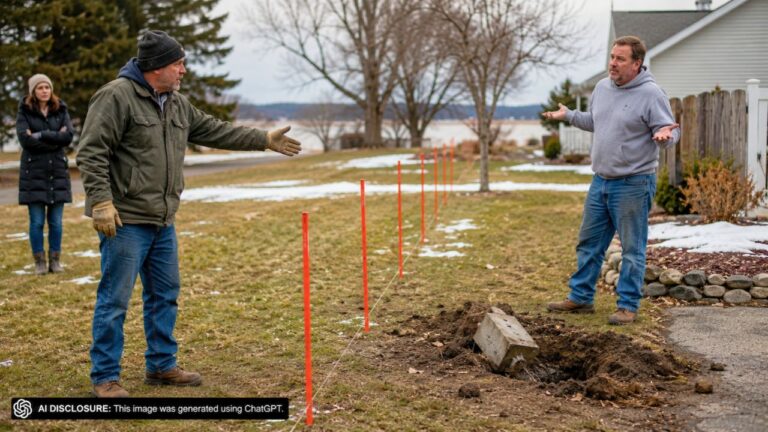
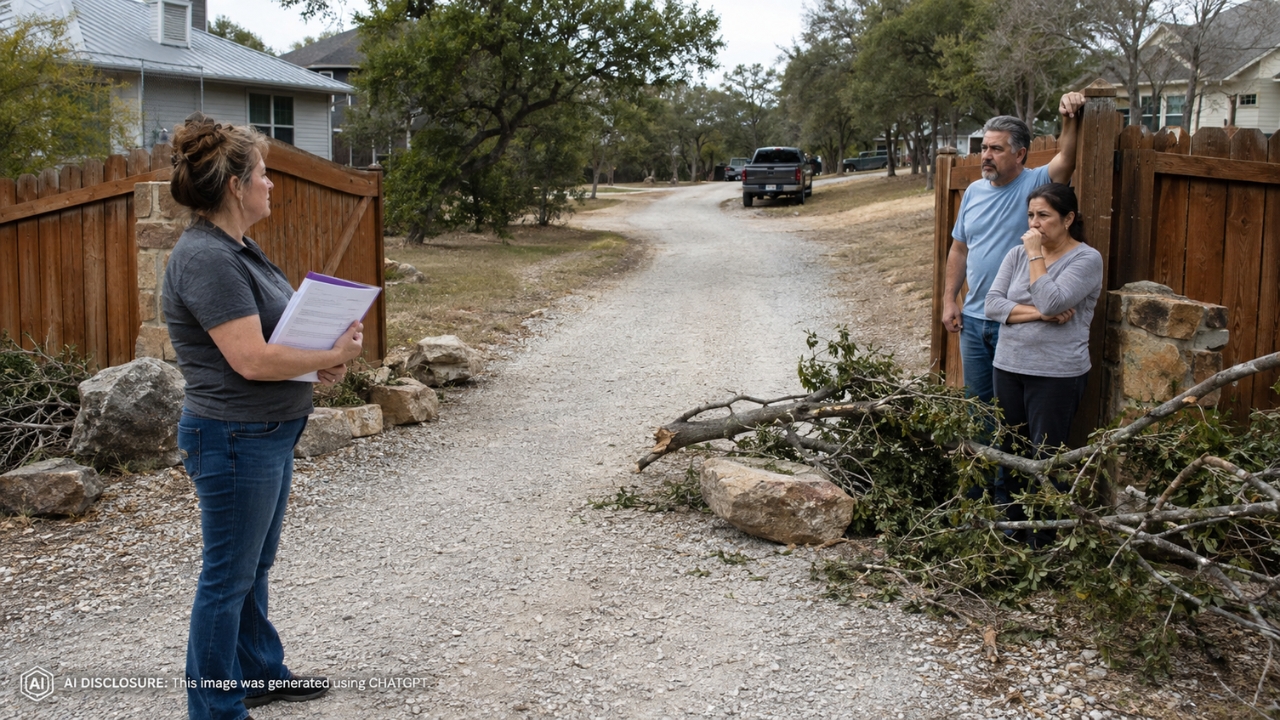
Photo credit: AI-generated image created using ChatGPT. Illustrative only
A private road can feel like a backyard extension—until it’s the only way you and your neighbors can get home. In a Stage Coach Hills Subdivision dispute in Bexar County, one homeowner recorded an affidavit claiming she alone owned the private road by adverse possession, and that paper move set off a chain reaction that ended in a jury verdict, statutory damages, and a big attorney-fee award.
The Texas Fourth Court of Appeals (San Antonio) later upheld the core judgment, with a small tweak to the post-judgment interest rate, in the court’s opinion. The case reads like a warning label for anyone tempted to “fix” an access dispute by filing something in the county records and hoping it sticks.
The “private road” wasn’t a side issue—it was the only way in
The road at the center of this fight runs in front of Deborah Morales’s property and the Walkers’ property, and behind the Gracians’ and the Flewellins’ properties. The key detail: the private road was the only access Morales and the Walkers had to reach their respective properties.
So this wasn’t an argument about a strip of dirt that no one uses. For the Walkers, losing the ability to use that road would affect daily life and, as the court noted, could dramatically affect property value.
That’s why the document Morales recorded on March 25, 2022—the Affidavit of Adverse Possession—hit like a hammer. In it, she asserted she was the sole owner of the private road by adverse possession, and said she’d exclusively occupied and used it since July 30, 2000.
Paper claims turned into “real world” blockades
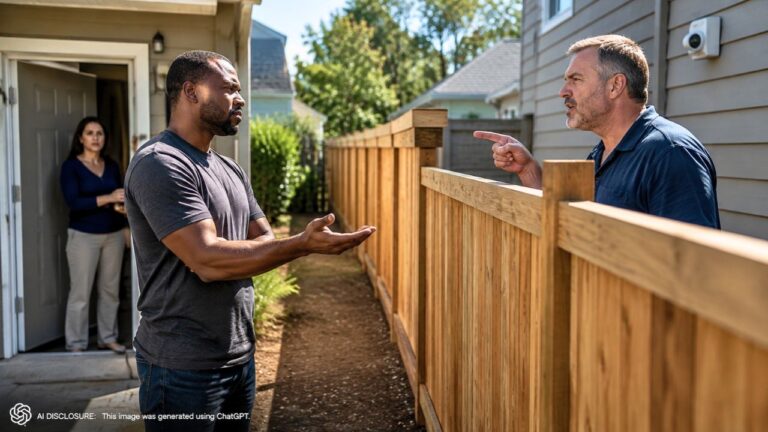
Once you strip away the legal terms, the neighbor version of events was blunt: they said Morales acted like she owned the whole road and started treating everyone else like trespassers.
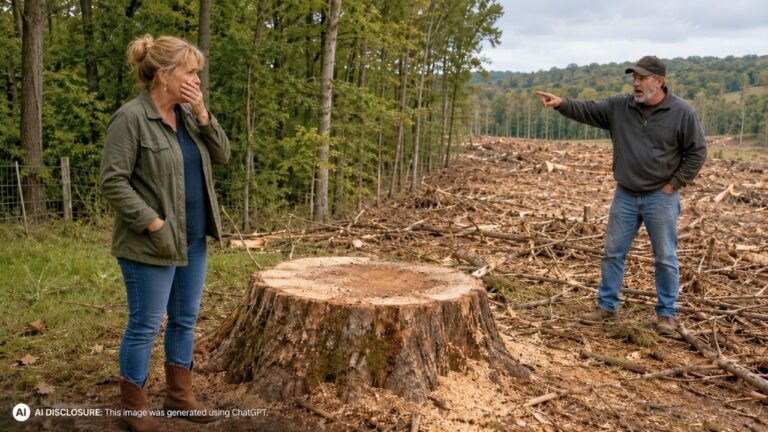
At trial, witnesses testified Morales tried to exclude others from using the entire private road by doing things that homeowners instantly recognize as escalation tactics. The testimony included claims that she cut down trees and placed large limbs in front of neighbors’ back gates, put large rocks in front of gates, posted written notices saying she had adversely possessed the road and others were prohibited from using it, and parked large vehicles to block access.
There was also testimony about heavy picnic tables being placed in front of back gates, and about a deputy sheriff being told Morales owned the road and no one else could use it. Morales denied these actions, but the jury got to decide who was credible—and they didn’t buy her version.
This is the part that turns a property disagreement into a daily stress test. When access is being blocked, it’s not just annoying. It affects moving trailers, getting deliveries, hauling materials, and even basic safety if emergency access is complicated.
Neighbors came armed with deeds, plats, and a title report
The Walkers’ side didn’t revolve around vibes or “we’ve always done it this way.” They brought receipts.
Kristy Walker testified the Walkers bought their property in September 2000 and had lived there continuously since their house was constructed in 2001. She said their warranty deed gave them the right to use the private road, subject to rights shown on a recorded subdivision plat (Volume 4960, page 225 in Bexar County plat records). Their deed and that plat were admitted into evidence.
Walker also testified Morales’s deed had the same kind of access language. That matters, because it undercuts the story that one owner had some unique, exclusive right everyone else lacked.
Then the Walkers went a step further: a title company researched ownership of the private road. Its report (also admitted into evidence) stated the road wasn’t dedicated to the public, and “no conveyance was found” out of the developer. The title company concluded the subdivision developer—Southwest Investors, Inc.—was the owner of the private road, even though the company had dissolved decades earlier.
It’s a very “real life property” moment: sometimes the entity that originally owned something is long gone, and that vacuum can tempt a nearby owner to claim the space as theirs. But vacancy in the paperwork isn’t the same thing as proof you exclusively possessed it.
The jury didn’t believe the “exclusive possession” story
For adverse possession claims, “exclusive” is a loaded word. If a bunch of neighbors have been using a road for years—openly—exclusive possession starts to look more like wishful thinking than reality.
The court recounted evidence that multiple neighbors used the private road: the Flewellins to reach their back gate and unload “wood and stuff,” the Gracians to access their property, and others in the neighborhood as well. Kristy Walker testified about a range of uses, from exercising a horse to dog training to kids’ science experiments.
There was also testimony suggesting Morales didn’t even live on the property until 2022. Walker testified Morales’s daughter lived there first, then a renter, and that the property sat vacant for several years. Photos were introduced showing the house in an uninhabitable condition prior to 2022, with extensive remodeling happening in early 2022. Morales was also impeached with evidence indicating she lived elsewhere before 2022.
In other words: even if Morales owned the house since 2000, the jury could still conclude she wasn’t continuously and exclusively occupying and controlling that road the way her affidavit claimed.
Filing the affidavit triggered statutory damages—even without “actual damages”
The neighbors sued on two tracks: a request for a declaration that Morales did not own the road, and a claim under Chapter 12 of the Texas Civil Practice and Remedies Code, which targets fraudulent liens or claims filed against property.
The jury found Morales liable under section 12.002 for filing a fraudulent affidavit in the deed records. The final judgment awarded $10,000 in statutory damages to each appellee. The Walkers were also awarded $105,462 in attorney’s fees through trial, plus court costs of $439.12 (the jury also awarded contingent appellate attorney’s fees, according to the opinion).
Morales argued on appeal that the evidence was legally insufficient to show she knew the document was fraudulent or intended harm. She also pointed out she revoked the affidavit on January 26, 2023 and waived any adverse possession claim. But the court noted neighbors kept going because they’d already incurred substantial fees and had no assurance a similar document wouldn’t be filed again.
Morales also argued the neighbors stipulated to having no actual damages and were seeking only statutory damages. The court’s response was basically: that’s allowed here. Chapter 12 provides statutory damages without requiring proof of actual damages.
The practical homeowner lesson people keep circling back to
When homeowners swap notes on fights like this, the “fix” people usually emphasize isn’t a bigger truck or heavier rocks—it’s documentation and restraint.
This case had the classic ingredients that make juries skeptical: sweeping claims of exclusivity in writing, evidence of multiple other users, and physical attempts (as testified to by neighbors) to block access. And because the affidavit was filed in official public records, the dispute moved from “arguing over a driveway” to “clouding title,” which is where statutory penalties and attorney’s fees start stacking up fast.
In the end, the court of appeals affirmed the judgment, modifying only the post-judgment interest rate to 7.75%. The road still existed, the neighbors still existed, and the paperwork—and the bill—became part of the property’s story. That’s the part that lingers in neighborhoods: once it’s in the records, it’s never really just between two people again.
Like Fix It Homestead’s content? Be sure to follow us.