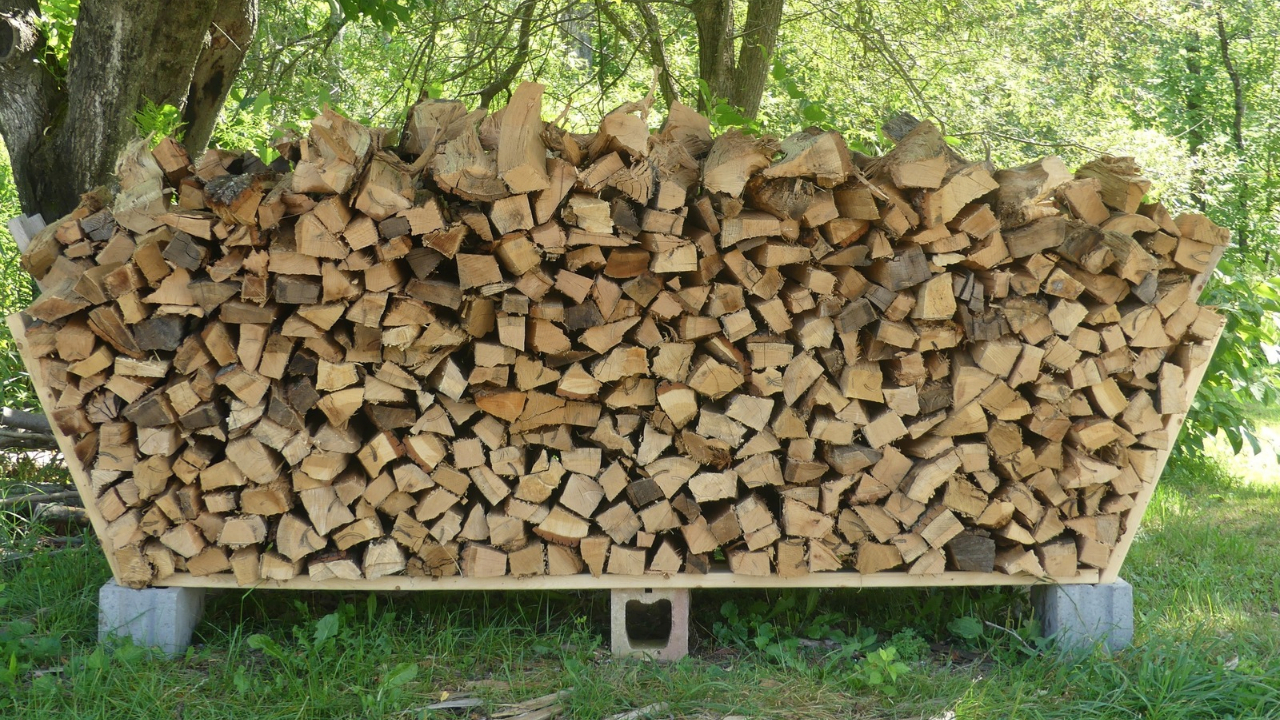
How to Season Firewood Fast: Split, Stack and Dry Wood Before Winter
Photo credit: Zohar Gal/Shutterstock.com
Fix It Homestead is reader-supported. If you buy through links in this article, we may earn a small commission at no extra cost to you. As an Amazon Associate we earn from qualifying purchases.
If you’re wondering how to season firewood fast, the short answer is this: split it small, stack it in single rows off the ground, put it where sun and wind hit it all day, and cover only the top. Do those four things and most lighter hardwoods and softwoods can drop from green to burnable in roughly six to nine months instead of a year or two.
It’s mid-October, so let’s be honest about the timeline. Wood you cut and split this week will not be ready for the first hard freeze, and in much of the country that freeze is weeks away, not months. What a good setup can still do is get your lighter species burnable by late winter and put you a full year ahead for next heating season. And if you already have wood that’s “sort of” dry, a few changes this weekend can finish it off.
What “Seasoned” Firewood Actually Means
Freshly cut (green) wood can be half water by weight. Burning it wastes a big chunk of the fire’s energy boiling that water off: a smoky, hissing fire, less heat, more creosote in your chimney.
Seasoned firewood is wood that has dried to roughly 20% moisture content or lower. University extension foresters commonly use that 20% line as the point where wood burns efficiently and cleanly. Many wood stove owners aim for 15–20%.
Signs your wood is getting there
- Ends show cracks (checks) radiating from the center
- Bark loosens or falls off easily
- Pieces feel noticeably lighter than a fresh split of the same size
- Two pieces knocked together make a hollow “clack” instead of a dull thud
- A fresh split face feels dry, not cool and damp
Those clues can fool you. The only reliable test is a moisture meter on a freshly split face.
How Long Does Firewood Take to Season?
Drying time depends mostly on species (density), split size, climate and how you stack. Dense woods hold water deep inside and release it slowly. Lighter woods give it up faster.
Here’s a rough guide for well-split wood stacked in the open with good airflow. Treat these as ballpark ranges, not promises. Humid or shady sites will run longer; dry, windy, sunny sites can run shorter.
| Wood Type | Density | Typical Seasoning Time |
|---|---|---|
| Pine, spruce, fir | Low | 6–9 months |
| Poplar, aspen, basswood | Low | 6–9 months |
| Soft maple, birch, cherry | Medium | 6–12 months |
| Ash | Medium-high | 6–12 months (starts out relatively dry) |
| Sugar maple, beech | High | 12–18 months |
| Red oak | High | 12–24 months |
| White oak, hickory, black locust | Very high | 18–24+ months |
The practical takeaway: burn the lighter species first this winter and let the oak, hickory and locust sit for next year.
Step 1: Split It Small (and Split It Now)
Round, unsplit logs barely dry. Bark holds moisture in, and water mostly leaves through cut ends and split faces. Splitting opens up far more surface area.
- Split as soon as possible after cutting. Every week wood sits in rounds is a week it isn’t drying well.
- Go smaller than you think. Pieces around 3–6 inches across dry much faster than 8-inch splits. Smaller splits also light easier and burn hotter in most stoves.
- Cut to length first. Shorter pieces (16 inches or less) dry faster than long ones because moisture has less distance to travel to the ends.
A good splitting maul makes this a lot less miserable if you’re doing it by hand.
The Fiskars IsoCore 8 lb. 36 in. Maul pairs a forged 8-pound head with a 36-inch composite handle built to soak up shock, which is what keeps the sting out of your hands and elbows over a long session. One shopping note: most US retailers have dropped the old “Pro IsoCore” wording, so match the manufacturer number 751110-1003 to be sure you have the same tool. If you’re facing a big pile of rounds rather than a few evenings of splitting, a hydraulic splitter is worth a look too.
See the Fiskars IsoCore 8 lb Maul on Amazon
Step 2: Stack for Airflow, Not for Looks
This is where most people lose months of drying time. A big heap or a tightly packed, double-deep row traps moisture in the middle.
Stack in single rows
Build rows one split deep, with the bark side up on the top layer if you can. Single rows let wind pass straight through the stack. If you must go two rows deep, leave a few inches of gap between them.
Get it off the ground
Wood sitting on dirt soaks up ground moisture and invites rot and insects. Use:
- A steel log rack
- Pallets
- Two parallel rails of old lumber, pipe or treated 4x4s
Even 4–6 inches of clearance makes a difference.
A note on timing: steel racks and rack covers thin out at farm stores once cold weather arrives, and the common 8-foot steel racks are already unavailable at some retailers. Pallets or two treated rails hold wood just as well, so don’t let a backordered rack stall your stacking.
Leave space between rows
Give your rows at least a foot or two of breathing room between them so air can move along the faces. Don’t stack against a solid wall or a fence where airflow dies.
Pick the sunniest, windiest spot
Sun heats the wood and wind carries the moisture away. An open, south-facing spot (in the Northern Hemisphere) with a clear breeze is ideal. A shady corner under trees can double your drying time.
Where not to stack
Keep your drying stacks away from the house. Firewood piles attract insects, mice and other critters, and you don’t want them next to your siding. See our guide on storing firewood to keep bugs away from the house for placement tips.
Step 3: Cover the Top Only
Covering firewood is a balancing act. Rain and snow soaking the pile slows drying, but wrapping it completely in a tarp traps humidity and can actually make things worse.
- Cover the top of the stack only, letting the cover hang down no more than a few inches on the sides.
- Leave the sides and ends open so air can move.
- Weight or strap the cover so wind doesn’t rip it off.
- A woodshed with open or slatted sides is the gold standard if you have one.
Some people leave brand-new green wood fully uncovered through its first summer to take advantage of sun and wind, then top-cover it before fall rains. If you can’t find a fitted rack cover, scrap metal roofing or a folded tarp over the top course does the same job. A purpose-made cover is easier to live with on a standard rack, because it is cut to hang a few inches down the sides and already has straps or grommets to tie off.
See the firewood rack cover on Amazon
Step 4: Speed It Up With a Solar Kiln or Other Tricks
If you want to push drying faster than open-air stacking allows, you have a few options.
Build a simple solar kiln
A solar firewood kiln is basically a small greenhouse for wood. The general idea:
- Build a frame (wood or metal) large enough for your stacked wood.
- Cover it with clear greenhouse film or polycarbonate panels.
- Put vents low on one side and high on the other so hot, moist air can escape and fresh air comes in.
- Stack split wood inside on pallets with gaps for airflow.
Inside, temperatures on a sunny day run well above outside air, which speeds drying. The vents are critical; without them you just build a sauna and the moisture has nowhere to go.
Other ways to help
- Use a greenhouse or hoop house during the off-season if you have one sitting empty.
- Bring a small batch indoors a week or two before burning to finish the outer layer. Keep it away from heat sources and watch for bugs.
- Buy kiln-dried wood for this winter if your own stash isn’t ready.
Step 5: Test Firewood Moisture Content With a Meter
Guessing is how people end up with a stovepipe full of creosote. A pin-type moisture meter is one of the cheapest tools in the woodshed and it takes the guesswork out of the whole job.
The General Tools MMD4E is the meter firewood guides point to most often, and it is still the pin-type version, with 0.3-inch pins that read inside the wood rather than skimming the surface. Two things to check when you shop: that you’re getting the pin-type MMD4E rather than a pinless surface meter, and that the kit comes with the pin cap and spare pins, since the pins are the part that eventually bends. A hold function helps too — it freezes the reading so you can pull the meter out of a stack and then look at the number.
See the General Tools MMD4E moisture meter on Amazon
How to test correctly
- Pick a piece from the middle of the stack, not the sunny top layer.
- Split it in half. Testing the outside or the ends gives a falsely low reading because those areas dry first.
- Push the pins into the fresh split face, near the center of the piece, going along the grain.
- Take readings from three or four pieces and average them.
- Test at room temperature if you can. Frozen wood throws readings off, so warm a piece indoors first on cold days.
Under 20%? Burn it. Between 20% and 25%? It’ll burn, but give it more time if you can. Above 25%? Keep it stacked.
Use the meter when you buy wood, too. Split a random piece before the load gets dumped — “seasoned” means different things to different sellers.
Common Firewood Seasoning Mistakes
- Leaving wood in rounds for months before splitting
- Stacking on bare ground where moisture wicks up
- Wrapping the whole pile in a tarp, trapping humidity
- Stacking in the shade or tight against a wall or fence
- Piling instead of stacking, which blocks airflow
- Measuring the outside of a split instead of a fresh inner face
- Assuming a year is always enough — dense oak and hickory often need more
Frequently Asked Questions
Can you season firewood in 3 months?
Only in ideal conditions with lighter species. Small splits of pine, poplar or soft maple in single rows through a hot, dry, windy summer can get close. Dense hardwoods like oak won’t, not without a kiln.
Should you cover firewood while it’s seasoning?
Cover the top, not the sides. A top cover keeps rain and snow off while leaving the sides open for airflow. Fully wrapping a stack in a tarp traps moisture and slows drying.
Does firewood season in the winter?
It does, just slowly. Cold air holds less moisture, and dry, windy winter days still pull water out of well-stacked wood. Drying picks up again in spring, so wood stacked in fall will be much further along by summer.
Is it better to season firewood split or in logs?
Split, every time. Bark slows moisture loss, and split faces let water escape far faster — often in a fraction of the time unsplit rounds take.
What moisture content should firewood be before burning?
Aim for 20% or lower, measured on a freshly split inner face. Many stove owners prefer 15–20%. Wood above 25% will smoke, burn cool and build creosote.
The Bottom Line on Seasoning Firewood Fast
Knowing how to season firewood fast comes down to a few basics you control: split early and small, stack single rows off the ground in full sun and wind, cover just the top, and test with a meter instead of guessing. Start what you can this week, burn your lightest, driest wood first this winter, and let the dense stuff sit. Do that and by next October you’ll be the one with a full, dry woodshed and nothing to worry about.