Best Log Splitter for Homeowners: Electric, Gas and Manual Picks for 2026
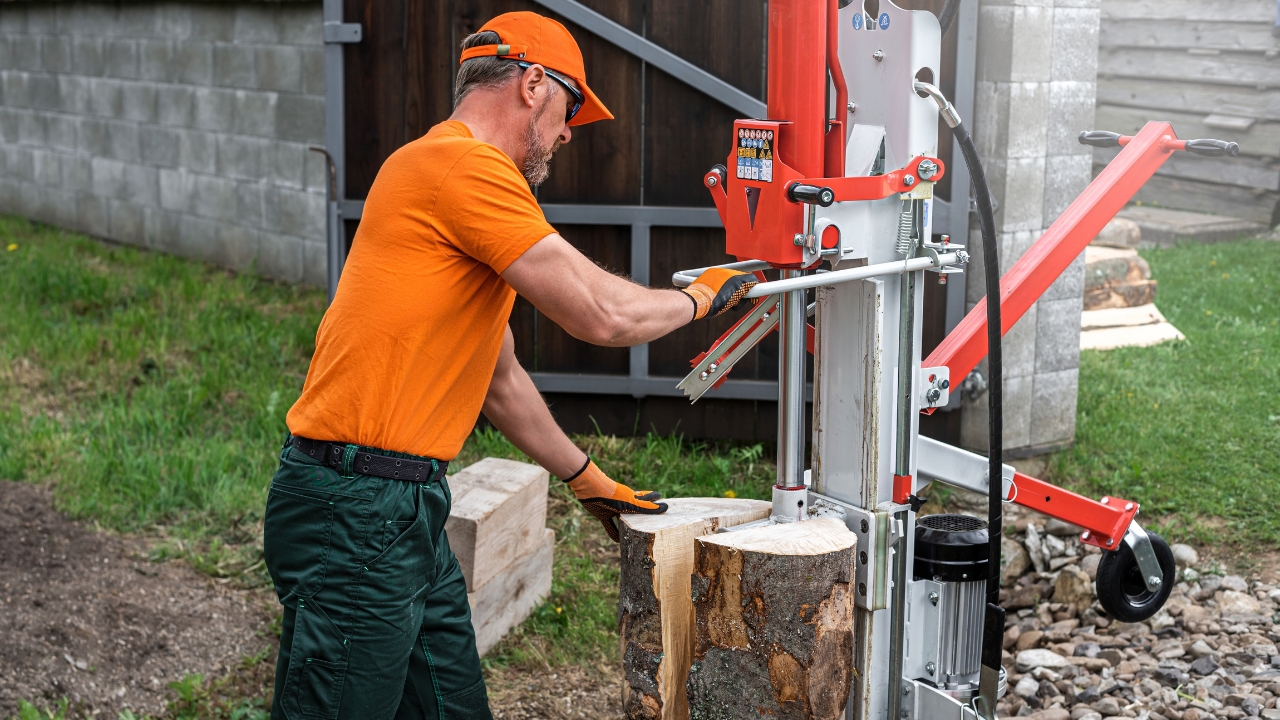
Photo credit: Sabrewolf/Shutterstock.com
Fix It Homestead is reader-supported. If you buy through links in this article, we may earn a small commission at no extra cost to you. As an Amazon Associate we earn from qualifying purchases.
The best log splitter for homeowners is usually a 6- to 10-ton electric model if you split a few cords a year of moderate-size wood close to an outlet. If you’re processing big, knotty oak rounds or working far from power, step up to a gas splitter in the 25-ton range. And if you only split a little, a manual hydraulic splitter or a good maul may be all you need.
This guide breaks down how to choose, what tonnage actually means, and six real, currently sold options spanning manual, electric and gas. We haven’t run these machines ourselves; picks are based on manufacturer specs, design and the kind of owner feedback that shows up consistently.
Quick Picks
Ordered by how you’ll use them, starting with no-power options and working up through the electrics to gas. Start with the row that matches your wood and your power situation, not the one at the top.
| Product | Best For | What Stands Out |
|---|---|---|
| Fiskars IsoCore 8 lb. 36 in. Maul | Small jobs, no power at all | Shock-absorbing 36-inch handle |
| Sun Joe LJ10M 10-Ton Manual Hydraulic | Splitting away from power | 10 tons with no motor to maintain |
| WEN 56208 6.5-Ton Electric | Entry-level electric | Comes with a 34-inch stand |
| Boss Industrial ES7T20 7-Ton Electric | Best overall electric for homeowners | 9-second forward stroke |
| Boss Industrial ED16T21 16-Ton Electric | Heavy-duty electric splitting | Splits both directions |
| Champion 100424 27-Ton Gas | Big rounds and large volume | Towable, horizontal or vertical |
Electric vs Gas vs Manual Log Splitters
Electric log splitters
Electric splitters plug into a standard household outlet, start instantly, and run quietly with no fumes. That makes them usable in a garage doorway or near neighbors.
Pros: Low maintenance, quiet, lightweight and budget-friendly. Cons: Usually 5–10 tons, slower cycle times, limited by cord reach. Most manufacturers say not to use long or light-gauge extension cords, so plan to work near an outlet. Larger models may need a 20-amp circuit.
Good fit if: You split up to a few cords a year of wood around 10–12 inches in diameter or smaller.
Gas log splitters
Gas splitters use small engines to run a hydraulic pump. They offer much more force and faster cycles, and you can tow many of them to wherever the wood is.
Pros: 20–35+ tons, fast, portable, handles big knotty rounds. Cons: Loud, heavier, need engine maintenance, sit at the premium end of the market, and need fuel stabilizer for storage.
Good fit if: You heat primarily with wood, process large hardwood rounds, or cut on acreage.
Manual and kinetic splitters
Manual hydraulic splitters use a pump handle; you work the lever and the ram pushes slowly. They’re quiet and need no power. Kinetic splitters (a separate category) use a spinning flywheel for very fast strikes and sit at the premium end of the homeowner market.
A splitting maul is the simplest option of all and still splits plenty of firewood for folks who burn occasionally.
How Many Tons Does Your Log Splitter Need?
Tonnage is the maximum force the ram pushes the log into the wedge. More isn’t always better; it needs to match your wood.
Here’s a general guideline many manufacturers and dealers use. Knots, crotches and twisted grain all require more force than the table suggests.
| Log Diameter | Softwood / Easy Hardwood | Dense or Knotty Hardwood (oak, elm, hickory) |
|---|---|---|
| Up to 6” | 4–5 tons | 5–6 tons |
| 6–12” | 5–7 tons | 8–10 tons |
| 12–18” | 10–16 tons | 16–20 tons |
| 18–24” | 16–20 tons | 20–27 tons |
| 24”+ | 20+ tons | 27+ tons |
Also check max log length. Most homeowner electrics take logs up to about 20.5 inches long, which covers standard 16-inch stove wood. Gas models often handle 24 inches.
Cycle Time Explained
Cycle time is how long the ram takes to extend fully and come back. A 20-second cycle against a 12-second one doesn’t sound like much, but over a few hundred splits it adds up to real hours.
- Electric: often 13–20 seconds
- Gas: often 10–14 seconds
- Manual hydraulic: depends on how fast you pump
Many splitters have auto-return, so you need not hold a lever to retract the ram — a nice feature for tired arms.
Horizontal vs Vertical Log Splitters
- Horizontal: Logs lie on a beam at waist height. You lift each round onto the machine. Most electrics work this way. Fine for pieces you can lift comfortably.
- Vertical: The round stands upright on the ground or a foot plate, and the wedge comes down. You roll heavy rounds into place instead of lifting. Great for big, heavy wood.
- Horizontal/vertical convertible: Most gas models in the 20+ ton range switch between both, which is the most flexible setup.
The Best Log Splitters for Homeowners
1. Fiskars IsoCore 8 lb. 36 in. Maul — Simplest Option, No Power Needed
Sometimes the best log splitter is the one you swing. The Fiskars IsoCore 8 lb. 36 in. Maul has a forged 8-pound head and a 36-inch handle built to absorb shock, which is what saves your hands and elbows over a long session. Note the naming: most US retailers have dropped the old “Pro IsoCore” label and now list it as the 8 lb. 36 in. maul or the IsoCore maul, so match the manufacturer number 751110-1003 to be sure. For kindling, straight-grained rounds and a cord or less a year, nothing else here is simpler to store or quicker to pick up.
See the Fiskars IsoCore 8 lb Maul on Amazon
Best for: Light splitting, backup tool, and anyone with no power at the woodpile. Keep in mind: Your back and shoulders are the motor, and knotty or crotched rounds will beat you.
2. Sun Joe LJ10M 10-Ton Manual Hydraulic Log Splitter — Best Away From Power
The Sun Joe LJ10M has no motor at all. You pump dual-speed handles and the hydraulic ram does the heavy work. Sun Joe lists 10 tons of force, logs up to 18 inches long and 8 inches in diameter, and an 87-pound steel build with wheels.
See the Sun Joe LJ10M on Amazon
Pick this one for where and how you split rather than as a way to save money. It goes wherever you can wheel it, makes no noise, needs no cord, and there’s no engine to service or winterize at the end of the season — you check the hydraulic fluid and that’s about it. It also stores in a corner of the shed without fuel in it.
Best for: Small volumes, remote spots with no power, or folks who want quiet. Keep in mind: It’s slow compared to powered splitters, sized for smaller logs, and the pumping is real work on a big pile.
3. WEN 56208 6.5-Ton Electric Log Splitter with Stand — Best Entry-Level Electric
The WEN 56208 6.5-ton electric is the entry point into powered splitting and the easiest way to stop swinging a maul. It runs on a 15-amp motor and, per WEN, takes logs up to 10 inches in diameter and 20.5 inches long with a 20-second cycle time. The included 34-inch stand raises the work to a more comfortable height, and you can remove it if you prefer to work at ground level.
See the WEN 56208 electric log splitter on Amazon
Best for: Smaller splits, softer woods, and occasional wood burners. Keep in mind: Tough, knotty oak rounds will push the limits of 6.5 tons, and a 20-second cycle feels long once you’ve used a faster machine.
4. Boss Industrial ES7T20 7-Ton Electric Log Splitter — Best Overall Electric
The Boss Industrial ES7T20 stands out for its speed. The manufacturer lists a 9-second forward stroke and 6-second return, a 2 hp, 13.5-amp motor, 20.5-inch max log length, full-beam construction and automatic ram return. At about 128 pounds, it’s still easy to move around.
See the Boss Industrial ES7T20 on Amazon
Against the entry-level electrics you’re buying cycle speed, not tonnage — half a ton more force, but a stroke roughly twice as fast. Over a few hundred splits that is the difference between an afternoon and a whole Saturday.
Best for: Homeowners who split a few cords a year and want a faster electric. Keep in mind: Still a mid-size machine, so it is sized for stove wood rather than 20-inch oak rounds.
5. Boss Industrial ED16T21 16-Ton Electric Log Splitter — Best Heavy-Duty Electric
If you want gas-like force without an engine, the Boss Industrial ED16T21 is the kind of machine to look at. Boss lists 16 tons, a 2.5 hp motor, 20.5-inch max log length and a 13-second cycle. Its dual-action design splits on both the forward and return strokes, so you’re not wasting half the cycle. It comes with a built-in stand and weighs about 304 pounds.
See the Boss Industrial ED16T21 on Amazon
Best for: Serious wood burners who work near power and want quiet operation. Keep in mind: It requires a 20-amp circuit, it sits at the premium end of the electric market, and at 304 pounds it is not something you wheel across the yard casually.
6. Champion 100424 27-Ton Gas Log Splitter — Best for Big Rounds
The Champion 100424 27-ton splitter runs on a 224cc Champion engine with an 11-second cycle time and auto-return, according to the manufacturer. It converts between horizontal and vertical, takes logs up to 24 inches long and up to 100 pounds, and includes log catchers. It’s towable (rated up to 45 mph) on 16-inch pneumatic tires.
See the Champion 100424 log splitter on Amazon
Best for: Heating your home with wood, large knotty hardwoods, and splitting where the wood falls. Keep in mind: At roughly 434 pounds, it needs storage space and regular engine care. Champion also sells other 27-ton splitters, including newer model numbers in the same size class, so check that the listing you’re buying from actually says 100424 before you assume you’re getting this machine.
Log Splitter Safety Tips
Log splitters are simple machines, but they can crush fingers and hands in an instant. Always read the manual for your specific model.
- One operator only. Only one person should load and run the machine. Keep kids, pets and helpers well back.
- Hands off the log once the ram moves. Never hold or steady a log during the stroke.
- Wear safety glasses, gloves and steel-toe boots. Wood chips and pieces can fly.
- Work on level ground and chock towable models.
- Never check hydraulic leaks with your hand. High-pressure fluid can penetrate skin; use cardboard and get medical help immediately if you’re injected.
- Run gas splitters outdoors only. Engine exhaust contains carbon monoxide.
- Use a GFCI outlet for electrics and follow the manufacturer’s extension cord guidance, if any.
- Don’t split two logs stacked on top of each other.
Frequently Asked Questions
What size log splitter do I need for home use?
Most homeowners do fine with a 6- to 10-ton electric splitter for logs up to about 10–12 inches. If you regularly split oak, elm or knotty rounds over 12 inches, look at 16- to 27-ton models.
Is an electric log splitter worth it?
For moderate firewood needs, yes. Electric splitters are quiet, low-maintenance and sit at the budget end of the market. They’re less suited to very large rounds or remote areas without power.
Is a 5-ton log splitter enough?
A 5-ton splitter handles small, straight-grained rounds. It struggles with big, knotty or twisted wood, so most homeowners are better served by at least 6–7 tons.
How many cords can you split in a day with a log splitter?
It varies with wood size, species, cycle time and how many people are loading and stacking. A fast gas splitter with a helper will outpace a small electric used alone.
Can I use an extension cord with an electric log splitter?
Check your manual. Many manufacturers discourage extension cords or require a short, heavy-gauge cord, because voltage drop can damage the motor.
Which Is the Best Log Splitter for Homeowners?
For most people, the best log splitter for homeowners is a quality 7-ton electric like the Boss Industrial ES7T20, or the WEN 56208 if budget comes first. Heavy wood burners with big oak should look at the Champion 27-ton gas model. Match tonnage to your biggest, knottiest rounds, think about where you’ll work, and get your splitting done this month so the wood has a full season to dry before next winter.