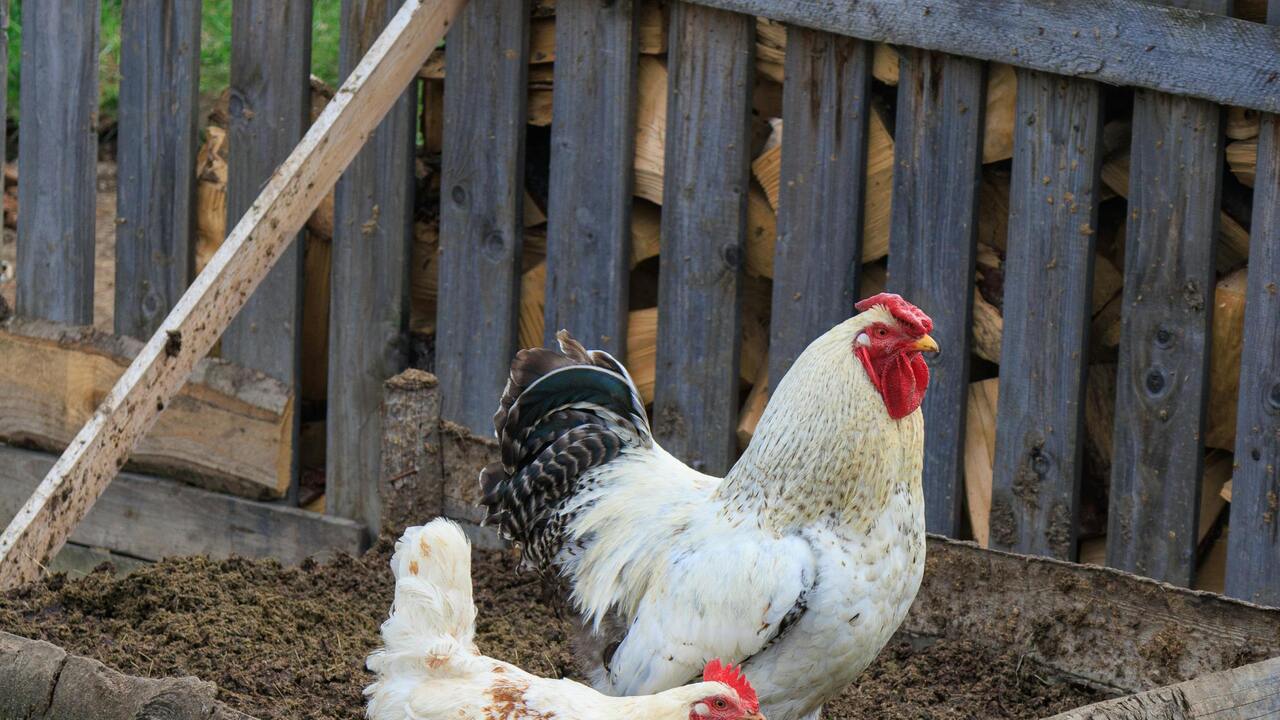
Do Chickens Need Heat in Winter? What Actually Keeps a Flock Safe
Photo credit: Ábrahám Szilárd/Pexels.com
Fix It Homestead is reader-supported. If you buy through links in this article, we may earn a small commission at no extra cost to you. As an Amazon Associate we earn from qualifying purchases.
Do chickens need heat in winter? For a healthy, fully feathered flock of cold-hardy breeds in a dry, draft-free, well-ventilated coop, the answer is almost always no. The heat lamp most people reach for in late October is a bigger threat to that flock than cold ever was, because heat lamps burn coops down.
The guidance is not unanimous. University of Maine Cooperative Extension is blunt: “Chickens do not need a heat source in the winter,” professor Donna Coffin told the Bangor Daily News. “As long as they are acclimated, in a draft-free shelter and have dry bedding, they will be fine.” University of Minnesota Extension and the University of Arkansas Division of Agriculture advise supplemental heat below 35°F, but that is a comfort threshold, not a survival one.
Why Chickens Handle Cold Better Than You Expect
Your birds wear the best winter coat on the property. Under the outer feathers sits a layer of down, which traps still air against the skin. Air conducts heat poorly, so that layer is the insulation. When a hen puffs up she is not shivering. She is lifting her feathers to thicken it.
She roosts shoulder to shoulder, losing heat on one side only. She squats so her breast feathers cover her feet, which is why a wide flat roost beats a round dowel. And she tucks her head into her shoulder feathers to shelter her face. University of Minnesota Extension puts a chicken’s body temperature at 106°F. Your job is to stop stealing that heat.
Moisture and Draft Are the Real Enemies, Not Cold
Chickens release a lot of water vapor. They breathe it out, they splash the drinker, and their droppings are mostly water: Minnesota Extension puts manure at roughly 70% water. Seal the coop tight to keep the heat in and all of that stays inside. Warm wet air hits a cold wall, condenses, and soaks the bedding and the birds’ combs.
Wet cold causes frostbite. Dry cold mostly does not. Ohio State University Extension says it plainly in fact sheet ANR-66, by Extension educators Sabrina Schirtzinger and Tim McDermott, DVM: “humid air creates more frostbite risk than drier air.” Dr. Jacquie Jacob of the University of Kentucky adds that frostbite is likeliest at night “in a cold, poorly ventilated coop with damp bedding.”
Ventilation goes high, above the birds’ heads. Soffit vents, a ridge or gable vent, a leeward window cracked behind hardware cloth. Warm wet air rises and leaves all night. A coop can be far more open than most keepers are comfortable with and still be right.
Drafts get blocked at roost height. A draft is air moving across sleeping birds, stripping off the layer they built. Find those gaps with a wet hand or tissue paper, the test UMaine’s Bulletin #2217 recommends, and close them. Condensation on the windows at dawn, or an ammonia smell when you open the door, means you need more ventilation up top.
The ThermoPro TP60S keeps the sensor in the coop and the display in the house, which turns humidity from a guess into a number. The gear named here is picked from manufacturer specs and owner feedback, not hands-on testing. Cons: the sensor eats batteries in deep cold.
See the ThermoPro TP60S wireless thermometer hygrometer on Amazon
Read next: How To Winterize A Chicken Coop
The Heat Lamp Problem
Heat lamps burn coops down. This is not theoretical. Greg Day of the Office of the Maine Fire Marshal told the Bangor Daily News that heat lamps, extension cords, bedding and water heaters are the leading causes of coop fires, and that heat lamps are the worst of the four. A 2020 coop fire in Clifton, Maine was most likely started by a newly installed heat lamp and killed six birds. Coffin’s verdict: “using that 500-degree bulb and a heat lamp is just asking for trouble.”
A second problem gets less attention. A flock in a heated coop never fully acclimates and never builds the same down layer, so it has no cold tolerance banked. When the power fails at 2 a.m. on the coldest night of the year, those birds drop to below zero with no adaptation. An unheated flock just has another cold night.
If You Do Add Heat, Add It Safely
Use a flat radiant panel, not a bulb. The Cozy Products Cozy Coop panel is the common one: a thin ETL-listed panel that mounts flat to a coop wall, sold in 150-watt and 200-watt versions, with no bulb to break. Coffin backs the approach: “These radiate low temperature heat and are mounted on the walls so the chickens can go toward them if they want.” The bird chooses. Cons: it will not warm a whole coop, and the in-cord switch is a weak point in a dusty coop.
See the Cozy Coop flat panel chicken coop heater on Amazon
Mount it to framing, never to bedding, and never let it hang by its cord, which Minnesota Extension warns against outright. Keep wires away from birds, water and litter. Run power in through conduit on its own circuit, wired by an electrician. No extension cords, no space heaters.
A thermostatically controlled outlet stops a heater running when nothing needs it. The Thermo Cube TC-3 switches on at 35°F and off at 45°F, as UMaine’s bulletin suggests. Cons: the switch points are fixed.
See the Thermo Cube TC-3 thermostatically controlled outlet on Amazon
For chicks, a brooder plate such as Brinsea’s EcoGlow Safety 600 replaces a lamp entirely, warming by contact the way a hen does.
The Genuine Exceptions
A flat “never heat a coop” is as wrong as “always heat it.” These birds need more:
- Chicks and young birds not fully feathered. They cannot thermoregulate yet.
- Sick, injured or recovering birds. No spare calories for staying warm. Warm, dry, quiet, separate.
- Very old birds. Thinner feathering, less muscle, last to the roost.
- Large single-combed Mediterranean breeds in deep cold. More exposed tissue to lose.
- A bird molting late in the season. Genuinely underdressed, and she needs feed as much as warmth.
- Cold snaps well outside your local normal. A Texas flock at 5°F is in a different fix than a Minnesota flock.
- A flock already acclimated to heat, midwinter. Do not pull the panel in January. Wean them off as the weather moderates.
Breed and Comb Type Matter
Comb and wattle tissue is bare and poorly insulated, so the more of it a bird carries, the more it can lose. Rose, pea and cushion combs sit low. Large single combs stand up and catch the cold. The Livestock Conservancy makes the link in its Chantecler profile: “The small comb and wattles allow the breed to withstand cold winters without the worry of frostbite.”
Winter well: Minnesota Extension names Plymouth Rock, Wyandotte, Ameraucana and Orpington as heavier breeds that over-winter well. Add Chantecler, Dominique, Brahma and Buckeye, all compact-combed.
Struggle in deep cold: big single-combed Mediterranean birds. The Livestock Conservancy says the Minorca thrives in heat but does worse in cold and is prone to frostbite. Leghorns are the backyard version. So are roosters of nearly any breed, which Dr. Jacob puts down to their larger combs and wattles.
5 Things That Help More Than a Heater
-
Liquid water all day. A frozen waterer is a bigger daily threat than cold air. UMaine’s bulletin warns birds suffer without water for more than 10 hours, and Minnesota Extension notes that without water chickens stop eating. The Farm Innovators HP125 steel base draws 125 watts and is listed as keeping water thawed to 10°F, which is also its limit. Cons: fits double-wall metal founts only.
See the Farm Innovators heated poultry waterer base on Amazon
Read next: Best Heated Chicken Waterer
-
Deep litter, kept dry. Four to eight inches of pine shavings, stirred and top-dressed rather than stripped out. Dr. Jacob writes that flocks do well at sub-zero temperatures on deep litter with an in-bucket water warmer. The catch, per Ohio State, is that deep bedding can raise humidity, so turn it daily. Sweet PDZ Coop Refresher is the common zeolite conditioner, which Standlee says captures ammonia and absorbs moisture. Cons: dusty, and no substitute for airflow.
-
Wide, flat wooden roosts. A 2×4 laid flat lets a hen cover her own feet. Both services warn against metal and plastic, which hold cold.
-
A full feeder and scratch before dark. Cold can raise feed intake by as much as 25%, per Minnesota Extension. A handful per ten birds on the litter at dusk gives them something to digest overnight.
-
Petroleum jelly on large combs, with a caveat. UMaine suggests it for small flocks, Dr. Jacob says it helps only against mild freezing, and Minnesota Extension says flatly that it does not treat frostbite. Opinions differ.
Frostbite: What to Look For
Frostbite shows up on comb tips, wattle edges and toes. Tissue goes pale or gray, then black and brittle. Dr. Jacob explains that freezing cuts the blood supply and kills the tissue, which dries, falls off and does not grow back. Swelling, redness, discharge or a foul smell mean infection.
Warm the bird slowly in a dry place. No hair dryer, no heat lamp, no rubbing, no popping blisters, and do not trim blackened tissue, which Dr. Jacob notes protects the comb underneath.
A seriously frostbitten bird, or any bird showing infection, is a veterinary question and not a home-remedy one. Ohio State and Minnesota Extension both say to call a vet. Dr. Jacob warns that oral pain medications are not needed and that some are lethal to chickens.
Signs Your Flock Is Actually Too Cold
Normal: puffed up like a tennis ball. Standing on one foot with the other tucked into the breast feathers. Huddled on the roost at night. Laying less. A grumpy, fluffed-up hen who is still foraging and drinking is fine.
Not normal: huddled in a corner off the roost at midday. Not eating or drinking. Lethargic, eyes closed, shivering, unbothered when you walk in. A comb gone pale or dark in patches. Rattling breathing, which points at humidity and ammonia rather than cold. A bird that has stopped doing chicken things needs to come inside.
Frequently Asked Questions
How cold is too cold for chickens?
There is no single number. A healthy, acclimated, cold-hardy flock in a dry, draft-free, well-ventilated coop handles sub-zero nights, and Dr. Jacob of the University of Kentucky says as much. The 35°F figure from Minnesota and Arkansas Extension is about comfort, not survival.
Will my chickens stop laying if I don’t heat the coop?
Partly, probably, and that is daylight more than temperature. UMaine’s bulletin says hens slow production below 55°F and recommends 14 to 16 hours of light a day. A timer and a low-wattage bulb will do more for eggs than a heater.
Is it bad to turn the heat off once I’ve started?
Yes, if you do it abruptly in midwinter. Birds used to a heated coop have not built the same cold tolerance, so pulling the heat drops them into conditions they are not ready for.
Do chickens need a heated coop in the South?
Usually no, but an unusual cold snap hits a southern flock harder than the same temperature does up north, because neither birds nor coop are built for it.
Can I use a heat lamp if I secure it really well?
Plenty of people do without incident, but the Maine Fire Marshal’s office names heat lamps the worst cause of coop fires, and a flat panel gives most of the benefit for a fraction of the risk. If you must, hang it on chain, never a clamp.
What to Do This Week
Go out after dark tonight, once the birds are up and the coop has been shut a while. Put your hand at roost height and feel for moving air. Then look up and ask whether the warm wet air has anywhere to go.
Then sort the water, add bedding depth, swap round or metal roosts for a flat 2×4, and put a hygrometer where you will read it. Leave the heat lamp in the box. If a cold snap, a late molt or a sick bird makes you want heat later, buy a panel then and mount it properly. Your flock is better dressed for this than you are.