Best Chainsaw for Firewood: 7 Homeowner Picks From Battery to Gas
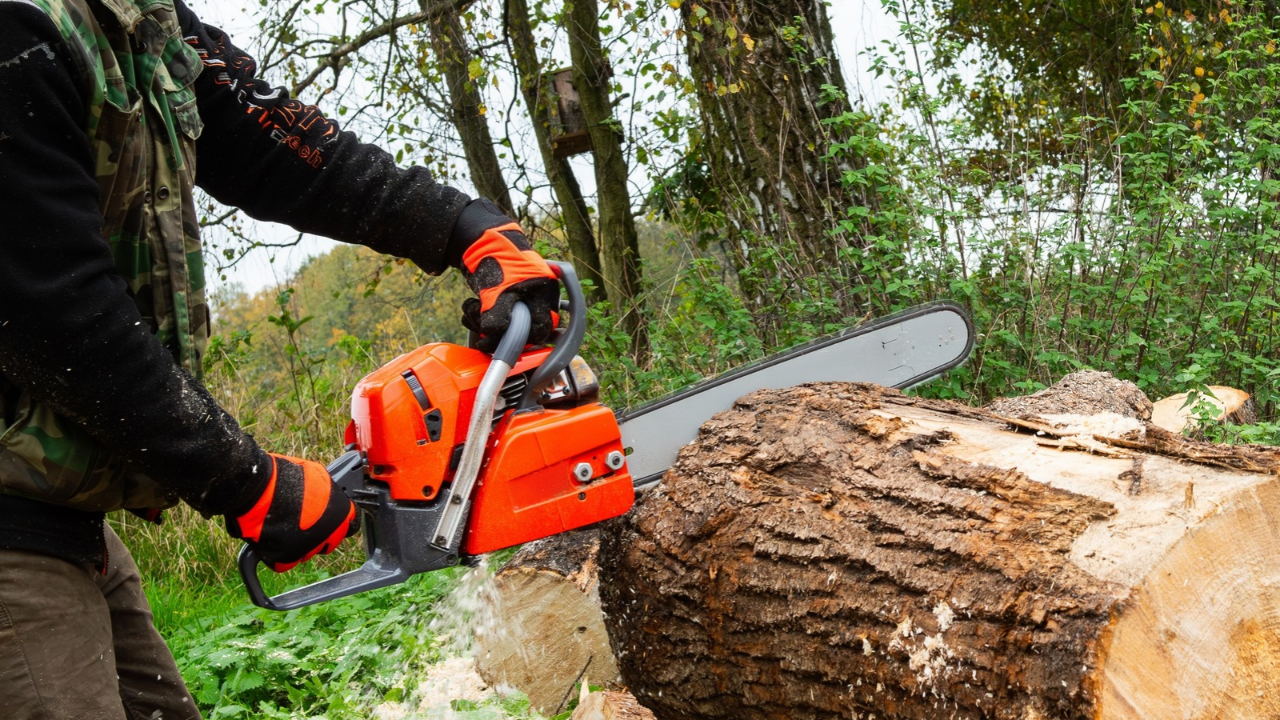
Photo credit: Petr Bonek/Shutterstock.com
Fix It Homestead is reader-supported. If you buy through links in this article, we may earn a small commission at no extra cost to you. As an Amazon Associate we earn from qualifying purchases.
For anyone cutting a few cords a year for their own stove, the best chainsaw for firewood is a 40 to 50 cc gas saw with a 16 or 18 inch bar, or a current 56V-and-up battery saw if the wood is already on the ground near the house. You do not need a professional felling saw, and the cheapest thing on the big-box rack will be dead in three seasons. These picks come from manufacturer specs and owner feedback, not hands-on testing.
Quick Picks
| Saw | Type | Bar | What stands out |
|---|---|---|---|
| ECHO CS-4010 | Gas, 41.6 cc | 18” | Best overall, five-year warranty |
| STIHL MS 271 FARM BOSS | Gas, 3.1 cu in | 18” or 20” | Buy-it-once saw |
| Husqvarna 450S Rancher | Gas, 50.2 cc | 20” | Farm Boss class, sold online |
| Husqvarna 435 | Gas, 40.9 cc | 16” | Lightest gas pick |
| EGO POWER+ CS1804 | Battery, 56V | 18” | Easiest to live with |
| STIHL MSA 70 C-B Set | Battery, AK | 12” | Grab-and-go limbing |
| RYOBI 40V HP RY40580 | Battery, 40V | 18” | Honest budget pick |
Sizing the Saw: The Only Rule That Works
Your bar should comfortably exceed the diameter of most of what you cut. Not the biggest thing you will ever cut. Most.
If your wood is mainly 10 to 14 inch rounds with an occasional 20 inch butt log, a 16 or 18 inch bar is right. You can take a 24 inch round with an 18 inch bar by working both sides.
The classes that matter:
- 30 to 40 cc: limbing, brush, rounds up to about 8 inches. A second saw, not a firewood saw.
- 40 to 46 cc: the real homeowner firewood class. Light enough to hold all afternoon, torque enough to buck hardwood. Two or three cords a year, this is you.
- 50 to 60 cc: the workhorse class. Faster through oak and hickory, heavier by day’s end. Worth it at four cords and up, or if you fell your own trees.
- Above 60 cc: felling and milling. More than a firewood cutter needs.
A too-long bar on a too-small engine is slow and dangerous at once. The engine cannot hold chain speed under load, so the saw bogs and you lean on it. Leaning on a bogging saw is how people bury the bar nose in the wood, and that contact is what causes kickback.
Battery vs. Gas, Honestly
Battery saws have genuinely crossed over. A good 56V or 80V saw bucks 12 inch rounds about as fast as a 40 cc gas saw, starts on the trigger every time, and needs no mixed fuel.
The binding constraint is runtime, not power. STIHL rates its 16 inch MSA 220 C-B at up to 40 minutes with the AP 300 S battery, and Lowe’s lists the EGO CS1804 at up to 300 cuts on a 4×4. Hardwood pulls harder than any test condition. The MSA 220 C-B is the one that comes closest to gas, but it is dealer-only, so we cannot link it.
And the batteries are the real cost: a second big pack runs about what the saw did. Budget for two or you will spend Saturday waiting on a charger.
The rule: wood already on the ground, close to an outlet, under about three cords a year in sessions of an hour or two, buy battery and buy two packs. Felling your own trees, working away from power, four cords and up in long days, buy gas.
The Seven Picks
ECHO CS-4010
Home Depot lists 41.6 cc, an 18 inch bar, 11.3 pounds, 3/8 pitch with .050 gauge chain, and a five-year consumer warranty. The saw for a two-to-four-cord year.
Pros: right displacement, longest warranty here, tool-free tensioner. Cons: takes only 16 and 18 inch bars, so no room to grow. Owners report hard cold starts and power loss once the filter loads up.
See the ECHO CS-4010 18 inch gas chainsaw on Amazon
STIHL MS 271 FARM BOSS
STIHL lists 3.1 cubic inches, 3.50 bhp, 12.4 pounds bare, and 18 or 20 inch bars. People still run these after twenty years. Buy it if you fell your own timber.
Pros: longevity, pro-grade air filtration, pulls 20 inches through wet oak. Cons: heavy for limbing, serious-tier money, and not an Amazon brand. Buy from stihlusa.com, a dealer or Ace Hardware.
Husqvarna 450S Rancher
Husqvarna lists 50.2 cc, 3.2 hp, 11 pounds bare, a 20 inch bar, and .325 pitch with .050 gauge. Farm Boss class, and the one you can have shipped. Watch the letter: Husqvarna’s page for the older 450 Rancher now reads discontinued.
Pros: 20 inch bar on an engine that can pull it, X-Torq, inertia chain brake. Cons: .325 chain is fussier to file than 3/8, and the homeowner service network is thinner than STIHL’s.
See the Husqvarna 450S Rancher chainsaw 20 inch on Amazon
Husqvarna 435
Husqvarna lists 40.9 cc, 2.2 hp, 9.78 pounds bare, a 16 inch bar as shipped and a 13 to 18 inch range. Nearly two pounds lighter than the 450S, which you feel by round forty.
Pros: genuinely light, Smart Start, cheap to feed. Cons: hang an 18 inch bar on it and it bogs in hardwood. Stick to 16.
See the Husqvarna 435 chainsaw 16 inch on Amazon
EGO POWER+ 18” Chain Saw (CS1804)
56V, 18 inch bar, 5.0 Ah battery and charger included, rated by Lowe’s at up to 300 cuts on a 4×4. The same pack runs EGO’s mower and blower.
Pros: starts every time, quiet, no fuel mixing, stocked at Lowe’s and Home Depot. Cons: 18 inches of bar eats charge fast in hardwood. One pack is not a session.
See the EGO POWER+ 18 inch cordless chainsaw CS1804 on Amazon
STIHL MSA 70 C-B Set
Twelve inch bar, 1/4 inch Picco chain, STIHL’s lighter AK system, with the AK 30 battery and AL 101 charger included. STIHL lists up to 45 minutes with that pack.
Pros: light, quiet, lives on a hook ready to go, chain brake included. Cons: 12 inches is not a firewood bar, and AK packs do not share with the AP tools.
One word on top-handle saws, since people ask. Models like the Husqvarna T435 are built for trained climbers working one-handed in a tree. Untrained, on the ground, they are the fastest route to a serious injury here. Buy a small rear-handle saw.
RYOBI 40V HP Brushless 18” (RY40580)
Home Depot lists an 18 inch bar, a 40V 5.0 Ah battery and charger, and up to 168 cuts per charge. Fewer cuts than the EGO, plainer build, no Farm Boss lifespan.
Pros: battery and charger included, shares packs with a huge tool line. Cons: smallest runtime claim here, and Home Depot exclusive, so no Amazon link.
Milwaukee’s M18 FUEL 2727-21HD, DeWalt’s FLEXVOLT 60V DCCS670 and the Makita XCU04 are current too, if you already own those batteries. Once the rounds are cut, splitting is the next bottleneck.
Read next: Best Log Splitter For Homeowners
Chain and Bar Basics That Save You Money
Pitch and gauge are not preferences. Pitch is drive-link spacing, gauge is their thickness, and bar, sprocket and chain all have to match. The CS-4010 runs 3/8 pitch with .050 gauge; the 450S runs .325 with .050. Buy wrong and it either will not seat or it wrecks your bar.
A sharp chain beats horsepower. A sharp chain pulls itself in and throws square chips. A dull one makes sawdust and demands you push. If you are pushing, stop and file. Most people who think they need a bigger saw need a sharper chain. Match the file to the pitch: Oregon lists part 25896 with a 3/16 inch file for .325 chain, and 25894 with a 5/32 inch file for 3/8 low profile and 1/4 inch.
See the Oregon chainsaw file guide with round file on Amazon
Run low-kickback chain unless you have had training. Oregon says exactly that, and in North America it comes in a green ANSI-labeled package. Yellow-labeled professional chain is not low-kickback. It cuts faster and bites harder.
Replace rather than sharpen when a tooth is cracked or missing, when the cutters are filed back to stubs, or when the chain will not hold tension because the rivets are worn. A chain is a consumable. Your bar is not.
The Maintenance Nobody Does
Bar oil, and only bar oil. Oregon says to fill the oiler with clean bar and chain oil made for the purpose, that standard motor oil is not recommended, and that used motor oil can void your warranty. Used oil carries metal shavings that act like grinding paste in the bar groove.
See the bar and chain oil for chainsaw on Amazon
The air filter is why your saw lost power. Firewood dust loads a filter fast. Pull it and look every few tanks.
A new chain stretches. Check tension after the first few cuts, then again after the first tank. A loose new chain jumps the bar, and a derailed chain can hit you.
Ethanol kills saws over the winter. STIHL’s FAQ says its gas engines accept no more than a 10 percent ethanol blend, advises against fuel older than 60 days and prefers 30 days or less even with stabilizer, and says to empty the tank or idle the saw dry before storage. Its premixed MotoMix has no ethanol and stores up to two years. If your saw sits from April to October, that is the cheapest insurance you will ever buy on a carburetor.
Safety: The Most Dangerous Tool You Own
OSHA’s chainsaw fact sheet lists the gear plainly: head protection such as a hard hat, eye and face protection, hearing protection sufficient to reduce noise exposure to 90 decibels or less, work gloves, leg protection such as work pants or chaps, and protective footwear meeting OSHA standards.
Chaps, not jeans. They are packed with loose fiber that pulls out, jams the sprocket and stops the chain. Husqvarna’s Technical Apron Wrap chaps meet ASTM F1897 and ANSI Z133.1, are UL certified, and run five layers from waist to ankle. Buy the wrap style: it covers the back of your calf, where the bar comes around when you limb.
See the chainsaw chaps ASTM F1897 apron wrap on Amazon
A helmet system, not a hard hat plus earplugs you lose. Husqvarna’s Forest Helmet Technical is ANSI Z89.1 Class C, with a mesh face screen, a clear visor, and an ear defender rated 24 dB(A) NRR. Add leather boots, ideally steel-toed, and cut-resistant gloves.
See the chainsaw helmet system face shield ear muffs on Amazon
Kickback is what hurts people. Oregon describes it as the sudden upward motion of the guide bar, from one of two causes: the moving chain at the tip or nose of the bar strikes an object, or the wood closes in and pinches the chain mid-cut. The dangerous spot is the top of the bar tip, the upper quadrant of the nose. Touch a branch, a log or the dirt there with the chain moving and the saw comes back at your face faster than you can react. Know where your tip is, keep your thumb wrapped around the front handle rather than draped over it, and stand to the side of the cutting path.
Never cut above shoulder height. OSHA and the Canadian Centre for Occupational Health and Safety both say it flatly. Above your shoulders you cannot control a kickback or get clear of what falls. And never cut alone without a phone on your body, not in the truck.
Leave the hard ones alone. Spring poles, storm-damaged trees, anything leaning on another tree, anything with tension you cannot read. Those kill experienced sawyers. Call someone with training.
Frequently Asked Questions
What size chainsaw do I need for firewood?
A 40 to 50 cc gas saw with a 16 or 18 inch bar covers nearly everything most homeowners cut. Match the bar to the majority of your rounds, not the biggest log you will ever meet.
Is a battery chainsaw powerful enough for firewood?
Yes, for bucking rounds. A current 56V or 80V saw cuts about like a 40 cc gas saw. Runtime is the limit, not power, and published cut counts come from ideal conditions. Plan on two batteries.
Can I use motor oil instead of bar oil?
No. Oregon says standard motor oil is not recommended and that used motor oil can void your warranty. Bar oil is tacky so it clings to a chain at speed; used oil carries metal particles that grind away your bar groove.
How often should I sharpen my chainsaw chain?
Any time the saw makes sawdust instead of chips, or any time you have to push it into the cut. In dirty wood that can be more than once a tank.
Do I really need chainsaw chaps for cutting firewood?
Yes. OSHA’s guidance lists leg protection among the PPE for this work, and the left thigh and knee are where a bar most often lands. Chaps are the cheapest thing between a slipped cut and the emergency room.
What to Do This Weekend
Go measure your woodpile. Not the biggest round in it, the average one. If most of it is under 14 inches and already bucked near the house, buy the EGO and a second battery. If you fell your own trees or cut four cords and up, buy the Farm Boss or the 450S. Either way, put the chaps and the helmet in the same cart as the saw.
Then get those rounds split and stacked while the weather holds. Wood cut in late October has a long way to go before it burns clean.
Read next: How To Season Firewood Fast