Cheapest Way to Heat a Shop in Winter: Propane vs Wood vs Electric
Photo credit: Country View Acres (Formerly Smalltown442)/Youtube
Fix It Homestead is reader-supported. If you buy through links in this article, we may earn a small commission at no extra cost to you. As an Amazon Associate we earn from qualifying purchases.
The cheapest way to heat a shop in winter is to stop losing the heat you already paid for. If gas reaches your building, a vented gas unit heater costs the least to run. Otherwise it depends on your hours, and for anyone out there two hours on a Saturday, the cheapest answer is to heat the person, not the building. Notes below come from manufacturer specs and owner feedback, not hands-on testing.
The Answer Nobody Wants: Fix the Building First
Picture a 24×30 steel building. Bare slab, no ceiling, metal skin, daylight under the overhead door. Hang the biggest heater you can afford in there and you will still work in a coat.
Heat leaves three ways: conduction through bare steel, conduction at the slab edge into the soil, a loss path the Department of Energy specifically flags, and air leakage, every gap pulling in 20-degree outside air you pay to heat again. No heater fixes that; it only replaces the loss, forever.
So spend the first weekend on the building. Ceiling before walls, because heat stacks and an open truss space is the biggest hole. Air sealing at penetrations, the walk-in door and under the overhead door, which costs little and returns the most. An insulated overhead door instead of a bare steel radiator pointed outside. Rigid foam at the slab edge, rated for ground contact. Walls last, vapor retarder taped and continuous on the warm side, since a botched barrier is worse than none. Handle any water line too; see how to keep a well pump from freezing.
How the Options Compare
| Option | Install | Running cost | Best for |
|---|---|---|---|
| Natural gas heater | Line, flue | Lowest available | Gas at the meter |
| Vented propane | Tank, flue | Low to moderate | Shops used often |
| Unvented propane | None | Moderate, water indoors | Short sessions |
| Electric resistance | Plug-in or 240V | Highest per BTU | Small, occasional |
| Mini-split | Highest up front | Very low, cools too | Insulated, year-round |
| Wood stove | Chimney, clearances | Lowest if you cut it | Wood and time |
| Spot heating | None | Lowest total | Weekend shops |
Propane: The Rural Default, With One Big Catch
Past the gas main, propane is the default, and a vented unit is a good shop heater. Forced-air units bring a space up fast but stir dust. Radiant tube heaters warm objects, not air, so heat stays put when the overhead door opens.
Now the catch. An unvented propane heater, the flueless kind claiming near-100% efficiency, hits that number by putting everything it makes into your shop. Propane burns to carbon dioxide and water: about 1.6 pounds of water vapor per pound of fuel, roughly five gallons of water for every six gallons of propane. It lands on cold cast iron, and owners find out three weeks later as a film of rust. It also releases nitrogen oxides and carbon monoxide into the air you breathe. ASHRAE’s position document on unvented combustion devices says flatly that “unvented combustion appliances should never be used as the primary/sole source of heating.” A vented unit loses some heat out the flue but keeps the water and the exhaust outside.
For short, ventilated stints at the bench, the Mr. Heater Big Buddy MH18B is the one most people own. Mr. Heater lists 4,000, 9,000 and 18,000 BTU settings, up to 450 square feet, an oxygen depletion sensor and 11 hours on two cylinders. Pros: no install; runs off a 20-pound tank with the optional hose. Cons: a moisture and CO source; never set-and-forget.
See the Mr. Heater Big Buddy MH18B portable propane heater on Amazon
Verdict: Vented propane is right for a shop you use often. Unvented propane is a short-session tool, not a system.
Natural Gas: Cheapest to Run, If You Have the Line
If gas already reaches the building, price a vented gas unit heater first. EIA’s winter fuels outlook for this winter puts natural gas households at the lowest heating expenditures of any fuel, below propane, electricity and heating oil. The install is the whole cost: piping sized for the load, a flue, combustion air, a permit.
Verdict: Where it’s available, the lowest running cost here, and worth the install.
Electric Resistance: Easy, Clean, Expensive to Leave On
No flue, no combustion byproducts, no water vapor, and every watt becomes heat in the room. It’s also the most expensive heat here per unit delivered: one unit of heat per unit of power, against two to four for a heat pump. Where it wins is the case people forget: a small insulated shop, occasional use, spot heating a bench.
For a hardwired 240V unit, the Fahrenheat FUH54 has been the standard garage heater for years. Marley lists a thermostat from 45 to 135°F and a ceiling bracket; distributor listings put it at 5,000 watts on 208/240V, 17,065 BTU/h, roughly 500 square feet. Pros: cheap to install with panel capacity; the 45°F setting holds the shop above freezing. Cons: needs a dedicated 240V circuit; costliest to run continuously; loud fan.
See the Fahrenheat FUH54 5000 watt electric garage heater on Amazon
Verdict: Right for small spaces and occasional use. Wrong for a big building all winter.
A Mini-Split Heat Pump: The Option Most Shop Articles Skip
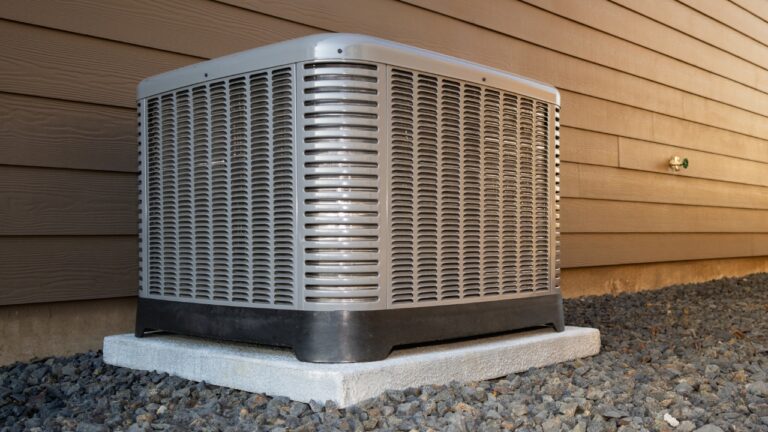
A mini-split doesn’t make heat, it moves it, and even at 5°F there’s usable heat in outside air. Efficiency is coefficient of performance, where COP 1.0 is resistance electric and anything higher is free heat. DOE’s Cold Climate Heat Pump Technology Challenge set a minimum COP of 2.1 to 2.4 at 5°F while holding 100% of a unit’s 47°F capacity. So at 5°F, roughly 40% of the running cost of resistance electric, and a quarter to a third at milder temperatures. Capacity falls as it gets colder and older designs drop off badly, so look for the ENERGY STAR Cold Climate label if your winters are real. It also runs backwards in July, which nothing else here does. The downside is up-front cost.
Verdict: For an insulated shop used year-round, the lowest running cost of any electric option, and the only one that also cools.
Wood: Genuinely Cheap, If Your Time Is Free
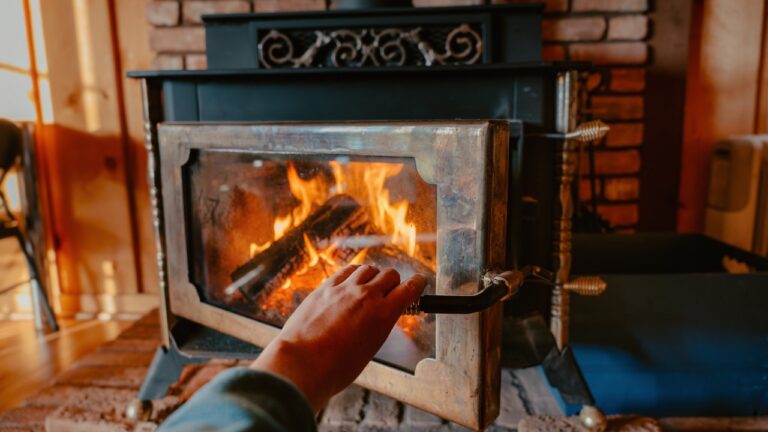
Cut your own and wood heat costs you labor and chain oil. Nothing here competes on running cost.
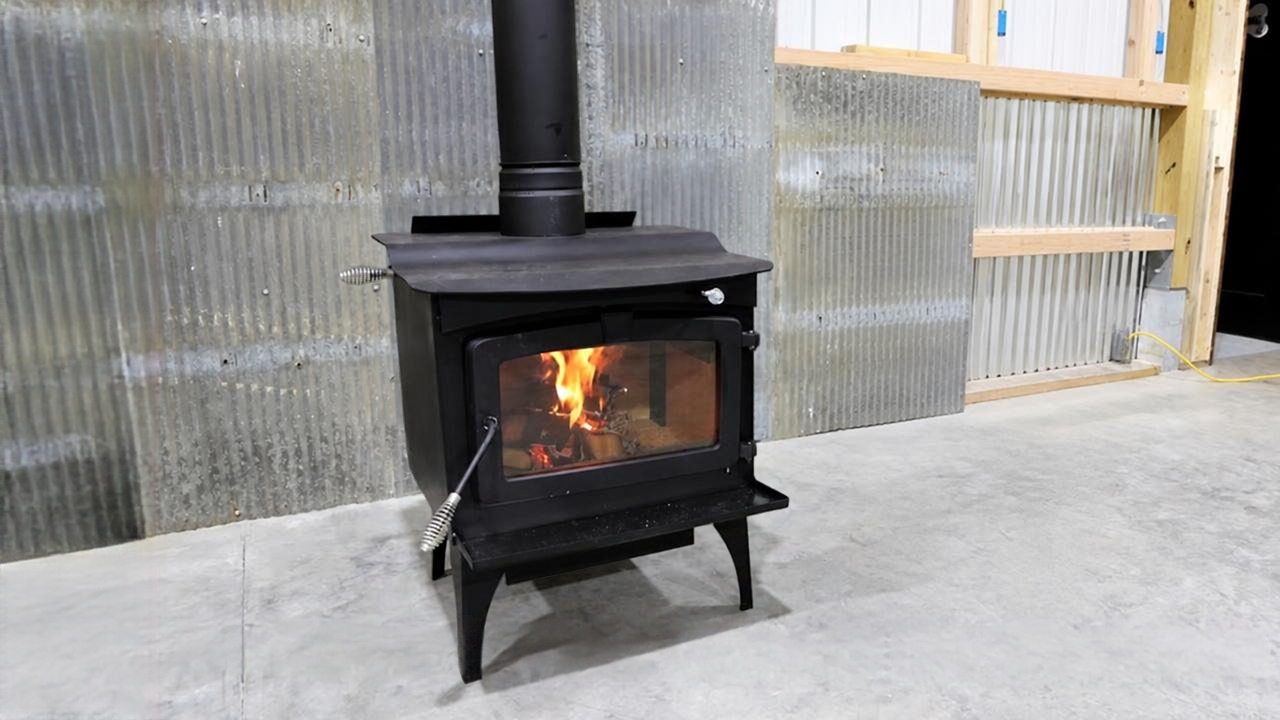
Then there’s the rest. A listed stove installs to its own label; for unlisted stoves, Maine Forest Service guidance following NFPA 211 puts a radiant stove 36 inches from unprotected combustible walls and ceilings, against 18 inches for a listed appliance. You need a real chimney, not stovepipe out a hole. Call your insurer first; most carriers want to know about a solid-fuel appliance in an outbuilding. And it heats when you’re there to feed it, not at 6 a.m. while you’re asleep. Ash and bark dust land on everything, which matters if you spray finish. Green wood also coats a chimney in creosote; our guide to seasoning firewood fast covers getting it burnable in one season.
Verdict: Cheapest running cost here if you cut your own and tend the fire. Not an answer if you want unattended heat.
Waste Oil: Only If You Have a Supply
A waste oil heater turns a disposal problem into heat if you change oil for a farm or a fleet. Federal rule 40 CFR 279.23 allows it only where the heater burns “only used oil that the owner or operator generates” or takes it from household do-it-yourselfers, is rated “not more than 0.5 million Btu per hour,” and vents “to the ambient air.” Oil from the shop down the road isn’t covered.
Verdict: Excellent if you generate the oil. A non-starter otherwise.
Spot and Personal Heating: The Real Winner for Weekend Shops
Heating thousands of cubic feet of air to warm one person at a bench is the most expensive thing you could do. Heat the person instead. Radiant warms objects directly, so a panel aimed at the bench is pleasant in minutes while the far corner stays cold. You aren’t in the far corner.
The Heat Storm 1000 Watt Infrared Wall Heater runs on a standard 120V outlet. Tractor Supply lists 1,000 watts, up to 3,400 BTU, about 100 square feet of coverage, a cool-touch grill and ETL listing. Pros: no install; instant warmth where you point it. Cons: 100 square feet means 100 square feet; no thermostat listed; 1-year warranty.
See the Heat Storm 1000 watt infrared wall heater on Amazon
Then the floor, because cold concrete pulls heat out through your boots. The Cozy Products Super Foot Warmer (FWB) is a 36 by 16 inch rubber mat Home Depot lists at 135 watts, around 130°F, for concrete or tile. Pros: draws less than a lamp; makes a cold slab tolerable. Cons: hard floors only; never covered; six-month warranty. Add a heated jacket and a weekend shop is solved.
See the Cozy Products Super Foot Warmer heated floor mat on Amazon
Verdict: For occasional use, nothing else comes close. Buy this first and see whether you still want the heater.
Which One Is Yours
- Gas at the building: vented gas unit heater.
- Two hours a weekend, any size: spot and personal heat. Skip the system.
- Small insulated shop, 240V: electric resistance, thermostat at 45°F.
- Insulated, year-round, want cooling: cold-climate mini-split.
- Rural, no gas, out there most days: vented propane, radiant tube if a door cycles.
- Firewood and time to tend a fire: wood stove, listed clearances, real chimney.
- Oil from a farm or fleet: waste oil heater, inside the limits above.
- Uninsulated building: insulate first.
Shop Heating Safety, Once and Properly
Put a carbon monoxide alarm in any shop with a combustion heater. That is not optional. CPSC’s guidance is to “install battery-operated CO alarms or CO alarms with battery backup on every level of the home and outside sleeping areas,” and that goes double in a tight outbuilding. CPSC also says plainly: “never use gas appliances such as ranges, ovens, or clothes dryers to heat your home,” and never use portable fuel-burning camping equipment in a garage. Early CO symptoms look “similar to the flu (but without the fever),” per CPSC.
The Kidde C3010, a sealed 10-year alarm with an electrochemical sensor and an 85 dB horn, is rated by Kidde for 40°F to 100°F. That’s typical of the category, and it means an alarm monitors reliably while your heater runs, not while the shop sits at 20°F. Mount it in the work area, not over the heater. Pros: no batteries for ten years. Cons: not rated for a freezing shop; the sealed battery makes it disposable.
See the Kidde C3010 10-year sealed battery carbon monoxide alarm on Amazon
Clearance to combustibles is a number on a label, not a judgment call. Keep sawdust, lumber, tarps and rags outside it, and never leave an unvented construction heater running unattended.
And the hazard most people overlook: gasoline vapor is heavier than air and pools at floor level. That’s why codes require gas water heaters in garages to be elevated so “the source of ignition is not less than 18 inches above the garage floor,” unless the appliance is listed as flammable vapor ignition resistant. A gas can with a weeping cap, an open can of lacquer thinner, or a finish-soaked rag near a pilot light or glowing element is how shops burn down. Keep fuel and solvents in approved containers, finish-soaked rags in a sealed metal can, and open-flame heaters mounted high.
Codes vary by state and county. Check your current local requirements and pull the permit.
Frequently Asked Questions
What’s the cheapest way to heat a detached garage?
If gas reaches it, a vented gas unit heater. If not, and you’re out there occasionally, spot heating plus insulation beats any whole-building system. Most days? Vented propane or a mini-split.
Is propane or electric cheaper to heat a shop?
Propane almost always wins against electric resistance per unit of heat, though price it locally since propane swings by region and season. Against a mini-split, electric wins: a heat pump delivers two to four units of heat per unit of power.
How do I compare fuel costs without guessing?
Convert everything to cost per BTU from your own bills. EIA puts propane at about 91,452 BTU per gallon, natural gas at 1,036 per cubic foot, electricity at 3,412 per kilowatt-hour. Divide your local rate by those, then adjust for efficiency or COP.
Can I use a ventless propane heater in my garage?
For short, ventilated sessions with a CO alarm running, people do it constantly. As a heating system, no. ASHRAE says unvented combustion appliances “should never be used as the primary/sole source of heating,” and the water vapor rusts bare cast iron.
Will a mini-split work in an uninsulated shop?
Not well and not cheaply. Capacity drops as it gets colder while the building’s losses climb, so the unit runs flat out and never catches up. In bare metal, an expensive disappointment.
Where to Start This Weekend
Start with the leaks. Weatherstripping, a door seal and a can of foam is one Saturday that changes everything. Then be honest about your hours. Two mornings a month? Buy an infrared panel for the bench and a heated mat for the slab, and put the rest toward insulation. Most days? Get a vented heater sized by a pro, add a CO alarm, and price your local fuels first. The right answer is the one your own utility bill picks.