10 Things People Forget When Jump-Starting Equipment
Photo credit: Schumacher Boosters – Chargers – Testers/Youtube
The battery’s dead, the job’s waiting, and the weather’s already turning. Jump-starting a tractor, mower, skid steer, or generator feels simple until it isn’t. Most problems come from small oversights that turn a five minute fix into a fried fuse, a cooked battery, or a no-start that lasts all afternoon.
1. Checking The Wrong Battery Voltage

People clamp on and hope for the best, then wonder why nothing changes. A lot of equipment runs 12 volts, but plenty of diesel tractors, loaders, and older rigs are 24 volts or use two 12-volt batteries wired together. If you hit a 24-volt system with a 12-volt jump pack, you’ll crank forever and drain both batteries even lower.
Flip up the hood and actually read the battery labels and cable routing. Two batteries with a cable from one positive to the other negative usually means 24 volts. If you’re not sure, stop and check the manual or the wiring diagram under the hood. Guessing here gets expensive fast.
2. Hooking Clamps In The Wrong Order
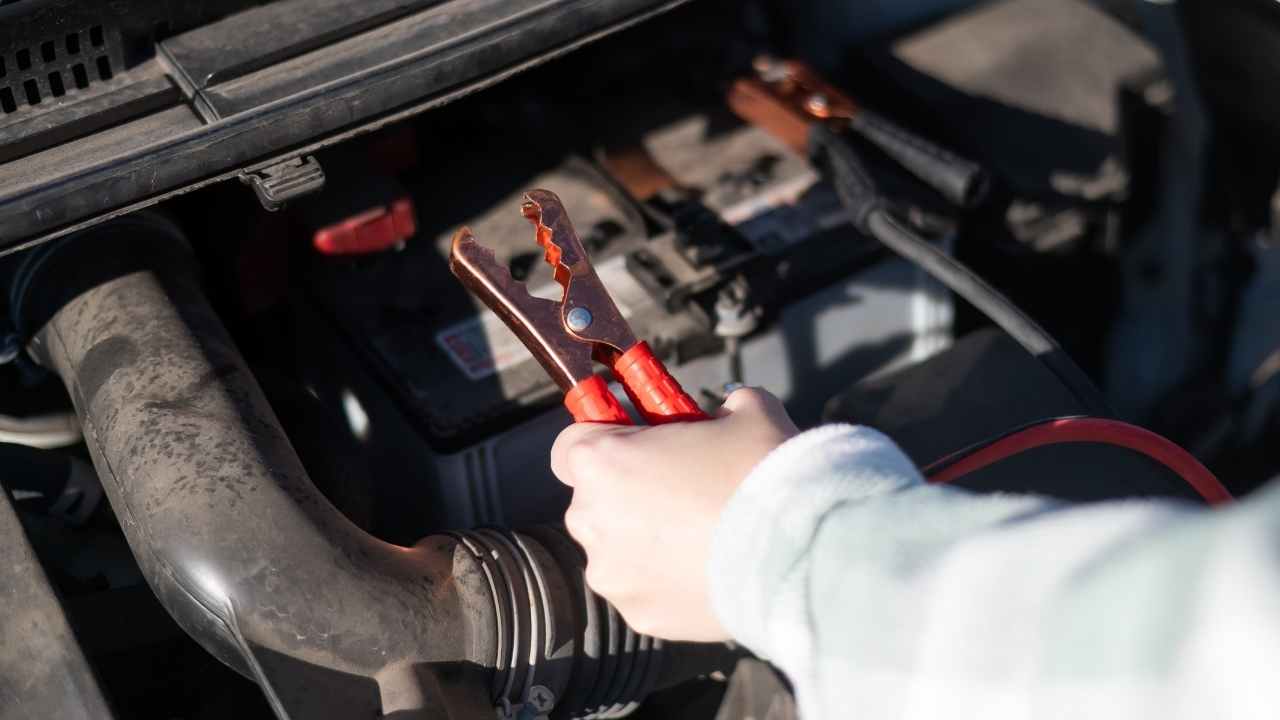
This is where fuses pop and cables get hot enough to sting through gloves. If the final connection makes a big snap, you’re making the spark where you shouldn’t, usually right over the battery. Batteries vent hydrogen, especially when they’re low or frozen, and sparks belong away from the battery case.
Connect positive to positive first. Then connect the negative clamp to a clean metal engine block or frame point on the dead machine, not to the dead battery’s negative post. When you’re done, remove the negative clamp first, then the positive. Slow down and do it the same way every time.
3. Clamping Onto Paint, Rust, Or Plastic
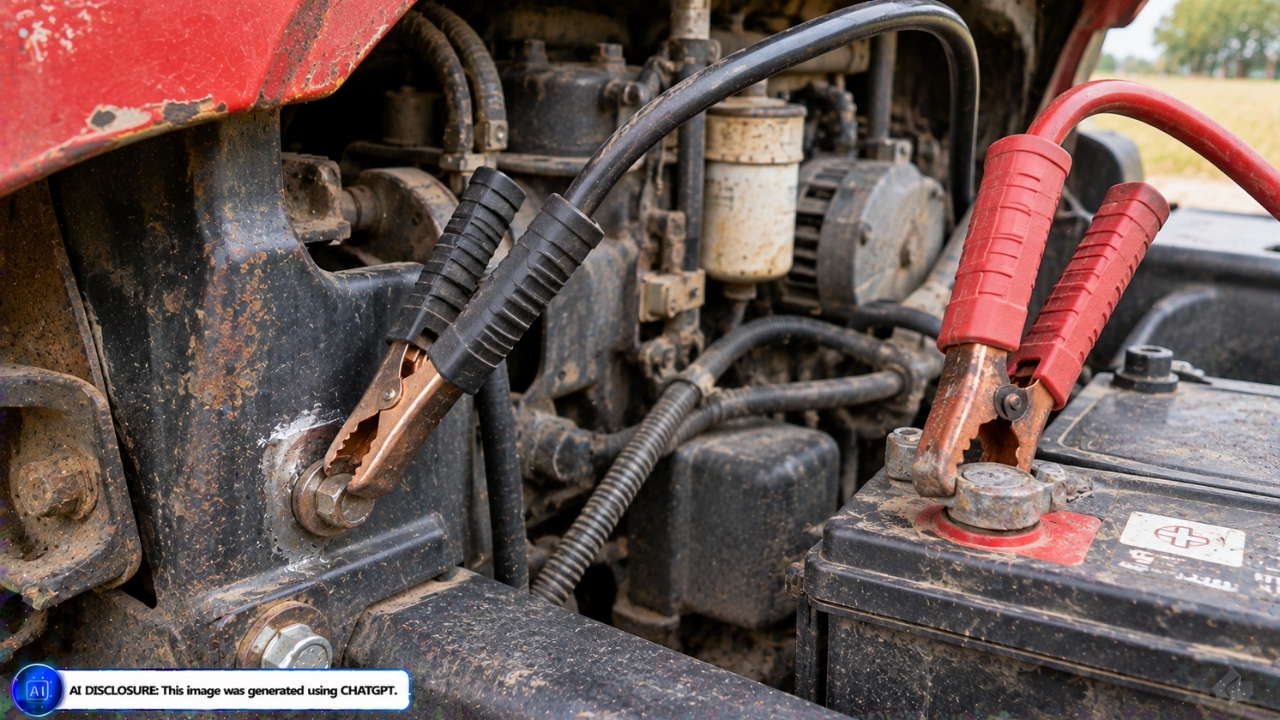
You get a “dead click” and think the starter’s shot, but the real problem is the clamps are biting into a lousy ground. Powder coat, grease, rust scale, and plastic shrouds all block current. The jumper cables can be perfect and the jump pack can be full, and it still won’t crank.
Look for bare metal on the engine, a lifting eye, or a thick bracket bolt. If you need to, scrape a small spot with a pocket knife or a piece of sandpaper. On farm equipment, a solid ground point fixes more “mystery no-starts” than new parts ever will.
4. Ignoring Swollen, Cracked, Or Frozen Batteries
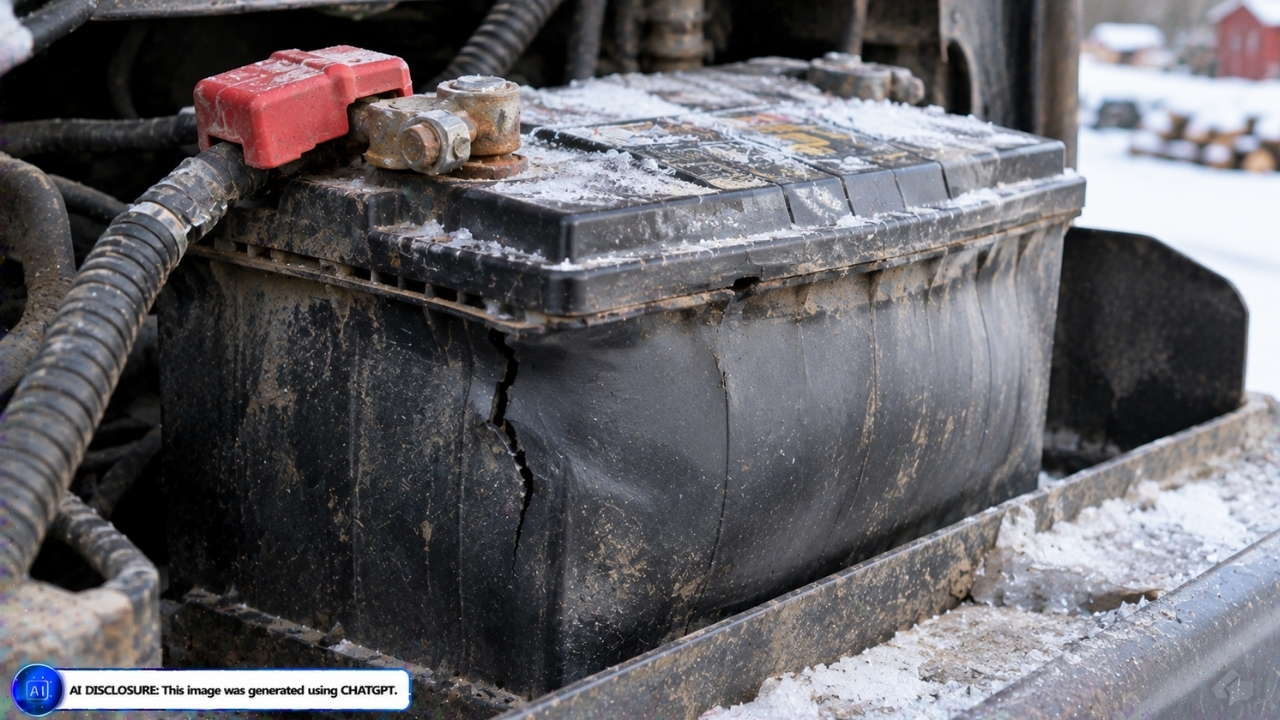
When it’s been below freezing and the battery was already weak, the electrolyte can freeze. A frozen or bulged case is not a “try it anyway” situation. Charging or jumping a damaged battery can crack the case further, leak acid, or fail violently.
If the sides are bowed, the top looks domed, or there’s wetness around seams, stop. Thawing a frozen battery should be done slowly in a safe place, and replacement is often the right call. Wear eye protection and gloves when you handle it, and neutralize spills with baking soda and water.
5. Using Skinny Cables On Big Starters
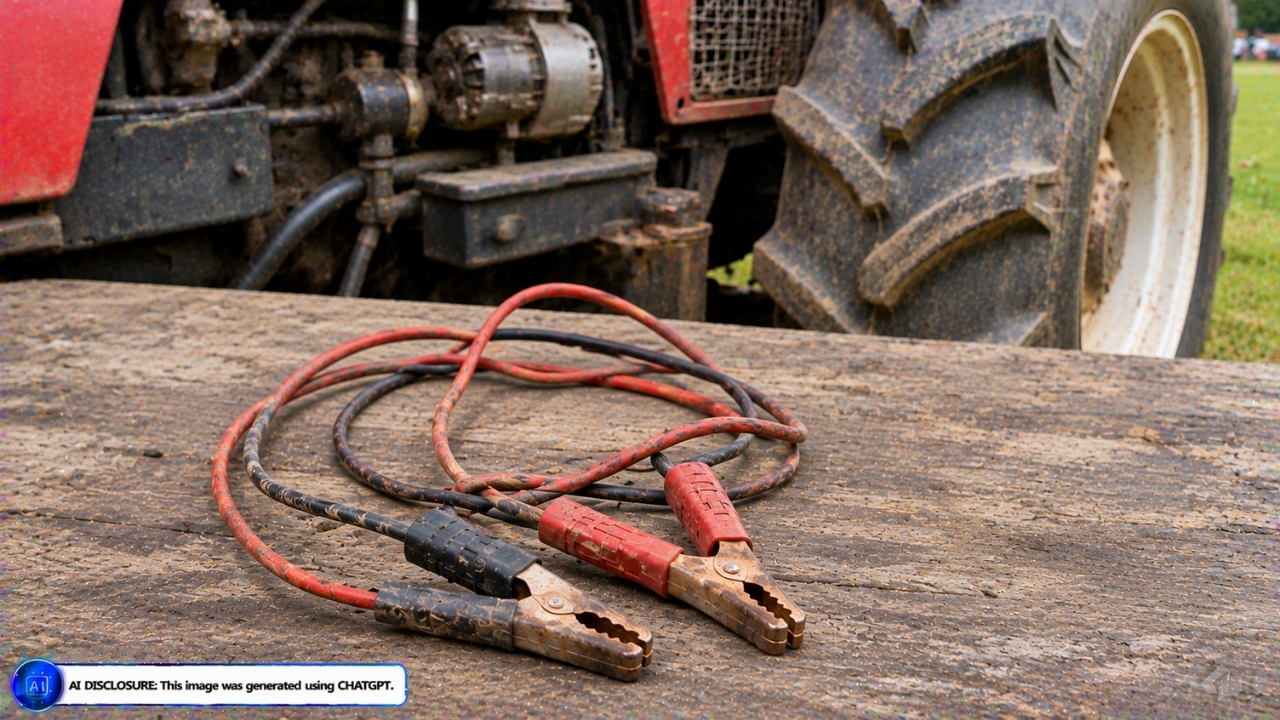
A compact car can sometimes get away with light jumper cables. A diesel tractor, older truck, or generator with a big starter motor will make those thin cables smoke, or at least drop so much voltage the starter just chatters. Then you cook your cables and still don’t get a start.
Use short, heavy gauge cables for equipment, and keep the clamps clean and tight. If the cables feel warm after a few seconds of cranking, stop and upgrade your setup. For larger machines, a proper jump pack rated for the job is usually a better buy than bargain cables that live in the toolbox and never work when you need them.
6. Forgetting The Machine Needs Fuel And Air
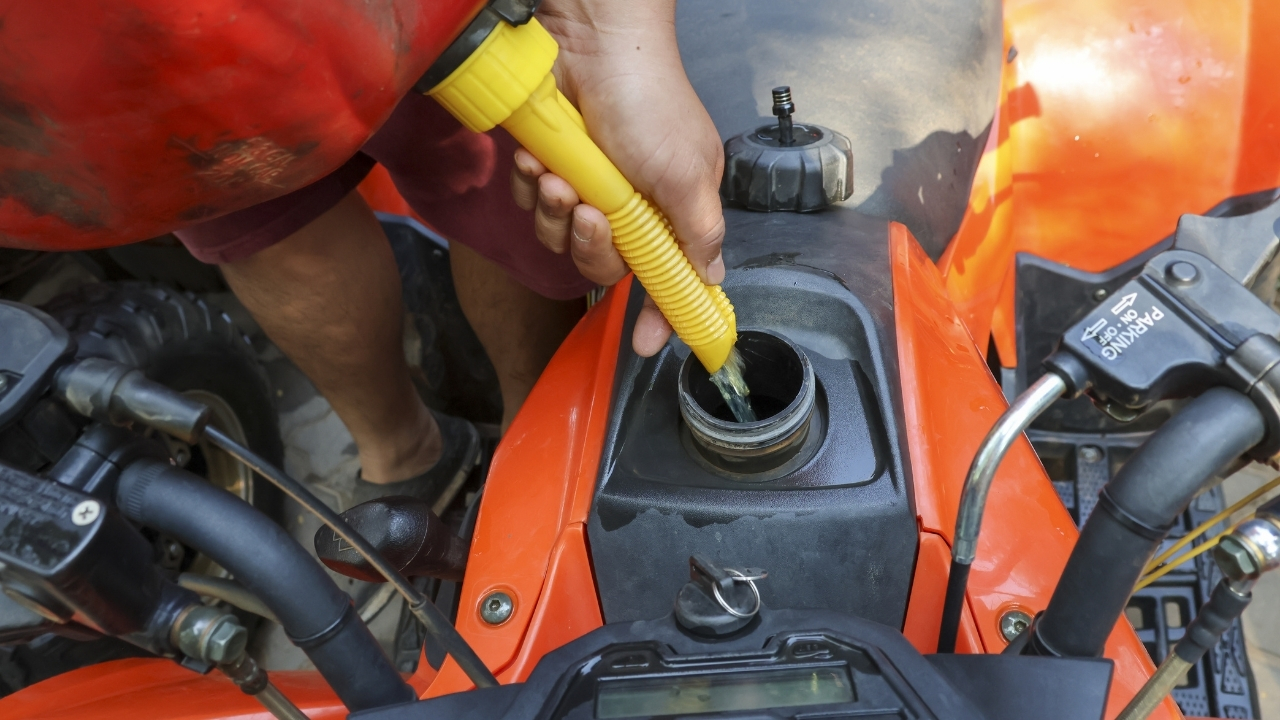
It’s easy to blame the battery because the engine won’t turn over. Plenty of “dead battery” calls are actually an empty fuel tank, a closed fuel shutoff, gelled diesel, or a clogged air filter packed with chaff. You jump it three times, and it still won’t run because there’s nothing to run on.
Before you drag another vehicle over, do a quick reality check. Fuel in the tank, fuel valve open, safety interlocks satisfied, and air intake not blocked by mouse nests or snow. On diesels in real cold, treat the fuel and use the right winter blend, otherwise you’ll keep cranking until something gives up.
7. Not Giving The Donor Time To Help
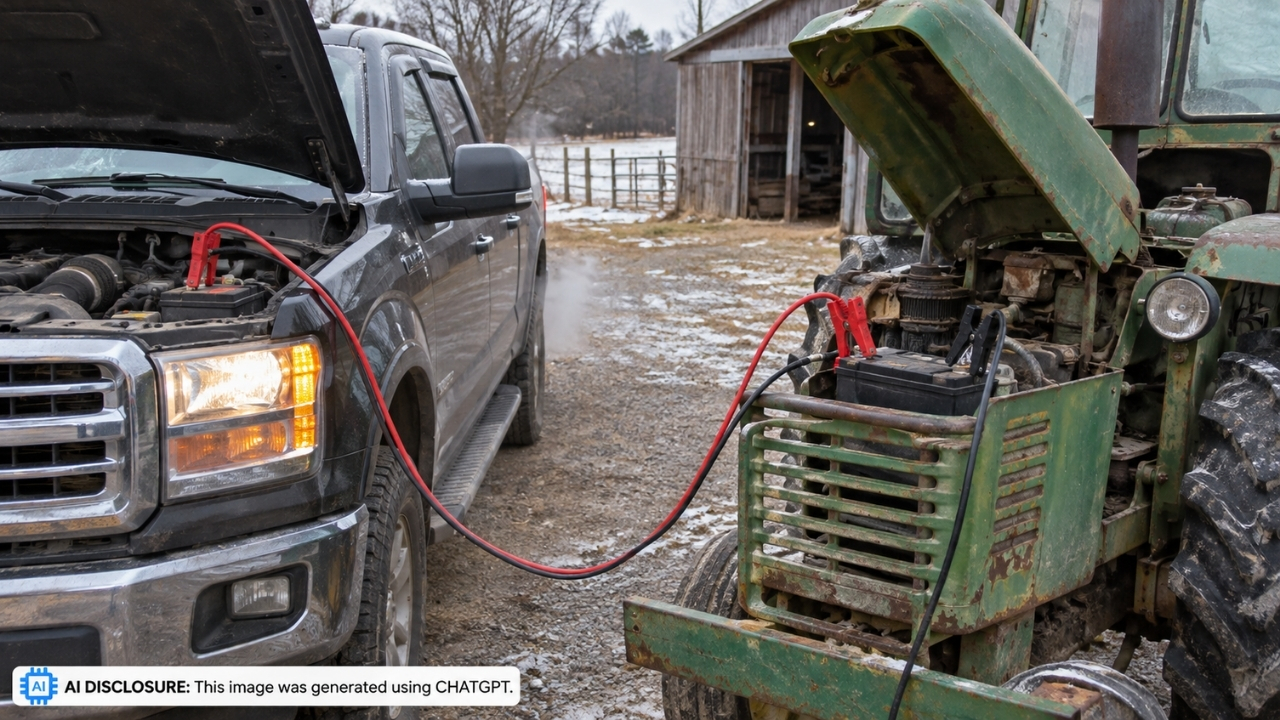
With vehicle-to-equipment jumps, people connect cables and immediately crank the dead machine like it’s a race. If the dead battery is deeply discharged, it will soak up current for a bit before the starter sees enough voltage to spin. The result is a slow grind, then a dead donor vehicle too.
Let the donor run at a fast idle for a few minutes, or let the jump pack sit connected briefly, before you hit the key. If the cables start to get hot or you hear rapid clicking, stop and wait. Patience here saves alternators and saves you from needing a second jump.
8. Leaving Modern Electronics Unprotected
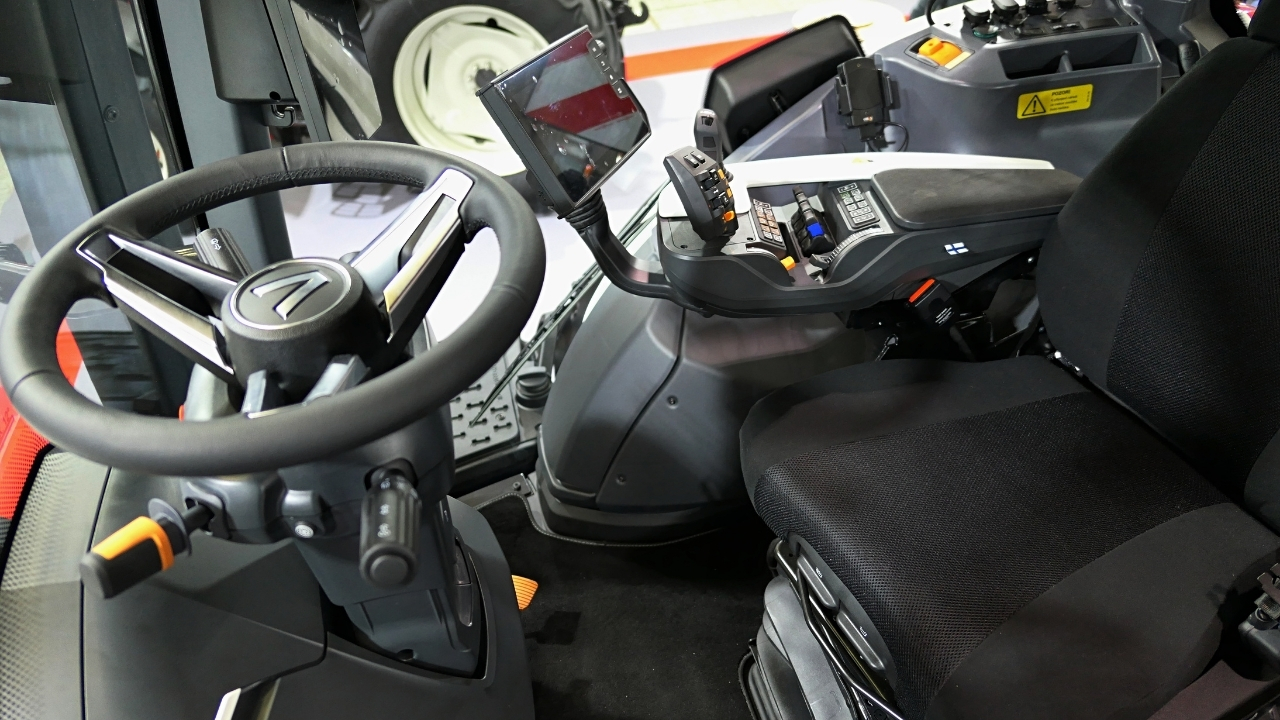
Some newer equipment has sensitive control modules, and voltage spikes can make for a bad day. Slamming clamps on and off, or revving the donor engine high, can create surges. When something electronic gets upset, the fix is rarely cheap, and it’s rarely something you solve in the driveway.
Keep connections solid and clean, and don’t race the donor engine. If the machine has a designated jump post or a procedure in the operator’s manual, follow it. If you keep blowing fuses or the dash lights flicker like crazy during cranking, stop and get a mechanic involved before you turn an electrical problem into a control problem.
9. Forgetting The Battery Just Failed For A Reason
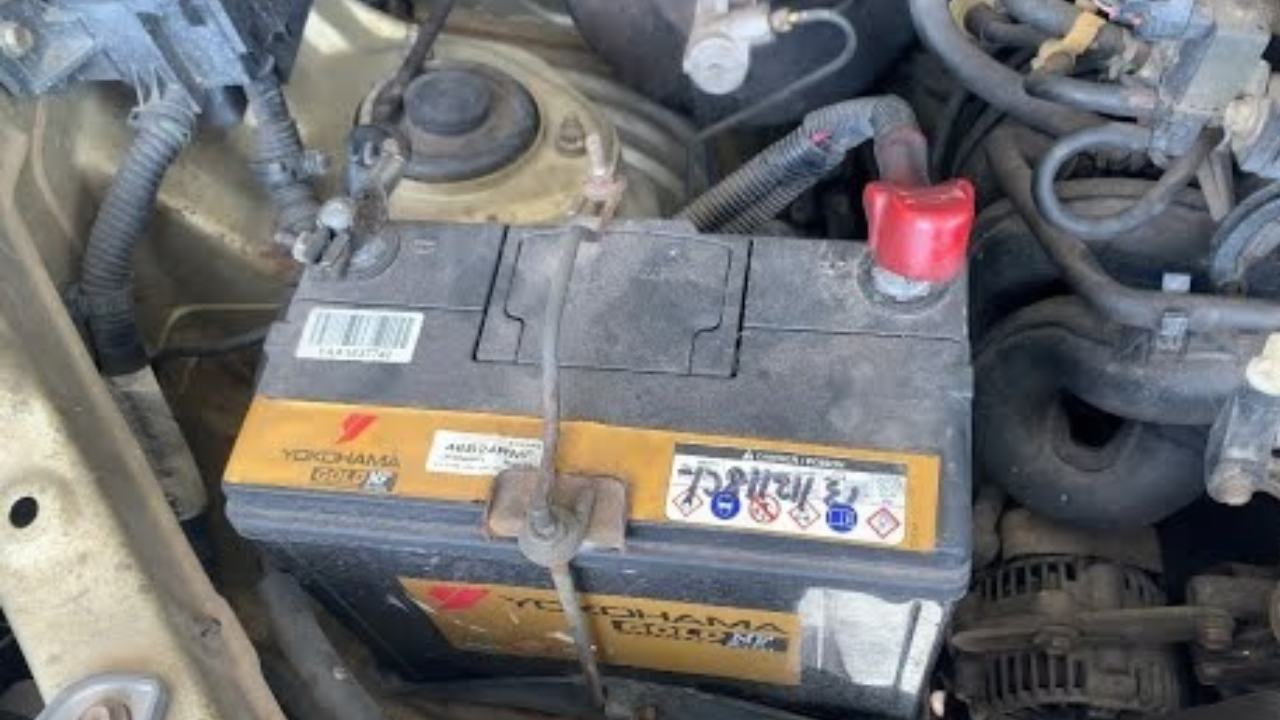
Getting it started feels like winning, so you shut the hood and go back to work. Then it’s dead again after lunch. Batteries don’t usually die out of nowhere, they die because they’re old, they were left discharged, the charging system is weak, or there’s a drain you haven’t found.
After the machine is running, check charging voltage with a basic multimeter at the battery posts. On a 12-volt system you want roughly the mid-13s to mid-14s while running. If it’s low, or it climbs way high, you’ve got a charging issue that’s worth fixing before it ruins the new battery you’re about to buy.
10. Thinking A Trickle Charger Is Always The Answer
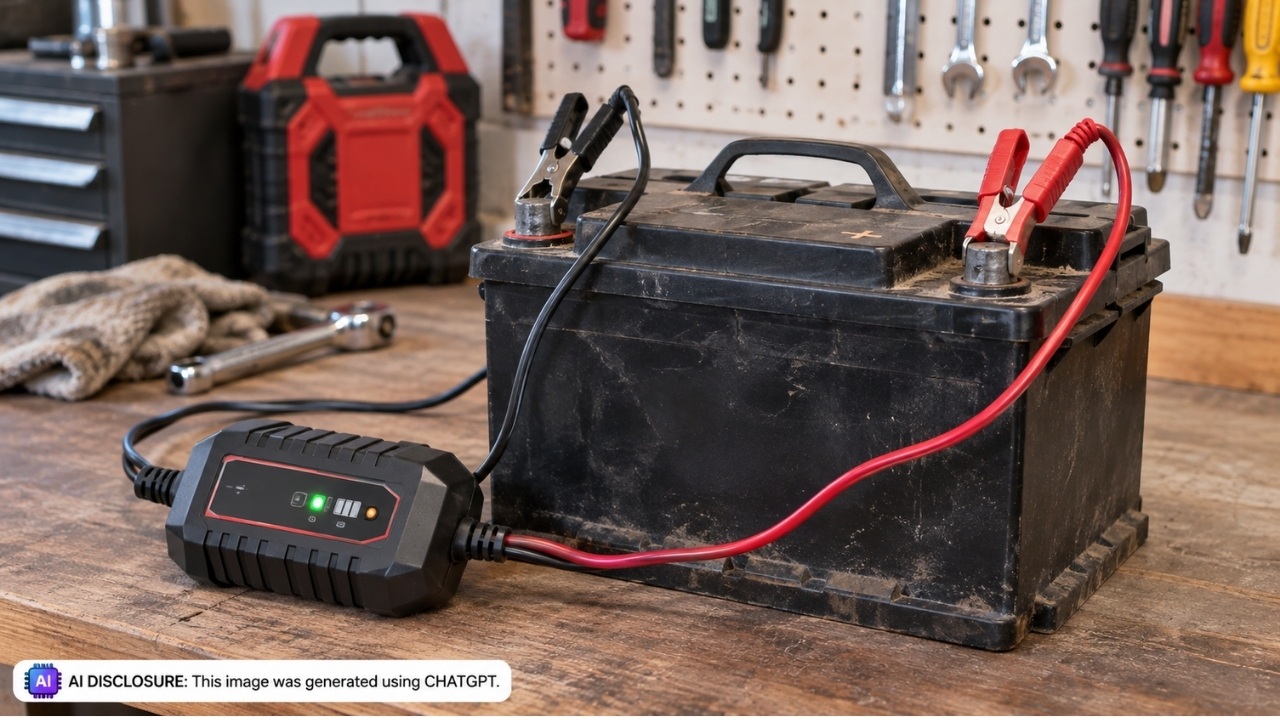
A cheap trickle charger is fine for storage, and it’s one of the few “cheap options” that can actually be worth it if you use it right. But it won’t bring back a battery with a dead cell, and it won’t save you if you keep running the battery flat. On some smart chargers, the unit won’t even start charging if the battery voltage is too low.
Use a maintainer for equipment that sits, like seasonal mowers and standby generators. If you need a jump more than once in a season, stop leaning on chargers and test the battery and charging system. Sometimes the right fix is a new battery, cleaned terminals, and a better shutdown habit.
Keep your jump gear in a dry spot, check it before the first cold snap, and don’t wait until you’re stuck in the field to find out a clamp is broken. A few minutes of setup beats an hour of chasing problems that started with one sloppy connection.
Like Fix It Homestead’s content? Be sure to follow us.