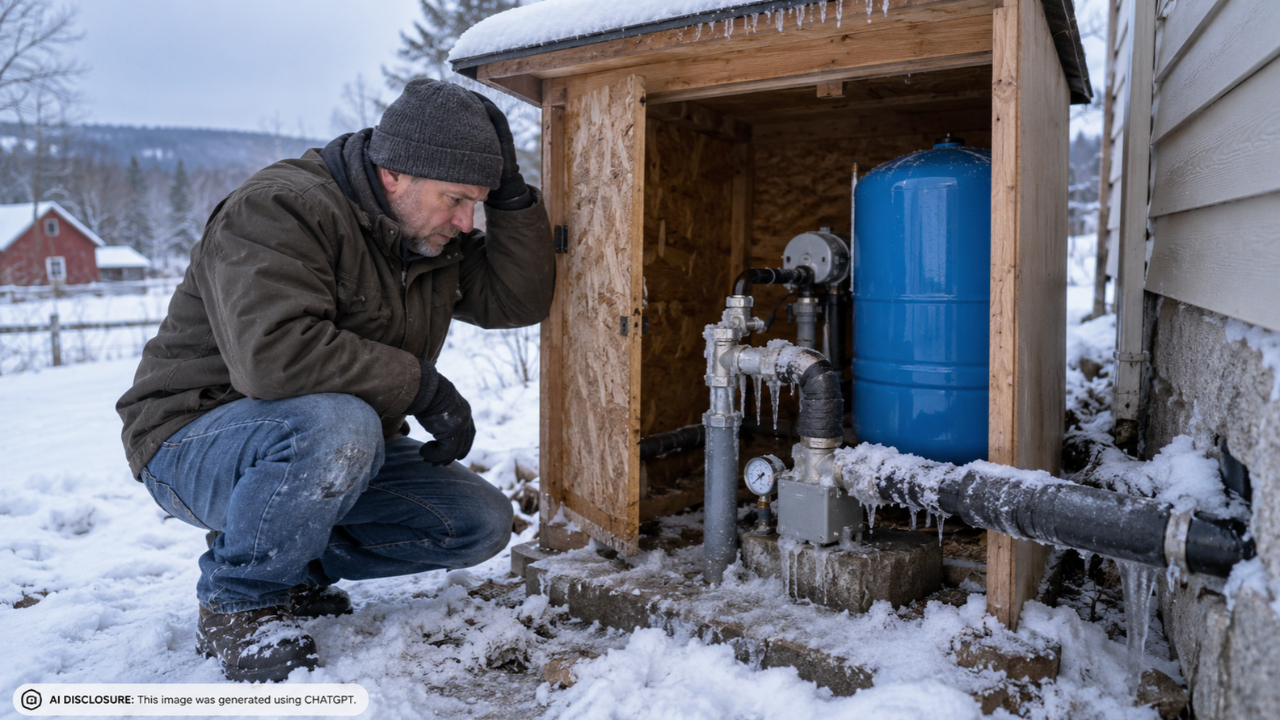
How to Keep a Well Pump From Freezing
Photo credit: Fix It Homestead
When a well system freezes, the house has no water, the animals have no water, and a cracked pipe or pump can turn a cold snap into an expensive repair. The good news is that most well freeze-ups happen in the same few places, and all of them can be protected before winter.
Here is how to keep a well pump from freezing, what to check first, and what to do if it freezes anyway.
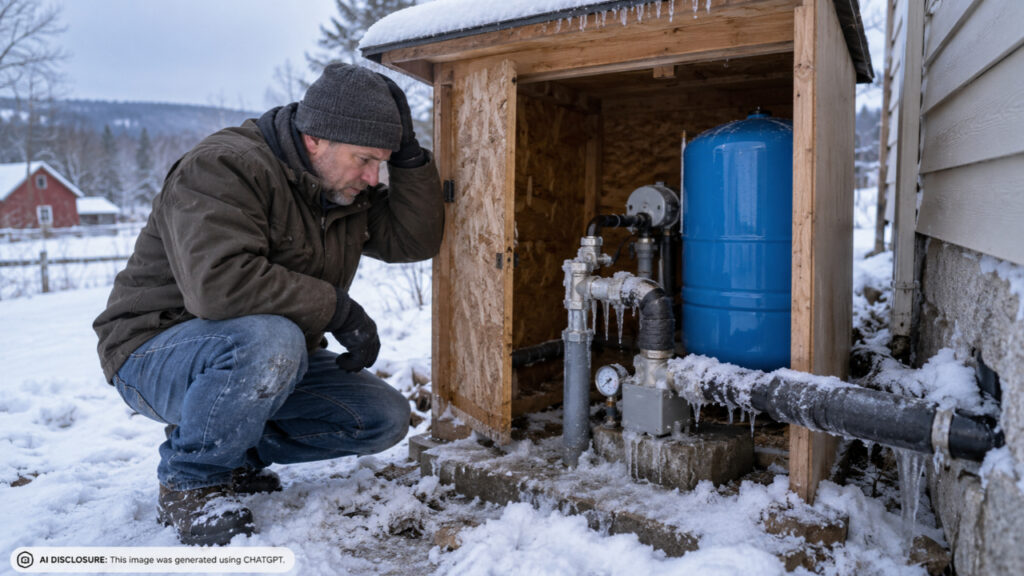
First, know which kind of system you have
| Setup | What can freeze | Risk level |
|---|---|---|
| Submersible pump down in the well | Above-ground pipe, pressure tank, pressure switch, the line into the house | Lower. The pump itself sits below the frost line. |
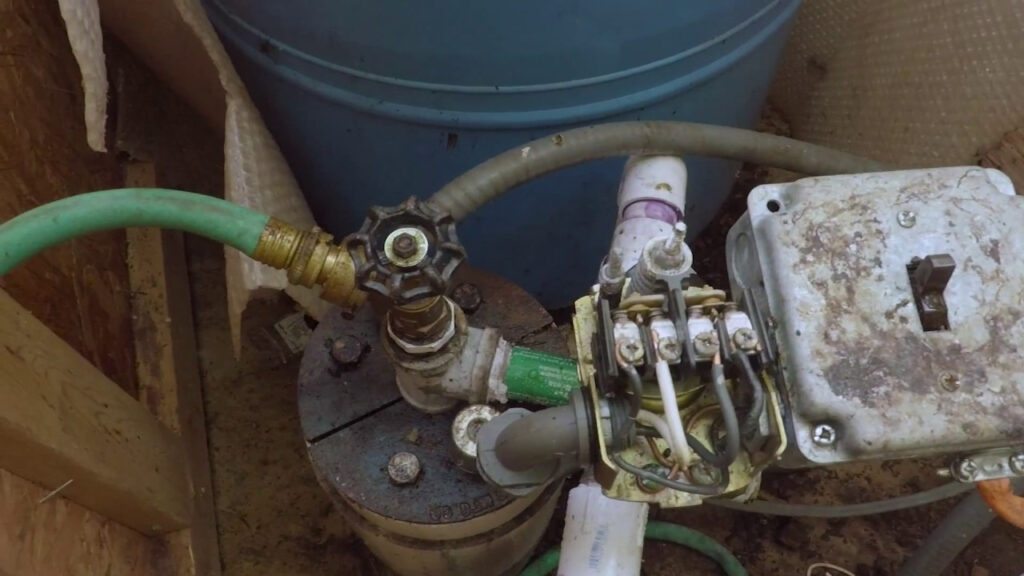
| Jet pump in a pump house or crawl space | The pump, pressure tank, switch and every exposed pipe | Higher. Everything sits where cold air can reach it. |
| Shallow well or pump in an unheated building | Almost all of it | Highest |
If you are not sure, look for the pump. A jet pump is a motor sitting above ground next to the pressure tank. If you only see a tank and a pressure switch, your pump is most likely a submersible down in the well.
1. Insulate the pump house or pump area
- Seal gaps around doors, walls and where pipes enter, with spray foam or weatherstripping. Wind is what freezes pumps fastest.
- Add rigid foam board to the walls and ceiling of a small pump house.
- Keep the door closed. A door left cracked open on one cold night is a common cause of freeze-ups.
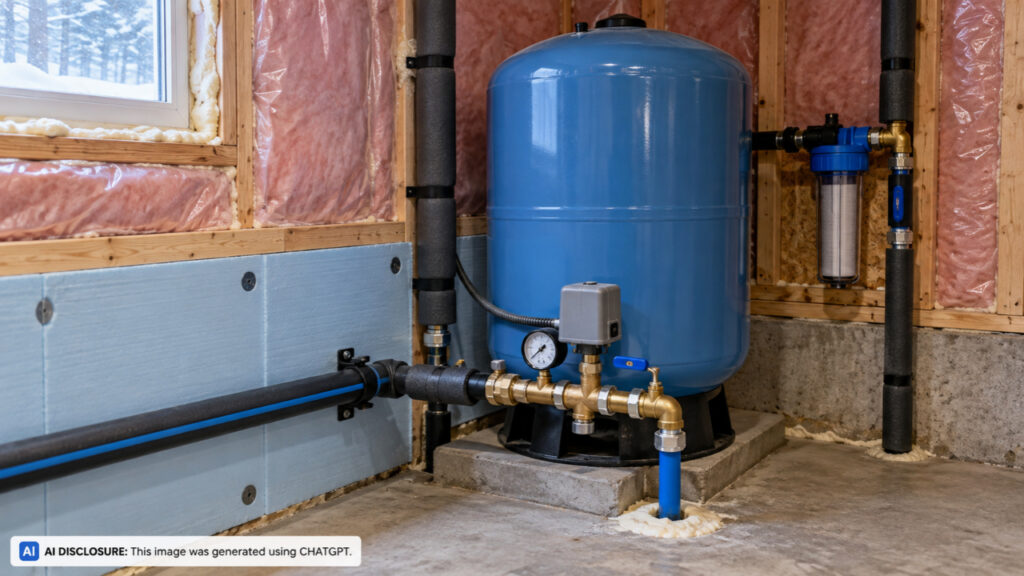
2. Insulate exposed pipes and the pressure tank
- Wrap every exposed pipe with foam pipe insulation, including the short runs people forget near the floor.
- Pay extra attention to the pressure switch and the small tube that feeds it. That tiny line freezes first and stops the pump from turning on.
- Insulating the pressure tank helps it hold heat on cold nights.
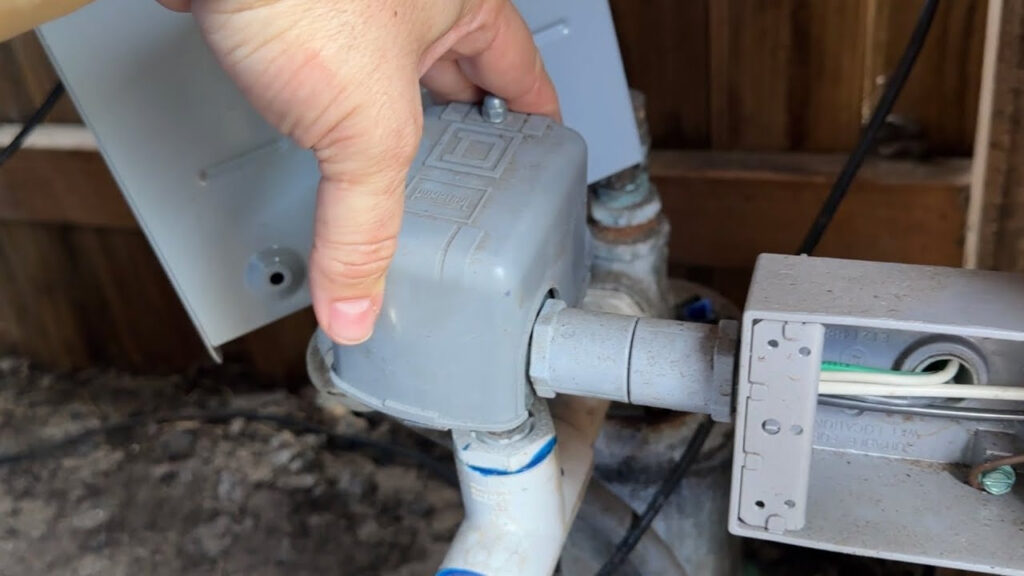
3. Add safe, steady heat if you need it
In a well-insulated pump house, the warmth from the ground is often enough in mild winters. In colder climates you will usually need a little added heat.
- Heat cable (heat tape): use a self-regulating cable rated for water pipes, installed exactly as the instructions say. Plug it into a GFCI outlet.
- A pump house heater with a thermostat: small heaters made for well houses turn on only near freezing. They’re far safer than a space heater left running.
- Avoid heat lamps and open flames. A heat lamp in a dusty, cramped pump house is a fire risk, and the bulb can burn out on the coldest night without you knowing.
A cheap thermometer, or a wireless one that reads out in the house, lets you check the pump house temperature without walking out in the dark.
4. Check the well cap and the line to the house
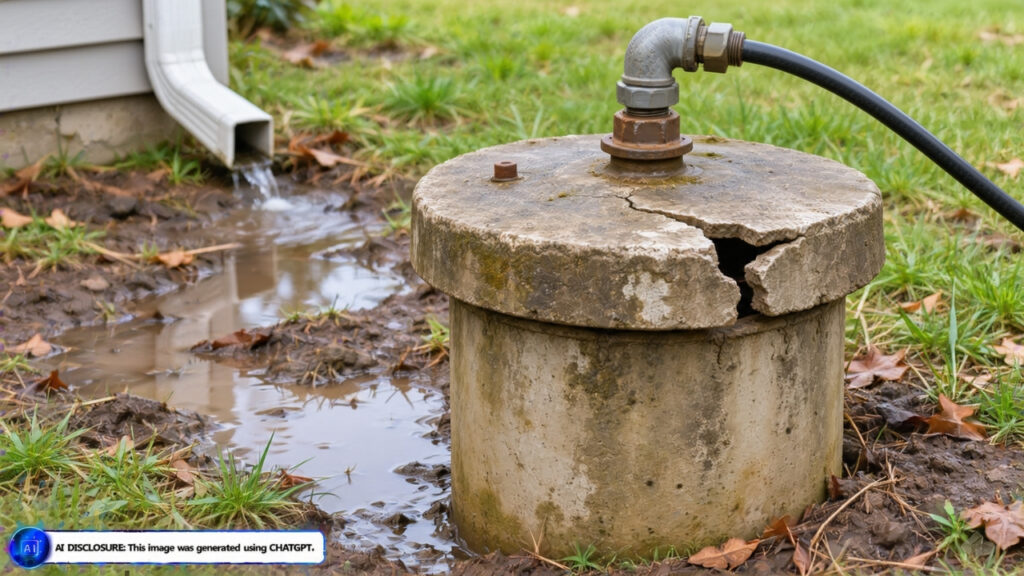
- Make sure the well cap is intact and sealed. A cracked cap lets cold air and critters in.
- The pipe from the well to the house should run below the frost line. If one section is shallow or exposed, insulate it or bank soil, straw or snow over it.
- Disconnect garden hoses from outdoor spigots, and use frost-free hydrants for animal water.
5. Keep water moving in a deep freeze
Moving water freezes much more slowly. During extreme cold, letting a faucet drip in the house keeps water flowing through the system. Running water for the animals at regular times during the day helps too.
Signs your well is freezing
- Water pressure slowly drops, or a faucet only trickles.
- The pump doesn’t kick on, or the pressure switch clicks but nothing happens.
- The pump runs and runs without building pressure.
- Frost on the pipes or pressure tank.
What to do if it freezes
- Turn off power to the pump at the breaker. A pump that runs against a frozen line can burn out.
- Open a faucet in the house so water has somewhere to go once it thaws.
- Warm the frozen section slowly with a hair dryer, a heat gun on low, or a space heater set up safely nearby. Start closest to the faucet and work back.
- Never use an open flame or torch on pipes, the tank or the pump.
- Once water flows, check every pipe, fitting and the tank for cracks or leaks before you turn the pump back on for good.
- If a pipe or the pump housing is cracked, or the pump won’t restart, call a well professional.
Plan for the worst day
Even a well-protected system can lose power in an ice storm. Keep a few days of drinking water and animal water stored, and know whether your generator can run the well pump. Many well pumps need a 240-volt circuit and more starting power than people expect.
A frozen well is one piece of winter prep. See the full winterizing a small homestead checklist for water, animals, firewood and equipment.