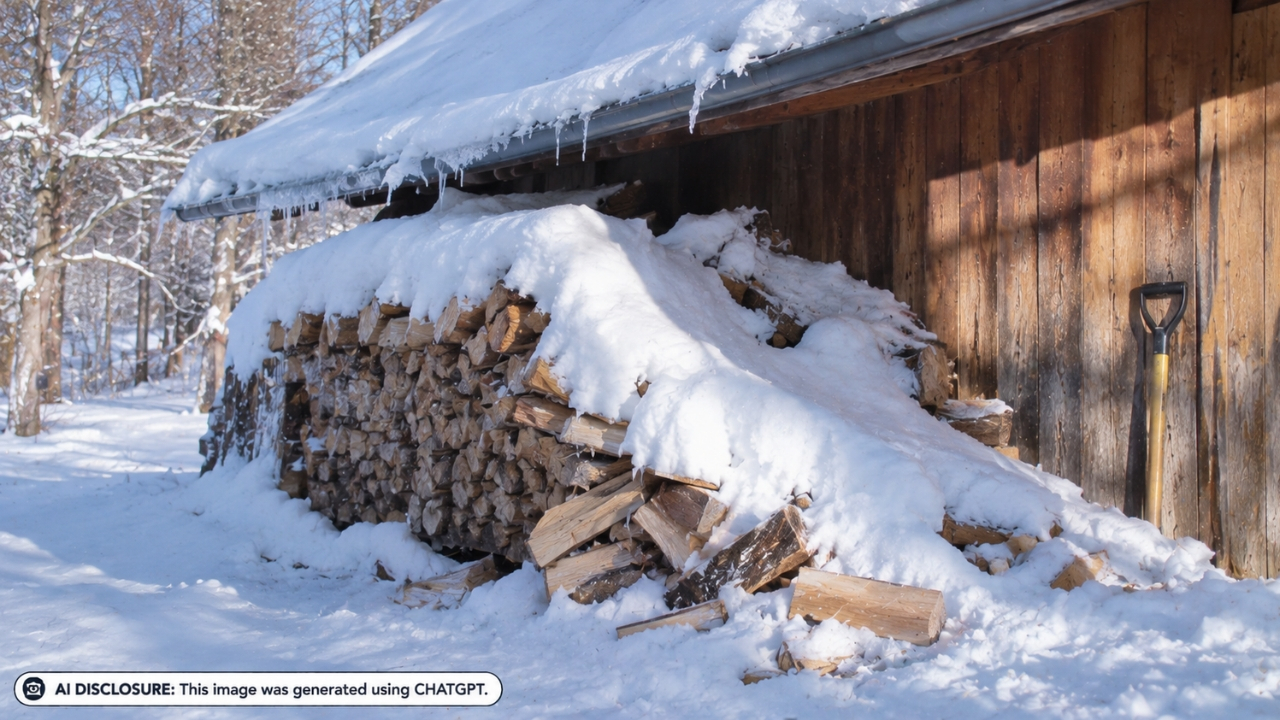
How to Season Firewood Fast (and Know When It’s Ready)
Photo credit: Fix It Homestead
Fresh-cut wood can be half water by weight. Burn it like that and you get a smoky, sputtering fire, very little heat, and a chimney lined with creosote. Seasoned firewood has dried to 20% moisture or less, the level the EPA’s Burn Wise program recommends. It lights easily and burns hot and clean.
Most firewood takes 6 to 12 months to season, and dense hardwoods like oak can take longer. You can’t skip the drying, but you can speed it up a lot. Here’s how to season firewood fast.
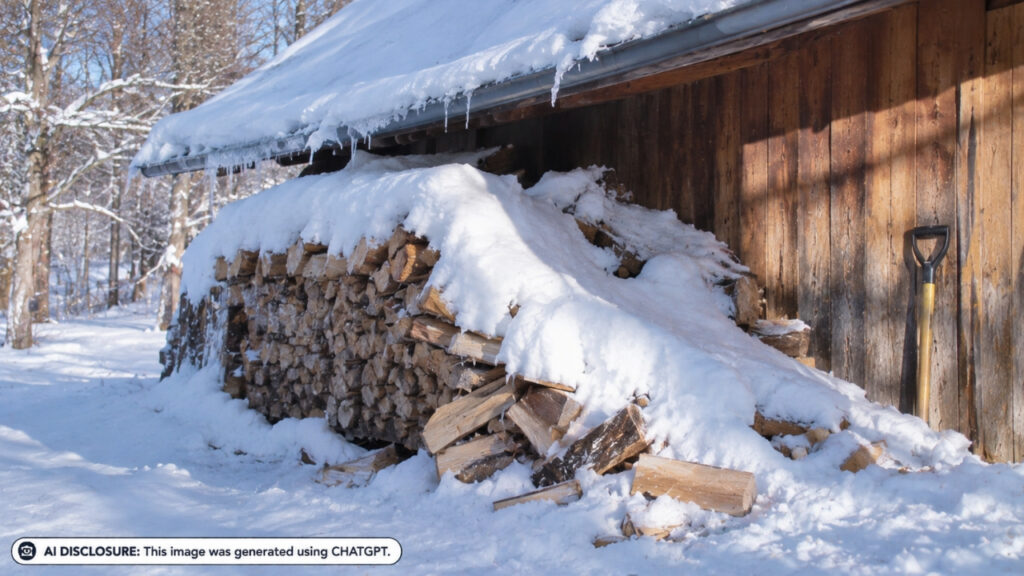
1. Cut and split it as soon as possible
Wood barely dries through bark. It dries through the cut ends and split faces. A whole log sitting in the yard can stay wet for years.
- Cut to stove length right away. Shorter pieces dry faster.
- Split everything, even pieces that would fit in the stove whole.
- Split smaller than you think. Pieces about 3 to 6 inches across dry much faster than big rounds.
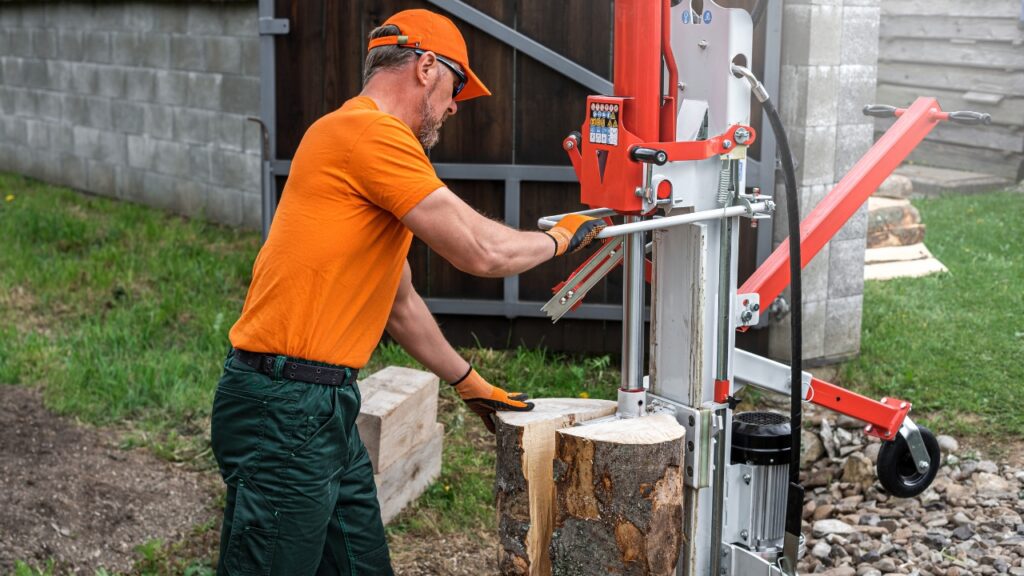
2. Stack it off the ground
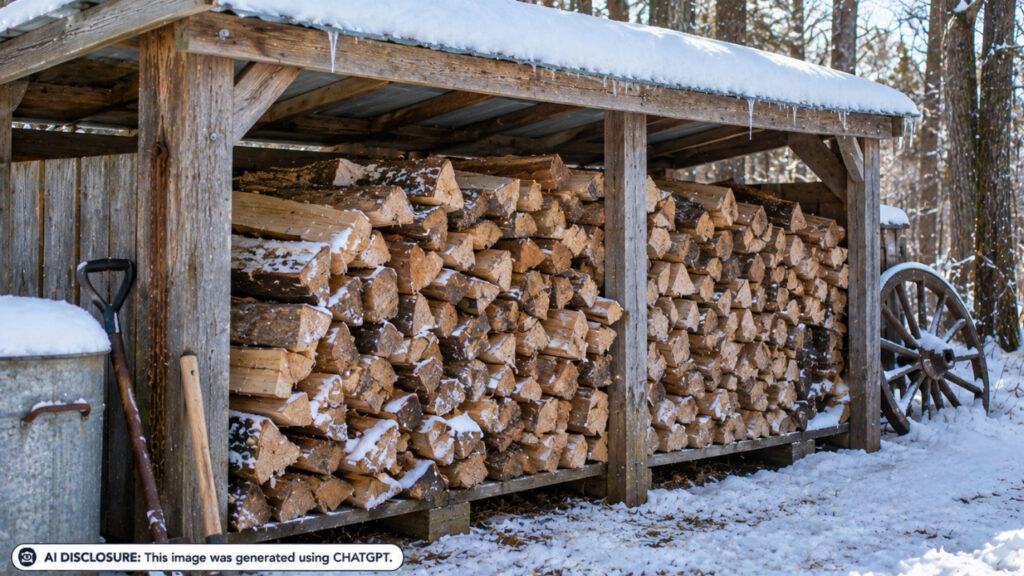
Wood sitting on dirt pulls moisture up from the ground and starts to rot from the bottom. Use pallets, scrap lumber, or two rows of landscape timbers to keep the bottom layer a few inches up.
3. Stack for airflow, not looks
- Stack in single rows, not one deep pile, with a few inches between rows.
- Leave small gaps between pieces so air moves through the stack.
- Face the stack into the wind if you can. Moving air does more drying than sunshine alone.
- Pick the sunniest, windiest spot you have, away from the shade of the house or trees.
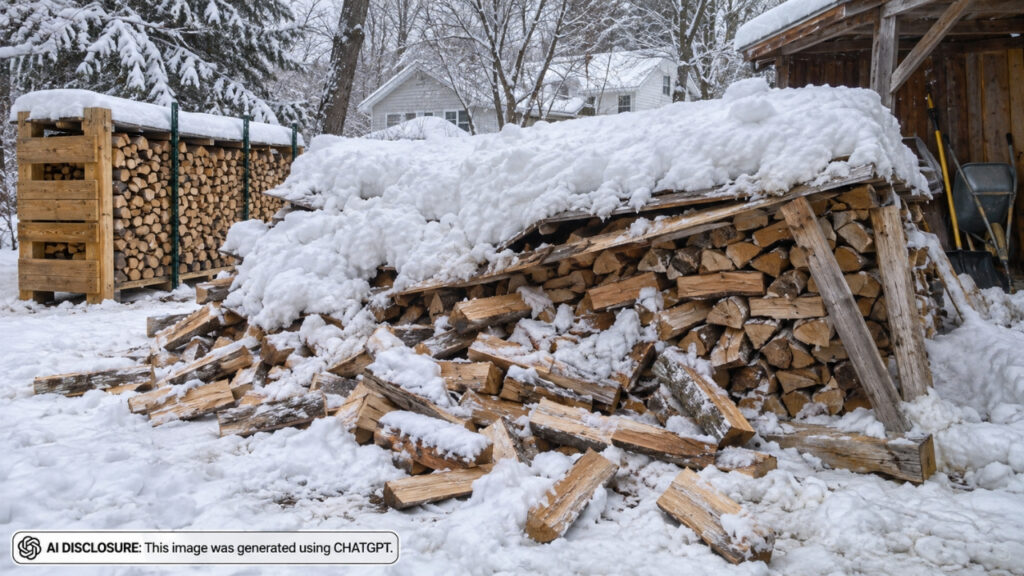
Build the ends of each row with crisscrossed pieces (a “crib”) so the stack doesn’t lean and fall over as it dries and shrinks.
4. Cover the top, not the sides
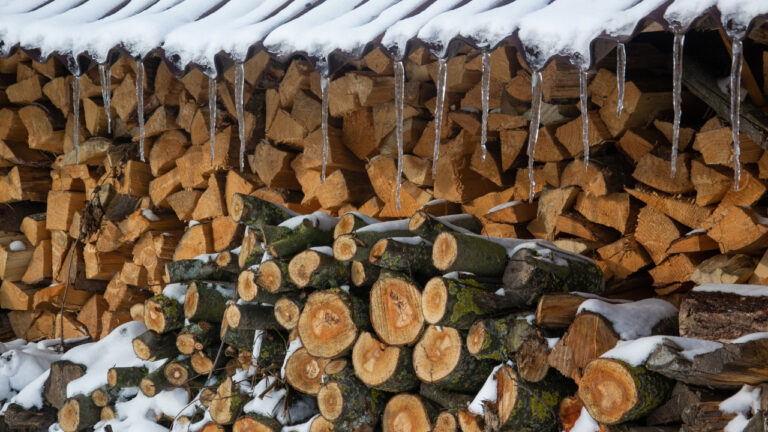
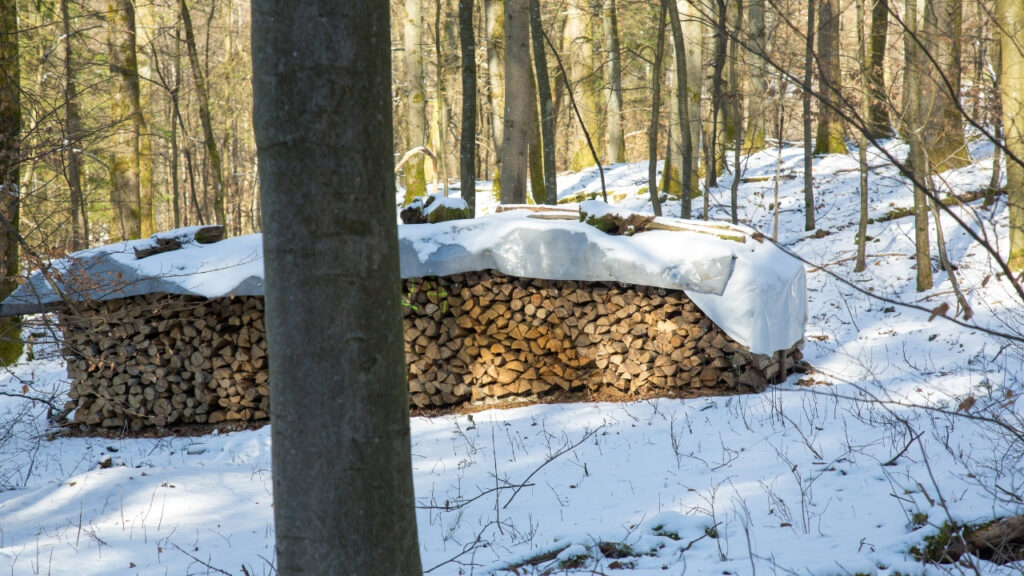
Rain and snow on top of the stack slow drying. A full wrap traps moisture inside. Cover only the top with a roof, metal sheeting or a tarp weighed down at the top, and leave the sides open to the air.
5. Start with wood that dries faster
| Wood | Drying speed | Notes |
|---|---|---|
| Ash | Fast | Often burnable after about 6 months |
| Cherry, maple, birch | Medium | Usually 6 to 12 months |
| Hickory | Medium to slow | Worth the wait for heat |
| Oak | Slow | Often 1 to 2 years for red oak |
| Pine and other softwoods | Fast | Dries fast but burns quickly |
If you need wood for this winter, burn the fast-drying kinds first and let the oak sit until next year.
How to tell when firewood is seasoned
- Use a moisture meter. It is the only sure test. Split a piece and press the pins into the fresh inside face, not the outside. Under 20% is ready.
- The ends show cracks and checks.
- It feels lighter than a fresh piece of the same size.
- Two pieces knocked together make a hollow crack instead of a dull thud.
- Bark comes loose easily.
Stuck with wet wood this winter?
- Buy a cord or two of kiln-dried wood and mix it in with what you have.
- Bring a few days’ worth inside or into a garage to dry the surface, keeping it a safe distance from the stove.
- Burn hot fires with plenty of air. Never let wet wood smolder all night with the damper shut.
- Get the chimney inspected and cleaned. Wet wood builds creosote fast, and creosote is what causes chimney fires.
Plan a year ahead
The real secret to seasoned firewood is timing. Cut, split and stack next winter’s wood in late winter or spring, and let it dry all summer. Then you are always burning wood that has had a full season or more.
Firewood is one piece of getting ready for winter. See the full winterizing a small homestead checklist.