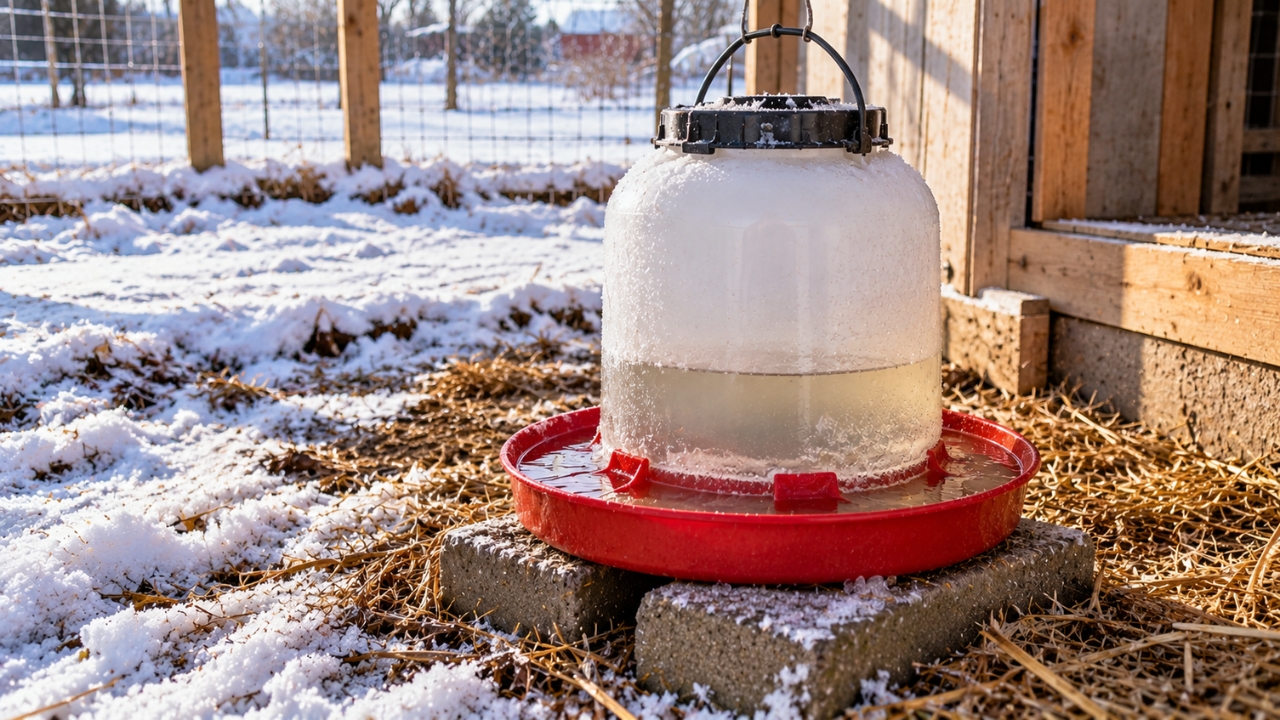
How to Keep Chicken Water From Freezing
Photo credit: Fix It Homestead
Frozen water is the most common winter chicken problem, and the one that costs you eggs the fastest. A laying hen drinks roughly a pint of water a day, and an egg is mostly water. When the waterer turns into a block of ice, laying drops off within a day or two.
Here are the practical ways to keep chicken water from freezing, from cheapest to most hands-off, plus the safety rules that matter when electricity is involved.
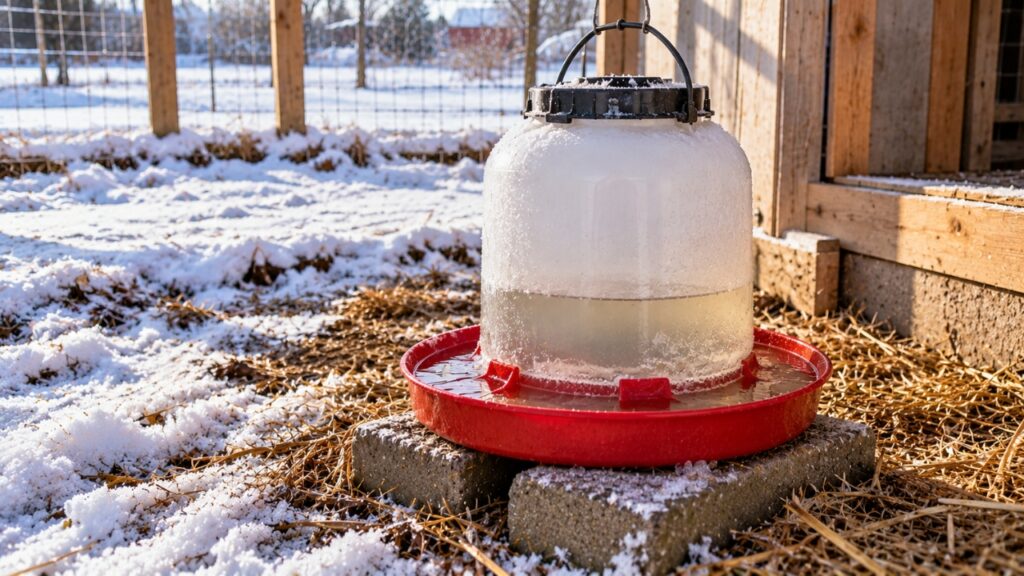
Quick comparison
| Option | Needs power? | Best for | Watch out for |
|---|---|---|---|
| Heated poultry waterer | Yes | Most backyard flocks | Needs a safe outdoor outlet |
| Heated base under a metal fount | Yes | People who already own metal founts | Don’t put plastic founts on a base unless the maker says it’s safe |
| Heated pet or livestock bowl | Yes | Small flocks, ducks | Gets dirty fast; set it up on a block |
| Heated nipple or cup system | Yes | Cleaner water, larger flocks | Nipples freeze first; needs a heater rated for it |
| Two rubber pans, swapped daily | No | No power at the coop | You have to swap them every day, sometimes twice |
| Floating tank de-icer | Yes | Livestock troughs, not chicken founts | Must be rated for the tank material |
1. A heated poultry waterer
For most people this is the easiest answer. These are plastic waterers with a small heating element built into the base that keeps water just above freezing. Plug it in, fill it, and check it daily like any other waterer. Look for one sized for your flock so you aren’t refilling twice a day, and one that is easy to clean.
2. A heated base for a metal waterer
If you already own galvanized founts, a heated base is a good add-on. The fount sits on a warming plate that keeps the water liquid. Metal founts are the right match here. Many plastic founts are not made to sit on a heated base, so check the instructions before you try it.
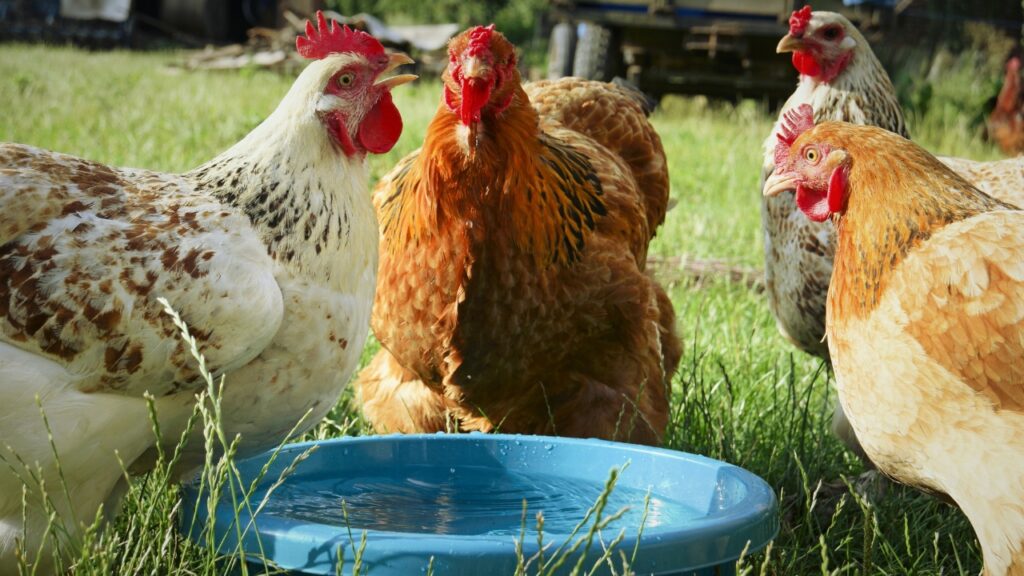
3. No power? Use the two-pan swap
If you can’t run electricity to the coop, flexible rubber pans are the simplest system. Keep two. Take a full one out in the morning, bring the frozen one inside to thaw, and swap again in the afternoon on very cold days. Rubber pans let you pop out ice by flipping and stepping on them, which plastic and metal can’t take.
- Fill with warm (not hot) water so it takes longer to freeze.
- Put the pan in the sunniest, least windy spot in the run.
- Set it on a block or paver so it stays out of the bedding.
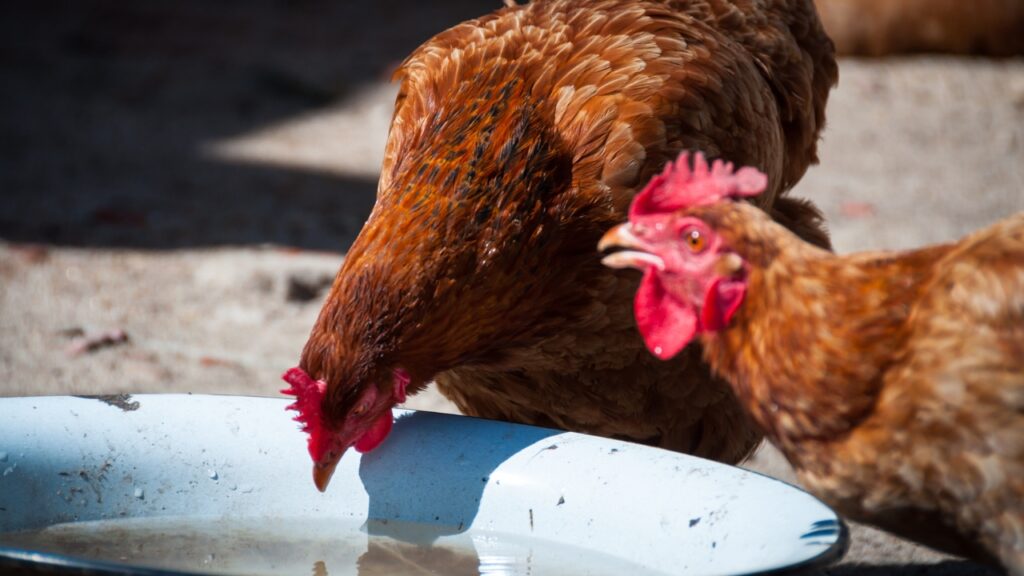
4. Nipple and cup systems in winter
Nipple waterers keep water clean, but the small valves freeze before the bucket does. If you use one in winter, choose a system with a heater made for it, and keep a backup pan nearby for the coldest nights.
What doesn’t work
- Salt in the water. It lowers the freezing point, but salty water is harmful to chickens. Don’t do it.
- Apple cider vinegar. Some people add it for other reasons. It won’t keep water from freezing.
- Homemade heaters made from a light bulb in a cookie tin. These show up online a lot. They are a real fire risk in a coop full of dry bedding. Buy a heater made for the job.
- Hot water poured over ice. It works for a few minutes, then refreezes harder. It’s fine in an emergency but it isn’t a system.
Electrical safety at the coop
Any heated waterer means electricity, water and dry bedding in the same small space. A few rules keep that safe:
- Plug into a GFCI-protected outlet.
- Use one heavy-duty extension cord rated for outdoor use. Don’t chain cords together.
- Run the cord where chickens can’t peck it and water can’t pool around the connection.
- Check cords and plugs every week for chewing, cracking or heat.
Where to put the waterer
- Raise it 6 to 8 inches on a block so bedding and droppings stay out.
- Put it in the run or a covered area rather than right next to the roost. Water inside the coop adds moisture to the air.
- Keep it out of the wind if you can. Wind freezes water faster than still cold air.
Water is one part of getting the flock ready. See how to winterize a chicken coop for ventilation, bedding and predator-proofing, and the full winterizing a small homestead checklist.