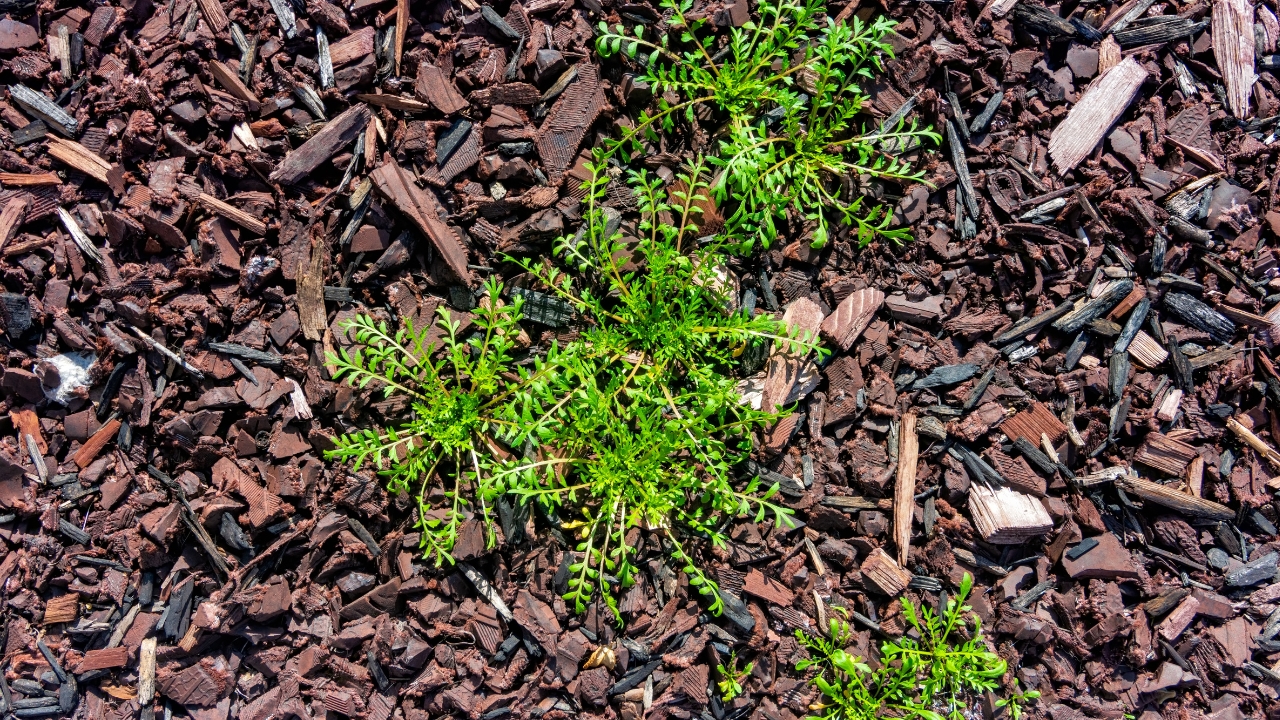
Bad mulch choices make weeds worse, not better
Photo credit: Tim Gray/Shutterstock.com
Mulch is supposed to make life easier. You put it down to keep weeds out, hold moisture in, and make beds look neat without having to babysit them every weekend. Then you blink and it’s July and your mulch bed looks like a weed nursery. That’s when people start saying mulch “doesn’t work,” or they assume they need to use more chemicals, thicker layers, or landscape fabric everywhere. The truth is mulch works, but certain mulch choices and installation habits can absolutely make weeds worse. Some types create a perfect environment for weed seeds to sprout, some break down too fast and turn into soil, and some get laid down in a way that basically invites every windblown seed to settle in and take root.
A big misunderstanding is thinking mulch kills weeds. Mulch doesn’t kill weeds. It blocks light and makes it harder for seeds to germinate and for seedlings to survive. If the mulch layer is too thin, too fine, or already full of organic material that behaves like dirt, weeds don’t struggle at all. They root right into it and you end up pulling weeds that snap off instead of coming out cleanly. If your mulch choice is feeding weeds more than it’s blocking them, you’ll be doing more work than if you’d never mulched in the first place, which is exactly the opposite of what most people are trying to accomplish.
Dyed mulch and cheap shredded mulch can turn into weed food fast
Dyed mulch isn’t automatically bad, but the cheap bags are often made from mixed wood sources, and they can break down quickly into a soft, soil-like layer. Once mulch starts decomposing, it becomes a planting medium. That’s great in a compost pile. It’s not great in a bed you’re trying to keep weed-free. Fine shredded mulch also tends to mat down, stay damp, and create the kind of environment that weed seeds love. When the top layer stays moist and the texture is soft, seeds don’t have to work hard to get started. They sprout, they root, and now you’re pulling weeds that are anchored into a mulch layer that’s basically turning into topsoil.
Another issue with cheap bagged mulch is inconsistency. You might get pieces that are too small, too dusty, or already partially composted. It looks nice for a couple of weeks, then it collapses. Once it collapses, sunlight can hit the surface in spots, and weeds find those gaps. And if you’ve ever noticed weeds popping up in perfect little clusters, that’s often because the mulch layer isn’t even. Thin spots are basically weed “landing pads.” People think they need to keep adding more mulch constantly, but if the product breaks down fast, you’re just creating a richer weed-growing layer every season.
“Mulch volcanoes” and piling it wrong invites weeds around plants
How you place mulch matters as much as what you buy. One of the biggest mistakes is piling mulch up against plant stems, tree trunks, or shrub bases. It’s common because it looks tidy right after you do it, but it creates a damp, protected zone where weeds can root, and it can also stress the plant by holding moisture against bark. That stress often leads to weak growth, which means the plant doesn’t fill in the bed as well, which means more sunlight hits the ground, which means more weeds. It’s a chain reaction that starts with a “nice-looking” mulch pile and ends with an uglier bed by mid-season.
Mulch should sit like a blanket, not a mound. A clean bed has an even layer across the surface with space around plant bases so stems aren’t buried. That even coverage is what blocks light consistently. When mulch is piled in some spots and thin in others, weeds sprout in the thin areas and you end up chasing them all season. And when mulch is piled up, it often shifts over time, leaving bare spots behind. Bare spots are where weeds move in first because the soil is exposed and warm. People will blame wind or rain, but it’s usually the initial installation that created the uneven bed in the first place.
The mulch types that usually work better for weed control
If weed suppression is the main goal, you generally want mulch that stays chunky enough to block light and doesn’t break down into soil too quickly. Pine bark nuggets or larger bark chips can work well because they don’t mat as easily and they hold structure longer. Cedar chips can also perform well, mostly because they’re often chunkier and last longer in the bed, though any organic mulch will eventually break down. The real key is choosing a product that doesn’t collapse into a fine, dirt-like layer within a season. When mulch holds its shape, it keeps light from reaching the soil surface, and that’s what slows weed germination.
Depth matters too. A thin layer of mulch is basically decoration. For weed control, you want enough depth to block light consistently, but not so much that you smother plants or create moisture problems. An even layer that stays in place does more than dumping a bunch in one spot and leaving others thin. If you’re dealing with heavy weed pressure, sometimes a one-time reset helps: remove the old, decomposed mulch that’s turned into soil, clean up existing weeds, then lay fresh mulch evenly. That reset is often what turns mulch back into a weed blocker instead of a weed nursery.
Like Fix It Homestead’s content? Be sure to follow us.