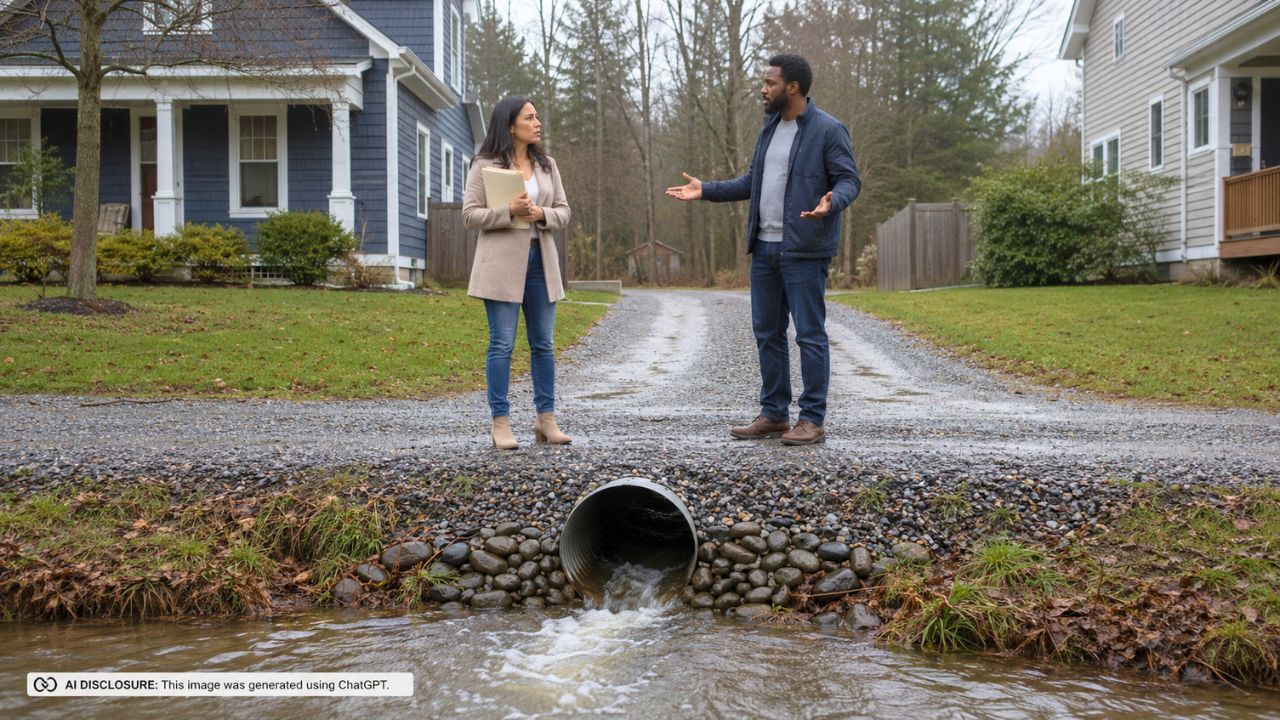
Buyer Discovers After Closing That the Neighbor’s Yard Has Always Drained Through a Culvert Pipe Under the Shared Driveway — Then the Neighbor Says Removing the Pipe Would Back Up Water Into Both Yards and Refuses to Discuss Alternatives
Photo credit: AI-generated image created using ChatGPT. Illustrative only.
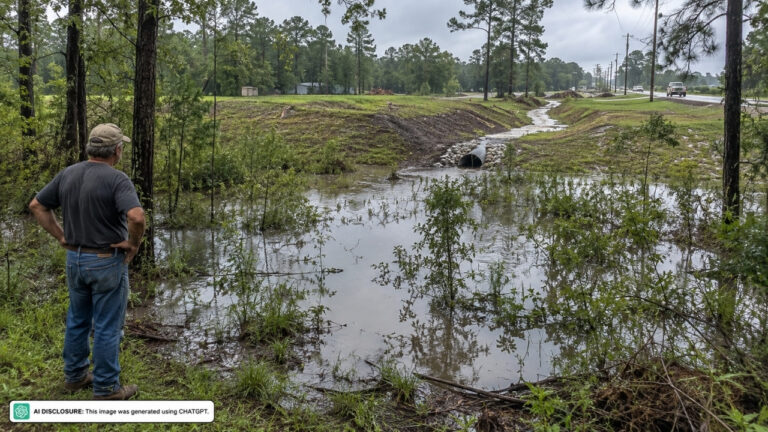
The first week after closing, the new owner thought the soggy patch near the shared driveway was just spring melt doing spring melt things. Then the ground stayed soft. The grass went dull. And every time it rained, water seemed to pick the exact same path—straight across the property like it had a routine.
What they eventually pieced together felt like one of those “how did nobody mention this?” surprises: the neighbor’s yard had always drained through a culvert pipe that runs under the shared driveway. When the new owner raised the issue, the neighbor didn’t deny it. The neighbor’s position was blunt: pulling that pipe would back water up into both yards, and they weren’t interested in talking about alternatives. The underlying legal and practical questions around neighbor-caused water problems are similar to those described in the source post about a sump pump discharge turning someone else’s backyard into a swamp.
The first sign was easy to brush off
Drainage problems have a way of looking “normal” right up until they aren’t. A little pooling after a storm? Most people shrug that off. Lots of yards hold water for a day or two, especially if the street grade sends runoff downhill.
But this wasn’t random pooling. It was directional—like someone had aimed it. And that’s the detail that changes the entire mood, because natural runoff is one thing, while redirected water is another.
Then the driveway became the plot twist
The shared driveway is where these stories get sticky. Two households use it. The drainage structure is physically tied to it. And once you notice there’s a pipe under there, you start mentally replaying every heavy rain you’ve seen since moving in.
A culvert under a drive can be a lifesaver for moving water where it needs to go. It can also be a quiet, buried “agreement” that no one ever wrote down—just something the neighborhood has lived with for years because messing with it would cause a mess.
That’s also why the post-closing discovery feels so personal. It’s not just that there’s water. It’s that the water is being managed in a way the buyer didn’t know they were inheriting.
Why “it’s always been that way” doesn’t calm anyone down
Homeowners love the phrase “it’s always been that way” when it benefits them. But it doesn’t answer the real question: is it supposed to be that way, and who’s responsible when it damages someone else’s property?
The Moneywise discussion lays out the basic dividing line people keep running into with water disputes: if water naturally runs from one yard to another due to existing grading after a storm, the uphill neighbor often isn’t liable just because gravity did what gravity does. But when someone takes specific action—like installing something intended to move water, such as a sump pump—there’s an expectation it’s handled properly and not dumped in a way that harms the next property over.
A culvert under a shared driveway isn’t a sump pump hose, but the emotional punch is similar: it’s a system moving water, and someone is benefiting from where that water goes.
Swampy yards don’t stay “just cosmetic” for long
The big fear with ongoing saturation isn’t just a muddy lawn. It’s everything that comes after. Soft ground can kill grass and invite weeds. Standing water invites mosquitoes. Wet soil presses against anything nearby—fences, slabs, crawlspaces—especially if the low spot sits near the house.
And once a yard starts holding water regularly, you can’t unsee it. You start watching storms like a hobby. You start timing how long puddles last. You start noticing where water collects along the foundation line and whether it’s seeping toward places you can’t easily inspect.
The worst part is that drainage problems are slow-burn expensive. They don’t always create a dramatic, insurable “event.” They just keep working on your property every time the sky opens up.
The neighbor’s refusal is what makes it feel unfixable
In a perfect world, the two households would walk the property line together, point at the low spots, and talk about a solution that doesn’t ruin either yard. Even when neighbors disagree, there’s usually some room for “What if we…”
Here, the refusal to discuss alternatives turns a maintenance question into a standoff. The neighbor’s argument—that removing the pipe would back water up into both yards—might even be true. Culverts are often installed for a reason, and removing them can cause water to pond in exactly the places you don’t want it.
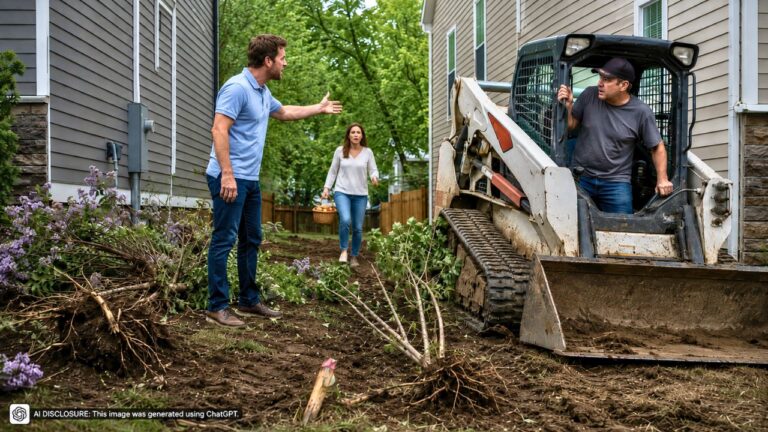
But refusing to even talk about options leaves the new owner stuck with two bad choices: live with the swamp, or start pushing the issue in ways that almost guarantee a relationship freeze.
How people in the comments tend to think about proof and responsibility
When homeowners compare notes on drainage battles, the practical crowd usually goes to the same place first: document everything before it turns into a shouting match. Not because they’re eager to sue, but because water problems are notoriously hard to “prove” once a week goes by and the yard dries out.
The Moneywise piece also hints at the core principle people come back to: liability often depends on whether the damage came from natural runoff versus something a neighbor intentionally installed or directed. In that article’s example, a sump pump is meant to protect a basement, but the owner still has a responsibility to make sure it drains properly. That idea—responsibility following the action—shows up again and again in neighbor-water disputes.
And it’s why these threads often end up focused less on feelings and more on records: photos after storms, notes on when the pooling happens, and any written communication showing the problem was raised calmly before it got heated.
Because once you’re past the “friendly talk” phase, the next steps usually involve outside eyes—contractors, drainage specialists, sometimes local rules about discharge and property damage. Nobody wants that. But people also don’t want to spend years watching their backyard turn into a sponge.
For the new owner, the tension isn’t just the pipe under the driveway. It’s the realization that a hidden piece of infrastructure can quietly dictate how two properties function—and that once you’ve closed, “always drained that way” can start sounding less like history and more like a problem you just inherited.