Rural Landowner Buys Forty Acres and Finds the Only Road In Has Been Chained and Gated by the Adjoining Property Owner — Then the County Says the Road Appears Private on All Maps and It Has No Authority to Intervene
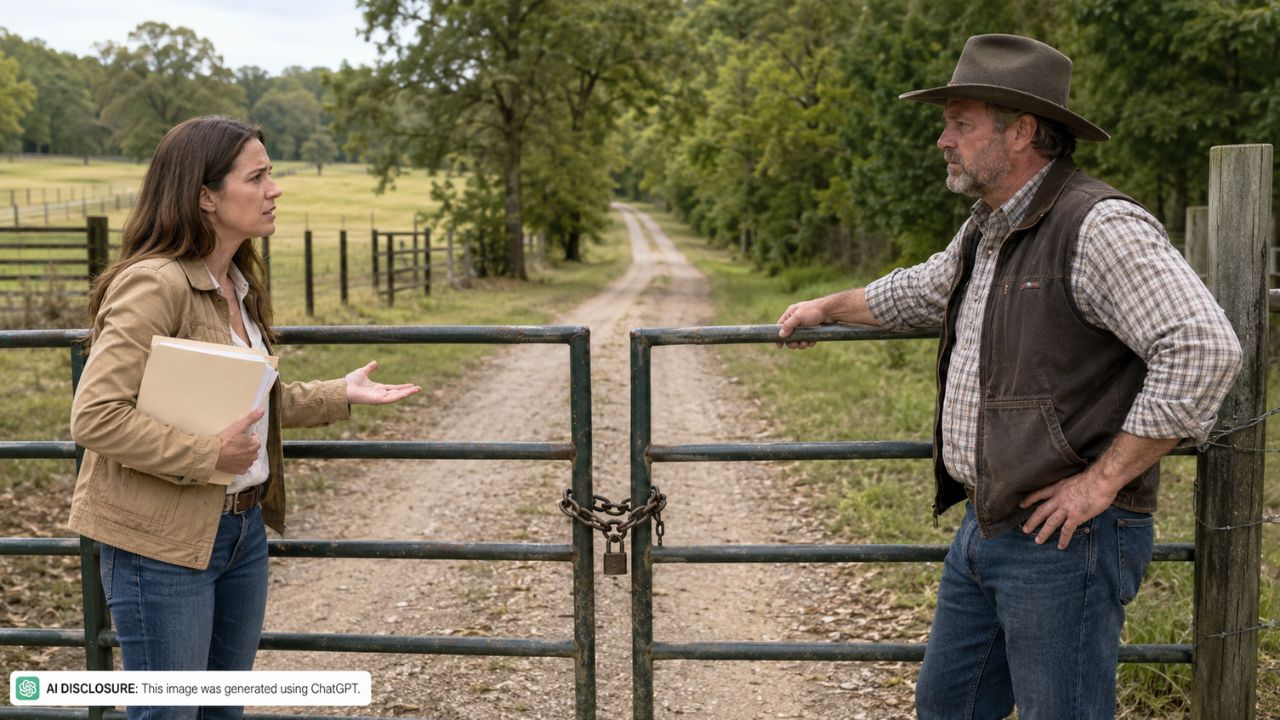
Photo credit: AI-generated image created using ChatGPT. Illustrative only.
The day you realize you can’t reach your own land is the kind of gut-drop moment rural buyers worry about but don’t expect to actually live. One Utah landowner described finding their access suddenly cut off when a neighbor chained and blocked the road leading in, leaving the property effectively unreachable.
In the source post, the owner said the road sits on the neighbor’s property and that there’s no practical way to build an alternative route. To make it even more tense, the neighbor isn’t a stranger—it’s the wife’s cousin—turning what might’ve been a clean “lawyer-to-lawyer” dispute into a family pressure cooker.
One chain turns acreage into a trap
When people talk about being “landlocked,” it can sound like a technical term. Out on a mountain, it becomes painfully literal: you can’t drive in, can’t bring in tools, can’t haul out trash, and can’t check on the place without risking trespassing.
The owner explained that their neighbors blocked the only road to the property and that the access route runs through the neighbor’s land. They also said there’s no way to construct another road to reach their own parcel, which is where this stops being a minor inconvenience and starts feeling like someone has effectively taken control of your property without touching your deed.
Even if you can hike in, rural property ownership isn’t “walk in when you feel like it.” It’s deliveries, seasonal maintenance, fire concerns, and the basic ability to get emergency help close to the land. A locked gate doesn’t just block a driveway. It blocks everything that comes with ownership.
It’s not just a neighbor dispute when family is involved
A normal property-line argument has one set of rules: keep it civil, keep it documented, and don’t say anything you wouldn’t want read in court. Adding a family relationship scrambles that. Suddenly the person holding the key might also be the person you see at holidays, and every conversation carries emotional baggage.
The owner made it clear the adjoining landowner is related—specifically, the neighbor is the wife’s cousin. That detail matters because it changes how people act. Some relatives assume a shared-road arrangement is “understood,” while the other side assumes it’s “their land, their rules,” and both sides feel personally slighted when the other treats it like a business matter.
When access gets shut off with a chain instead of a conversation, it’s also a signal. It says this wasn’t a misunderstanding handled in the open. It was a decision made unilaterally, with the expectation that the landowner will either give up or come begging.
The mountain location makes every delay more expensive
The property is located on Beaver Mountain in Utah, and anyone who’s owned land in a mountainous area knows how quickly “we’ll deal with it later” turns into a bigger problem. Weather can change access conditions. Seasonal work windows close fast. Something as simple as checking erosion, downed trees, or storm damage becomes a project if you can’t get a vehicle in.
And if the land is meant for future building, the ripple effects multiply. Surveyors, excavators, septic evaluation, well drilling—almost all of it assumes you can physically reach the site. A blocked road can stall plans and rack up costs in ways that don’t show up on paper until you start missing appointments and rescheduling crews.
There’s also the day-to-day fear factor: if you can’t access the land, you can’t confirm what’s happening on it. People worry about dumping, unauthorized use, or damage that goes unnoticed. Being locked out of your own acreage creates a strange kind of helplessness.
They hadn’t filed anything yet—because it just happened
The owner said they hadn’t taken any steps yet and had only discovered the blockade that day. That’s another detail rural folks will recognize: you might not visit a distant parcel every day, especially if it’s raw land, so you can be “fine” one week and shut out the next.
It also means the first response is a scramble—figuring out whether this is a temporary move, a misunderstanding, or the beginning of a long-term power play. You start mentally flipping through everything you know about the property: what the seller said, what the closing documents showed, what you assumed was a public or shared road, and whether you ever saw a recorded easement.
In these moments, the hardest part is that you feel behind before you even start. The chain is already up. The message has already been sent. Now you’re the one who has to react, document, and fight for something as basic as getting to your own land.
What people tend to zero in on: access rights and proof
Even without a long comment thread included, this kind of blocked-road story usually pulls out the same practical instincts from homeowners and landowners. Before anyone recommends a heated confrontation, people push for paperwork: deeds, title documents, surveys, and anything that shows whether an easement exists—even if it’s old, vague, or referenced in earlier transfers.
They also tend to focus on the difference between “a road exists” and “you have the legal right to use it.” Rural properties often have long-used routes that everyone treats as shared—until a new owner shows up or relationships change. That’s when “we’ve always driven through here” collides with “show me where it’s recorded.”
And because the road is physically on the neighbor’s land, the proof matters more. If there’s no written access right, the neighbor may feel emboldened. If there is, the chain becomes a different kind of risk—one that could bring court orders into play. Either way, most experienced landowners will tell you not to rely on verbal family agreements when the only access to your property is on the line.
The quiet dread: owning land you can’t reach
For now, the owner is standing at the start of a process that tends to be slow and stressful: figuring out what rights they have, and how to enforce them without triggering a neighbor war that lasts for years. It’s especially messy when the neighbor is family, because every step toward formal action can feel like a betrayal—even if the chain went up first.
The practical reality doesn’t wait for feelings to settle. Land needs access. Plans need roads. And even if the property is just a long-term investment, it’s hard to feel like you truly own something when another person can decide whether you’re allowed to enter it.
That’s the tension hanging over this kind of rural standoff: one locked gate can turn forty acres into a postcard you’re not allowed to visit, and the fix is rarely as simple as cutting a chain and hoping it all blows over.