Buyer Finds a Brand-New Fence Sitting Two Feet Onto the Neighbor’s Own Lot — Then the Neighbor Demands the Fence Stay Exactly Where the Contractor Put It
Photo credit: AI-generated image created using ChatGPT. Illustrative only.
A new fence should be one of those rare neighbor surprises that makes life easier: instant privacy, cleaner property lines, one less weekend project. But for one homeowner, the “free” upgrade came with a problem carved into the ground—a long, narrow trench-like drop running the length of the fence line.
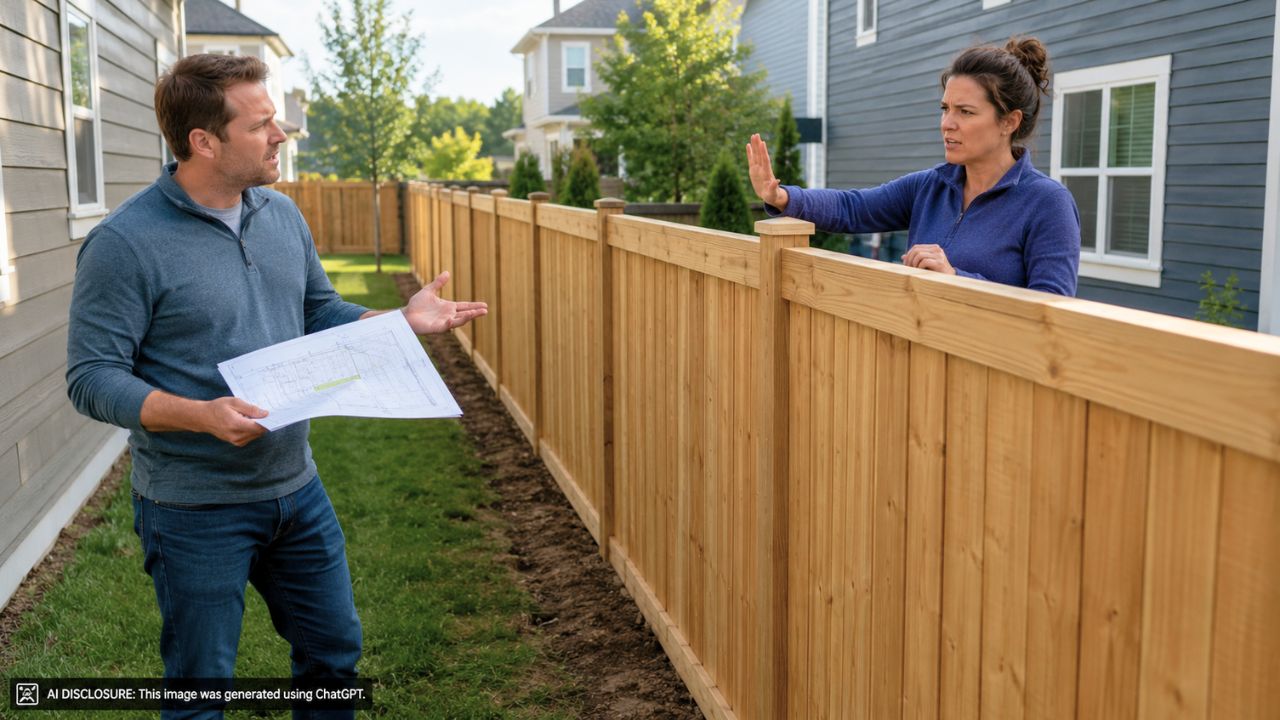
In the original post, the homeowner explained that the neighbors had their contractor install a brand-new fence set about two feet inside the neighbors’ own side of the property line. The poster wasn’t angry about where the fence landed—if anything, they sounded genuinely thankful. The worry was what the installation left behind: a channel about 20 inches wide, 12 inches deep, and roughly 31 feet long running alongside the new fence.
The fence looked like a gift—until the ground started telling on it
At first glance, the fence itself wasn’t the issue. The homeowner even led with gratitude, calling themselves “super grateful for the new fence.” That’s not how people talk when they’re gearing up for a turf war.
But fences don’t exist in isolation. They change the way you mow, where water goes, where dirt settles, and where you can safely pile anything. And the moment the homeowner looked down the line and saw a long, uniform drop-off next to the boards, it stopped feeling like a simple neighbor upgrade and started feeling like an unfinished job left for someone else to solve.
The dimensions mattered because they weren’t a tiny divot you can kick a little soil into and forget. A 31-foot run is long enough to become a drainage path, a tripping hazard, a pest-friendly gap, or a slow-motion erosion problem—especially if it sits right next to a garden bed.
The awkward part: it’s not “their” property, but it’s their problem
Here’s where these fence stories get messy in real life. The fence was installed two feet inside the neighbors’ side, which means the strip of land between the old posts/property line and the new fence isn’t technically the poster’s. The homeowner acknowledged that plainly: it’s “not technically my property post those old posts.”
But when the ground drops down right beside your yard, your landscaping doesn’t care about whose deed covers which inches. If water starts cutting channels, if mulch migrates, if the soil under a planting bed slumps toward the low spot, you’re the one watching it happen.
The homeowner’s immediate fear wasn’t theoretical. They mentioned their wife’s garden and worried it was going to “wash away into it.” That’s the kind of detail that turns a mild annoyance into a must-fix: once a garden starts sliding, you’re not just losing plants. You’re losing soil structure, edging, and whatever time and money went into getting it established.
“Just fill it” sounds easy—until you imagine a bowed fence
The homeowner’s first instinct was the same one most people have: fill the trench with dirt or mulch and move on. Then they stopped themselves, because packing material against a fence can create a different kind of damage.
They worried that backfilling might bow the fence. That’s a practical concern, not paranoia. Depending on how the fence was built and whether it’s designed to handle lateral pressure, piling soil against it can push boards and rails over time—especially after rain saturates the fill and adds weight. Even if the fence doesn’t visibly warp right away, a season of wet/dry cycles can shift things slowly.
And once a fence starts leaning or deforming, the question becomes: who pays to fix it? The person who tried to stabilize their garden, or the neighbor whose contractor left a trench behind? That uncertainty is where “being grateful” turns into biting your tongue every time you look at the fence line.
The part nobody wants to say out loud: this can turn into a boundary fight fast
Even without shouting, fences have a way of turning neighbors into amateur surveyors. Here, the fence being inside the neighbor’s side should have made everything simpler. It’s their fence on their land. No shared ownership. No “you can’t touch my side.”
But the homeowner still got stuck with a physical consequence right at the edge of everyday life: a long depression that can collect runoff and steal soil from a nearby garden. If they fill it in, they risk impacting the fence. If they leave it, they risk watching landscaping degrade. If they ask the neighbor to address it, the neighbor may feel like they already did a favor by paying for the fence and won’t want a second bill.
That’s how a good gesture turns into a standoff. One side feels they’ve already given more than required. The other side feels they’re being asked to live with the side effects. And because the fence sits two feet inside, the neighbor can dig in—literally and emotionally—by saying the fence is staying exactly where the contractor put it.
How commenters tend to react when the fence is “nice,” but the grading is wrong
The post itself was a direct request for advice: what do you do with a long drop-down next to a new fence when you’re afraid backfilling could damage it? That’s the kind of question that usually brings out two schools of thought from experienced homeowners and landscapers.
One camp focuses on water and soil behavior: you don’t want a channel that invites erosion, and you don’t want loose fill slumping against a fence. The practical tone in these discussions tends to revolve around controlling runoff, compacting properly, and thinking about where water goes during heavy rain—because that’s when “a little dip” becomes a washout.
The other camp focuses on documentation and avoiding misunderstandings. When a fence and a property line are involved—even when everyone is trying to be friendly—people often push for clarity before anyone moves dirt around. Not because everyone is itching for a fight, but because once you alter grade near a new fence, it’s easy for the story to change later: who changed what, who caused the bulge, who blocked drainage, who undermined posts.
In other words, the fix isn’t only about soil. It’s about avoiding a future argument where the only evidence is two neighbors pointing at the same 31-foot stretch of ground.
The homestead reality: the ground always wins if you ignore it
The homeowner’s closing line said it all: if they don’t do something, the garden is going to wash away into that drop. That’s the kind of slow problem that becomes expensive because it doesn’t look dramatic on day one.
Maybe the trench fills with leaves and hides until someone steps in it. Maybe it becomes the low spot where water sits, turning into mud against the fence line. Maybe it becomes a permanent trough that steals topsoil a storm at a time. Or maybe it stays mostly fine—until the week it isn’t, and you’re rebuilding an edge and replanting what slid.
A new fence can feel like the end of a project. But when the install changes the grade, it can also be the start of one. And for this homeowner, the hard part isn’t appreciating the privacy—it’s figuring out how to protect their yard without accidentally damaging a fence that isn’t even on their land.
Like Fix It Homestead’s content? Be sure to follow us.