Rural Property Owner Finds a Boundary Fence Has Stood Sixty Years on the Wrong Side of the Line — Then the Neighbor’s Attorney Cites Adverse Possession
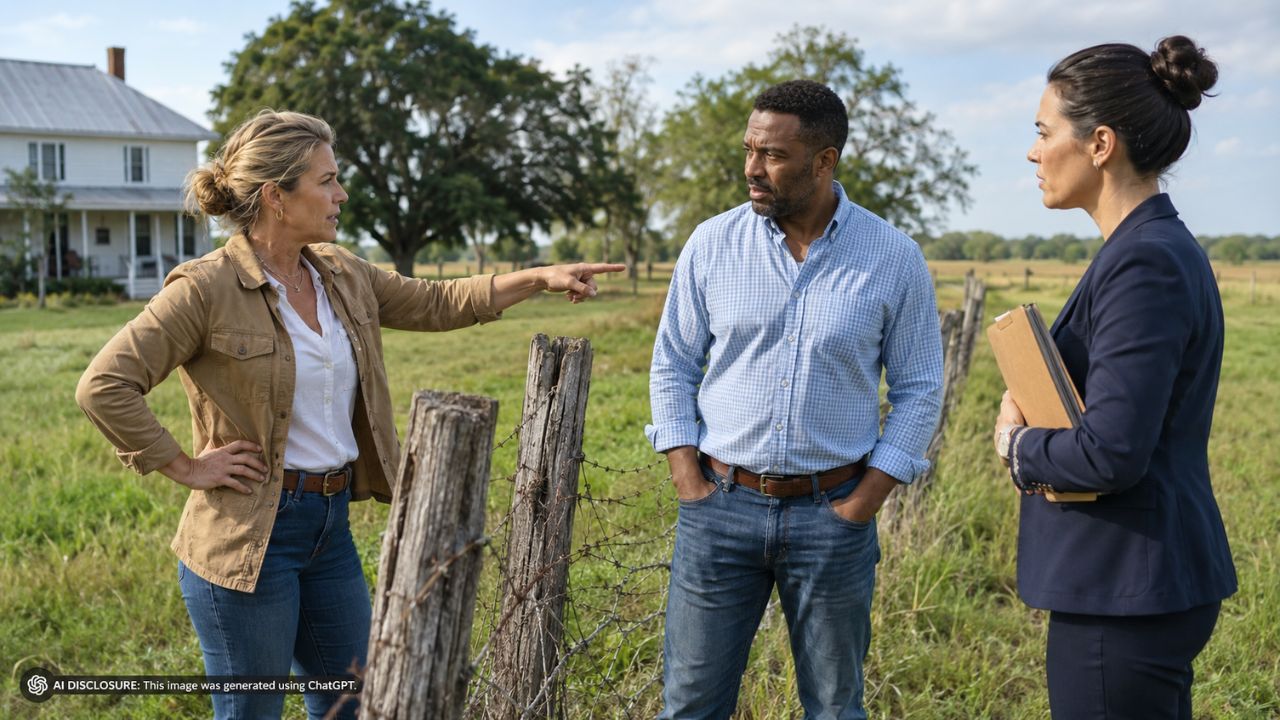
Photo credit: AI-generated image created using ChatGPT. Illustrative only.
The fence had “always been there,” the kind of old boundary line everyone around a rural place treats like gospel. Then a relative passed away, the heirs stepped in, and suddenly the neighbor wasn’t just making small talk—he was talking about feet of land on the other side of that fence.
In the original post, a Texas family described inheriting a house after a death in the family. The neighbor—who also wants to buy the property—now claims the fence is “multiple feet over” onto his land, even though it’s been in the same spot for 62 years. And to make it more complicated, the neighbor’s side is pointing at a concept that makes rural property owners go cold: adverse possession.
A death in the family turned a quiet fence into a bargaining chip
Before the ownership change, the fence line apparently wasn’t a daily topic. That’s how these things go in the country: people park equipment, run livestock, mow up to a familiar line, and decades pass with nobody digging out maps.
But when an estate is involved, everything gets sharper. The heirs aren’t just dealing with grief and paperwork—they’re suddenly responsible for a major asset, and the neighbor sees an opening. He wants to buy the house, and at the same time he’s insisting the fence isn’t where it “should” be.
The heir who posted was blunt about what it felt like: ridiculous, and suspiciously timed. If the fence has been “wrong” since the early 1960s, why bring it up now—right when the neighbor is trying to purchase the place?
“It’s over the line”—the phrase that can freeze a sale
A fence being “multiple feet over” doesn’t sound dramatic until you picture the real-world consequences. A few feet along a long run of fence can turn into a strip of land big enough to matter—room for a driveway edge, a gate swing, a line of trees, a shed corner, even a spot someone’s been mowing and treating as their own.
And once a buyer gets wind of a boundary dispute, the whole transaction can stall. Title companies get nervous. Lenders get cautious. Even cash buyers start renegotiating, because nobody wants to inherit a neighbor feud with legal teeth.
That’s why this kind of claim hits harder when a property changes hands. The land didn’t move, but the leverage did.
The adverse possession scare: does a new owner reset anything?
The heir’s big question was practical: does changing ownership “reset” adverse possession? In other words, if the original owner didn’t fight about the fence for decades, do the heirs get a fresh start just because the deed is changing?
This is where people get blindsided. Adverse possession is built on time and behavior—who possessed the land, how openly, for how long, and whether it was treated like an owner would treat it. When a fence has stood in one spot for 62 years, that time span immediately triggers everyone’s mental alarm bells, because it’s longer than most legal timelines people have heard of.
But it’s not as simple as “the fence was there, so the neighbor wins,” and it’s not as simple as “it’s a new owner, so everything resets.” The fear for heirs is that they’re stepping into the prior owner’s shoes. If the property’s history matters, then the estate transition doesn’t magically erase it.
Even without a court filing yet, just having the neighbor’s attorney cite adverse possession can feel like a warning shot: accept a shifted line, accept a lower price, or prepare for a fight.
What makes a 60-year fence feel “true,” even when the map says otherwise
In rural areas, fences aren’t just markers. They’re routines. They’re who fixes posts after a storm, who keeps brush down, who runs animals where, who unlocks what gate. Over decades, a fence becomes the lived boundary even if it was originally placed for convenience, not precision.
That’s also why these disputes get personal fast. The neighbor isn’t just saying, “My survey says X.” He’s indirectly saying, “Your family has been using my land,” or the other way around depending on who you believe. And because he also wants to buy the house, every conversation gets filtered through motive.
The heirs are looking at it like this: if it bothered him, he had a lifetime to speak up. The timing makes it feel less like a genuine boundary correction and more like a tactic to buy the place cheap.
Reactions focused on proof: surveys, paperwork, and not touching the fence
When fence-line stories like this come up, the most common practical reaction is: stop arguing from memory and start arguing from documents. People tend to split the problem into two tracks—what the recorded boundary is, and what decades of use might have legally changed.
That usually means getting a real survey instead of relying on old assumptions. Not a hand-drawn sketch, not a “my cousin said the pin is over there,” but a professional line that can be tied to legal descriptions. In disputes where someone is already waving around an attorney’s theory, homeowners also tend to advise doing everything in writing and keeping the tone calm.
And one point comes up again and again in these kinds of neighbor conflicts: don’t move the fence in anger and don’t tear it out to “prove a point.” Once you start altering a long-standing boundary marker, you can accidentally hand the other side exactly what they want—either evidence of control, or a new argument about damages and access.
For heirs trying to settle an estate, the emotional temptation is to push back hard. The practical temptation is to ignore it and hope it goes away. Neither one is great when a property may need to be sold cleanly.
Why this gets messy for heirs: time pressure and uneven information
Heirs often inherit a house without inheriting the story. They may not know who paid for the fence, who maintained which side, whether any handshake deal existed, or if there’s an old survey rolled up in a closet somewhere.
The neighbor, on the other hand, has had years to form his narrative. And if he’s the one initiating the purchase conversation, he can steer it: “I’m interested, but you should know…” That can plant doubt and weaken the heirs’ negotiating stance before they’ve even had a chance to gather records.
Meanwhile, estates run on deadlines. Taxes, insurance, utilities, basic upkeep—those bills don’t pause while a boundary argument simmers. A strip of land that might not matter day-to-day can suddenly matter a lot when it threatens the sale price or delays closing.
In the end, a fence that stood quietly for 62 years turned into a pressure point at the worst possible time. The heirs are left deciding what they can prove, what they’re willing to fight over, and whether the neighbor’s sudden certainty is about correcting a boundary—or controlling the deal.
Like Fix It Homestead’s content? Be sure to follow us.