Buyer Finds Out the Seller Added a Room Without a Permit — Then the County Sends a Notice Requiring the Work to Be Torn Out or Brought Up to Code
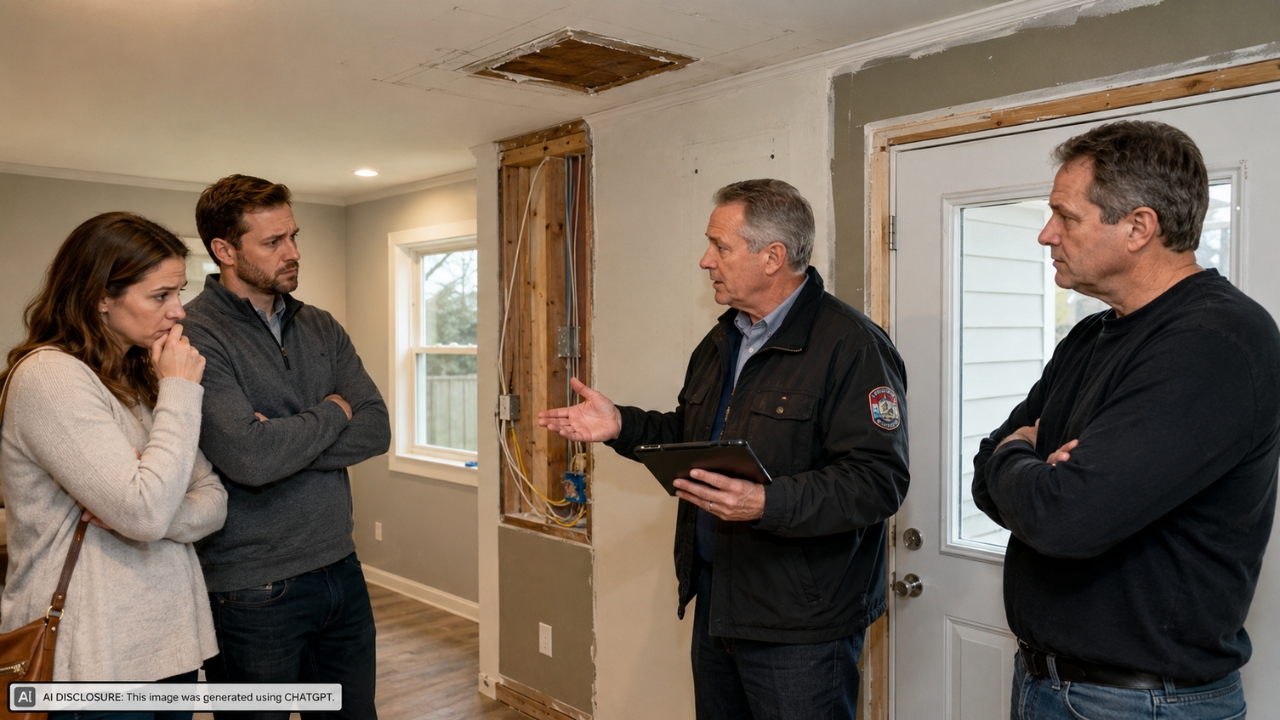
Photo credit: AI-generated image created using ChatGPT. Illustrative only.
It started like a normal homeownership chore: a new roof, a few contractors coming and going, and that familiar sense of finally getting ahead of the maintenance list. Then a code compliance vehicle drove by, slowed down, and the whole project suddenly felt like a spotlight had been switched on.
In the original post, a Florida homeowner said they bought their house only a few months ago and aren’t in an HOA. But after roofing work kicked off, the property drew attention from code enforcement—and what followed wasn’t a friendly reminder. It was a sweep.
A roof project turned into a full-property inspection from the street
The homeowner described a drive-by that didn’t stop at one issue. Code compliance flagged visible items that sound small on their own—like a trash can in plain sight, patchy grass needing new sod, and dead palm trees that needed trimming.
Those are the kinds of “welcome to the neighborhood” citations that can feel nitpicky, especially to someone who just moved in and is already spending money on big-ticket repairs. But the bigger hit wasn’t cosmetic. It was something permanent and expensive to undo.
The homeowner said the pavers around the driveway and walkway were also targeted, and that’s where things got serious. The house was purchased with those pavers already installed. Only now were they learning the work was unpermitted and that they were considered in violation.
The most frustrating part: “We bought it this way” doesn’t stop a notice
There’s a moment a lot of new homeowners recognize instantly: realizing that a problem from the past has your name on it now. The pavers weren’t a weekend DIY project they tried to sneak past the county. They were already there when the keys changed hands.
But code compliance doesn’t usually care who poured the concrete, ran the wiring, or laid the pavers. They care that it’s there, that it wasn’t approved the way the county requires, and that the current owner is responsible for making it right.
That’s the trap. You can do everything you’re “supposed” to do—get inspections, close the deal, start improving the property—and still get hit with enforcement once outside attention lands on your address.
Unpermitted exterior work can snowball faster than people expect
When people hear “unpermitted work,” they often picture a secret bedroom or a DIY bathroom remodel. This was outside: pavers around a driveway and walkway. The homeowner’s surprise makes sense, because lots of neighborhoods have pavers and hardscaping that looks standard.
But depending on the county and how the work was done, exterior changes can touch multiple rules at once. Pavers can affect drainage, stormwater flow, right-of-way boundaries, and sometimes even utility easements. If the installation extends into an area the county considers protected or regulated, it can move from “annoying paperwork” to “fix it or remove it.”
The homeowner didn’t describe the exact contents of the notice, but they did say they were in violation for unpermitted work. That’s the kind of language that tends to come with deadlines, follow-ups, and escalating penalties if the county believes the property isn’t being brought into compliance.
The paperwork problem: proving what’s permitted when you didn’t do the work
Once code enforcement flags something, the immediate stress isn’t just the potential cost—it’s the scramble for documentation. If you didn’t install the pavers, you may not know who did. You may not have receipts, plans, or a contractor’s information. And you may not even know what the county expects the “correct” version to look like.
Homeowners in this position often end up doing detective work: pulling property records, searching for old listings, and trying to match dates. Even if the work could be permitted after the fact, the county might require drawings, a site plan, or verification that the work meets current standards.
Meanwhile, the clock doesn’t stop just because you’re new. The homeowner’s post reads like someone trying to figure out the proper next move before the problem gets bigger—because once a violation is logged, it can be harder to make it disappear quietly.
What people pushed back on: don’t treat code compliance like a casual complaint
The homeowner asked a simple question—what’s the proper way to handle this?—and that’s where a lot of homeowners get tripped up. It’s tempting to assume a code officer will take it easy if you explain you just bought the place.
In practice, a notice is usually a process, not a conversation. The fastest path forward tends to involve finding out exactly what the county is citing, what they’re requiring (remove vs. permit vs. modify), and what proof they’ll accept. The homeowner’s list of issues—from trash can placement to landscaping to the pavers—also shows another reality: once your property is on the radar, they may keep looking.
Even in neighborhoods without HOAs, code compliance can function like a rolling checklist. That can feel personal when you’re the one getting tagged, but from the homeowner’s point of view, it means you have to respond like it’s formal—because it is.
The uneasy ending: trying to fix today without paying for yesterday
The homeowner’s story doesn’t have a clean resolution yet. They’re only a few months into ownership, already spending on a roof, and now staring at the possibility of having to undo or legalize work they didn’t choose.
It’s the kind of homeownership whiplash that makes people question the whole transaction: What did the seller disclose? What did inspections cover? Should the pavers have been caught? And if this slipped through, what else might be lurking?
For now, they’re in the part nobody daydreams about when they picture buying a house in Florida: juggling roofers, sod, dead palms, and a county compliance file—all while trying to figure out how to make an inherited, unpermitted upgrade either meet code or go away. That’s a rough way to learn that “no HOA” doesn’t always mean “no rules.”