Buyer Learns Before Closing That the Seller Added a Bathroom Without a Permit — Then the County Says the Work Cannot Be Grandfathered In and Must Be Redone
Photo credit: AI-generated image created using ChatGPT. Illustrative only.
In a competitive Northeast market, it’s easy to focus on the shiny parts of a 1950s house—the refreshed kitchen, the extra bath, the “we already did the hard stuff” feeling that lets you picture move-in day instead of months of demo dust. That’s exactly where one first-time buyer’s head was at, right up until the sellers dropped a late detail that changed the entire tone of the deal.
After the buyer’s offer was received and accepted, the sellers disclosed that several remodel projects were completed without permits. The buyer laid out the details in the original post, and the list wasn’t small: a porch conversion into a formal dining room, an added bathroom, a full kitchen renovation, and a new washer/dryer mudroom. The work was described as “to code” and done by licensed contractors—but no permits were pulled.
The timing of the disclosure is what rattled them
The buyer wasn’t posting because they thought the workmanship was sloppy. They were posting because the disclosure came after the offer was already in play, when most people feel like the big hurdles are behind them and the rest is paperwork, inspection, and closing logistics.
That timing matters because it changes the buyer’s leverage and their stress level. It also triggers an ugly thought: if permits weren’t pulled for multiple major upgrades, what else might be “fine” until it isn’t?
In older homes especially, the line between “cosmetic updates” and “this altered the bones of the building” can get blurry. A new kitchen can be simple cabinet swapping—or it can mean electrical changes, plumbing moves, ventilation changes, and hidden work behind walls that the next homeowner inherits.
Four “done” projects, one big paper problem
The renovations the buyer listed covered a lot of ground, and each one carries its own paper trail in most jurisdictions. A porch turned into a dining room can involve insulation, windows, heating, and egress questions, even if the seller insists only non-load-bearing walls were modified.
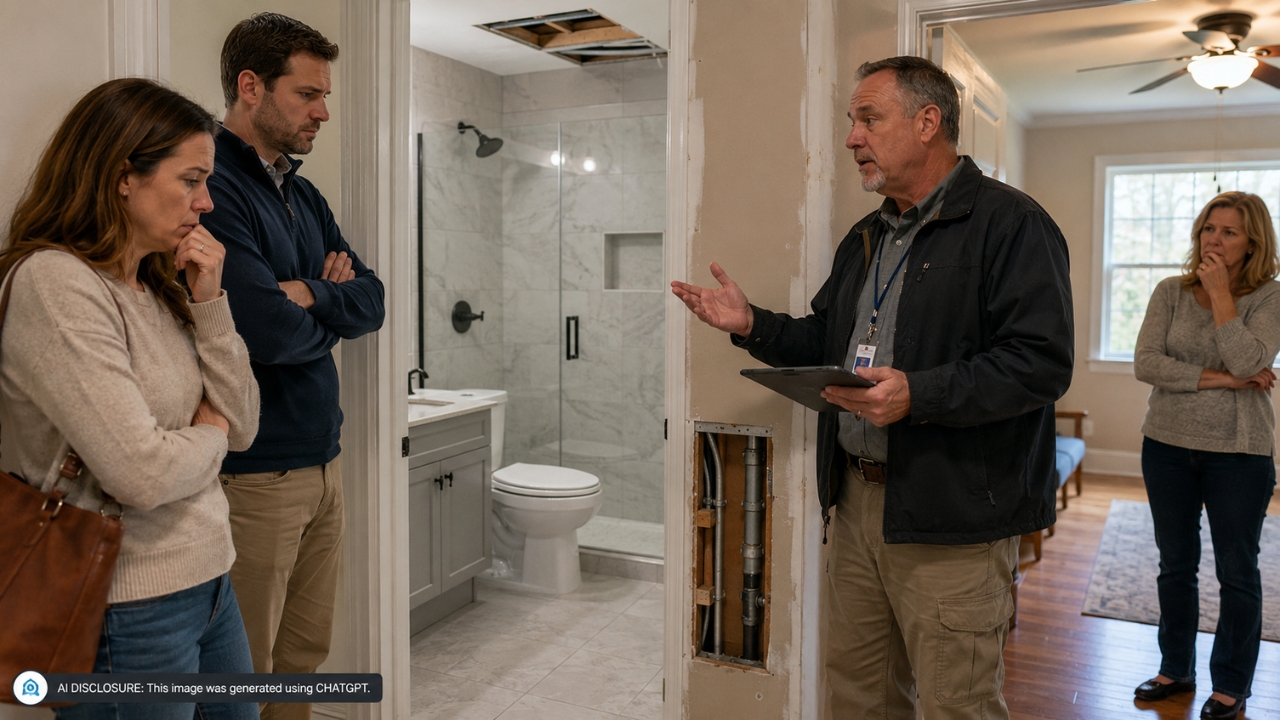
The bathroom addition is the one that tends to set off alarm bells fastest. Bathrooms are plumbing, drains, venting, and often electrical. If an added bath isn’t in the county records or doesn’t match what the house is “supposed” to have, it can become the kind of issue that forces a buyer to choose between paperwork headaches now or resale headaches later.
Then there’s the mudroom with washer/dryer hookups. Water supply lines, drain lines, venting, and electrical loads all live in that seemingly simple “laundry area.” The kitchen, too—most full kitchen renovations touch multiple trades, even when everything looks tidy and finished.
The real fear wasn’t the remodel—it was the next remodel
The buyer’s worry wasn’t framed as, “Will the bathroom leak tomorrow?” It was more like, “What happens when I try to do anything else?” They mentioned finishing the basement or doing add-on renovations later and feared the unpermitted history could become a roadblock.
This is where homeowners get trapped in a weird limbo. You can live with unpermitted work for years and never have a problem—until you pull a permit for a totally different project, and suddenly the old work is visible in a way it wasn’t before. If the record doesn’t match reality, you’re the person standing there trying to explain why the house has an extra bathroom that doesn’t officially exist.
Even if the work truly was done “to code,” permits aren’t only about quality—they’re about documentation and inspections. For buyers, it can turn a supposedly updated house into a question mark: not necessarily dangerous, but potentially expensive and time-consuming to sort out if the municipality ever takes an interest.
“It goes unseen after a decade” is not a plan
The buyer’s realtor tried to calm things down with a familiar line: unpermitted work generally goes unseen after a decade. The buyer didn’t fully buy it, especially because the renovations were completed in recent years, not decades ago.
That’s the hard part about advice like that—it’s not really advice, it’s a bet. It’s a bet that no one complains, no future project triggers scrutiny, no appraiser or insurer asks the wrong question, and no buyer down the road gets spooked and demands a discount or repairs. Sometimes that bet pays off. Sometimes it becomes the thing that complicates every future decision.
And in a 1950s home, “recent years” can be the worst timing. The work is new enough that it may not feel like an accepted part of the home’s history, but old enough that opening walls later could mean tearing out finished materials just to prove what’s behind them.
Reactions centered on leverage, documentation, and future resale
The buyer came looking for insight because it’s their first purchase, and the stakes feel lopsided: the sellers already got to enjoy the upgrades, and now the buyer is the one deciding whether to inherit the paperwork risk.
When people weigh in on scenarios like this, the most practical reactions tend to cluster around the same themes: get everything in writing, figure out exactly what was changed, and don’t rely on verbal assurances that something is “to code.” Licensed contractors can do excellent work, but without permits, the buyer may not have the inspection history that would normally back up those claims.
Resale value is the other pressure point. Even if today’s buyer is willing to live with it, tomorrow’s buyer might not be. Some future purchaser could demand that the unpermitted bathroom be permitted retroactively, removed, or redone—especially if it changes the home’s bed/bath count compared to public records.
And that’s where the anxiety really lives: not in the tile job, but in the uncertainty. The buyer isn’t just buying a bathroom. They’re buying the possibility of having to reopen finished work later to satisfy someone else’s rulebook.
The house can be beautiful and still be a headache
The buyer’s post reads like someone standing at the edge of a commitment, trying to decide whether “updated” means “safe” or just “new.” In a fast market, the pressure is to keep moving—don’t rock the boat, don’t lose the house, don’t make the sellers mad. But unpermitted work has a way of becoming a long-term companion, not a short-term inconvenience.
If the buyer moves forward, they’ll likely do it with a new mindset: treat every future project as a moment where the past might resurface. If they walk away, it won’t necessarily be because the renovations are bad—it’ll be because the paper trail is missing, and missing paperwork can turn a normal basement-finishing dream into a drawn-out, expensive reroute.
That’s the quiet dread in homes like this. Everything looks finished. Everything looks clean. But the most important part—the part that proves the work can stand up to scrutiny—was never done, and now it’s the buyer who has to decide whether that’s a harmless shortcut or a problem waiting for the next permit application.