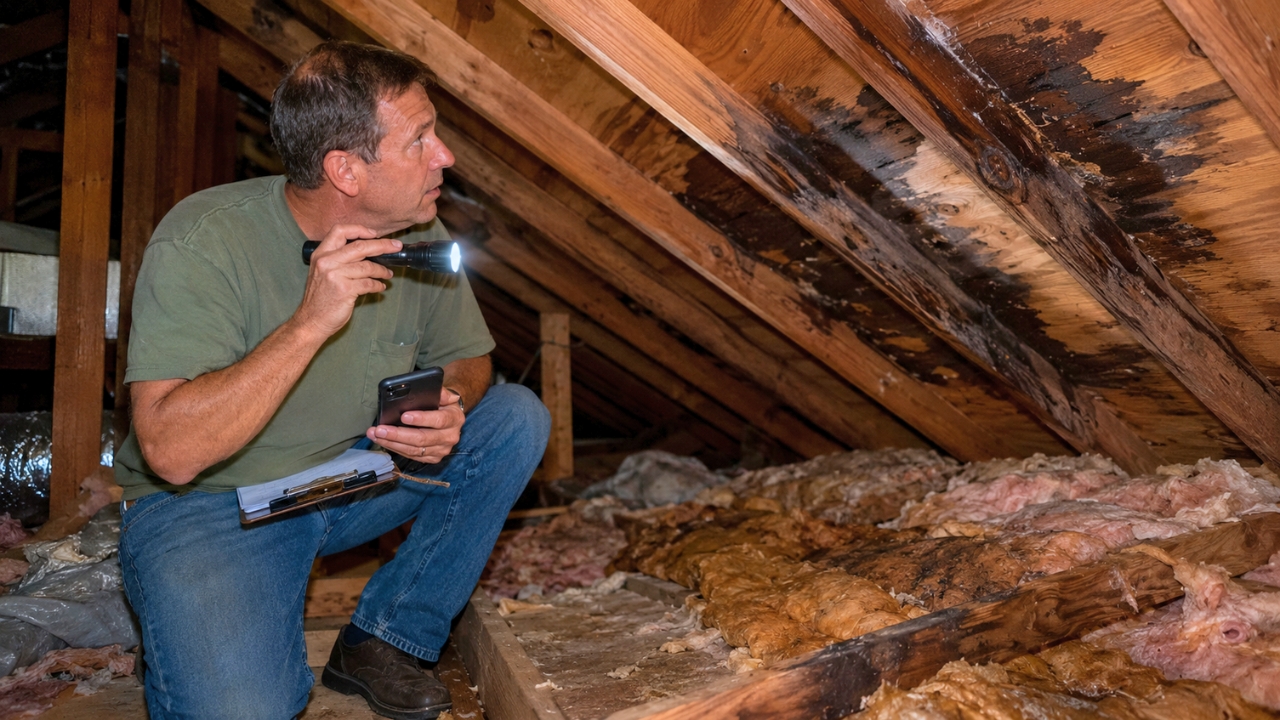
Buyer Says the Inspector Called the Roof Good — Then They Found Water Damage in the Attic
Photo credit: Fix It Homestead
Buying an old house comes with a certain amount of risk. Most people understand that a home built in the early 1900s is probably going to have quirks, repairs, and a few surprises tucked away somewhere. But there is a big difference between expecting normal age-related issues and finding out that major problems may have been sitting there the whole time.
That is what one first-time homeowner described after buying a house in 2021 and later discovering serious roof, water, plumbing, and electrical problems that they believed should have been caught during inspection. They shared the situation in a Reddit post on r/homeowners, explaining that the inspector had told them the roof was good and that an old leak had been fixed. The original post is here: https://www.reddit.com/r/homeowners/comments/18w4elc/bought_a_house_inspector_said_roof_was_good_found/
According to the homeowner, the house was built in the early 1900s, so they were not expecting perfection. Older homes often come with worn finishes, outdated repairs, tired materials, and systems that need attention. The issue, in their view, was that the inspection had made them feel more comfortable than they should have been.
The inspector reportedly told them that the roof had leaked in the past but had been repaired. They also said the electrical system was good, the pipes were good, and everything generally appeared acceptable. For a first-time buyer, that kind of reassurance can carry a lot of weight. When you do not know what you are looking at yet, you rely heavily on the person you hired to find the expensive problems before you close.
Then the homeowner started finding things that did not match what they had been told.
A few months after moving in, they discovered that some pipes were corroded. They also found live wires hanging around in crawl spaces. Worst of all, the supposedly fixed roof leak was not actually fixed. Water had been getting in, and the damage was not minor. The homeowner said there was major water damage to wood and ceiling materials, including rotted wood that was large enough to make the repair feel overwhelming.
The hardest part was that some of the damage was not sitting in plain sight. The homeowner said certain areas could only be found by climbing, reaching, and working into awkward spaces. That created one of the biggest arguments in the thread: what exactly should a home inspector be expected to find?
From the homeowner’s perspective, the problems were too serious to shrug off. They believed the inspector had blatantly lied and wondered if he may have had some connection to the sellers. They felt like they had trusted the inspection report, closed on the house, and then started uncovering thousands of dollars in issues they never would have accepted so casually during the buying process.
The financial stakes were heavy. The homeowner estimated the repairs would likely cost more than $15,000. Between the rotted wood, water damage, corroded pipes, and electrical concerns, this was not a situation where a weekend patch and a few supplies would handle it. Each issue pointed to a different trade, and each trade meant more money.
They also suspected insurance would not cover the roof damage because it did not appear to be sudden. That is a painful reality for homeowners dealing with long-term leaks. Homeowners insurance often handles sudden and accidental events differently than old leaks, maintenance problems, rot, or gradual deterioration. So even though the damage was new to the buyer, it may not have been new to the house.
That left the homeowner wondering if they had any recourse against the inspector. Could they sue? Could they prove the problems were there at the time of inspection? Could they show that the inspector had missed something obvious or misrepresented what he saw?
The thread showed how complicated that question can get. An inspection can feel like a safety net when you are buying a house, but it is usually limited. Inspectors often do not move walls, tear into ceilings, crawl into dangerous spaces, or take apart finished areas. Their reports may also include language that limits liability, especially for hidden or inaccessible areas.
Still, for the homeowner, that did not erase the frustration. They said they found some of the issues within months of buying and had photographed the damage. At first, they planned to fix things as they went. But as more was opened up, the repairs kept growing in cost and scope. That is often how older-house problems snowball. One ceiling stain leads to a roof issue, the roof issue leads to rotted framing, and the rotted framing leads to a much bigger project than anyone expected.
Commenters were split between sympathy and blunt reality. Several people told the homeowner that most inspection contracts heavily limit the inspector’s responsibility, sometimes to little more than refunding the inspection fee. Others said it would be very hard to prove what the inspector could see at the time, especially years after the inspection.
A number of commenters pointed out that inspectors generally inspect what is visible and safely accessible. They do not perform destructive inspections, open walls, or crawl into every unreachable corner of a house. Some argued that if the damage required difficult access or “acrobatics” to find, the inspector may not have been expected to see it.
Other commenters said the situation was still a warning for future buyers. Several urged people to attend the inspection, walk with the inspector, ask direct questions, and hire specialists for older homes when something matters. For a 100-year-old house, some suggested bringing in a roofer, electrician, plumber, or structural professional instead of relying only on a general inspection.
A few users also raised the insurance angle, saying the homeowner should read their policy carefully and ask about water damage coverage. Even if the leak itself was not covered as a sudden event, some commenters thought there might still be a path depending on the policy, the cause, and the documentation.
The clearest lesson from the discussion was not that every inspector is useless or every old house is a mistake. It was that an inspection is not the same thing as a guarantee. For older homes especially, buyers may need more than one set of eyes before they sign the papers.