HGTV’s favorite tile layout is the reason some bathrooms feel busy
HGTV-style bathrooms often lean on intricate tile layouts that photograph beautifully but can leave you feeling oddly restless in real life. When every surface is patterned, gridded, or sliced into tiny pieces, your eye never gets a break, and the room starts to feel smaller and busier than it really is. If your bathroom feels more chaotic than calming, the tile pattern you copied from your favorite reveal might be the main reason.
The good news is that you can keep the character and polish you love from HGTV projects while dialing down the visual noise. By rethinking scale, grout, and how many layouts you mix together, you can turn a fussy space into a quiet, spa-like room without giving up style.
How HGTV’s go-to layouts create visual noise
When you watch a renovation show, you usually see dramatic tile reveals that rely on multiple patterns, borders, and accent walls to create instant impact on camera. In a still photo or a quick pan across the room, that complexity reads as rich and layered. Lived in every day, especially in a compact bathroom, the same layout can feel like clutter you can never put away. Your brain has to process every grout line and pattern shift, which makes the room feel busy even if the countertop is spotless.
Designers who work with small spaces warn that patterned surfaces can quickly overwhelm you when you repeat them across floors and walls. Guides on small bathroom tiles explain that intricate designs make a room feel busier and more cramped, especially if you use them from floor to ceiling. Combined with a layout that chops the room into small rectangles, your HGTV-inspired look can end up fighting the calm, open feel you probably wanted in the first place.
The grout grid problem: why small tiles read as clutter
One of the biggest reasons a bathroom feels hectic has nothing to do with the tile color and everything to do with grout. Every grout joint creates a line, and a field of small tiles multiplies those lines into a dense grid that dominates your view. Even when the tiles themselves are simple, the sheer number of joints can make the walls and floor look like graph paper, which tricks your eye into seeing the space as busier and more chopped up than it is.
Tile specialists point out that small formats require many grout joints that create a busy, grid-like effect, especially when you run them across entire walls. Another design guide warns that the huge amount of grout lines from tiny tile, combined with strong contrast between tile and grout, makes the whole surface look entirely too busy. If your bathroom walls resemble a checkerboard of tiny squares, you are probably feeling that visual fatigue every time you walk in.
Why bigger tiles instantly calm a bathroom
If small tiles create noise, larger formats act like noise-cancelling headphones for your walls and floors. Bigger pieces mean fewer seams, so your eye reads each surface as a single plane instead of a patchwork quilt. That uninterrupted look makes a room feel more connected and expansive, which is especially helpful in the tight footprints HGTV often renovates.
Retailers who work directly with homeowners explain that Bigger tiles make feel more unified because there are fewer grout lines breaking up the view. Advice on bathroom layouts echoes that while small tiles might seem practical, the number of joints can overwhelm a compact room, and for wall tiles larger, the better if you want a calmer backdrop. Designers on social platforms go further, noting that Fewer grout lines reduce visual clutter and create the illusion of more space, especially in small showers.
HGTV’s love of mixed patterns and why it backfires at home
Television reveals often showcase three or four different tiles in a single bathroom so each camera angle has something interesting to capture. You might see a patterned floor, a textured wall, a contrasting shower niche, and a bold accent band all in one view. On screen, that mix reads as layered and custom. Standing in the room, though, your eye jumps from one statement to the next, which can feel chaotic instead of curated.
Designers who focus on small bathrooms caution that when you are working with limited square footage, you should not overcomplicate the surfaces. One guide notes that When designing a, choosing multiple patterns and colors can make the space feel cluttered and chaotic. Another overview of Overview of Bathroom warns that patterned designs need to be balanced with plain tiles if you want the room to feel comfortable rather than overwhelming. If you copied a show bathroom tile for tile, you may simply have too many focal points competing for attention.
Trends are shifting away from fussy layouts
While HGTV projects still showcase plenty of pattern, broader bathroom trends are quietly moving in a calmer direction. Tile suppliers report that homeowners are drifting away from traditional small formats and toward larger pieces that read more like solid surfaces. The goal is a sleek, modern look that still has character but does not shout at you every time you flip on the light.
Trend reports explain that Tile trends are away from small pieces with excessive grout lines and toward large format tiles that create a smooth, modern surface. A separate look at Bathroom Tile Trends for Floors, Walls, and Modern Spaces highlights large format tile as a key direction, with warm toned neutrals and subtle texture adding depth without overwhelming the room. Earlier guidance on bathroom tile ideas also notes that simple brick and subway layouts remain staples because they can suit both traditional and modern bathrooms without feeling fussy.
Why some classic HGTV moves now look dated
Some of the tile tricks that defined HGTV bathrooms a few years ago are already starting to age. High contrast checkerboard floors, diagonal layouts, and hyper realistic faux materials once felt bold and fresh on camera. Now, many designers see them as busy, impractical, or simply too nostalgic for spaces that are supposed to feel like low stress retreats.
Professionals who evaluate tile patterns list several styles that make your bathroom feel dated or chaotic. According to Key Points from design experts, Pros say stone mosaics, wood look porcelain, and sugary pastels can feel dated and impractical, and patterns like Diagonal layouts, checkerboard grids, and aggressive accent borders often read as fussy. Another warning from trend watchers notes that Bold floors with high contrast patterns can fight with cabinetry and fixtures, leaving you with a bathroom you regret in a few years.
How to borrow HGTV drama without the chaos
You do not have to give up drama to gain calm. The key is to choose one or two places for your eye to land and let everything else support that moment quietly. Instead of mixing three busy patterns, you might pick a single feature wall or a striking floor, then keep the remaining surfaces simple and tonal so the room still feels open.
Designers who share real projects suggest that when you are Thinking of mixing tile styles, you should Start with a unifying element like color or finish, then layer in one contrasting texture or pattern rather than several. Trend reports on Tile Drenching Tile explain that using the same tile across floors and walls can create a continuous, uninterrupted flow, which lets you introduce interest through details like a sculptural basin or warm metal tapware instead of another busy layout. That approach keeps the HGTV-level impact while protecting the serenity you want in a bathroom.
Why spa-like bathrooms favor open, simple layouts
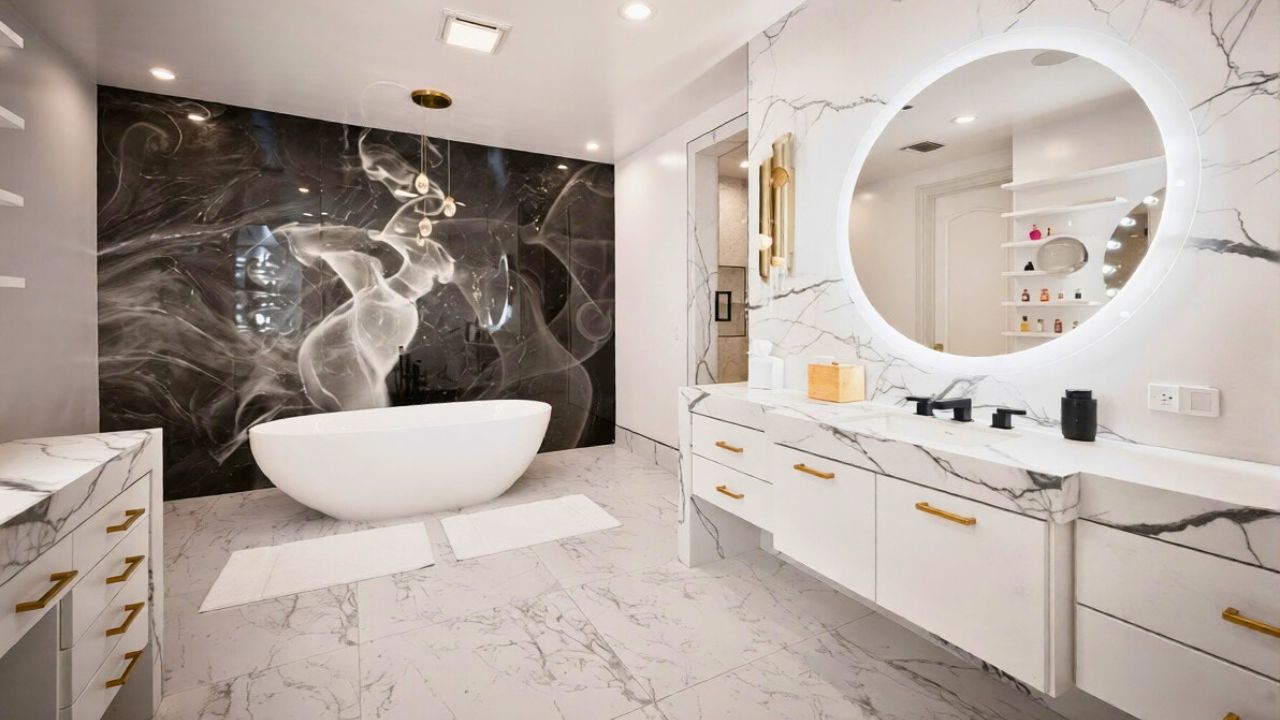
If you look at spa inspired bathrooms, you see fewer grout lines, softer contrasts, and layouts that make the room feel as open as possible. Instead of chopping the space into zones with different tile patterns, these rooms often use one main surface that wraps the floor and walls, so your eye glides from one end to the other. That sense of continuity is a big part of why they feel restful.
Designers who focus on primary suites describe Calming, Open Concept that rely on barrier free showers, floating vanities, and large format tile to make a small bathroom look bigger. Other trend reports describe how Another hot trend, tile drenching, uses the same tile on the walls and floor to create an enveloped, cozy feeling without extra pattern. A separate look at Tile drenching notes that this approach can feel visually calm as long as you keep the color palette soft and avoid high contrast grout.
Simple ways to fix a bathroom that already feels too busy
If you are staring at an existing HGTV inspired bathroom that feels chaotic, you still have options short of a full gut renovation. Sometimes you can calm the space just by changing grout color, repainting walls, or covering part of a patterned floor with a solid rug. In other cases, swapping out one hyper active tile for a quieter alternative is enough to shift the mood.
Guides on half tiled walls explain that when you reduce the amount of small format tile and let painted drywall or larger pieces take over, you instantly cut down the should know the your space looked so busy, and the room starts to appear more open and vast. Trend writers also point out that Brick and subway tiles in simple layouts are on trend because they offer subtle texture without overwhelming your eye. If you combine those quieter choices with the warm toned, textured large format tiles highlighted in Key Takeaways for 2026, you can keep your bathroom feeling current and polished without inviting the visual chaos that makes so many HGTV style layouts hard to live with.
Like Fix It Homestead’s content? Be sure to follow us.
Here’s more from us:
- I made Joanna Gaines’s Friendsgiving casserole and here is what I would keep
- Pump Shotguns That Jam the Moment You Actually Need Them
- The First 5 Things Guests Notice About Your Living Room at Christmas
- What Caliber Works Best for Groundhogs, Armadillos, and Other Digging Pests?
- Rifles worth keeping by the back door on any rural property
*This article was developed with AI-powered tools and has been carefully reviewed by our editors.