Homeowner Finds a Neighbor’s New Shed Built Right on the Property Line Instead of the Required Ten-Foot Setback — Then His $900 Buyout Offer Is Countered With a $2,200 Demand for a Refrigerator
Photo credit: AI-generated image created using ChatGPT. Illustrative only.
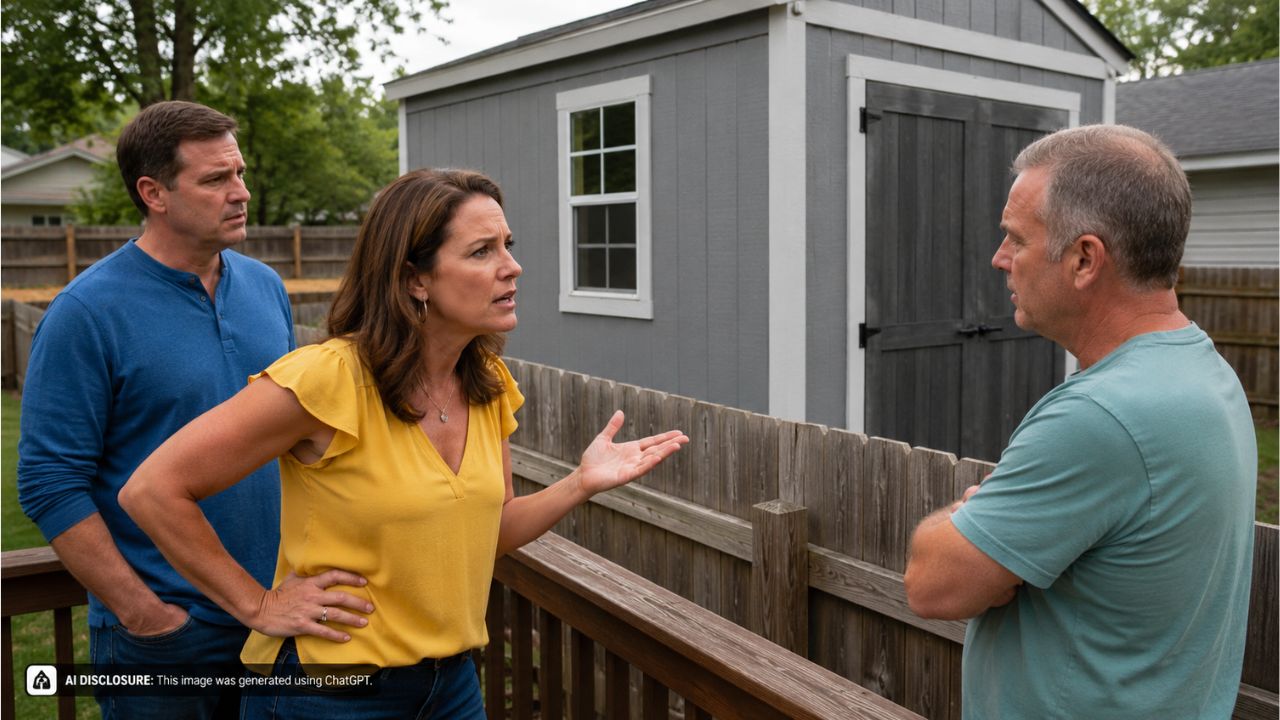
It started as one of those backyard surprises you don’t expect when you’ve got a tall fence, trees for privacy, and a routine that doesn’t include checking the neighbor’s building projects. One day, the homeowner’s youngest daughter walked in and casually mentioned the neighbors had put up a shed right against the back fence. He stepped out onto the deck to look—and there it was: a 10-by-15 shed sitting about a foot off his fence line.
From his vantage point, it wasn’t just an eyesore. It felt like a line had been crossed. In the original post, he described the shed as planted so close it was “in our face” from their deck, despite the expectation that structures are supposed to be set back from property lines.
A backyard view that changed overnight
The two yards back up to each other, separated by a six-foot fence with trees on either side. Even in winter, the homeowner said, there’s enough screening that they don’t feel like they’re living on top of each other.
That’s part of why the shed was such a shock. The homeowner didn’t notice it going up until it was effectively finished and looming at the boundary. A building that size—10×15—doesn’t disappear into landscaping, especially when it’s only a foot off the fence.
And once something like that appears, it’s hard to un-see. Every time they sat on the deck, the structure would be right there, dominating the line where the trees used to do most of the visual work.
The setback question turned into a property problem
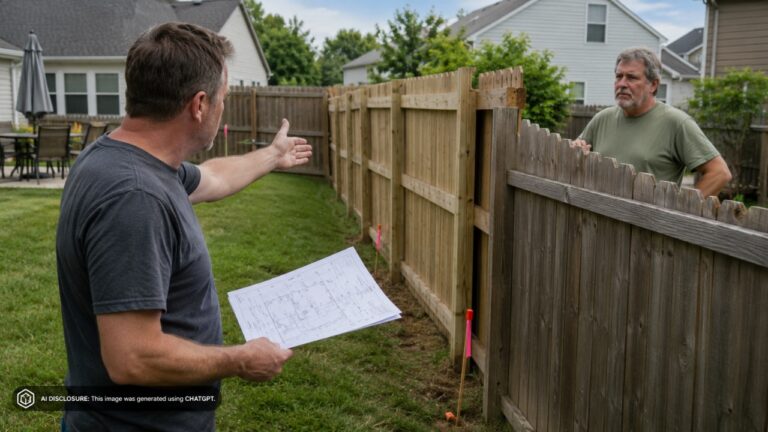
The homeowner’s first move wasn’t to call an inspector or start a fight. He called the neighbor and asked what was going on. The neighbor said he’d come over and talk, which at least suggested a conversation was possible.
When they talked, the homeowner raised the issue directly: the shed was right on the property line, and he believed it was supposed to be set back ten feet. He asked if the neighbor could move it back so it wasn’t so close to their fence and deck.
The neighbor’s explanation was that the slope of his yard and a drainage ditch meant this was the only spot that would work. The homeowner also had a future-facing worry that anyone who has dealt with property lines will recognize immediately: if they ever sold and a survey flagged the shed placement, it could turn into a messy, expensive hassle at the worst possible time.
A $900 offer… and then the kitchen walked into the negotiation
The neighbor’s solution was to offer to buy a piece of the homeowner’s property, essentially making the shed placement “right” by shifting the boundary on paper. But the number he put on that fix was $900.
That’s when the tone of the discussion changed. The homeowner’s wife came outside, and he made it clear she already had a long-standing opinion of this neighbor. She didn’t entertain the $900 figure. She told him she needed a new refrigerator, the model she wanted cost $2,200, and that was the price for the land.
Her alternative was even simpler: she could call zoning enforcement and force the issue through the proper channels, which could mean the shed would have to be moved or the neighbor would start getting fined. And she added another detail that matters in the real world even when people try to gloss over it: if there was going to be a property line adjustment, the neighbor would pay for the survey and the filing costs too.
That’s how a backyard shed ended up purchasing a “brand new fancy refrigerator,” at least in the storytelling shorthand of the post.
Why a few feet on paper can cost real money
It’s easy to laugh at the refrigerator angle, but underneath it is a very typical homeowner pressure point: undocumented boundaries and “close enough” construction can come back to haunt everyone. A shed planted near a fence isn’t just about aesthetics—it can raise questions about access for fence repairs, drainage and runoff, and what happens if either side needs to replace trees or deal with storm damage.
Even if the shed wasn’t technically over the line, the homeowner was staring at a structure that appeared to ignore the expected setback. If a future survey ever showed an encroachment, it could become a negotiating chip during a sale or refinancing. That’s the kind of problem that doesn’t show up until you’re already stressed and on a deadline.
The wife’s hard line also addressed a practical reality: if you’re going to give up land—no matter how small the patch looks on the ground—you want the paperwork done correctly. Surveys and filings aren’t freebies, and informal handshake deals around property corners tend to age poorly.
People fixated on the math, not just the drama
After the story was posted, the homeowner added an update responding to people who assumed he sold the land for less than it was worth. He argued the opposite—that $2,200 was more than fair for the small section being adjusted.
He explained that he sold 96 square feet. He compared it to a nearby .47-acre building lot for sale with a steep back slope similar to his property, noting that based on that sale price, the portion he sold would come out to about $528. In his view, he didn’t get pressured into a bargain—he got a premium.
That detail is where the homeowner mindset splits. Some people see land as priceless because it’s permanent. Others see it as a number, especially when the piece is small, sloped, and not particularly usable. In this case, the homeowner framed it as a strategic trade: if the neighbor needed the paper boundary to match what he built, the neighbor could pay a price that made it feel worthwhile.
A shed can be permanent, but so is the paper trail
The ending here isn’t a court fight or a months-long feud. It’s a blunt, expensive agreement: the neighbor pays for the survey and filing, pays $2,200 for the adjustment, and the homeowner’s household ends up with the refrigerator they wanted.
But the tension doesn’t fully disappear just because the money changed hands. The shed is still there, still close, still a daily reminder of how quickly a neighbor’s project can reshape your space. The difference is that now, on paper, it matches reality.
In a lot of neighborhoods, that’s the real win—not the appliance. It’s the fact that the next time a property line question comes up, there’s a documented answer instead of a fence, a guess, and a looming shed that never should have been that close in the first place.
Like Fix It Homestead’s content? Be sure to follow us.