New Homeowner Learns the Neighbor Quietly Moved the Fence Line Six Feet Overnight — Then Claims the Extra Yard Was “Just Landscaping”
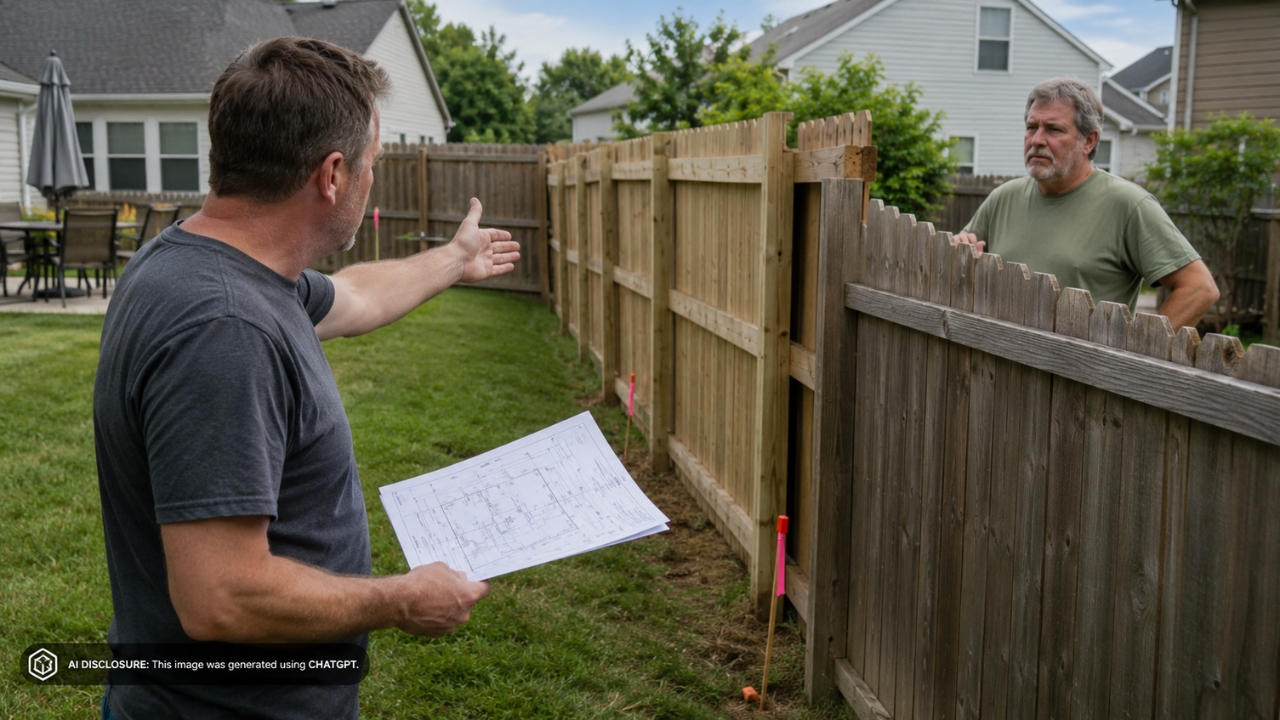
Photo credit: AI-generated image created using ChatGPT. Illustrative only.
Eight months after putting in a new 6-foot privacy fence, a homeowner stepped outside and realized something felt “off” behind it. The narrow buffer they’d intentionally left for maintenance access was gone. In its place: the neighbor’s fence posts, suddenly set tight to the corners of their fence, cutting off the passage completely.
The homeowner laid out the whole sequence in the original post, including the part that makes any property owner’s stomach drop—survey markers were still in the ground, and the neighbor appeared to build past them anyway. What looked like “just a fence tweak” quickly turned into a boundary grab, a paperwork fight, and then a face-to-face blowup that got personal fast.
They left a 3-foot buffer on purpose—then it disappeared
When the homeowner installed their fence, local rules allowed building right up to the property line. They chose not to. Instead, they set the fence roughly three feet inside their line to avoid any accidental encroachment and to keep access for repairs and weed-whacking behind the panels.
That decision should have reduced conflict. It did the opposite. The neighbor behind them had an older fence with a gap between the two fence lines—about four feet of passage. Then, “very recently,” the neighbor dug up their old posts and moved their corner posts to butt directly into the homeowner’s fence corners, using the homeowner’s fence run as part of their enclosure.
The result wasn’t subtle. The homeowner couldn’t get behind their own fence anymore, couldn’t easily maintain that strip, and now faced the prospect of the neighbor’s dog and kid treating their fence like the shared boundary—without any permission or agreement.
The first conversation felt like excuses, not a mistake
The homeowner decided to walk over and talk rather than immediately escalate. The timing was awkward: they saw the neighbor’s wife smiling while showing off the fence work on a FaceTime call, which made the “oops, didn’t realize” explanation harder to believe.
Standing at the corner, the homeowner pointed to a boundary spike and showed how the neighbor’s new fence line was built outward from it and past it by close to three feet. They also said there had been a middle property marker that appeared to be removed.
The neighbor’s explanation didn’t land. She claimed they thought the markers were theirs and moved them. She also argued the gap between fences wasn’t big enough for their tractor, and they didn’t want to deal with maintaining a narrow strip. Another line that stung: she suggested the strip became overgrown because the homeowner “didn’t care” since they couldn’t see it from their side.
The homeowner pushed back, saying they did maintain it, and that some of their work involved cutting back the neighbor’s bushes that weren’t being kept up. From there, the conversation veered into something more complicated: the neighbor claimed they’d had a survey too, and that the surveys might not match—raising the specter of a weird wedge-shaped property line at the corner.
“Let’s do an easement” — and the homeowner said “not like this”
With the fence now effectively stealing the homeowner’s access, the neighbor floated an easement-style agreement: paperwork acknowledging the land was the homeowner’s, but keeping the new fence configuration.
The homeowner wasn’t interested in letting that become the new normal. They said if anything like that were even considered, the neighbor would need to replace the posts they’d jammed into the corners with a gate—something that would restore access when needed.
At home, the homeowner and their spouse aligned on a bigger principle: no shared fence arrangement at all. The homeowner started thinking in practical terms—pea gravel and landscaping fabric along the strip, and possibly adding a simple field fence along the true property line to make the boundary unambiguous even if the privacy fences sat inside it.
Putting it in writing worked—then the tone turned
The homeowner emailed the neighbor a copy of their survey plat and even made a birds-eye visual map with options, trying to offer a path that didn’t require ripping everything out. The message was firm: no matter what, the neighbor’s fence had to be pulled back off the homeowner’s property.
The neighbor replied with an apology and said they would “rectify it today and ensure we are off of your property entirely.” But the text didn’t stop there. They justified the move as a maintenance decision, claiming the homeowner hadn’t maintained the grass behind the fence “once since the fence was erected” and calling it an “eyesore” when it got overgrown.
Then came the part that made the homeowner bristle: the neighbor criticized the homeowner for sending an email instead of handling it face-to-face, adding that the email “makes it clear what kind of neighbors you wish to be.” The neighbor also admitted to removing the wooden stake with a flag because it was an “eyesore,” while insisting they didn’t remove the survey pins themselves.
From the homeowner’s perspective, the defensiveness was the tell. If the plan really was “just landscaping,” why move the posts right into someone else’s corners and toss a marker?
The fence got moved back—then the backyard peace collapsed anyway
A couple days later, the homeowner went outside and found the encroaching sections had been removed on both sides. That part, at least, was fixed. The neighbor was now building a privacy fence about an inch inside their own line, with a string set along the boundary.
But the narrow “wedge” at the corner—the area where the lot shape creates a tighter pinch—was still going to be a headache. The homeowner asked if the neighbor could start building on the far side so they could lay weed barrier and fabric along the tighter section first.
The neighbor brushed it off, saying they didn’t think either of them would need to worry about anything growing between the fences. The homeowner said they still planned to landscape it to reduce maintenance. That’s when the passive-aggressive comments restarted, with the neighbor taking another shot about how it was “funny” since the homeowner supposedly never cared for it.
The homeowner tried to force the real question into the open: if the strip bothered the neighbor, why not knock and talk instead of trying to fence it in? The neighbor minimized it—“it took two minutes to trim”—which only made the earlier fence move look more calculated.
The exchange escalated into insults about masculinity and accusations that the homeowner “knew exactly” what was happening. It ended with both sides cursing, and the homeowner walking away with the fence line technically corrected, but the relationship visibly scorched.
What other homeowners zero in on in fights like this
Fence-line disputes tend to split into two tracks: emotions and documentation. This homeowner did the documentation part early—getting a survey, keeping markers in place, and then sending the plat when things got weird. That paper trail is also what finally triggered the neighbor to move the fence back quickly.
But the story also shows the part people don’t talk about enough: even when the physical problem is “fixed,” access and maintenance don’t magically solve themselves. Two fences with a narrow corridor between them can become a long-term chore, a pest runway, and a future argument when weeds, vines, or repairs come up.
In this yard, the homeowner got their space back. What they didn’t get back was the easy assumption that a neighbor will behave like a neighbor. Now they’re left with a tight strip of land to maintain, a corner that may still need clarifying, and a next-door dynamic where every string line and weed-whack sounds like it could restart the whole fight.