Rural Landowner Finds a Septic Pipe Running Across Their Yard — Then the Neighbor Claims It Has Always Been There
Photo credit: Fix It Homestead
A rural property can look peaceful from the road.
Wide yard. Open space. Maybe a few trees, a long driveway, and enough distance from the neighbors to make everything feel simple.
But sometimes the biggest problems are not sitting above ground where a new owner can see them.
Sometimes they are buried.
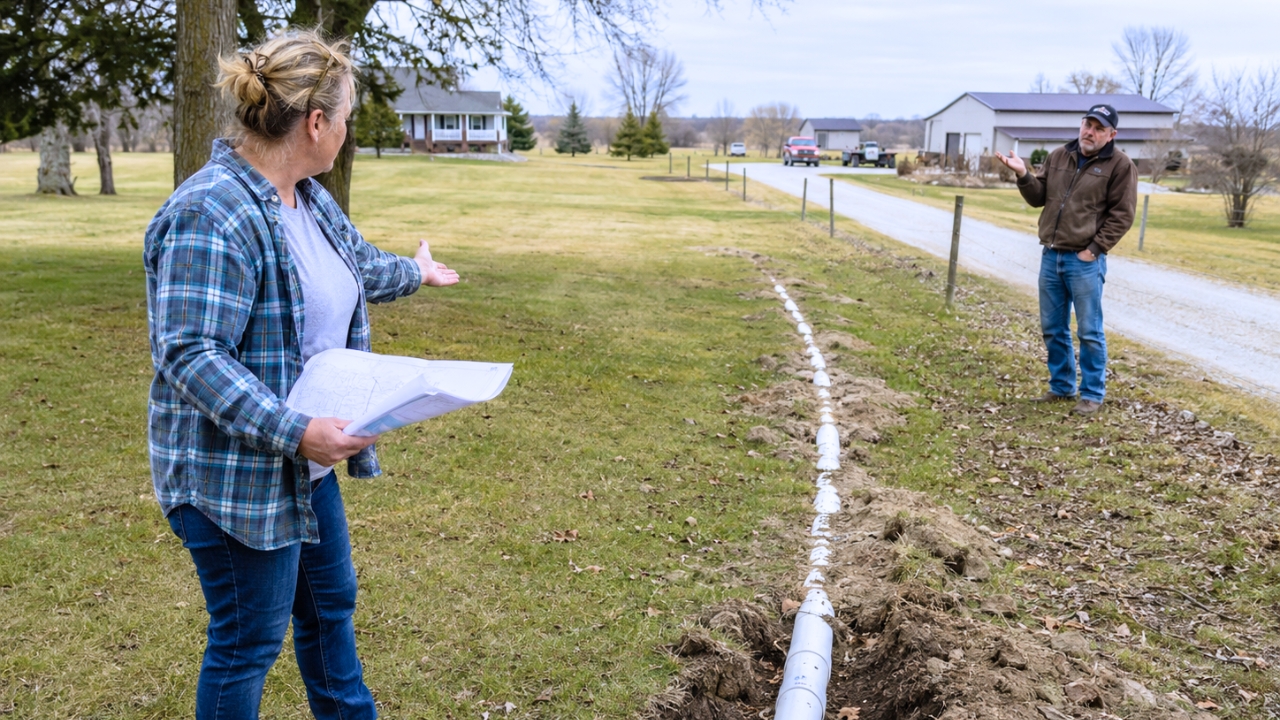
That was the issue for one rural landowner who discovered what appeared to be a septic-related pipe running across their yard. It was not something they had agreed to. It was not something they had planned around. And once they realized where it was, the situation started feeling a lot less like a small inconvenience and a lot more like a property problem that could become expensive fast.
The pipe appeared to be connected to the neighbor’s setup, which made the discovery even more uncomfortable.
This was not just an old piece of junk left underground. It seemed to be part of someone else’s system crossing land that did not belong to them.
And when the landowner questioned it, the neighbor’s answer did not exactly settle things.
The neighbor said it had always been there.
“Always been there” did not answer the real question
In rural areas, old arrangements can get messy.
Previous owners may have made handshake agreements. Neighbors may have installed things years ago without permits. A family member may have allowed something temporarily, only for it to stay long after everyone forgot the original conversation. Sometimes nobody even knows the full history because the people who made the arrangement no longer own either property.
So when a neighbor says something has “always been there,” that may explain why they are used to it.
But it does not automatically prove they have a legal right to keep it there.
That was the landowner’s problem.
If the pipe was crossing their yard, they needed to know whether there was an easement, a recorded agreement, a permit, or any official document giving the neighbor the right to use that section of land.
Without that, “it has always been there” sounded less like an answer and more like a reason the issue had been ignored for too long.
The septic angle made it more serious
A buried pipe is one thing.
A septic pipe is another.
Anything involving wastewater, drainage, leach fields, or septic systems can become a major problem for a property owner. It can affect where they build, where they dig, where they plant, and what happens if the system fails.
If the pipe leaks, backs up, collapses, or needs repair, who is responsible?
If the landowner wants to put in a fence, driveway, garden, shop, or addition, are they supposed to work around someone else’s septic line?
If a future buyer discovers the pipe, does that hurt the value of the property?
Those are not small questions.
The landowner was not just dealing with an annoying neighbor. They were dealing with hidden infrastructure that could limit how they use their own yard.
The neighbor seemed to think history settled it
From the neighbor’s side, the situation may have seemed obvious.
The pipe had been there. The system was already in use. Nobody had made them move it before. So in their mind, the landowner may have been creating a problem where there had not been one.
But that kind of thinking is exactly why rural land disputes can explode.
A person can get used to using someone else’s land so casually that they start treating it as part of their own property. Then a new owner arrives, asks reasonable questions, and suddenly the person benefiting from the old arrangement feels attacked.
The landowner, though, had every reason to press for clarity.
A septic line is not the same as a lawn chair sitting too close to the boundary. It is underground, costly, and potentially regulated. It could create legal, environmental, and repair issues that the landowner never agreed to take on.
Commenters focused on paperwork, not assumptions
When situations like this come up, people usually warn the landowner not to rely on what the neighbor says.
The first step is not arguing about memory. It is checking records.
Is there a recorded easement? Is the septic system permitted? Does the county or local health department have a map of the system? Was the pipe disclosed when the property was sold? Does the survey show anything related to utilities or septic access?
Those questions matter because the answer changes everything.
If there is a recorded easement, the landowner may have limits on what they can demand. But if there is no easement and no legal right for the pipe to be there, the neighbor may have a serious problem.
Commenters also tend to warn landowners not to dig, cap, damage, or remove anything without professional guidance. Even if the pipe is unauthorized, mishandling a septic component could create a bigger mess.
This is the kind of issue where a surveyor, county records office, septic professional, and real estate attorney may all become part of the same headache.
The real problem was control of the land
The pipe itself was frustrating enough, but the bigger concern was what it represented.
The landowner bought a rural property expecting to control their own yard. Then they found out a neighbor’s septic system might be physically crossing it.
That changes the feel of the whole property.
Suddenly, an ordinary patch of grass becomes a place they may not be able to disturb. A future project becomes more complicated. A repair problem that belongs to the neighbor could require access to their land. A hidden pipe could turn into a disclosure issue if they ever sell.
And the neighbor’s “it has always been there” response did not make those concerns go away.
It only made the landowner more aware that the situation may have been sitting unresolved for years.
In the end, the question was not whether the neighbor was used to the pipe being there.
The question was whether they had the right to keep using someone else’s land to run it.
And for a rural landowner, that is the kind of discovery that can turn a peaceful yard into a property fight almost overnight.