Homeowner Learns the Neighbor’s Driveway Has Encroached Three Feet Onto Her Land for Decades Only When the Neighbor Tries to Sell — Then He Asks Her to Sign a Permanent Easement to Save the Sale
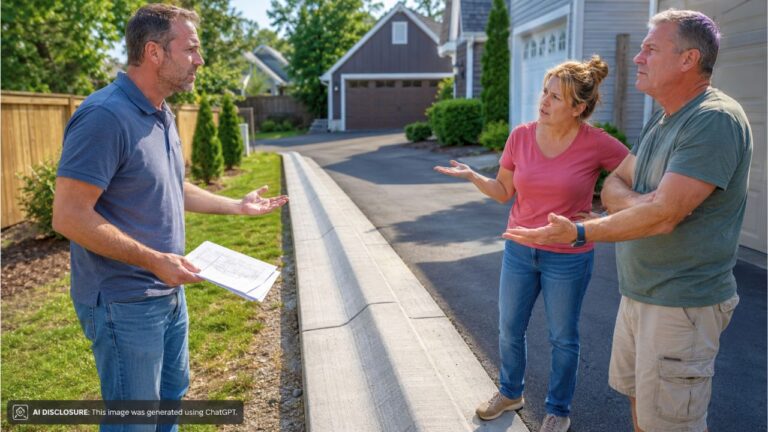
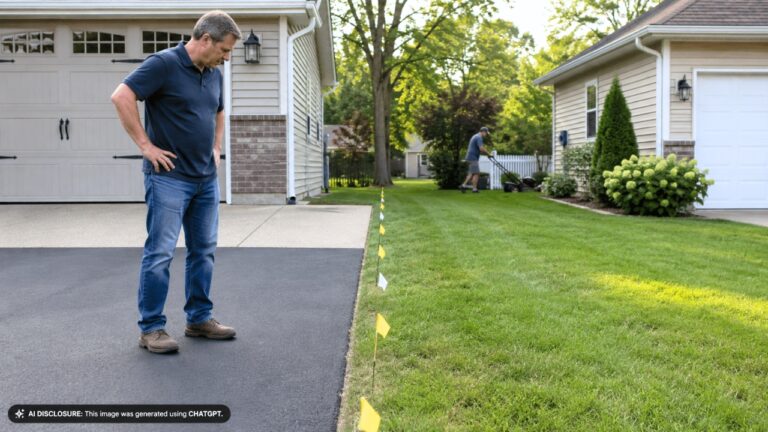
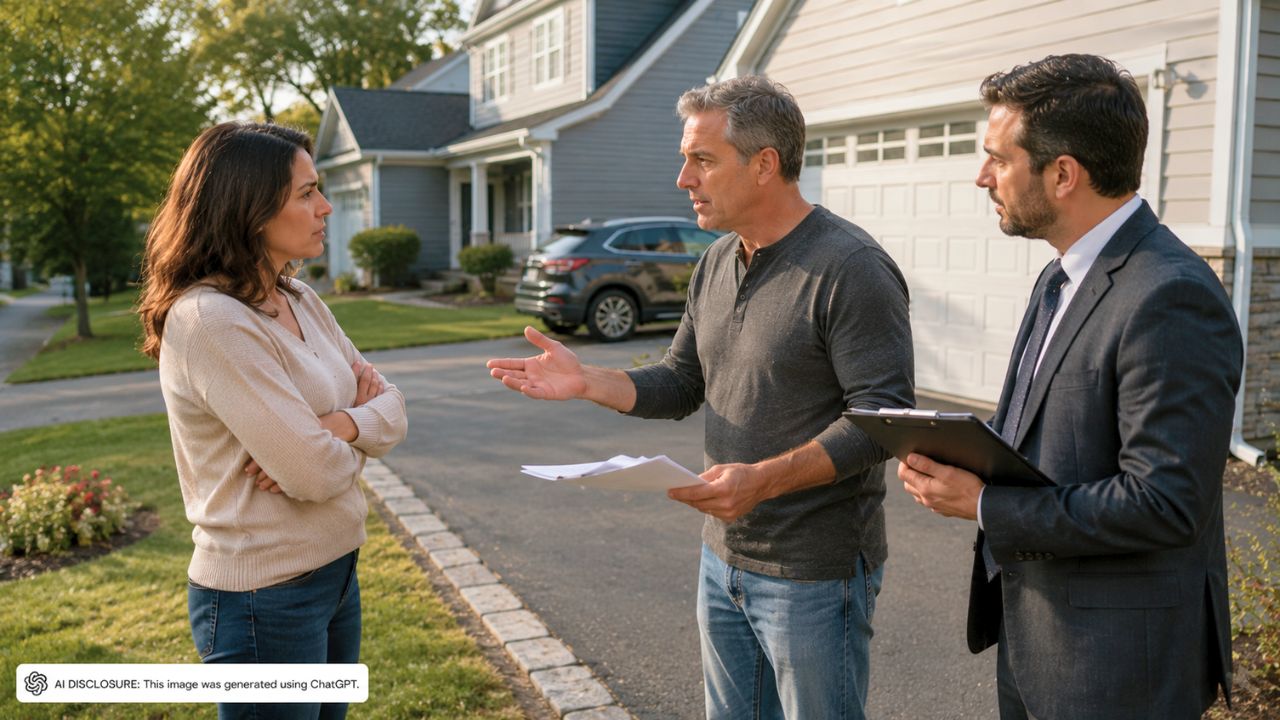
Photo credit: AI-generated image created using ChatGPT. Illustrative only.
It started the way a lot of property-line problems do: not with a fight over fences or barking dogs, but with a sale sign. A New Jersey homeowner thought she had a normal neighbor relationship—friendly, familiar, decades of “that’s just how it’s always been”—until a buyer’s paperwork brought an uncomfortable detail to the surface.
During the neighbor’s home sale, a discovery popped up that nobody had bothered to raise before: the neighbor’s driveway appears to be sitting about three feet onto her land. The homeowner laid out the details in the original post, explaining she didn’t even know about the encroachment when she bought her house, and the property had changed hands multiple times with no mention of it.
A three-foot strip that suddenly mattered
Three feet doesn’t sound like much until you picture it where it actually is: the edge of a driveway, right where cars need to pass to reach a garage. The homeowner described it as “significant,” and noted that without that extra width, it might be difficult for the neighbor to access the garage at all.
That’s what made the timing feel so pointed. The driveway had been in place for years—decades, according to the homeowner—without any formal agreement or visible dispute. It only became urgent when the neighbor tried to transfer the property to a buyer who wanted clean, insurable boundaries.
And once it became urgent, the request was no longer casual. The neighbor asked her to sign an easement.
The favor that would follow the house forever
An easement isn’t a quick “sure, you can use it” handshake. The homeowner’s concern wasn’t just about the current neighbor, who she called a friend. It was about whoever comes next, and what the agreement could mean for her own future sale in a hot market.
She declined the easement largely because she couldn’t gauge the long-term impact. An easement can show up in listings and title reports, and once it’s in place it can change how a future buyer views the property—even if nothing looks different on the ground.
Her other worry was more personal: giving unknown future neighbors a permanent right to use part of her property, and potentially dealing with behavior she “doesn’t like down the road.” It’s the classic homestead headache—today’s friendly arrangement can become tomorrow’s boundary fight when new people show up with different expectations.
She offered a temporary letter, and the deal fell apart
Trying to keep things civil, she didn’t jump straight to “move your driveway.” Instead, she offered something softer: a letter allowing access, but one she could revoke if she ever went to sell her own home.
That compromise didn’t solve the buyer’s problem. The buyers backed out anyway, which is where the pressure on the homeowner started to ramp up. What had been an awkward discovery turned into a failed sale that now had a clear villain in the neighbor’s eyes—fairly or not.
Real estate has a way of turning “we’ll figure it out” into “sign this now.” Once money is on the line, patience evaporates.
Why “just change the property line” wasn’t so simple
The homeowner did what a lot of people do when they want an elegant solution: she asked about adjusting the property line. Maybe she could sell that sliver, or swap some land, or make the paperwork match what’s physically there.
But after speaking with her real estate attorney, she said that didn’t sound like an option because of how close the encroachment is to her home. Even if everyone agreed, lot line adjustments and partial sales can trigger a maze of setbacks, zoning rules, lender requirements, and deed changes—especially in tighter neighborhoods where every foot matters.
She also acknowledged that selling just that piece likely wouldn’t work for the same reason: it’s too close to her own house. In other words, it wasn’t a spare strip on the far back edge of an acre. This was right where her daily use, her privacy, and her property value live.
The friendship part got complicated fast
The neighbor wasn’t just asking for help; he hinted at legal action. That’s the moment these disputes change tone. You can still wave and chat across the yard, but every sentence starts to feel like it could be repeated later in a courtroom or in a letter from an attorney.
The homeowner’s main question was blunt: can she get sued for refusing? From her perspective, she didn’t cause the encroachment, didn’t know about it when she purchased, and is simply declining to grant permanent rights over land she owns.
She also asked what role a title company would play, since the neighbor told her to “check with my title company to gauge their option.” That’s another pressure tactic homeowners run into: someone suggests that “your” insurance or “your” title company will make you cooperate, even when the disagreement started long before you moved in.
People zeroed in on paperwork, proof, and leverage
Even with limited details, the practical reactions to stories like this tend to cluster in the same places: surveys, title documents, and the difference between permission and permanent rights. When a driveway encroachment appears during a sale, it usually means a survey or title review flagged it, and that’s what spooked the buyers.
Commenters in similar disputes often stress getting your own survey instead of relying on what the selling side says the boundary is. Another common theme is documenting everything in writing—because once a threatened lawsuit enters the conversation, a “friendly neighbor chat” can turn into two very different versions of what was promised.
There’s also the unspoken leverage point: time. The neighbor wants to sell now. The homeowner wants to protect her future options. Those goals don’t line up, and that’s why a revocable letter wasn’t enough for a buyer who wanted certainty.
On the insurance question, people typically flag that title insurance can be tricky. It may help with certain undisclosed defects or boundary issues that existed at purchase, but it’s not a guaranteed piggy bank for resolving a neighbor’s decades-old driveway placement. And even if the insurer gets involved, their goal is to limit exposure—not to make everyone feel good at the next block party.
In the end, the homeowner was left balancing three hard truths: the driveway likely can’t stay “informally” if the neighbor wants a clean sale, a permanent easement could change her own property’s appeal, and a friendship doesn’t cancel out real estate math. When a few feet of pavement holds up a closing, it stops being a neighborly favor and starts being a decision that can stick to the land for the next few decades.
Like Fix It Homestead’s content? Be sure to follow us.
- Man Says He Found Out the Fence He Paid For Wasn’t Actually on His Property
- Woman Says Her Neighbor Started Taking Mulch From Her Delivery Pile Before She Could Even Spread It
- I made Joanna Gaines’s Friendsgiving casserole and here is what I would keep
- What Caliber Works Best for Groundhogs, Armadillos, and Other Digging Pests?