Homeowner Learns the Neighbor Who’s Mowed a Seven-Foot Grass Strip “To Be Nice” for Years Just Installed a Dog Fence Five Inches From the Driveway — Then Extends It Past the Driveway’s End
Photo credit: AI-generated image created using ChatGPT. Illustrative only.
It started as one of those neighborly things you don’t question too hard. A homeowner had a narrow, awkward strip of grass—about seven feet wide—sitting between their driveway and the neighbor’s. From the day they moved in, the neighbor “ceaselessly mowed” that strip and insisted he did it “just to be nice.”
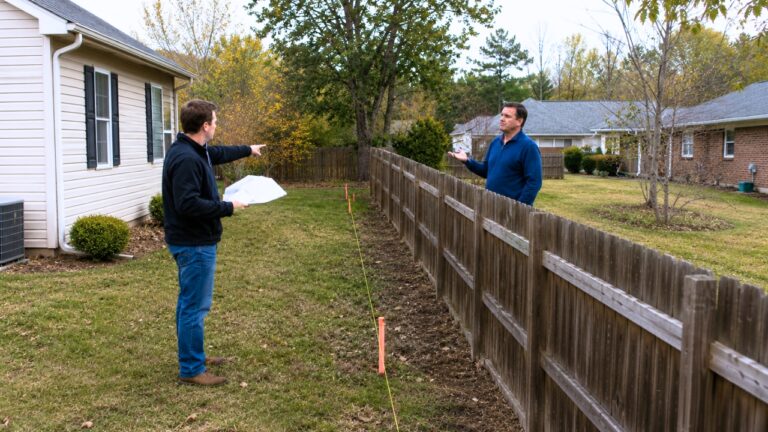
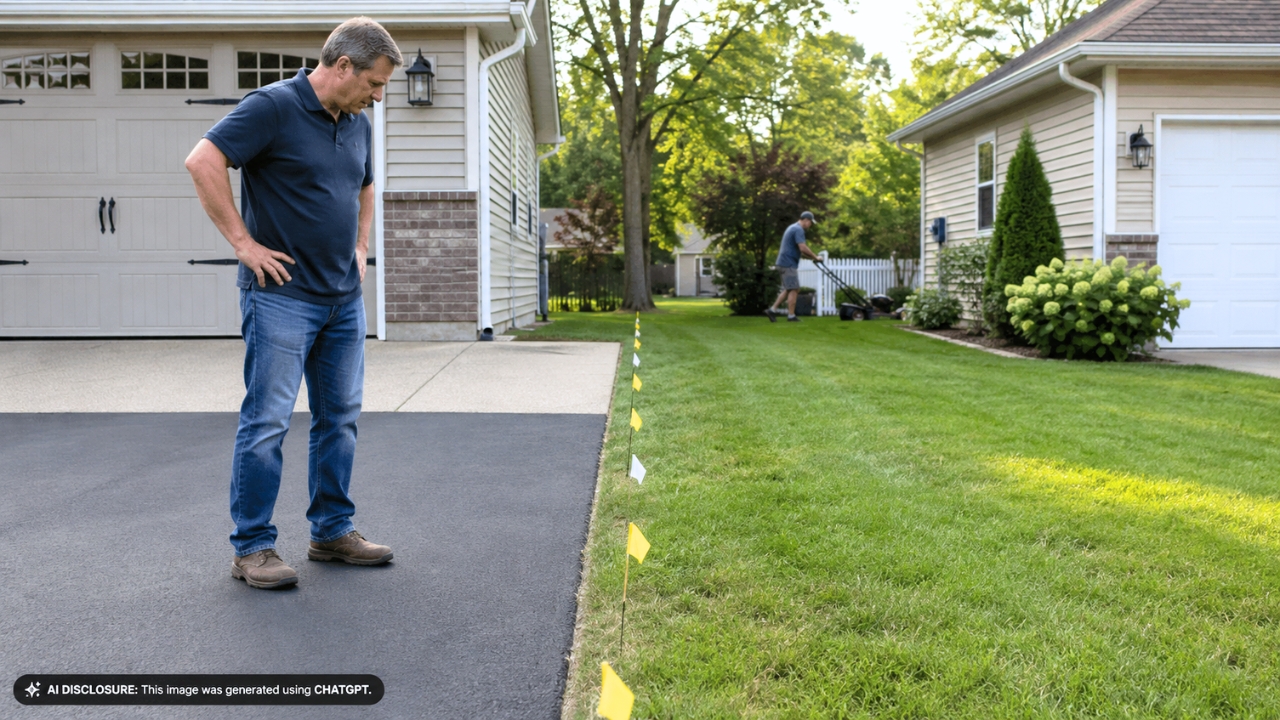
Then the homeowner pulled into the driveway one day and saw something that didn’t feel nice at all: a newly installed underground dog fence running shockingly close to their driveway—about five inches away—like someone had decided the line in the dirt was theirs to place. The homeowner laid out the details in the original post, asking what options they had when a neighbor appears to be staking a claim, not just mowing a courtesy strip.
The first sign was easy to brush off
A seven-foot grass gap between two driveways can be a weird no-man’s-land. It’s the kind of sliver that gets missed when people talk about “the yard,” and it’s easy to fall into a routine where one person maintains it because they already have the mower out.
That’s why this homeowner didn’t raise alarms when the neighbor took over mowing. The neighbor even offered a simple explanation: he was doing it to be nice. If anything, it probably felt like one less chore and one less thing to argue about.
But there’s a quiet downside to letting habits form around property boundaries: after a few seasons, “I always take care of that” can start to sound a lot like “that’s mine.”
A dog fence changes the meaning of “just being nice”
The moment the underground dog fence went in, the whole story changed. Mowing a strip of grass is reversible. A buried boundary for a pet is not, especially when it’s installed so close to a driveway that it feels like it’s marking territory.
The homeowner didn’t describe a casual, centered placement. They described it as being installed roughly five inches from their driveway, close enough to make anyone wonder if the installer was following a surveyed line or eyeballing a claim.
And then came the detail that made the homeowner’s stomach drop: the fence line wasn’t just along the driveway edge. They noticed it continued past the end of their driveway, extending beyond where the pavement stops. That made it feel less like a mistake and more like a deliberate “this is the border” move.
When the county map doesn’t match what you can see
The homeowner did what a lot of people do first: they went online and checked the county’s property line mapping tool. Those GIS-style maps can be helpful for a rough sense of shape and lot layout, but they can also be a trap when you’re trying to settle an inches-and-feet dispute.
In this case, the homeowner noticed the digital image seemed slightly off, even covering part of their driveway. That’s a rough feeling—because when the map doesn’t cleanly line up with reality, you can’t confidently point to anything and say, “See? That’s the line.”
They also pointed out another reason they were skeptical of the neighbor’s implied claim: the homes were built about nine years apart. In the homeowner’s mind, it didn’t make sense that their driveway would have been built over the neighbor’s property while the neighbor already lived there. But in older neighborhoods and piecemeal developments, “doesn’t make sense” isn’t the same as “can’t be true.”
This is where homeowner stress spikes. If you guess wrong and start digging, pulling markers, or escalating, you can create a real dispute out of something that might have been solved calmly. But if you do nothing, you risk letting a physical “boundary” sit there long enough to become the new normal.
The real-world stakes are bigger than a strip of grass
A fence wire is small, but the consequences can be big. If that line stays where it is, the homeowner is suddenly living with a tight squeeze along their driveway—right where people walk, where kids run, where passengers step out, where snow gets shoveled, where trash bins get dragged.
And underground dog fences aren’t just invisible. They come with flags during installation, collars, training boundaries, and the unspoken expectation that everyone will respect the line. If the neighbor starts treating the space as his dog’s “side,” the homeowner could find themselves dodging a boundary they never agreed to.
There’s also the messy long-term problem: property changes tend to stack. Today it’s a dog fence wire. Next season it might be landscaping stones, a row of shrubs, a “helpful” edging trench, or a sprinkler line. Each change makes it harder to reset the relationship back to “we’re just being nice.”
Even without any formal legal process, the day-to-day friction is real. Driveways are functional spaces, not decorative ones. People need room to open doors, maneuver trailers, widen turns, and keep clear sightlines. A line planted five inches from the pavement isn’t just bold—it’s asking for conflict.
Most reactions focused on proof before emotion
The homeowner’s question—“Do I have any options?”—lands in that familiar gray zone where common sense and paperwork often disagree. And that’s why many practical-minded people tend to focus on one thing first: establishing the actual boundary, not the assumed one.
When online maps don’t align, the next step most homeowners hear is to find the documents and markers that do: deeds, plats, and any existing survey pins. If those aren’t clear or easy to locate, a professional survey becomes the cleanest way to turn a gut feeling into something you can act on.
The other theme that typically comes up in disputes like this is documentation. Not to “build a case” in a dramatic sense, but because memories get fuzzy fast. When did the fence go in? Where exactly does it run? How close is it to the driveway? Does it extend past the driveway end? Photos taken early—before flags disappear and grass grows back—can prevent weeks of circular arguing later.
And, quietly, people tend to caution against ripping anything out in a rush. Even if you’re right, destroying a neighbor’s installed system can inflame the situation and shift the story from “they crossed the line” to “you damaged my property.”
Living next to someone who acts first and explains later
The thing that makes this story tense isn’t just the fence. It’s the pattern: years of mowing that looked generous, followed by a sudden installation that feels like an ownership play. The homeowner didn’t describe any conversation beforehand, any request for permission, or any attempt to verify the boundary together.
That kind of neighbor can be hard because they force you to react. You’re not choosing to be in a dispute; you’re choosing how to respond to a change that’s already been made. Every response has a cost—money for surveying, time for calls and paperwork, and the emotional cost of turning a “nice” neighbor into a watch-your-back neighbor.
For now, the homeowner is left staring at a line that’s too close for comfort and extends beyond the driveway, with only a slightly-off digital map to reassure them. Whether it’s a mistake, a misunderstanding, or a calculated move, the fence has done its job: it turned a forgotten strip of grass into a boundary that can’t be ignored.
Like Fix It Homestead’s content? Be sure to follow us.