Homeowner Offers a Simple Permission Letter After a Survey Shows the Neighbor’s Driveway and Basketball Court on Their Land — Then He Refuses to Sign and Hires a Lawyer to Demand the Deed Instead
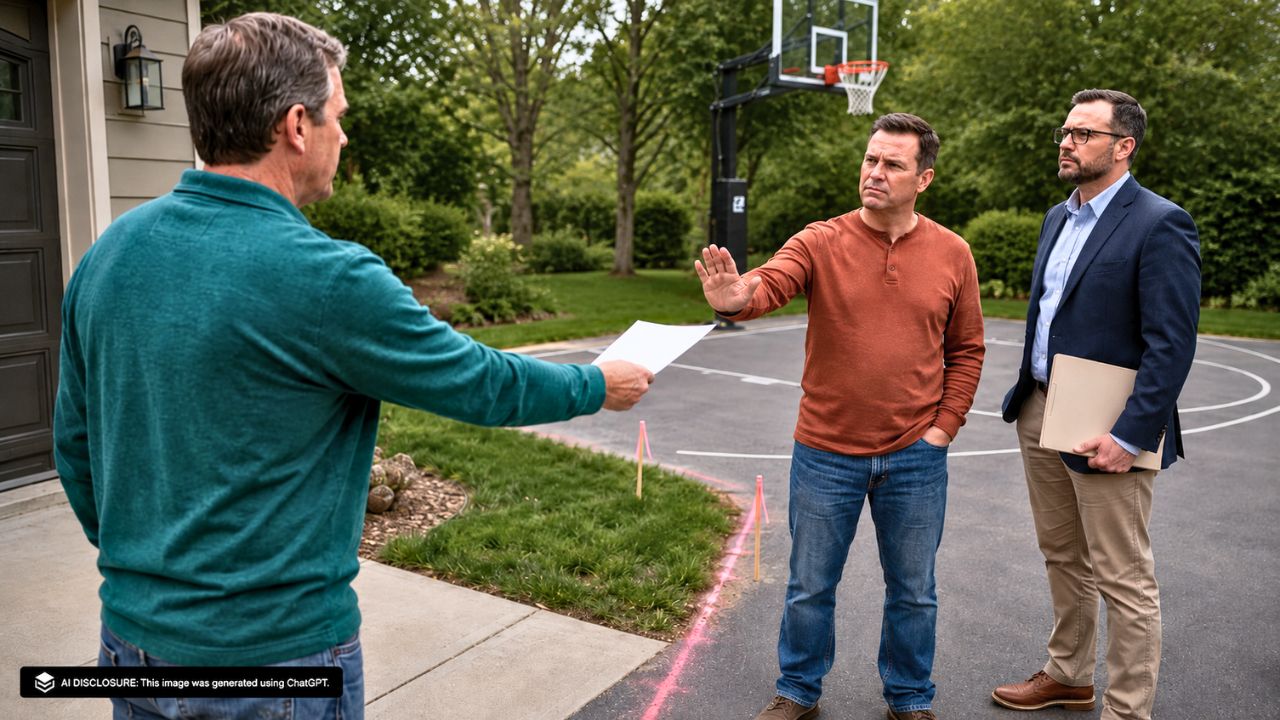
Photo credit: AI-generated image created using ChatGPT. Illustrative only.
It started the way a lot of boundary problems start: a neighbor did some upgrades that looked normal from the street. A widened driveway. Fresh landscaping. A little extra concrete pad for a basketball hoop. Nothing that screamed “property dispute” until one homeowner ordered a survey for a totally different project—putting up a shed.
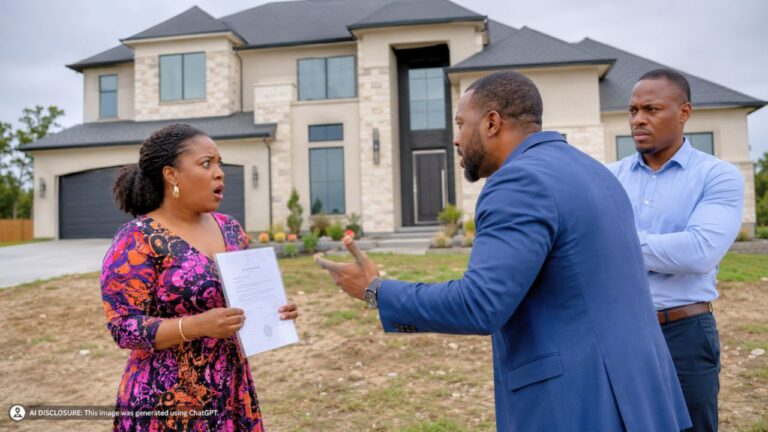
That’s when the lines on paper didn’t match the lines everyone had been living with. In the original post, the homeowner explained that the survey showed the neighbor’s newer driveway extension, landscaping changes, and basketball-court-style concrete extension had crossed onto their land. The neighbor’s response wasn’t an apology or an offer to move anything. It was a request to simply deed the strip of land over so the improvements would sit “solely on his property.”
The first sign was easy to brush off
The two homes had been neighbors for about six years. For most of that time, things were quiet enough—no major issues, no big shared projects, and no mention of property lines. Then, over the last two years, the neighbor started expanding: adding onto the driveway and redoing landscaping.
From the homeowner’s perspective, it all looked like typical curb-appeal work. People upgrade their driveways, add retaining edges, pour extra concrete for a hoop, and tidy up plantings all the time. The problem was that “typical” turned into “permanent” the second concrete went down in the wrong place.
And like a lot of property-line disputes, this one wasn’t discovered during the work. It was discovered later, when someone else needed a survey for their own plans.
A shed survey turned into a boundary fight
The homeowner ordered a survey to build a shed and redo their own landscaping. Surveys have a way of turning assumptions into hard facts, and the results weren’t subtle: the neighbor’s new work had been installed on the homeowner’s property.
That’s the moment when an uncomfortable choice appears. Ignore it and you may be handing over rights over time. Confront it and you risk living next to an angry person who now feels accused. The homeowner did what most people try first: they talked to the neighbor.
The neighbor didn’t argue the survey in the account provided. Instead, he pushed for a clean, permanent fix that benefited him: transfer the land so the driveway extension, landscaping, and concrete pad would no longer be on someone else’s parcel.
The homeowner offered a “permission to use” letter—then the neighbor refused
The homeowner declined to deed away the land and hired an attorney. The attorney’s guidance was a kind of middle road: offer a “permission to use” letter that would let the neighbor keep the improvements “as is for remaining useful life of concrete,” while clearly acknowledging the property still belongs to the homeowner.
That kind of letter can matter because it sets the rules in writing: you’re using it with permission, not because you own it. It also attempts to shut down the neighbor’s ability to later claim the area through adverse possession by showing the use was allowed, not hostile or unauthorized.
But the neighbor refused to sign. In other words, he didn’t just want to keep using the space—he wanted to keep using it without putting anything in writing that confirmed it wasn’t his. That refusal is what escalated this from a painful conversation into something that feels like a strategy.
Then came the next step: the neighbor hired his own attorney, who reached out asking the homeowner to reconsider either changing the deed or granting an easement as a “fair and acceptable outcome for all.”
When concrete crosses the line, the stakes get real
It’s easy to underestimate what a “decent portion” of land means until you picture what’s actually there. This wasn’t a stray fence picket or a garden edging stone. It was a driveway expansion—functionally part of how vehicles approach and park—and a concrete extension tied to a basketball setup, plus landscaping built around it.
Concrete and hardscape aren’t like a planter you can drag back over the weekend. Removing it costs money, makes a mess, and can trigger new problems: drainage changes, damaged roots, broken irrigation lines, and awkward slopes where two yards meet. Even when the encroachment is proven, undoing it can be the most expensive part.
The homeowner also pointed out a key detail: there was no long-term adverse possession claim yet. In their understanding, the neighbor hadn’t been using the strip for the required number of years (they referenced 15 years). And the driveway access wasn’t essential—this wasn’t a landlocked property that needed a path to the street. That made the neighbor’s demand feel less like necessity and more like, “I built it, so now you should make it mine.”
Another thing that made it sting: there was no offer to buy the land. The homeowner’s impression was that the neighbor expected the transfer as the “neighborly” thing to do, even though the neighbor was the one who didn’t confirm the lot lines before pouring and planting.
Reactions centered on paperwork, not feelings
Even without a full comment thread included, the homeowner’s own framing shows what people typically latch onto in these disputes: documentation, timelines, and what’s signed (or not signed). The homeowner already had the survey, had consulted an attorney, and had put a reasonable-sounding permission option on the table.
In property-line fights, refusing to sign a permission agreement tends to read as a warning sign. If someone truly believes it’s a simple misunderstanding and they just want peace, they usually jump at the chance to formalize a temporary, low-drama arrangement. When they refuse, it raises the question of what they’re trying to preserve—especially when the improvements are only a couple of years old.
The neighbor’s attorney pushing for an easement or deed change also signals where the pressure point is. An easement can be recorded, it can run with the land, and it can make a messy encroachment look “resolved” for future buyers. For the homeowner giving it, that can feel like locking in a loss, permanently, for someone else’s convenience.
Trying to avoid war while protecting the land
The hardest part in the homeowner’s account isn’t the concrete or the landscaping. It’s the day-to-day reality of having to live next to someone who now has legal representation and is asking for rights to your yard.
The homeowner admitted they felt bad and didn’t want “total war,” especially since the neighbors weren’t close to begin with. But they also recognized the trap: once you give up land or grant rights too casually, you can’t easily undo it. And even if you never plan to sell, property issues have a way of surfacing at the worst times—during a refinance, a future survey, or a sale when a buyer’s lender demands clean boundaries.
For now, the homeowner is standing on the survey and their attorney’s advice, while the neighbor is pushing for something recorded and permanent. The concrete is still there. The basketball hoop area is still there. And the space in between—where the property line is drawn—has become the most contested part of the neighborhood.
Like Fix It Homestead’s content? Be sure to follow us.