How to tell if your smoke detector is past its real lifespan even if it still beeps
Your smoke alarm’s chirp can be oddly reassuring, a small sound that suggests everything is still working. Yet the device making that noise may already be too old to reliably sense a real fire. The electronics and sensor inside every detector age out long before the plastic shell cracks or the test button fails, which means you need better checks than “it still beeps” to know if it can still protect you.
To tell whether your smoke detector is past its real lifespan, you have to treat it less like a permanent fixture and more like a safety appliance with a clear expiration date. That means learning how to read its manufacturing label, recognize subtle signs of deterioration, and understand the difference between a working buzzer and a working sensor.
1. Why a beeping alarm can still be unsafe
When you press the test button on a smoke detector and hear a loud blast, it is easy to assume the whole unit is healthy. In reality, that button is wired to check the power source and the sounder, not the sensitivity of the smoke sensing chamber. Independent testing has found that the test feature mainly confirms that the battery, electronics, and alert system are functioning, while it does not guarantee that the smoke sensor itself can still detect a dangerous level of smoke, which is why experts recommend using a dedicated smoke alarm test spray if you want to simulate a real fire condition.
Over time, dust, insects, and simple aging can degrade the sensor, so a detector that still screams on command may stay silent when smoke particles drift into its chamber. Some manufacturers and safety organizations note that smoke detectors have a typical lifespan of about 10 years, after which the internal components are more likely to fail or drift out of calibration even if the outer shell looks fine. Treat the built in test as a quick “is it powered” check, not as proof that an older unit is still within its safe operating life.
2. The 10 year rule and what it really means
Most modern guidance converges on a simple rule of thumb, you should replace smoke alarms at least every decade. Fire safety officials advise you to maintain your alarms by testing them monthly and changing batteries as needed, but they also stress that the entire unit needs to be swapped out at least every 10 years, regardless of how often it beeps on test. That recommendation reflects how long the sensing technology is expected to stay within its design performance, not how long the plastic housing can sit on your ceiling.
Consumer focused fire safety guides echo that smoke detectors expire and that ignoring this reality can leave you with a home that feels protected but is not. One detailed overview on whether Do Smoke Detectors Expire explains that, in general, detectors are built for about 10 years of service, after which the manufacturer expects the sensor to have degraded enough that replacement is the safer option. If you cannot remember when you installed a unit, or you inherited it from a previous owner, you should assume it is nearing or past that 10 year window until you can prove otherwise by checking the date code.
3. How to find and read the manufacture date
The most reliable way to know if your alarm is past its real lifespan is to find the manufacturing date printed on the device itself. To do that, you usually have to twist or slide the alarm off its mounting plate, then look at the back label for a small block of text that includes a production date or coded number. Major manufacturers explain that the date code is stamped on the label on the back of the unit, and that you can follow their guidance on How to Find the Date of Manufacture on an Alarm if you are unsure what you are looking at.
Security professionals advise you to Check the date as part of a regular audit of your home’s life safety equipment, instead of waiting for a chirp to remind you. Instead of relying on memory, you can write the installation date on the side of the alarm with a permanent marker once you decode the factory stamp, then set a calendar reminder for 10 years after that mark. If the printed manufacture date is more than a decade old, the detector is due for replacement even if it still passes its built in sound test.
4. Visual red flags that your detector is aging out
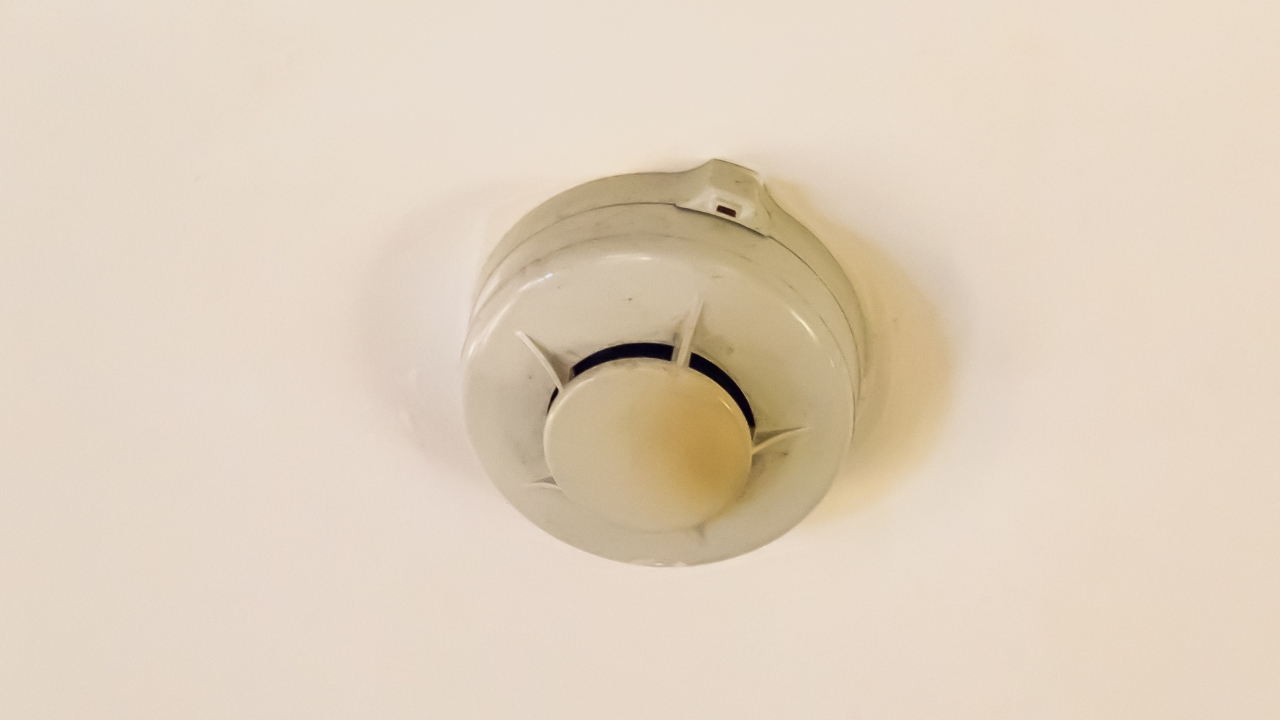
Even before you flip an alarm over to read its label, the way it looks can tell you a lot about whether it is past its prime. One of the clearest clues is discoloration, many smoke detectors start out white but gradually turn a dull cream or yellow as the plastic reacts to heat, UV light, and airborne contaminants. Fire safety technicians list Common Signs Your Smoke And CO Detector Are Deteriorating, and they highlight that Turning Yellow Or Looking Old is frequently a sign that the unit has been on the ceiling for years and may already be beyond its intended service life.
Home service companies that specialize in electrical and safety upgrades echo that warning, noting that Your Smoke Detector Turning Yellow is one of the clearest Signs It is Time for a Replacement. Cracked plastic, missing covers, or paint overspray on the vents are other visual cues that the detector has been neglected or exposed to conditions that can clog or damage the sensor. If the device looks like it belongs in an older car such as a 2005 Honda Civic rather than a recent model, you should treat that as a prompt to check the date and plan a swap.
5. When chirps, beeps, and false alarms signal deeper problems
The sounds your detector makes can also reveal whether it is nearing the end of its useful life. Fire safety educators explain that for SMOKE ALARMS, a continued set of three loud beeps, beep, beep, beep, means there is smoke or fire and you should Get out, call 9 1 1, and stay out, while a single periodic chirp usually points to a low battery or a fault condition. Public education materials on alarm sounds spell out these patterns so you can distinguish an emergency from a maintenance issue, and one guide to learning the sounds of SMOKE ALARMS makes clear that repeated chirps after a fresh battery is installed can indicate a problem with the unit itself.
Energy and home services experts also warn that ignoring nuisance beeping can leave you with a detector that is powered but not actually protecting you. They note that Failing to Test the Detector Post Replacement, After you change the battery, can mask a deeper failure if the unit does not sound properly. Security specialists add that Aging and Faulty Detectors Smoke detectors have a lifespan of about 10 years, and Beyond that, the internal sensor can degrade and trigger false alarms or fail to respond when it should. If your alarm is chirping even after a new battery, or it goes off for no clear reason, that behavior is a strong hint that the device is aging out and should be replaced.
6. Why sensor technology has a hard stop
Inside every smoke detector is a sensor that relies on either ionization or photoelectric technology, and both types are vulnerable to gradual decline. As dust and microscopic particles accumulate, the sensor’s baseline reading can drift, which makes it harder to distinguish between clean air and smoke. Security industry analysis of Aging detectors notes that manufacturers design their products to meet UL 268 fire safety standards for a defined period, and that Beyond that window, the sensor may no longer respond within the required time frame even if the alarm still has power.
Consumer safety testing reinforces that the built in test button does not measure this sensor drift, it only checks the electronics and buzzer. That is why independent reviewers recommend using a can of simulated smoke to verify that an alarm can still detect particles, and why they stress that the test button only confirms that the battery, electronics, and alert system are working, not that the smoke sensing element is still accurate. When you combine that reality with the 10 year design life, it becomes clear that the sensor technology itself has a hard stop, and that you should not stretch a detector’s service life beyond what the manufacturer intended.
7. Using dates and labels to decide when to replace
Once you know where to find the manufacture date, you can turn that information into a concrete replacement plan instead of guessing. Fire protection firms advise that if you are wondering How to Know If Your Smoke Detector Is Outdated, the first step is to Check the Manufacture Date, Remove the alarm from its base, and read the label on the back. If the date is more than 10 years old, or if the label is so faded that you cannot read it, the safest assumption is that the unit is due for replacement.
Some manufacturers and safety educators also point out that carbon monoxide alarms follow similar rules, and that standards bodies such as Underwriters Laboratories have required end of life warnings on those devices since 2009. That history underscores how important it is to treat the printed date as a firm guide, not a suggestion. If your smoke or CO alarm has an end of life chirp or message, you should not try to silence it with tape or battery tricks, you should replace the entire unit and record the new installation date so you are not guessing a decade from now.
8. Practical tests that go beyond the button
While you should never skip the monthly test button check, you can add a few simple habits to get a more realistic sense of whether your detectors are still doing their job. Fire safety guides recommend that you Test your Smoke alarms once a month using the built in button, then follow up every so often with a can of test smoke to see how quickly the unit responds. One detailed maintenance explainer titled Apr and Here lays out that regular cleaning, such as gently vacuuming around the vents, can help keep the sensor clear, but it also emphasizes that no amount of cleaning can reset the clock on an aging detector, so you still need to replace it at the end of its rated life.
Consumer testing organizations reiterate that the test button alone is not enough, and that using a smoke alarm test spray that simulates smoke is the best way to confirm that the sensor still reacts. After any battery change, energy service experts urge you to run a full test, since Failing to Test the Detector Post Replacement, After you swap the battery, can leave you with a powered but non responsive unit. If your alarm does not respond to simulated smoke, or if it reacts sluggishly compared with a newer unit in another room, that is a strong sign that it is past its real lifespan even if the button still triggers a beep.
9. Building a replacement routine so you are never guessing
To avoid the uncertainty of wondering whether a beeping alarm is secretly too old, it helps to treat smoke detectors the way you treat other time limited safety gear, such as car seats or fire extinguishers. Fire safety educators suggest creating a simple schedule, for example, replacing all alarms in your home every 10 years, and staggering them so you swap a few units at a time instead of all at once. A short instructional clip released in Sep under the title How To Tell Your Smoke Detector Is In Date underscores that checking the printed date is both an easy and tricky question, easy because the information is on the back, tricky because you have to remember to look, which is why a calendar reminder or home maintenance app can help.
Some homeowners also align detector replacement with other recurring tasks, such as major HVAC service or roof inspections, so that it becomes part of a predictable routine rather than an afterthought. Insurance and safety agencies encourage you to Maintain your alarms by testing them monthly and changing batteries as needed, but they consistently return to the same bottom line, detectors are not lifetime devices. If you build a habit of checking labels, watching for yellowing plastic, listening for unusual chirps, and replacing units on a set schedule, you will not have to wonder whether a still beeping alarm is quietly past its real lifespan.
Like Fix It Homestead’s content? Be sure to follow us.
Here’s more from us:
- I made Joanna Gaines’s Friendsgiving casserole and here is what I would keep
- Pump Shotguns That Jam the Moment You Actually Need Them
- The First 5 Things Guests Notice About Your Living Room at Christmas
- What Caliber Works Best for Groundhogs, Armadillos, and Other Digging Pests?
- Rifles worth keeping by the back door on any rural property
*This article was developed with AI-powered tools and has been carefully reviewed by our editors.