I thought the barn-style light fixture would look good outside and it missed the mark
The barn-style outdoor light has become a go-to shortcut for adding “modern farmhouse” character to a façade. Yet once a fixture that looks perfect in the product photo goes up beside a front door, it can flatten the architecture, glare into windows, or simply feel wrong for the house. Many homeowners discover too late that the charming metal shade they imagined as a subtle accent instead dominates the entry and makes the whole exterior feel off.
That disconnect rarely comes from the style itself. It usually stems from scale, placement, and how the light works with the rest of the exterior rather than in a vacuum. Treated more like a design system than a single pretty object, barn lighting can still deliver the warm, utilitarian look that first caught the eye.
Where barn lights go wrong
Designers who work with exterior fixtures regularly point to one recurring error: choosing barn lights purely for aesthetics without thinking about size in context. One source notes that a fixture that seems perfect on a laptop screen can read as “tiny” or “too much” once it is installed on real siding, especially around a tall door or wide garage.
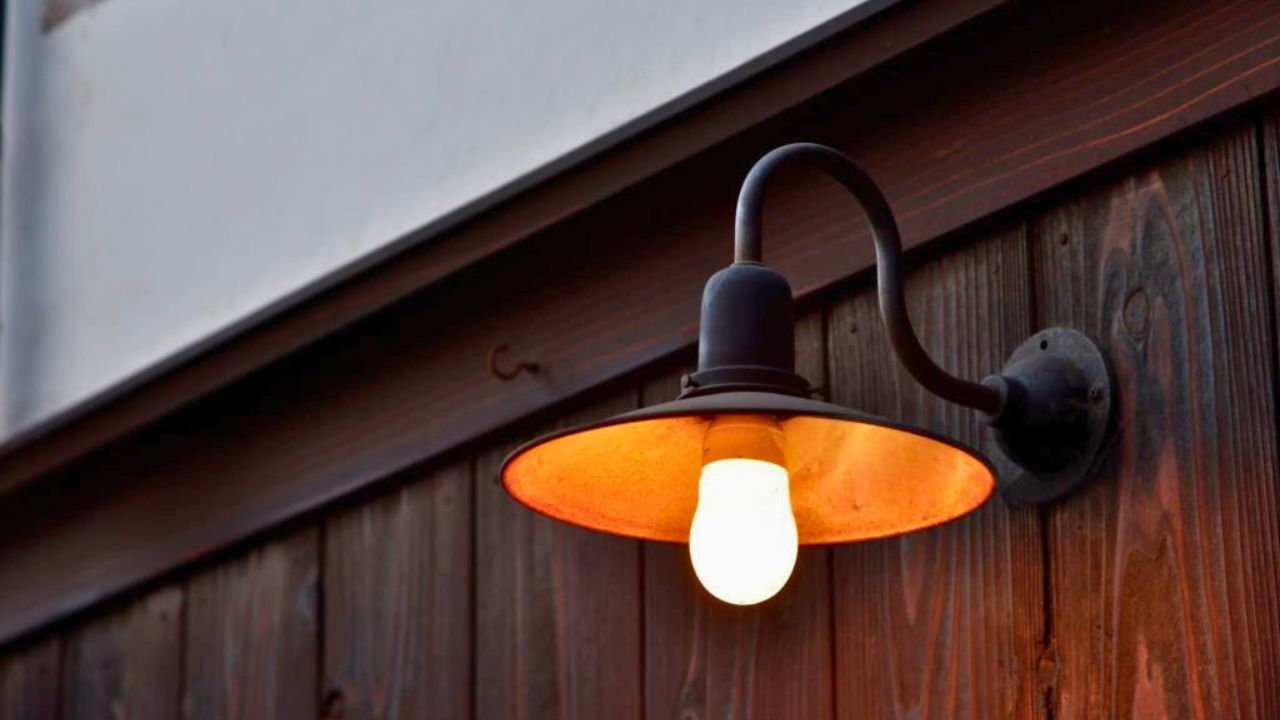
The problem often starts with the product page. A glossy listing for a compact, gooseneck-style sconce such as this metal outdoor fixture can make the shade feel substantial, even when the dimensions would be dwarfed by a two-story elevation.
On the flip side, a large industrial-style head like another barn-style light can overwhelm a modest entry. In photographs, the large shade is cropped tight, so the viewer never sees how far it projects from a wall or how low it hangs relative to a door frame.
Experts who work specifically with these fixtures warn that homeowners often misjudge not only width, but also how far the arm extends. A deep gooseneck that looks sculptural online can intrude into a narrow porch in person, which is one reason they stress measuring projection against real-world clearances before committing.
Architecture, not trend, should lead
Another common misstep is treating barn lights as a one-style-fits-all upgrade. Guidance on exterior lighting stresses that “Complementing Your Barn, Architecture” is more than a slogan. It refers to choosing fixtures that align with the building’s proportions and lines so the result feels intentional rather than themed.
That advice applies even when the structure is not a literal barn. A contemporary stucco house with flat roofs may be better served by a clean, shallow shade in a matte finish than a heavily curved arm and flared head. Resources that break down how “Choosing” fixtures by architecture can create either a rustic softness or a more modern, crisp feel suggest that the same basic barn profile can be tuned to different façades through color, arm shape, and mounting height.
Product families such as industrial wall lights illustrate that range. The same basic shade can appear either cottage-like or urban depending on arm style and finish, which is why designers recommend starting with the house’s architecture, then picking a barn light variation that quietly echoes those lines.
For homeowners who feel caught between traditional lanterns and stark modern boxes, some turn to Transitional outdoor fixtures. These are designed to bridge the gap between traditional and contemporary styles, with profiles that are neither too ornate nor overly simplistic, which can give a similar warmth to barn lights without leaning so heavily into a specific trend.
Scale and placement also determine how much the fixture competes with the door and windows. Advice from specialists in barn lighting notes that a light that is too small can make a façade look visually underbuilt, while one that is too large can dominate the entry in a way that feels theme-park rather than tailored.
Some homeowners discover this only after installing a large shade such as this oversized fixture beside a standard 3-foot door. The light suddenly becomes the focal point, and the entry proportions feel off, even if the style is attractive on its own.
Industry guidance on outdoor barn lighting emphasizes practical checks that can prevent that kind of regret. One expert writes that “One” mistake they see constantly is ignoring scale, which leads to fixtures that feel either “too little” or “too much” once mounted. They encourage taping out the dimensions on the wall and stepping back to the street to judge visual weight before ordering.
Retailers that specialize in these fixtures often group them under Popular Categories like Barn Lights, All Barn Lights, Outdoor Wall Lights, and Weather Resistant Outdoor Lighting. The categorization is not just marketing. It reflects how the same basic profile can be tuned for different exposures and architectural needs.
Light quality is the other frequent source of disappointment. Homeowners sometimes treat a single barn sconce as both task and landscape lighting, which can create harsh hot spots and deep shadows. One guide to exterior design warns that “Too” many bright sources, especially floodlights, can make a house look flat and unappealing, while “You” still need contrast between light and shadow.
That same guidance notes that “Not” aiming fixtures carefully can also annoy neighbors. Barn heads that throw light outward instead of down can create glare across property lines, which is why many pros recommend shields or shades that focus illumination on the door and threshold rather than the entire street.
Professionals who specialize in overall outdoor schemes often talk about three layers of light: task at the door, accent on the architecture, and ambient for the porch or yard. One design-focused source describes how “Finally” ambient lighting provides overall illumination and atmosphere and suggests “Think of” a lantern hanging from a porch ceiling or rattan string lights that glow from above.
In that layered context, the barn-style fixture becomes one piece of a larger composition rather than the sole protagonist. A modest gooseneck over the door, paired with subtle step lights and a soft ceiling lantern, can feel much more balanced than a single oversized shade blasting the entry.
Style alternatives can also soften the impact of a barn head that feels too aggressive. Some designers point to rustic lantern-style wall lights as a gentler way to frame an entry. One guide notes that “They” can guide people safely while casting a warm glow that softens long or narrow passages, and that a classic “Lantern” profile often works well in hallways or entryways where a barn shade might feel industrial.
Other options include up-and-down wall lights that wash both the siding above and the steps below. One exterior ideas resource explains that these vertical fixtures are ideal for highlighting architectural details and can make a home stand out at night without the directional glare sometimes associated with barn shades.
For homeowners still drawn to the barn look, product lines such as Sea Gull Lighting offer a more refined take. The Sea Gull Lighting Barn Light one light outdoor wall fixture collection is marketed as a way to enhance the beauty of a property while making the home safer and more secure, which reflects a broader shift toward fixtures that balance charm with performance.
Specialist brands that focus on barn-style shades have also built communities around their products. The company behind Outdoor Barn Lights promotes heavy-gauge steel fixtures and shares installation photos through social channels such as Facebook and Pinterest. Those galleries can help buyers visualize scale on real houses before committing.
The lesson from all of this is not that the barn-style light was a bad idea. It is that any single fixture, no matter how stylish, can miss the mark when it is chosen in isolation from architecture, scale, and overall lighting strategy.
Homeowners who step back, measure carefully, and think about how a fixture will look from the curb and feel at the door are far less likely to regret that metal shade once it is wired in place. The barn look still has staying power, but it works best when it plays a supporting role in a thoughtful exterior plan rather than trying to carry the entire façade alone.
Like Fix It Homestead’s content? Be sure to follow us.
Here’s more from us:
- I made Joanna Gaines’s Friendsgiving casserole and here is what I would keep
- Pump Shotguns That Jam the Moment You Actually Need Them
- The First 5 Things Guests Notice About Your Living Room at Christmas
- What Caliber Works Best for Groundhogs, Armadillos, and Other Digging Pests?
- Rifles worth keeping by the back door on any rural property
*This article was developed with AI-powered tools and has been carefully reviewed by our editors.