Landowner Claims 474 Acres in Far West Texas — Then a Neighbor Produces a 2006 Correction Deed and Keeps the Adjoining 1.7 Acres
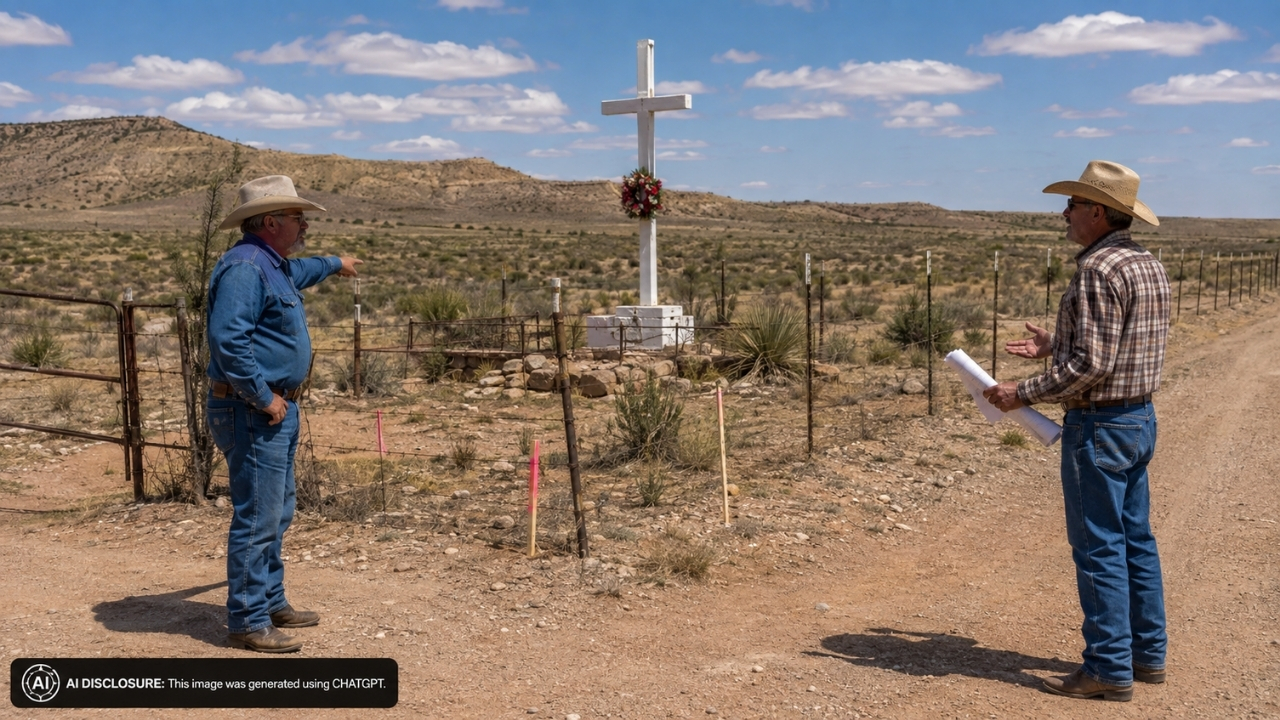
Photo credit: AI-generated image created using ChatGPT. Illustrative only.
Buying a big slice of West Texas can feel like the finish line: gates up, roads mapped, the deed in a safe. But in Presidio County near Redford, a family land company learned the hard way that acreage on paper doesn’t always match what’s been treated as “someone’s place” for years.
A dispute over a small adjoining tract turned into a courtroom fight, and the details read like a rural property nightmare—surveys, old deeds, tax records, and a memorial cross you can see from the road. The Eighth Court of Appeals’ opinion in the source post explains why the big land purchase didn’t carry the day when the neighbor came back with a correction deed—and nearly two decades of possession to back it up.
The first sign was a tiny carve-out next to a massive purchase
Local Chapter, LLC was formed by Baxter and Amber Box to hold land for their family—something that could be passed down. They bought about 474 acres in far West Texas and believed an extra adjoining 1.7 acres was part of the package, too.
But the part that caused the real trouble was much smaller: roughly two acres with a long-standing memorial. Local Chapter eventually took the position that this two-acre tract was included within its holdings and asked a court to declare it owned the property outright.
In rural areas, these disagreements often start with a casual assumption: “It’s inside our fence line,” or “It’s always been part of the ranch.” Here, the boundary question came with something you can’t ignore—an established site that other people had been visiting for years.
A memorial site turned a boundary question into a hard line
The disputed tract includes the location where 18-year-old Juni Hernandez was shot and killed by a U.S. Marine in 1997, and a memorial cross has stood there for decades. That kind of landmark isn’t like a random patch of mesquite. It’s visible, emotionally loaded, and it brings regular foot traffic.
The history mattered for more than just feelings. The Hernandez family’s later claim against the government, as described in the opinion, involved arguments about whether the Marines had permission or authority to be on that land in the first place.
Long before Local Chapter arrived, the Grado family had asserted ownership of a larger six-acre parcel that included the memorial area. Trinidad Grado Jr. paid property taxes and initially gave the Hernandez family permission to place a wooden cross where Juni died. Then in 2005, he changed the rules—remove it, or start paying rent.
The neighbor didn’t just wave a deed—he had years of receipts and routines
John William Weinacht, who had represented the Hernandez family, approached Grado about buying the land. He purchased what he believed was the full six acres in May 2005 and let the family reinstall the memorial—this time as a steel cross cemented into the ground.
Then came the kind of title snag that makes rural buyers feel sick: Weinacht discovered that Grado had previously deeded four of the six acres to his daughters. A new survey showed the memorial site and the place where Hernandez died sat within the remaining two acres.
So in December 2006, Weinacht accepted a correction deed covering those two acres, effective back to his May 2005 purchase. That “correction deed” detail later became a key piece of the neighbor-vs.-neighbor story: it wasn’t just someone claiming land—it was someone tightening the paperwork to match what was actually left to sell.
Meanwhile, Weinacht’s actions on the ground didn’t look like a placeholder. His name appeared on property-tax records, and he paid taxes starting in 2005. When the appraised value jumped in 2017, he challenged it and got it reduced. He also restricted use of the tract to the memorial purpose and had the Hernandez family patrol and report activity to him.
And that cross? It wasn’t hidden back in a wash. The opinion describes it as visible from the county road and illuminated at night. In homestead terms, that’s not “occasional use.” That’s a constant marker that someone is treating a spot as theirs.
What made it worse: the buyer’s own deed pointed at the neighbor’s claim
When Local Chapter bought its larger tract years later, its 2019 deed contained an exception referencing Weinacht’s 2006 deed. In plain English, their own title documents flagged that another person had a recorded interest right where the fight would later happen.
Even so, Local Chapter later approached Weinacht about buying the two-acre parcel. Weinacht refused. After that refusal, the gloves came off: in August 2023, Local Chapter sued to have a court declare it owned the tract in fee simple and to knock out Weinacht’s deeds as a cloud on title.
Weinacht responded with a counterclaim that tends to end these fights fast if it’s backed by facts: adverse possession. He argued that even if Local Chapter could trace record title, he had owned it through open, exclusive possession over time.
The trial court sided with Weinacht on summary judgment. Local Chapter appealed, also arguing that procedure went sideways—requests for more time, additional evidence, and notice issues. But the appellate court wasn’t persuaded.
The court focused on the “lived reality” of the land for 18 years
Texas adverse possession can be proved under different time periods. The appeals court said it only needed to analyze the 10-year statute. Weinacht’s deed had been recorded in May 2005—almost 18 years before the lawsuit was filed.
The court found the record showed Weinacht’s possession was actual, visible, continuous, open, notorious, peaceable, exclusive, and hostile to competing title claims for well beyond the 10-year requirement. Taxes were part of it. So were inspections and maintenance. After talks with Local Chapter in 2019, Weinacht began making additional improvements: fencing, a septic tank, underground electrical and water lines, and restoration of an adobe structure.
There was also a detail that would make any rural buyer wince. Weinacht said a Local Chapter representative contacted him in December 2019, acknowledged the tract belonged to him, and expressed interest in buying it. If you’re trying to argue later that ownership was unclear, that kind of contact is a problem.
On the procedural complaints, the appellate court noted Local Chapter’s lawyer attended the summary-judgment hearing and argued the merits, but didn’t bring the continuance request to the judge’s attention during the hearing. The court held the issue wasn’t properly preserved and Local Chapter didn’t show harm. Attempts to supplement the record with a whole new brief and lots of exhibits were also limited, and the court said that wasn’t an abuse of discretion.
The judgment was affirmed in full. Weinacht keeps title to the tract that includes the memorial site.
The practical reactions were the same ones property folks always preach
If you’ve spent any time around rural land buyers, the reactions almost write themselves. People fixate on the basics: read every exception in the deed, don’t assume a fence is the line, and treat long-standing improvements—especially visible ones—as a warning sign to slow down.
Tax records came up for a reason, too. In this case, paying taxes, challenging an appraisal, and being listed in the records weren’t just background facts. They were part of the story the court accepted: a consistent pattern of ownership behavior.
And then there’s the human piece that doesn’t show up on surveys: when a place has been used for a memorial for years, with regular visits and a lighted cross visible from the road, it doesn’t behave like “unused extra acreage.” It behaves like controlled ground.
Out in Presidio County, this didn’t end with a handshake and a new fence line. It ended with one landowner holding on to hundreds of acres—and still losing the small corner that had already been treated as someone else’s, in public, for nearly two decades.
Like Fix It Homestead’s content? Be sure to follow us.