Louisville Homeowner Warns Two Different Neighbors for Years About Four Feet of Documented Property Line Before Planning an Addition — Then the Newest Owners, There Only Five Years, Claim Kentucky’s Fifteen-Year Adverse Possession Law Already Makes It Theirs
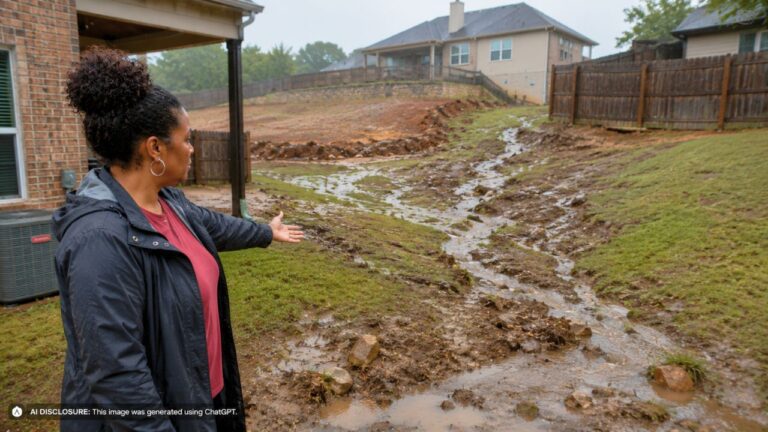
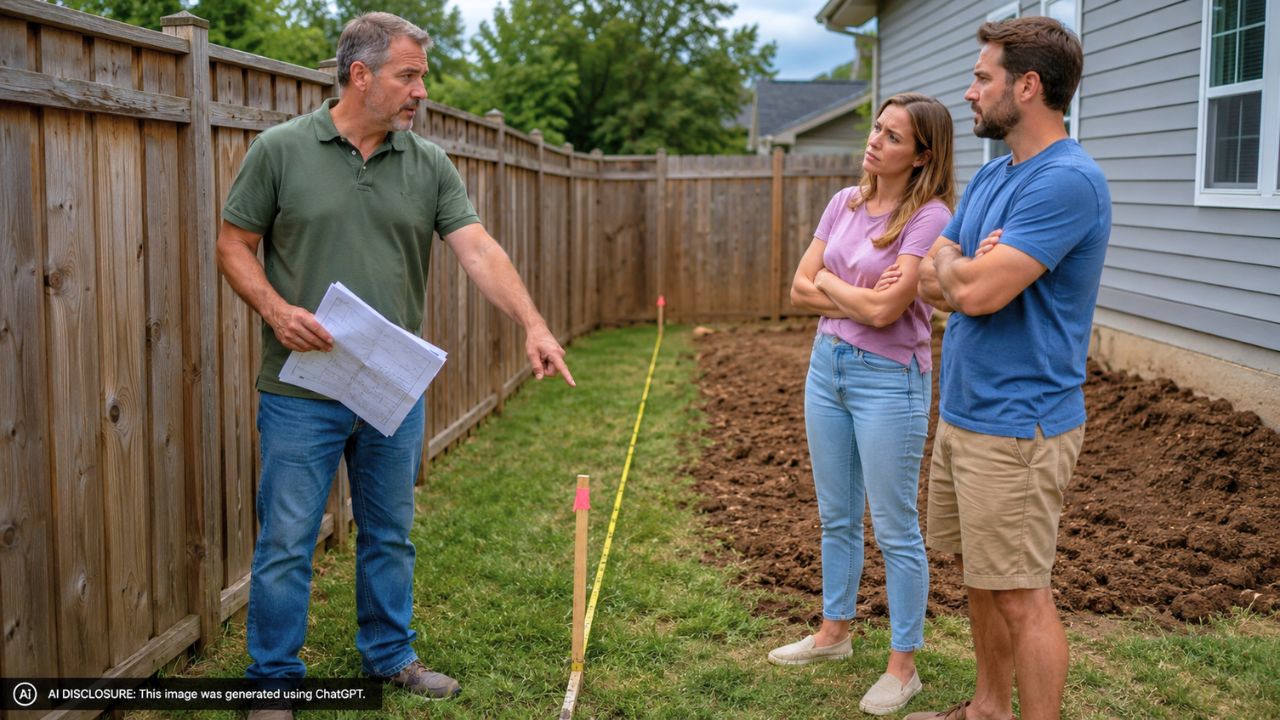
Photo credit: AI-generated image created using ChatGPT. Illustrative only.
A Louisville homeowner thought they were doing everything the responsible way: plan the addition, pull the records, and make sure the build stays on their own lot. Then the fence line turned into a four-foot problem that suddenly had a clock attached to it.
In the original post, the homeowner explains that a survey filed with Jefferson County shows roughly three to four feet of their property sits on the neighbor’s side of an existing backyard fence. It didn’t feel urgent at first—until the homeowner revived plans for an addition and told the neighbors that reclaiming that strip would be part of the design.
The fence looked “normal” until the survey didn’t match
The homeowner bought the house in 2018 and, like a lot of buyers trying to get through closing, didn’t do a survey at purchase. A year later, in 2019, they paid for an official property survey and had it recorded in county property records.
That’s when the quiet surprise showed up on paper: the fence line didn’t track the property line. The survey indicated about three to four feet of the homeowner’s lot—running toward the rear—was fenced into the neighboring yard.
On the ground, it probably looked like plenty of older city lots do: a fence that’s been “good enough” for decades, landscaping established on one side, and nobody actively measuring. The homeowner even notes the “pretty side” of the fence faces the neighbor, and that the fence itself sits on the homeowner’s side of the property.
They warned the old neighbor, then warned the new one
When the neighboring home went up for sale in 2019, the homeowner didn’t stay quiet and hope it would magically resolve later. They told the neighbor who was listing the property that the survey showed roughly four feet of the homeowner’s land on the other side of the fence.
They also documented it in multiple ways: a certified letter with the survey, a copy provided to the neighbor’s realtor, and an email to the neighbor with the survey attached. They even mentioned they were working with an architect and considering an addition, though they weren’t sure when the project would actually happen.
A few months later the house sold. About a year after the new owners moved in, the homeowner brought it up again—same basic message: the property line is about four feet on your side of the fence, and a remodel might be coming. The response was minimal: “okay,” and thanks for the heads-up.
Then the addition planning made it real money
Property line disputes can sit dormant for years when nobody has a reason to touch the boundary. That changed when the homeowner met with their architect again and decided to move forward with a remodel.
The homeowner says the drawn plans would require reclaiming that strip of property on the other side of the fence. In practical terms, that could mean moving or rebuilding the fence, changing the yard layout, and possibly removing anything the neighbor has placed in that space.
That’s when the neighbor’s tone shifted. Instead of “okay,” the homeowner got a claim: that Kentucky’s adverse possession rule—described in the post as a 15-year standard—means the land is now the neighbor’s. The catch is the current neighbors have only lived there about five years.
The homeowner also describes what’s physically happening on that strip now: the neighbors have a flower bed on their side of the fence where the survey says the homeowner’s land actually is. There was never an agreement, according to the homeowner, that granted permission to use or maintain that piece of land.
The neighbors pointed to a 15-year clock—and the fence’s age
The real anxiety isn’t just about the current neighbors’ five years. It’s about what came before them.
The homeowner estimates the fence has been there 20 to 30 years, with that four-foot strip effectively treated as part of the neighboring yard for that entire time. They don’t have any record of an agreement between prior owners that would explain why the fence was placed where it was, or whether it was ever intended as a boundary.
That’s how these disputes get expensive fast: a homeowner can “know” what the survey says, but the lived history of the fence line becomes its own story. If previous owners on either side behaved as though the fence was the boundary for long enough, a neighbor may try to argue that the boundary shifted in practice, even if paper records never changed.
The homeowner’s question is blunt and practical: can a neighbor claim the land is now theirs through adverse possession if they’ve only been there five years—especially when the homeowner notified both the seller and the new owners soon after the survey?
Commenters zeroed in on proof, permission, and interruptions
Responses focused less on the drama and more on the timeline and documentation. The homeowner had a key detail many people wish they had later: an official survey recorded with the county, plus a clear paper trail showing the neighbor was told about the encroachment during the 2019 sale and again after the new owners moved in.
Practical reactions centered on the idea that adverse possession typically isn’t a casual “we’ve been mowing it” argument. It’s usually a legal standard that depends on continuous use for a set period, along with other requirements that vary by state. Several pointed out that new owners generally can’t just declare ownership after five years unless they can connect their use to prior owners in a legally meaningful way.
Another common theme: the homeowner’s notifications matter because they show the use wasn’t secret, and they also suggest the homeowner didn’t sit silently while someone else openly claimed the land. People encouraged treating this like a paperwork problem first—surveys, letters, records—before it becomes a chainsaw-and-postholes weekend that inflames the block.
Now it’s a neighborhood relationship problem with a construction deadline
What makes this feel tense isn’t just four feet of dirt. It’s what four feet can do to an addition footprint, a setback line, and the overall project cost. Architects draw to property lines, not to “the fence we all assumed was right,” and lenders and permits don’t love surprises.
The homeowner is stuck in the worst middle ground: they’ve got documentation, but they also have a fence line that may have functioned as the “real” boundary in everyday life for decades. On top of that, the newest neighbors are no longer hearing the survey as a friendly heads-up—they’re hearing it as a threat to part of their yard, including landscaping they’ve likely cared for since moving in.
For now, the strip remains a narrow piece of ground carrying a wide load: the history of multiple owners, a recorded survey, a certified letter, and an addition plan that turns a quiet mismatch into a moment where somebody is going to feel like they’re losing something.
Like Fix It Homestead’s content? Be sure to follow us.