New Homeowner Closes on 1.1 Acres With a Full Survey and Corner Stakes — Then the Neighbor Claims a Quarter of the Property Is His and Threatens Lawyers and Police
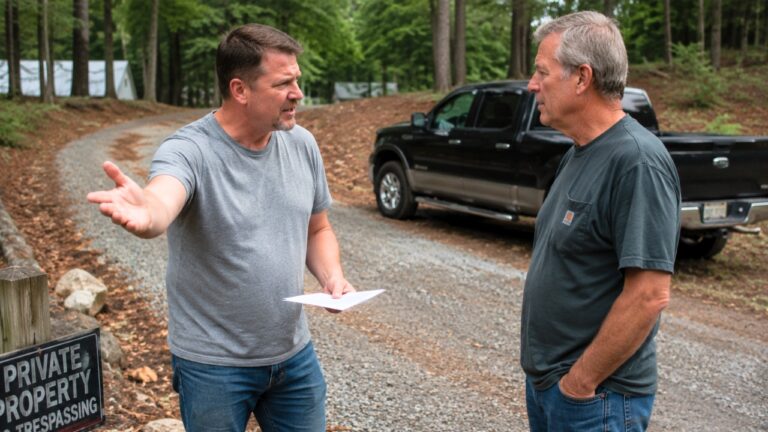
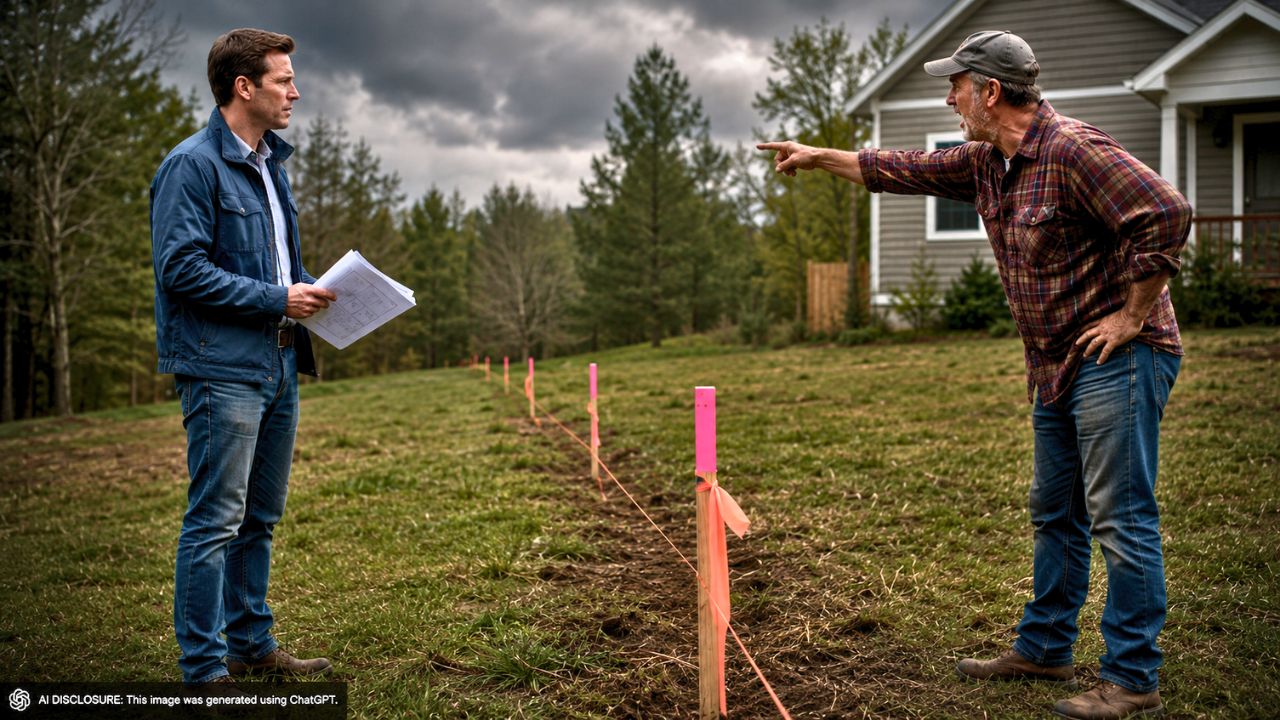
Photo credit: AI-generated image created using ChatGPT. Illustrative only.
You buy a place because it finally checks the boxes: a well-kept house, room to breathe, and just over an acre of land. You do the responsible stuff up front—inspection, title insurance, a survey with corner stakes, a lawyer at closing—so you can settle in and start making it yours.
Then you find out the neighbor has been treating a chunk of your yard like it’s his for decades, and he’s not interested in being corrected. That’s the mess one New York homeowner laid out in the original post, after a quiet mowing routine turned into threats of police and a lawyer-to-lawyer standoff.
The first sign was easy to brush off
The homeowner closed in July on a 1.1-acre property after a long search. Land was the deal-breaker—at least an acre—and in their price range that wasn’t easy to find. When the right place came along, they moved fast and did the paperwork right: survey, corner stakes, inspection, title insurance, and a closing attorney.
After moving in, they couldn’t immediately locate one of the survey stakes: the back corner shared with the neighbor, a retired man they call “Edgar.” The marker was buried behind thick bushes, so for a while the homeowner did what a lot of people do—they watched where the neighbor mowed and assumed that must be close to the line.
But something felt off. The yard didn’t seem as big as it should have, and once they crawled into the brush and finally found the missing stake, the reason became obvious. Edgar had been mowing 80 to 100 feet past the actual property line.
A lawnmower turned into a line in the sand
At first, the homeowner gave him the benefit of the doubt. Maybe Edgar was “helping” because the new owner wasn’t mowing far enough out. So the homeowner started mowing their full section—out to the staked line.
That’s when Edgar’s mood changed. While the homeowner was mowing toward the street, Edgar stopped his car in the road and stared for a long time. The homeowner waved. Edgar sped off.
The next day, Edgar called the homeowner over and demanded to know why they were mowing “over there.” When the homeowner said they were mowing to the property line and mentioned the survey, Edgar exploded. He insisted he’d been mowing that area for 40 years, called part of it “my garden” (described as an old fenced-in patch that hadn’t been used in decades), claimed a lawyer told him long use made it his, and warned that if he caught the homeowner “on my land again,” he’d call state troopers and get them arrested. He finished with the classic: “I’ll see you in court.”
Paperwork, cameras, and a lawyer who wasn’t impressed
The homeowner’s response was immediate and practical. They emailed their closing lawyer, started calling fencing companies for quotes, and ordered security cameras. This wasn’t just about grass anymore; it was about someone threatening police over land the homeowner had purchased and could document.
The lawyer responded quickly: Edgar’s claim had no merit. In New York, the homeowner learned, adverse possession is difficult to win, and the law specifically excludes lawn mowing and general maintenance from adverse possession claims. In other words, “I’ve been mowing it forever” isn’t the magic key some people think it is.
As mowing season ended, things went quiet. Then in November the homeowner saw a survey crew on Edgar’s property and assumed reality would finally sink in.
The neighbor’s lawyer tried to make it sound friendly
In April, the homeowner received a letter from a law firm Edgar had retained. The letter claimed there was a discrepancy between the “observed boundary line” and the legal boundary “as understood by local homeowners in the community.” It leaned hard on “being neighborly” and “coming to the table,” but didn’t put clear terms on the table.
The homeowner checked the new stakes Edgar’s surveyor had placed. Crawling through the same thick bushes, they found the survey point—and it was about four inches from the stake placed by the homeowner’s surveyor. Four inches, not a quarter-acre.
The homeowner wrote back asking if that four-inch difference was the supposed discrepancy. Edgar’s lawyer confirmed it was.
At that point, the homeowner sat down with their attorney—an attorney they already liked from closing, and one they were willing to pay to keep things clean. In the meeting, the lawyer reiterated that Edgar had no claim and called the whole thing ridiculous given how small the survey difference actually was. Then came the kind of blunt reassurance homeowners tend to appreciate: the neighbor and his lawyer could, in the attorney’s words, “go away.”
The best part for the homeowner wasn’t emotional—it was financial. The homeowner discovered their workplace legal plan would cover the back-and-forth at no cost. And if it ever went to court, title insurance would kick in, also leaving the homeowner out-of-pocket at zero. Meanwhile, Edgar was likely paying standard hourly legal rates to argue over inches.
The “terms” came down to a fence… and a pool buffer
Once the letters started, the homeowner’s lawyer asked Edgar’s attorney for a copy of Edgar’s survey so they could compare. It took two weeks of asking. What they got back was a smudged, faded copy of an original 1971 survey. Not exactly the kind of crisp documentation that screams “we’re confident here.”
Eventually, Edgar’s side sent actual terms instead of friendly-sounding fog. The proposal: Edgar would remove the “garden” if it was on the homeowner’s side of the line (it was), and the homeowner would build a fence that created a 10-foot “buffer” to Edgar’s backyard pool. The pool sat close enough to the property line that it might be just over or under 10 feet.
The homeowner’s reaction was simple: if Edgar built his pool too close to the line, why was that suddenly the homeowner’s problem to solve with a fence setback? The homeowner decided they would build a fence one foot from the property line—no more.
That detail matters because fences are permanent in a way mowing patterns aren’t. A fence doesn’t just keep a neighbor’s mower out; it turns “I thought this was mine” into a daily, visible reminder that it isn’t. It also becomes a new flashpoint when someone already feels entitled.
People focused on the same three things: proof, boundaries, and staying calm
Even without a big pile of quoted comments, the practical reactions practically write themselves because this is the classic property-line playbook. The homeowner did what most experienced homeowners recommend: they leaned on documents, not arguments. A stamped survey, title insurance, written communication through attorneys, and cameras to document any future trespassing.
The other common theme is avoiding “handshake solutions” that quietly give away land. Neighbors sometimes push for compromises that sound harmless—move the fence back “just a bit,” keep mowing “like we always have,” don’t make it a big thing—until that “bit” turns into an argument later about where the true line is. This homeowner’s insistence on building near the line, and not creating a generous buffer because of the neighbor’s pool placement, reflects that wariness.
For now, Edgar appears to be mowing closer to his side, though still a little over. The homeowner is prepared to keep pushing back with the survey, the fence, and legal representation if needed. It’s not the relaxing acreage dream they bought into, but it’s the reality when someone else has been treating your land like a free extension of their yard—and doesn’t want to stop just because you brought receipts.
Like Fix It Homestead’s content? Be sure to follow us.