New Homeowner Finds a Public Footpath Used for Thirty Years Cutting Straight Through the Backyard — Then the County Confirms the Path Has Legal Standing
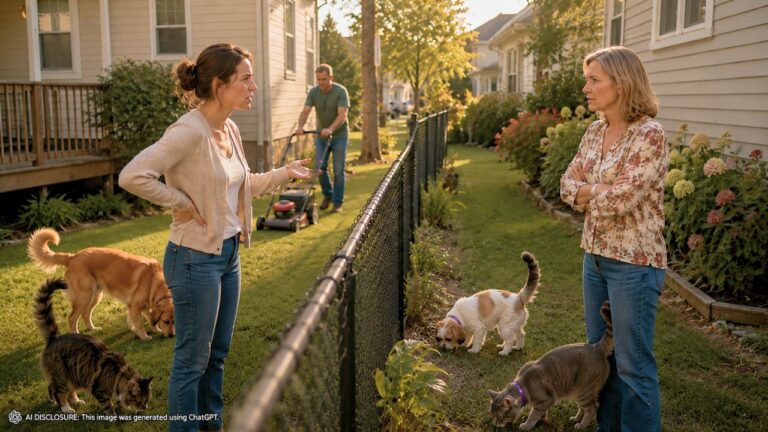
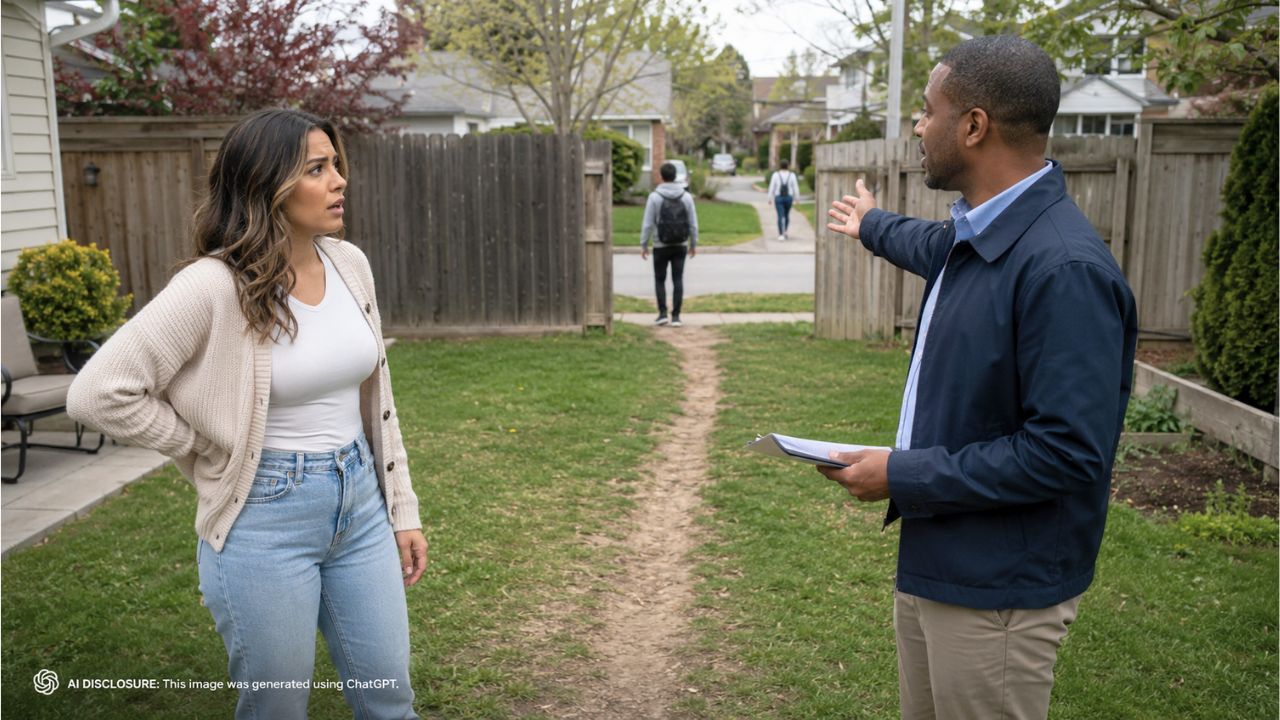
Photo credit: AI-generated image created using ChatGPT. Illustrative only.
You don’t expect to learn new facts about your land from a neighbor after the moving truck is gone. But that’s exactly how one new homeowner discovered a well-worn footpath cutting across one of their extra lots—used by locals as a shortcut for what they were told has been decades.
In the original post, the buyer explained they purchased a house plus two additional lots, one on each side. Not long after closing and moving in, a neighbor casually mentioned there’s a pathway along the far boundary of one lot, hugging the fence line, then slipping through an opening at the back corner into another backyard. It isn’t loud or messy. It’s just… there. And it’s used every day.
The first clue was a path worn into the grass
At first, it sounded like a neighborhood quirk—one of those things that existed before you and would exist after you, like kids cutting through a block to get home from school. The homeowner said the shortcut doesn’t cause much trouble: a few people use it daily, including school-age kids, and they’ve been respectful and quiet.
But when they went to look closely, the ground told the real story. There was a visible, well-worn line from the sidewalk straight back to the corner of the lot. That kind of “desire path” doesn’t form from occasional use. It forms from routine.
That’s when the homeowner’s feelings shifted from “no big deal” to “wait—what did I buy?”
It wasn’t the foot traffic—it was what the foot traffic prevents
The homeowner wasn’t describing a scary, chaotic stream of strangers. The frustration came from the practical consequences of having a known cut-through on your land.
They said their dog can’t use the yard and they can’t fence it. That single line says a lot. A yard is supposed to be a private buffer—space for pets, kids, gardening, storage, projects, and a little peace. A daily-used walkway changes how you live on the property, even if everyone using it is perfectly polite.
And once a path becomes “normal,” it starts to feel untouchable. Not because you like it, but because you can picture the blowback the moment you try to change it.
The neighbor-to-neighbor part is awkward, even when everyone’s nice
What makes these stories sticky is that the first person who brings it up is often trying to be helpful. Here, the neighbor came by after the move-in and pointed out the route: along the fence line, then out through an opening in the fence at the back corner into another backyard.
That detail matters. An opening in a fence isn’t just a scuff in the grass—it’s a sign the shortcut has been physically accommodated over time. Even if the current owner didn’t create it, it implies the neighborhood has treated the route like a real corridor, not a one-off trespass.
And once you know it exists, you can’t unknow it. Every time you see someone pass, you’re doing mental math: liability, privacy, safety, resale value, and whether saying anything makes you “that neighbor.”
The biggest questions: is it permanent, and should it have been disclosed?
The homeowner’s questions were straightforward and the kind most buyers don’t think to ask before they sign: Is this a permanent feature of the yard? Can they do anything about it? Should it have been disclosed when they bought the property? And if it stays, do they have to disclose it to the next buyer?
That’s where the tension spikes. A footpath can be “just a habit,” or it can be something closer to a right-of-way in practice—especially if it’s been used openly for decades and tied into how the neighborhood moves around. Even without a formal sign or paved trail, longstanding use can feel official to the people relying on it.
And the homeowner is stuck in the middle: they don’t want to punish kids walking home, but they also don’t want to buy land they can’t fully use.
Commenters pushed the same theme: paperwork, boundaries, and proof
While the post itself focused on the homeowner’s discovery and questions, this kind of property drama tends to draw a familiar set of practical reactions from readers: find out what you actually own on paper, and whether any access rights exist that weren’t obvious during the walk-through.
When a path runs along a fence and exits through a deliberate opening, people often urge new owners to look for recorded easements, older surveys, or any documents tied to the extra lots. The reason is simple: if something is legally recognized, your options look very different than if it’s just customary use that nobody ever challenged.
And even if it turns out to be informal, “informal” doesn’t mean “easy.” The homeowner’s own description—used daily, for decades, by kids going home from school—reads like a routine the neighborhood will fight to keep, at least emotionally.
When the county says the path has standing, it stops being a simple backyard problem
What turns this from an annoying surprise into a true homeowner nightmare is the moment a local authority confirms the pathway has legal standing. Once a county recognizes it as a real public access route, it’s no longer a question of whether you feel comfortable closing a gap in the fence.
Now it becomes a long-term property constraint. The homeowner isn’t just managing neighbors’ expectations; they’re dealing with the reality that certain parts of that lot may be treated like a corridor the public can legally use. That can impact fencing plans, landscaping, where a dog can safely run, and how “private” the lot really is.
It also reframes the disclosure worry. The homeowner already felt they “absolutely would” disclose it to a future buyer. Once it’s recognized as having legal weight, that instinct looks less like courtesy and more like self-protection.
In the end, the most unsettling part wasn’t the foot traffic itself. It was learning—after closing—that a piece of their new property functions like a shared passageway, with decades of routine behind it and official recognition to match. That’s a hard thing to unsee every time you look out at your own backyard.
Like Fix It Homestead’s content? Be sure to follow us.