New Homeowner Finds the Neighbor Has Filed a Legal Claim to a Twelve-Foot Strip of the Yard — Then Cites Eight Years of Uninterrupted Mowing as Proof
Photo credit: AI-generated image created using ChatGPT. Illustrative only.
It started the way a lot of property-line headaches start: a homeowner wanted to build an addition, pulled records, and realized the backyard wasn’t as simple as the fence made it look. In a tight neighborhood in downtown Louisville, a few feet can be the difference between a workable remodel and a design that suddenly doesn’t fit.
In the original post, the homeowner explains they bought their house in 2018 and didn’t order a survey at closing. The following year, they paid for an official survey and had it recorded in the county property records. That’s when they learned the fence line didn’t match the legal line—roughly three to four feet of their lot sat on the “other” side of the fence, running toward the rear.
The fence looked settled… until the paperwork showed otherwise
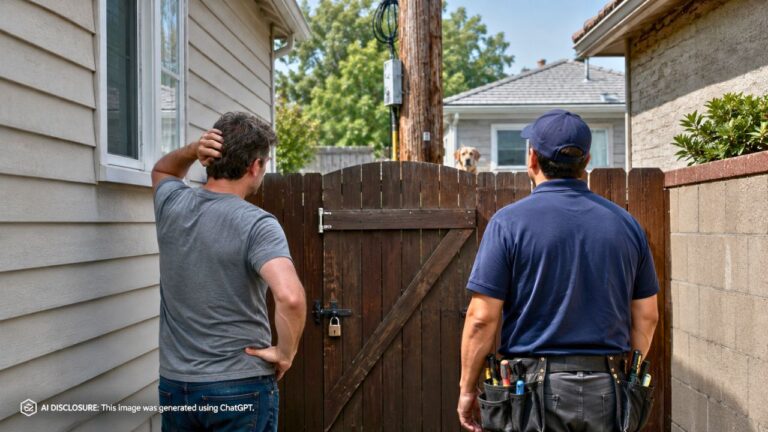
The fence had all the visual signals of permanence. It had likely been there for decades, and the “pretty side” of the fence faced the neighbor’s property. To most people, that’s the kind of detail that silently tells you who the fence is “for,” and by extension, whose yard is whose.
But the recorded survey said otherwise. The homeowner’s description makes it sound like the fence was built inside their property line, leaving a narrow strip—about four feet wide—outside the fence but still legally theirs. And once you know that, you can’t un-know it, especially if you’re about to spend real money expanding the house.
In neighborhoods where lots are tight, builders and previous owners often make choices that look tidy at the time: avoid moving a fence, align it with landscaping, or keep it where it’s always been. Years later, those choices can turn into a fight when someone needs the space for a project.
They tried to flag it early, before it became a blow-up
What’s striking here is that the homeowner didn’t sit on the information. In 2019, when the neighbor on the other side listed their home for sale, the homeowner told them directly about the survey and the strip of land. They followed up with a certified letter, provided a copy to the neighbor’s realtor, and also emailed it.
It reads like someone trying to create a paper trail before things got messy—especially since they also mentioned they were working with an architect and considering an addition. They weren’t demanding the fence be moved that day. They were putting the neighborhood on notice: “This is what the boundary shows, and I may need it later.”
Not long after, the neighboring home sold. The new owners moved in, and about a year later the homeowner again mentioned the property line and the survey. The response was casual—basically an “okay”—the kind of neighbor-to-neighbor exchange that feels uneventful until it turns out nobody heard the same message the same way.
The remodel plan turned a quiet strip into a real stake in the ground
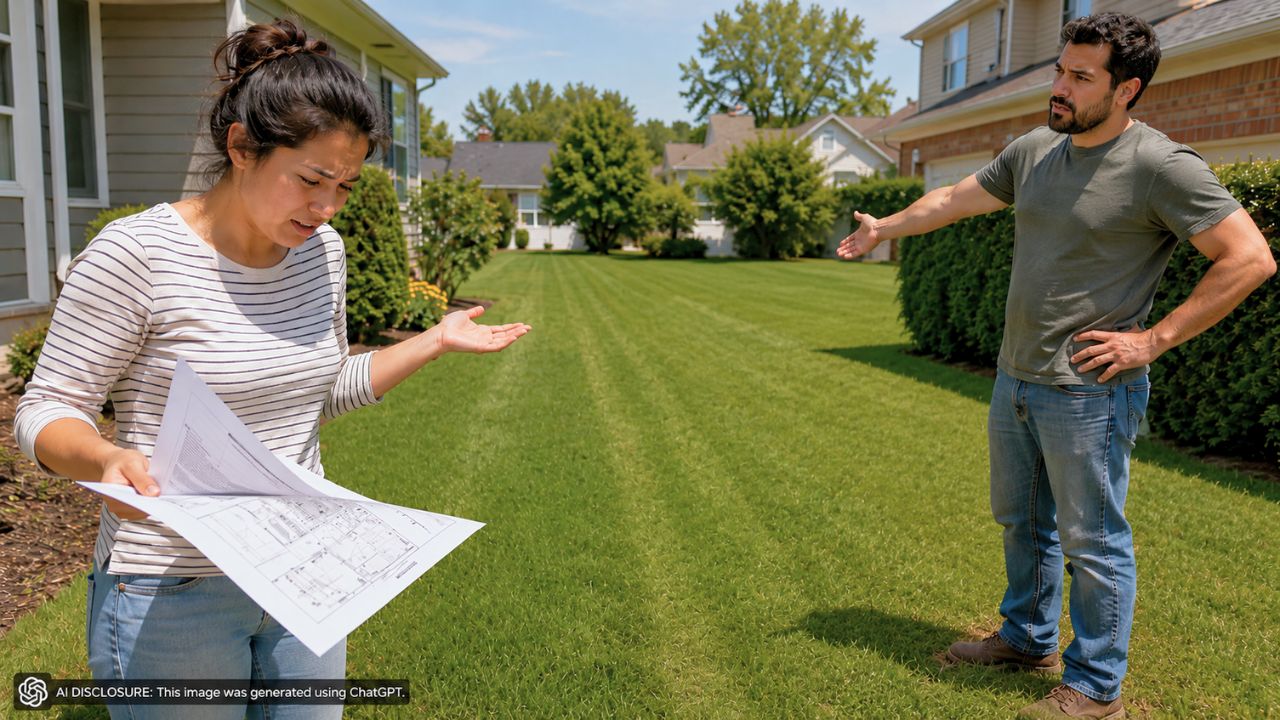
The problem didn’t explode until the homeowner returned to the addition plans in earnest. After meeting with the architect again, they spoke with the neighbors and said the new design would reclaim the portion of yard on the other side of the fence line.
That’s when the tone changed. The neighbors responded with a claim that the land was theirs due to adverse possession, citing Kentucky’s 15-year requirement. The homeowner notes the current neighbors have only lived there about five years, but they also point out that the fence itself has likely been in place for 20 to 30 years.
This is the nightmare version of “it’s only a few feet.” The homeowner isn’t arguing about a theoretical boundary anymore. They’re trying to build an addition, which means permits, contractors, and a design that needs predictable setbacks and a clean footprint. A strip of land that a neighbor treats as yard can quickly become the most expensive four feet on the lot.
Mowing, flower beds, and the “we’ve always used it” argument
The neighbor’s side apparently has a flower bed in the disputed area. It’s the kind of everyday yard improvement that feels harmless—until someone uses it as evidence that they’ve been openly treating the land as their own.
The homeowner says there was never any agreement with the prior neighbor or the current one about using or maintaining that portion. They also don’t know whether the previous owner of the homeowner’s house (who had owned it for decades) had any sort of arrangement when the fence was installed. Nothing like that was conveyed at purchase.
And that’s the tricky part of old fences: even without a written agreement, decades of routine use can create a sense of entitlement. One person thinks, “The survey says it’s mine.” The other thinks, “We’ve cared for it and used it like ours for years.” Then somebody mentions a legal doctrine, and suddenly nobody is just talking about grass anymore.
The homeowner also adds a detail that complicates the “they stole it” narrative: the fence is on the homeowner’s side of the property line. So the homeowner is essentially saying, “The fence isn’t even on their boundary—it’s inside mine.” That can feel obvious on paper, but in real life it creates a practical barrier: the land is legally yours, but physically separated and treated as theirs.
What people tend to push in these property-line fights
While the post itself is mainly the homeowner laying out the timeline and asking whether the strip could now be the neighbor’s, the broader pattern in these disputes is predictable. The first thing people focus on is proof: surveys, recorded documents, letters, and dates.
In this story, the homeowner already did something many homeowners don’t do until far too late—they got an official survey and had it recorded, then notified the neighbor and the realtor when the neighboring home was for sale. That’s the kind of documentation that can matter when one side later claims they’ve possessed and used the land without interruption.
What makes it tense is that documentation doesn’t always stop a neighbor from staking a claim. Once someone believes they’ve earned the strip through years of upkeep—or they were told by someone else that “it’s ours now”—they may dig in harder when a construction project threatens to change the status quo.
Now it’s not just a fence line—it’s a construction schedule
The homeowner’s original goal was simple: more square footage for a growing family. But the addition plan forced a boundary question into the open, and the response from next door turned it into something heavier—talk of adverse possession and a potentially entrenched disagreement over a decades-old fence line.
And that’s where these things get ugly fast. A remodel has deadlines, deposits, and drawings that assume you control the space you’re building into. A neighbor dispute doesn’t run on your timeline. It drags, it distracts, and it can turn a routine project into months of delays and hard conversations.
For now, the homeowner is left staring at the narrow strip of yard that looked settled for years, but suddenly has the power to reshape an entire renovation. The grass may only be a few feet wide, but the standoff it created is anything but small.