New Homeowner Finds the Neighbor’s Electrical Service Line Running Through the Property With No Easement on Record — Then the Power Company Says It Is Not Their Problem to Fix
Photo credit: AI-generated image created using ChatGPT. Illustrative only.
It’s the kind of thing you don’t notice until you’re walking the land and your brain finally catches up to what your eyes are seeing: a straight line of utility poles and overhead wire cutting through the exact middle of the property you’re about to buy.
That’s what a prospective buyer in Louisiana described in the original post: roughly two acres with a neighbor’s electrical service line running “smack dab down the middle” for the full stretch—about 380 feet. The home getting power sits behind the parcel, and the buyer is trying to figure out whether the line can be moved to the edge, what that might cost, and whether building is even possible if the line stays.
A pretty piece of land, with a not-so-small surprise down the center
Two acres sounds like freedom. Room for a house site, maybe a shop, maybe a driveway that isn’t squeezed between fences. But a service line through the middle changes how the land “works,” even before you get into legal paperwork.
The buyer’s description is specific: not a corner clipping, not a line grazing the treetops. This is the entire run across the parcel, centered, like someone took a ruler to it.
And because the home that benefits is behind the land, the poles and wire don’t feel like a convenience for the buyer. They feel like someone else’s infrastructure placed right where the buyer would naturally want to build.
Why “just move it” turns into a real-money problem fast
The first instinct is simple: shift the poles and the wire over to the edge so the property is usable. But the minute you say it out loud, you can hear the complication hiding behind it.
Moving utility infrastructure isn’t like moving a fence. Poles are set to standards. Lines have clearance requirements. And even if a buyer is willing to pay, the question becomes: who actually has the authority to approve the route, schedule the work, and decide what “moved” means—new poles, different spans, different angles, different attachments?
The buyer asked the most practical question homeowners ask in this spot: “what kind of money are we talking?” It’s the right question, because this is where a dream parcel can quietly turn into a budget sink—especially when the line is not even serving the buyer’s future house.
Building under the line: the part that makes people pause
The other half of the stress is whether the land can be built on at all. The buyer said they were reading online that the answer is no, then noticed something that made it even more confusing: other neighbors appear to have service lines running over their houses when viewed from above.
That’s where people get trapped: “I’ve seen it done” versus “I’m being told it can’t be done.” Overhead lines can exist near structures in many places, but “near” is doing a lot of work. Setbacks, clearances, and local building rules can dictate where a structure can go, what height is allowed, and what happens if a line ever needs repair access.
Even if a building is technically possible, the middle-of-the-property route can dictate the layout like an invisible wall. You may end up designing around it, not designing what you actually wanted.
The missing easement is where the paperwork starts to matter more than the poles
The post raised a key detail: the line is there, but the buyer is already thinking about what’s on record and what isn’t. In rural and semi-rural areas, it’s not unusual for things to have “always been there,” while the documentation is murky or filed in a way that’s hard for a normal person to locate quickly.
When a wire crosses land to serve another property, an easement is the usual way it’s formalized. Without it, you’re in a weird zone where the physical reality is obvious—poles don’t exactly hide—but the rights and responsibilities can be argued, delayed, or bounced between parties.
And that’s the moment buyers get nervous, because closing on the property can turn the problem into your problem. Suddenly you’re not asking “can I buy this?” You’re asking “am I buying a permanent obstacle, plus a future dispute?”
What people zeroed in on: proof first, plans second
Even with the limited details in the post, the practical fear is clear: if a line is running down the middle of your soon-to-be land, you don’t want to discover after closing that you can’t move it, can’t build near it, and can’t force anyone to cooperate.
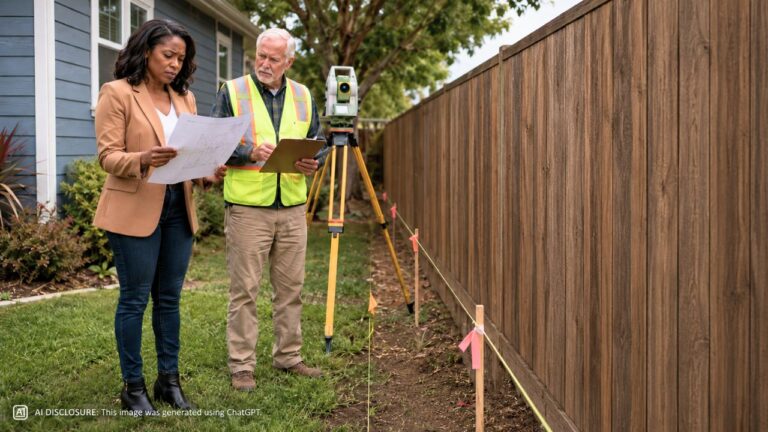
The most grounded reaction in these kinds of property-line utility tangles is to slow down and verify everything: where the parcel boundaries actually are, exactly where the line and poles sit relative to those boundaries, and what the recorded documents say about access and utility rights.
It’s not the fun part of buying land, but it’s the part that keeps you from designing a house around a guess. When the buyer says the line is “smack dab down the middle,” that’s the red flag that pushes people toward surveys, title work, and written clarification instead of handshakes and assumptions.
The tension nobody likes talking about: living with it, or making it a fight
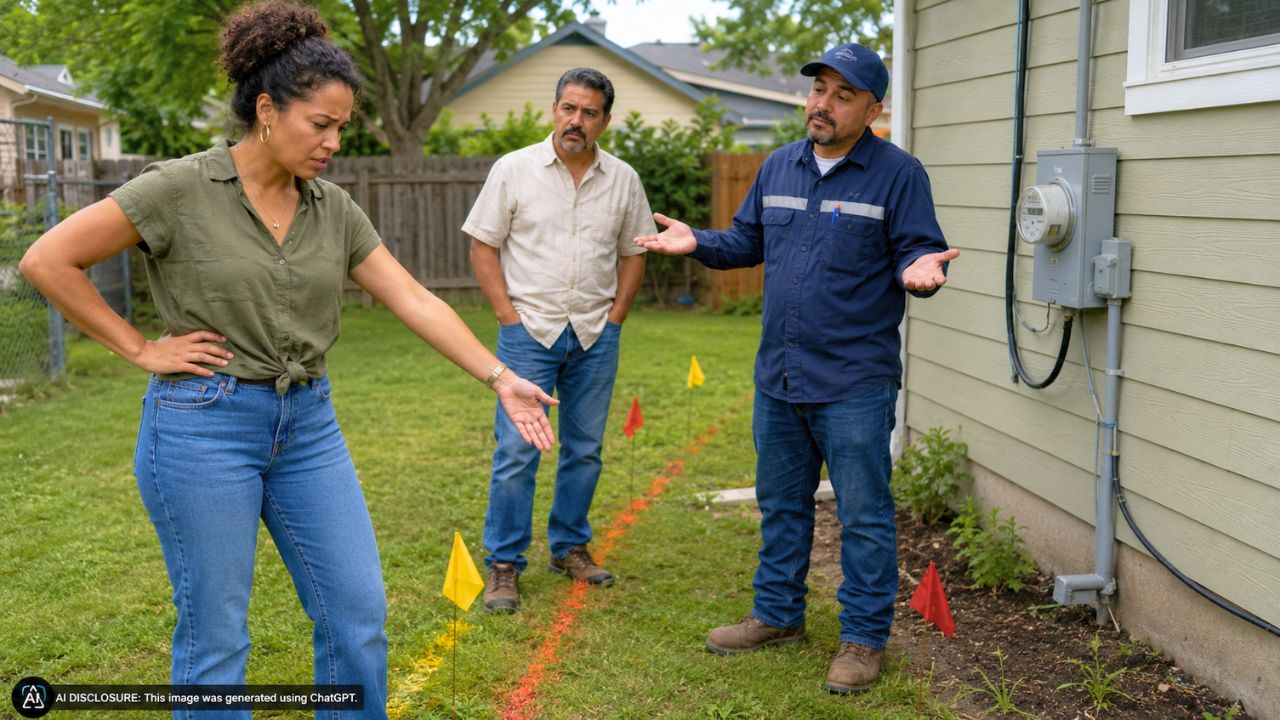
There’s a human element here that doesn’t show up on satellite images. The neighbor behind the property is already being served by that line. If the buyer closes and tries to change it, the neighbor’s power reliability is suddenly tied to a negotiation they never asked for.
On the flip side, if the buyer does nothing, they may be living with a long utility corridor through the most useful part of the property—something that can shape where kids play, where trees can be planted, where a shop can go, and where a future fence line makes sense.
The buyer is standing right at that fork in the road: accept the line and design around it, or push to relocate it and risk delays, high costs, and neighbor friction. Neither option feels clean, because the poles are already in the ground and the house behind the land already depends on them.
For now, the only thing that feels certain is the physical fact on the ground: 380 feet of poles and wire running right through the heart of what was supposed to be a simple land purchase. That’s the kind of “small detail” that can decide whether a property is a bargain—or a project before you even break ground.