New Homeowner Finds the Neighbor’s Fence and Shed Both Built Over the Property Line — Then the Neighbor Says Neither One Can Be Moved
Photo credit: AI-generated image created using ChatGPT. Illustrative only.
It’s one thing to inherit a few quirks when you buy a house. It’s another to look out at your side yard and realize the “quirk” is a fence that isn’t actually on your neighbor’s land.
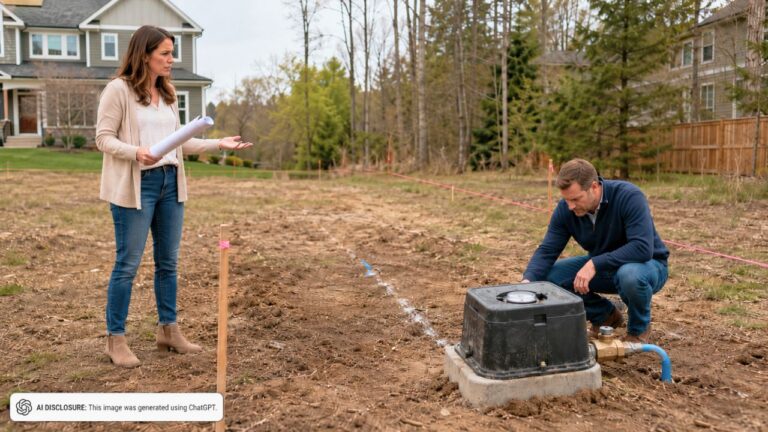
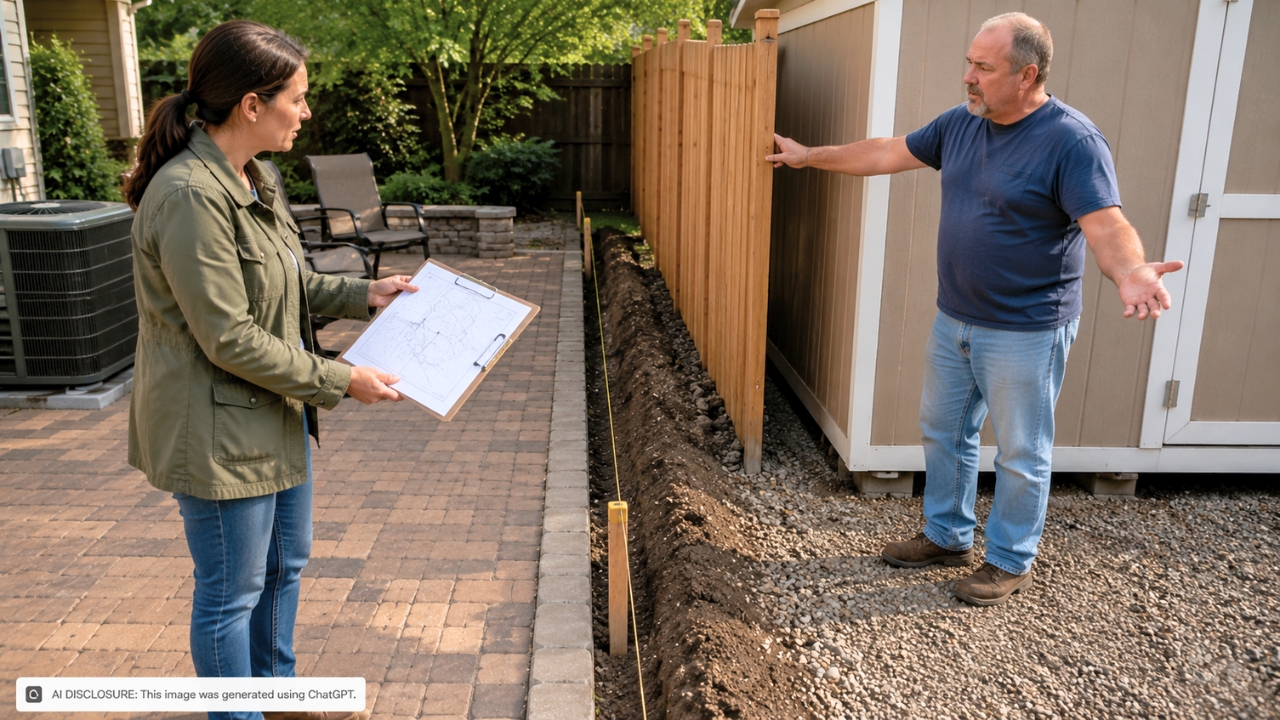
In the original post, a new homeowner said they located the survey pins and discovered the neighbor’s fence was built 1 foot 8 inches past the property boundary—onto their side. Then the neighbor added a shed in the corner, and the shed also ended up partially over the line. When the homeowner tried to address it directly, the neighbors’ answer was blunt: they weren’t moving or taking down anything.
The moment the pins in the grass changed everything
The homeowner didn’t describe a long, drawn-out feud. This started with something concrete: metal survey pins in the ground, and a fence line that didn’t match where those pins said the boundary should be.
They weren’t guessing based on vibes or where the grass changed color. They said they “found the survey pins” and “know exactly where the line is.” In a neighborhood of small, cookie-cutter lots, a foot and a half isn’t a rounding error. It’s usable space—space you might need for a gate, a future patio, a garden bed, even just the feeling that your yard is yours.
Then came the shed. A fence can sometimes be rationalized away as a mistake that’s been there awhile. A new shed landing partially on someone else’s property feels different. It’s physical, heavy, and it signals permanence.
A fence is annoying; a shed can turn into a long-term problem
The homeowner made it clear the lot is small—less than a quarter acre—so the encroachment doesn’t just affect an unused corner. On compact suburban parcels, the corners and edges are often where people route drainage, tuck in utilities, place gates, store bins, and plan the kind of projects that make a property livable.
A shed crossing the line also brings a different kind of stress. It’s not just about losing a strip of dirt; it’s about access and maintenance. If a roof panel loosens, if critters move in, if water runs off the wrong way, it’s happening on a structure that technically sits on someone else’s land.
And there’s a practical, everyday pressure that doesn’t show up on plat maps: neighbors tend to treat fences and sheds as “settled.” Once a structure is in, people arrange their lives around it. They set up landscaping. They store equipment. They stop imagining it could ever move.
The face-to-face talk didn’t go how it’s “supposed” to
A lot of property-line drama starts with the same advice: talk to them first, keep it friendly, assume it was an honest mistake. The homeowner did that step.
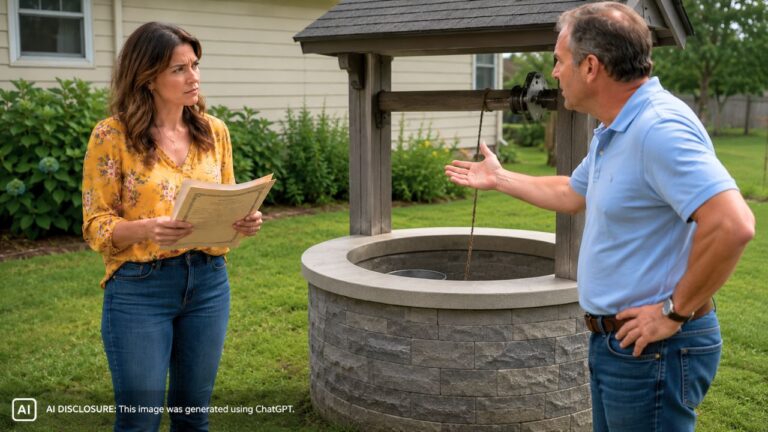
The response wasn’t negotiation, or even “let’s double-check.” According to the homeowner, the neighbors said they’re not moving or taking down anything. That’s the point where a small boundary issue turns into something heavier, because now the homeowner is no longer dealing with a possible error—they’re dealing with a decision.
The homeowner’s next frustration was familiar to anyone who’s tried to solve a real-world problem through official channels: they went looking for a government office to help. Their city’s code enforcement website specifically said they can’t help with property line disputes, leaving the homeowner feeling stuck between a neighbor who won’t budge and a system that doesn’t want to touch it.
The money problem: when “just call a lawyer” isn’t real advice
The homeowner’s biggest limiter wasn’t confusion about where the line is. It was money. They said they can’t afford an attorney, and asked if they’re basically out of luck.
This is where homeowners get squeezed. A fence and shed may look like a straightforward issue—move it back, problem solved—but getting from “I can prove it” to “it has to change” often costs time and cash. Even sending a formal letter can feel intimidating when you’re worried about escalation, retaliation, or being dragged into a legal process you can’t bankroll.
And the longer an encroachment sits, the more it starts to feel normal to everyone except the person losing the land. That’s especially true in tight neighborhoods where every inch of side yard matters and the fence line becomes the default “truth” for anyone walking by.
People zeroed in on documentation and the next move
Even from the homeowner’s short description, the pressure points are obvious: proof, paper trail, and who—if anyone—has authority to force a change. The homeowner already has a plat map showing pin locations and lot sizes, and they’ve physically located the pins. They also said they don’t think they need another survey done.
When disputes like this play out, the practical voices tend to circle the same themes: document everything, keep communication in writing, and be careful about assuming a city department will step in just because a structure seems “wrong.” Code enforcement can be limited, especially if the issue isn’t a clear safety violation but a boundary fight between private owners.
There’s also a common undercurrent in these kinds of discussions: if you let it sit, you may be living with it for a long time. A fence that’s “only” 1’8″ over can shape the whole yard. A shed partially on your property can feel like you’re sharing land you never agreed to share.
A small strip of yard can turn into a big shadow over the house
For this homeowner, the tension isn’t just the fence or the shed. It’s the feeling of being boxed in—by tight lot lines, by a neighbor’s refusal, and by the cost of formal help.
In neighborhoods where houses are close and backyards are measured in steps, property lines aren’t abstract. They’re where you put your hands on a gate latch, where you run a mower, where you plan your own shed someday. Finding out someone else already claimed part of that space—and is treating it as non-negotiable—changes how “home” feels.
The homeowner hasn’t described a resolution yet. What they have described is the moment many people dread after closing: realizing you can own the deed, find the pins, and still end up staring at someone else’s structure on your side of the line, wondering what it will take to get your yard back without starting a war you can’t afford.
Like Fix It Homestead’s content? Be sure to follow us.