New Homeowner Gets a Survey Done and Finds the Neighbor’s Entire Driveway Was Poured Onto Their Property — Then the Neighbor Says Replacing It Would Bankrupt Them
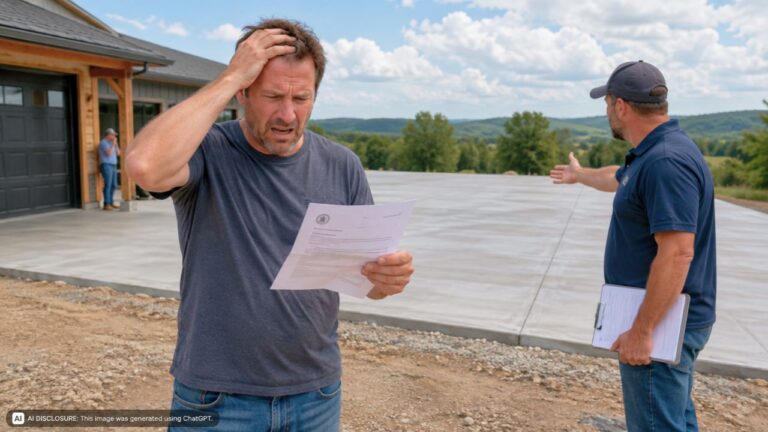
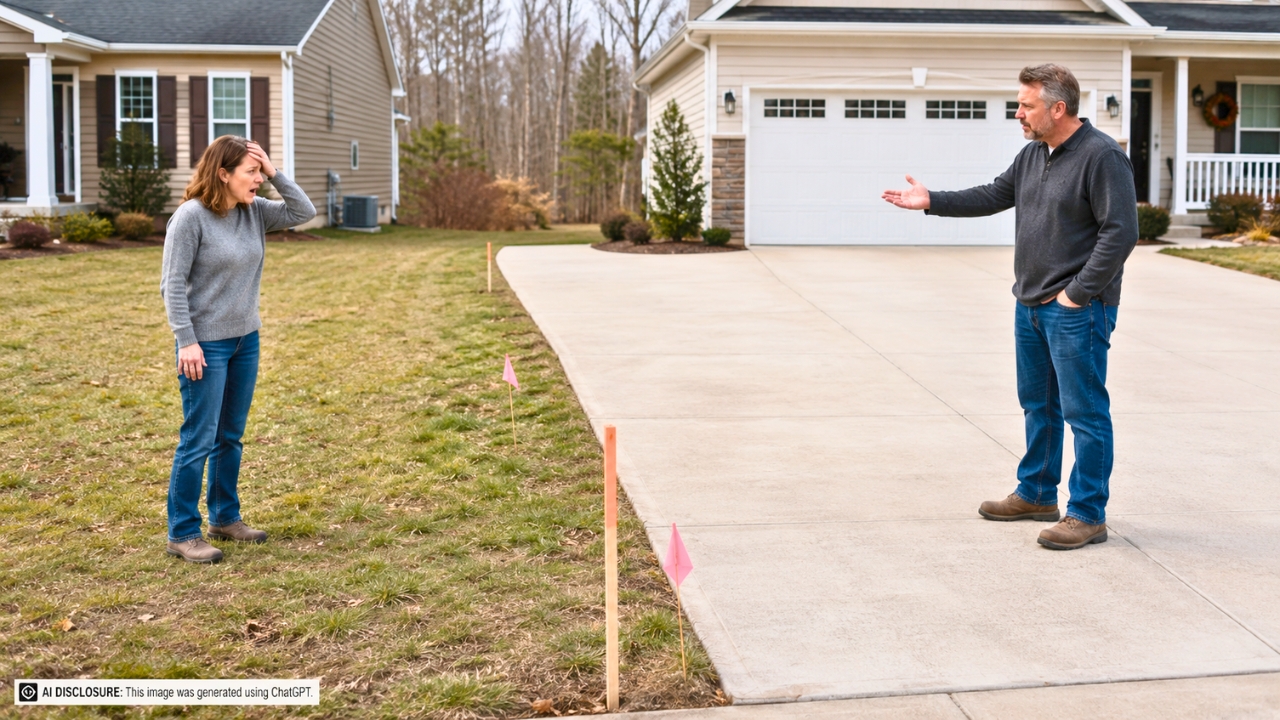
Photo credit: AI-generated image created using ChatGPT. Illustrative only.
You don’t expect your first months of homeownership to include measuring out the edge of your yard and realizing someone else’s concrete is sitting on it. But that’s exactly what happened to one new homeowner after doing a little homework on the county’s parcel maps.
In the original post, the homeowner said they bought their house in October, while the neighbor closed in September. Neither one installed the driveway—meaning this problem likely predates them both—but the maps made it look like the neighbor’s driveway cuts into the new owner’s property.
A driveway that “wasn’t a big deal”… until it was
At first, the homeowner’s instinct was to keep things calm. They weren’t looking to pick a fight over a strip of pavement, and they made it clear they weren’t planning to “make a stink” about the neighbor using the driveway.
That’s the spot many people get stuck in: it feels petty to complain about a few feet, but it also feels risky to ignore it. A driveway isn’t a fence panel you can slide over later. It’s heavy, permanent-looking, and it silently teaches everyone where the boundary “is,” even if the deed says otherwise.
The homeowner’s real fear wasn’t today’s inconvenience. It was the “down the road” question: if they don’t address it now, could they lose that slice of land permanently?
The awkward timing: both owners are brand new
This wasn’t a long-running feud between people who’ve watched each other through kitchen windows for 20 years. Both households were barely unpacked. That changes the whole vibe.
When both parties are new, nobody has the comfort of “this is how it’s always been.” They also don’t have the personal history that sometimes helps neighbors work through messy property issues with a handshake.
And there’s another problem baked into the timing: when something like this is discovered early, it tends to feel like it should be “fixed” early—before patios, fences, sheds, landscaping, and routines settle into place. But early is also when budgets are tight. Closing costs are fresh, repairs are stacking up, and nobody wants a surprise project involving concrete.
Parcel maps raised the alarm, but lines on paper aren’t the same as lines on the ground
The homeowner said they did a parcel search through the county and saw property lines showing the driveway crossing into their lot. That kind of map is often the first breadcrumb people follow when something doesn’t look right.
But parcel viewers can be both helpful and misleading. They’re great for spotting a potential issue, yet they’re not always precise enough to settle a boundary question by themselves. Sometimes those overlays are off by feet, not inches. Sometimes they’re right, and the driveway really is over the line.
Either way, once you see it, you can’t unsee it. And it’s hard to enjoy your own yard the same way when you’re staring at a slab of concrete that might technically be yours… except it’s not serving you.
What makes a shared-driveway problem so tense
Driveways aren’t just “improvements.” They’re access. If there’s ever a dispute, the stakes can jump fast because people need to get in and out of their homes.
Even when everyone is acting reasonable, there’s a quiet pressure in the background: if the driveway is on the wrong side of the line, what else is? Drainage patterns. Snow removal. Liability if someone slips. Future resale questions when a buyer’s inspector asks why the driveway doesn’t match the survey.
And then there’s the social side. Most people don’t want to be the neighbor who moved in and immediately started talking about property lines. The homeowner in this case clearly wanted to avoid becoming “that person,” while still protecting themselves from a long-term land headache.
Reactions leaned toward documenting first, not escalating first
The homeowner’s post read like a classic first-time-owner moment: they knew enough to recognize a risk, but not enough to know how quickly it can snowball if handled the wrong way.
In these disputes, the most practical voices usually push the same basic theme: get clear information before making it personal. That means distinguishing between a rough parcel map and a true boundary determination, and making sure whatever gets said to the neighbor is grounded in something more solid than “the county website looks like…”
Because once you bring it up, you can’t take it back. If the driveway really is encroaching, the neighbor may feel threatened even if you’re being polite. If it isn’t encroaching and the map is simply off, you’ve still introduced tension over something that was never real.
Either way, people tend to advise keeping early conversations calm and practical: “I’m trying to understand what the boundary is,” rather than “You’re on my land.” That small change in wording can be the difference between a problem-solving talk and a cold-war driveway standoff.
The part nobody wants to say out loud: ignoring it can turn into a permanent problem
The homeowner’s biggest question—whether not addressing the line could lead to losing land later—is the part that keeps people up at night. They weren’t worried about the neighbor driving across the edge today. They were worried about what happens after years of uninterrupted use, future home sales, and the slow solidifying of “possession” in everyone’s minds.
And that’s what makes encroachments so tricky: they can sit quietly for a long time, looking harmless, until the moment they aren’t. A refinance. A fence project. A new shed. A future buyer demanding clean boundaries. Suddenly, the driveway isn’t just concrete. It’s paperwork, deadlines, and someone feeling accused.
For this new homeowner, the tension is still in that early stage—caught between being neighborly and being careful. They don’t want a feud. They also don’t want to wake up years from now and realize a small decision to stay quiet turned into a much bigger and more expensive one to undo.
Right now, it’s a strip of pavement and a first-time owner trying to do the responsible thing without blowing up the peace on the block. And sometimes that’s the most stressful kind of home repair story—because the “fix” isn’t a tool or a contractor. It’s figuring out where you stand before the ground hardens under everybody’s feet.
Like Fix It Homestead’s content? Be sure to follow us.