New Homeowner Is Asked for a “Favor” by the Builder Next Door — Then Learns the New House Was Framed Too Close to the Property Line, Violating the Town’s Setback Rules
Photo credit: AI-generated image created using ChatGPT. Illustrative only.
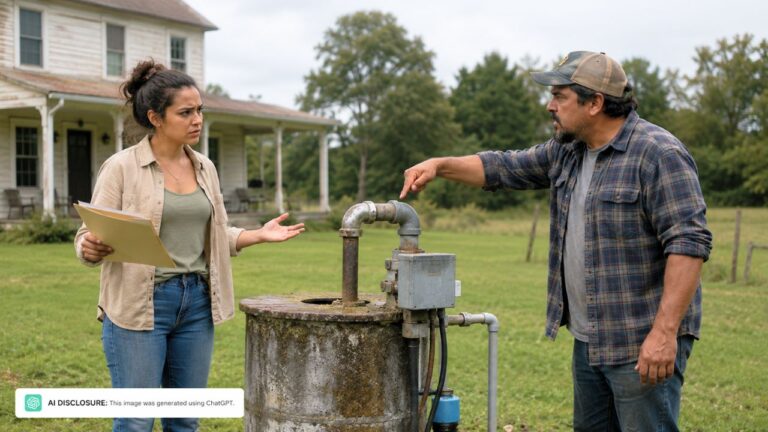
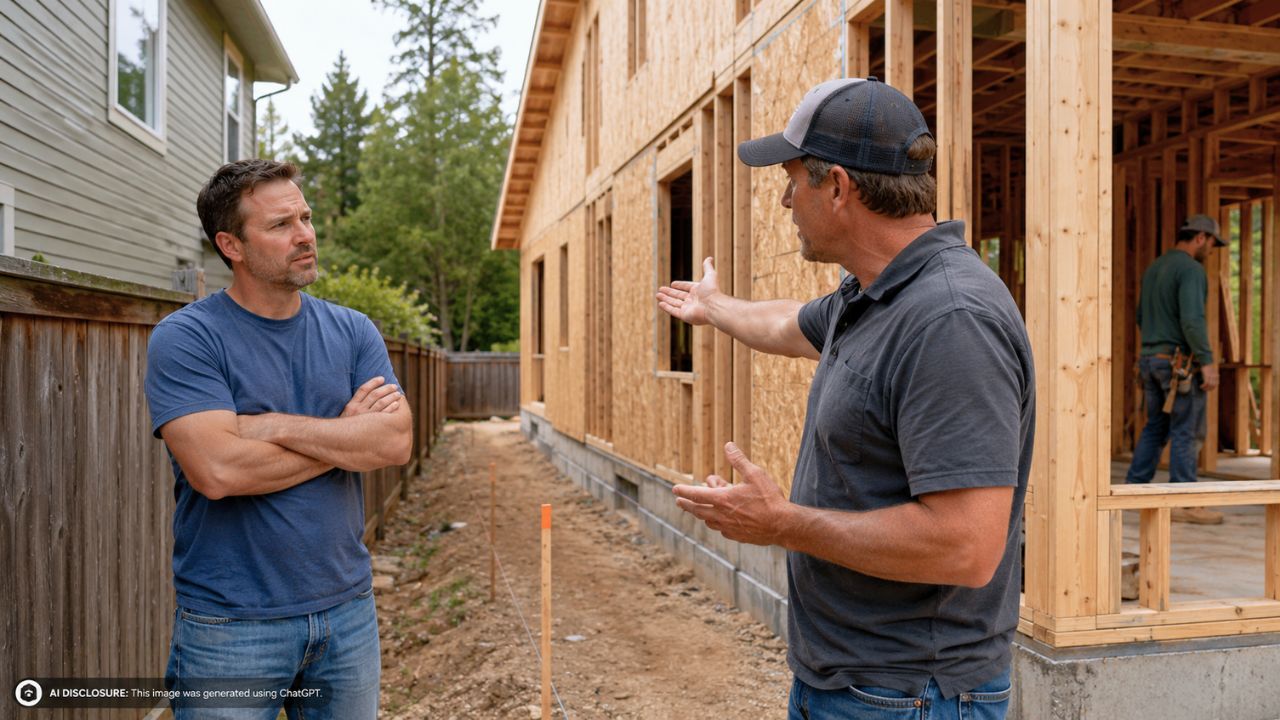
Two months after moving into a newly built home in Maine, one homeowner thought they were just watching normal progress on the vacant lot next door. Framing went up. A full basement was already in. Then the builder walked over with a request that didn’t sound like small talk.
The builder—described as a nonprofit, Habitat-for-Humanity-type outfit—asked for a “favor.” He said the new house had been framed too close to the property line and didn’t meet the town’s setback requirements. His proposed fix sounded clean on paper: shift the property line so the structure would comply, then shift another section so both lots ended up with the same acreage. The homeowner shared the details in the original post, trying to figure out whether helping would turn into a legal and financial headache.
A “simple” favor that landed like a brick
The builder didn’t try to hide that it was their mistake. He told the homeowner he’d gone to the town office, nobody was there, and he started building anyway—only to find out later his measurements were off. Now the framed house next door sat too close.
In neighborhood disputes, people usually argue over a fence line or a few feet of mowing. This was different. The home was already framed on a full basement, which meant the error wasn’t just a matter of nudging a stake in the ground—it was locked into concrete, lumber, and gravity.
The homeowner didn’t slam the door. They said the property swap sounded reasonable but admitted they didn’t know enough to agree on the spot. And that’s when the pressure started building.
Code enforcement made it sound like there was only one answer
On the next weekday, the homeowner called the town’s code enforcer, expecting clarification. Instead, they got something that felt like a push: the code enforcer tried to tell them the property swap was the only way to satisfy the setback issue.
There was more. The code enforcer said the builder wouldn’t win an appeal—something the homeowner understood as the builder trying to get a “pass” for the mistake. If the neighbor didn’t get cooperation on the swap, the alternative was blunt: the house would have to be moved about 10 feet.
Ten feet doesn’t sound like much until you picture a framed structure with a basement. The homeowner immediately understood the financial weight behind that option. Moving it would be extremely expensive. Suddenly, a “favor” didn’t feel like a casual neighborly request. It felt like being asked to take part in damage control.
The hidden cost wasn’t the land—it was the mortgage
The homeowner reached back out to the building company with a tentative yes: they wanted to help, but they needed to check with their mortgage firm first. That’s where the swap stopped being a tidy handshake plan and started looking like a paperwork sinkhole.
The bank reportedly said it would be a loan collateral adjustment. That came with more than $1,000 in fees and a lot of extra work—appraisals, documentation, and whatever internal steps the lender required to stay comfortable with what they were actually lending against.
And the homeowner wasn’t interested in signing anything without an attorney. Even if the builder paid for the survey, recording, and closing-style costs, the homeowner still had to protect themselves: review documents, confirm the new boundary, and make sure there weren’t future surprises like easements, title issues, or resale problems.
This is the part that hits home for anyone who’s moved recently. The homeowner had just moved, had a toddler, work was busy, and they didn’t have the time or energy to shepherd a boundary line transaction through multiple parties. The reason was “selfish,” they said—but it’s also real life. You can’t always absorb someone else’s emergency just because you happen to live next door.
When “no harm, no foul” still means risk
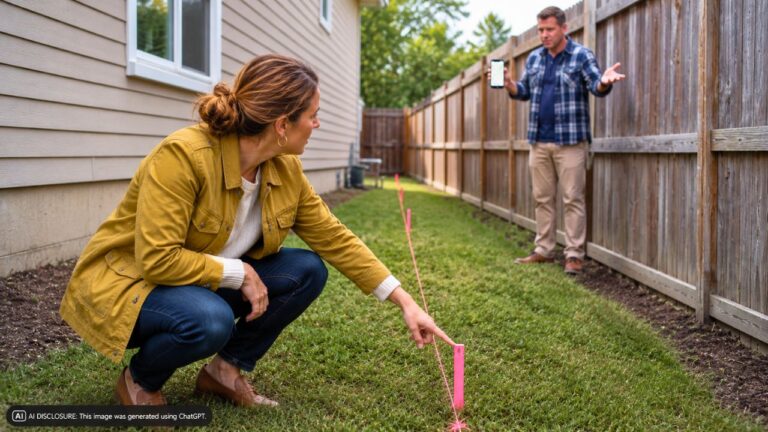
On the surface, swapping equal acreage sounds harmless. But a property line isn’t just an invisible border—it’s tied to title records, mortgage collateral, future appraisals, and the basic question of what you actually own.
If you adjust a lot line, you’re not just helping a neighbor fix a setback problem. You’re changing the legal description of your property. That can ripple into how the home is valued, how a future buyer’s lender views it, and how easily you can sell without complications.
There’s also the emotional side. The homeowner didn’t buy a brand-new home expecting to be pulled into a construction compliance problem two months in. And once a neighbor’s structure is too close, the stakes stay high for years: privacy, maintenance access, drainage patterns, and the feeling of being boxed in—even if the total acreage stays the same.
The homeowner started floating a middle path: if the builder truly had no other option, could they offer compensation on top of covering bank and legal fees? Not a token gesture, but a number that recognized the time, risk, and disruption.
Reactions zeroed in on leverage and paperwork
In the responses they received, the theme was consistent: don’t treat this like a casual favor, and don’t undervalue what’s being asked. Even without seeing every comment, the homeowner’s edit makes it clear what the feedback pushed them toward—getting lawyers involved and recognizing that this isn’t just about “being nice.”
The homeowner ultimately emailed the builder saying the undertaking was more than they were willing to do, because it would create significant cost and take a lot of time. At the same time, they didn’t burn the bridge. They tossed out a high number (high for them) plus bank and legal fees, basically signaling: if you need this badly, it needs to be worth the burden.
That’s a very homeowner way to handle it—clear boundaries, but not spiteful. It also reflects the power dynamic here. The builder is the one with a framed house sitting in the wrong place. The homeowner didn’t create the problem, yet they’re being asked to spend time and accept risk to solve it.
A new house, a new neighborhood, and an awkward new start
There’s no neat ending in the post—just a pause while the homeowner waits to hear back from attorneys they contacted. The builder’s next step is unclear too: negotiate, pay up, or face the costly option of moving a structure that’s already underway.
But the tension is easy to picture. One side has a project that can’t move forward cleanly without fixing the setback. The other side has a brand-new home, a young family, and no interest in turning their first year of homeownership into a boundary-line negotiation.
Sometimes the hardest part of living next to construction isn’t the noise or the mud. It’s discovering that someone else’s “small measurement error” can land right on your deed, your mortgage, and your front yard—and you’re the one being asked to make it disappear.
Like Fix It Homestead’s content? Be sure to follow us.