New Homeowner Learns the Neighbor’s Well Sits on Her Property From an Old Agreement — Then He Demands She Pay to Connect to Public Water So He Can Keep Drinking Hers for Free
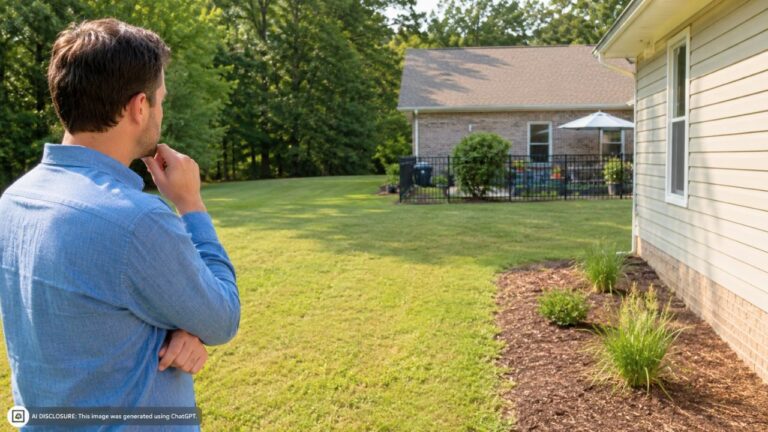
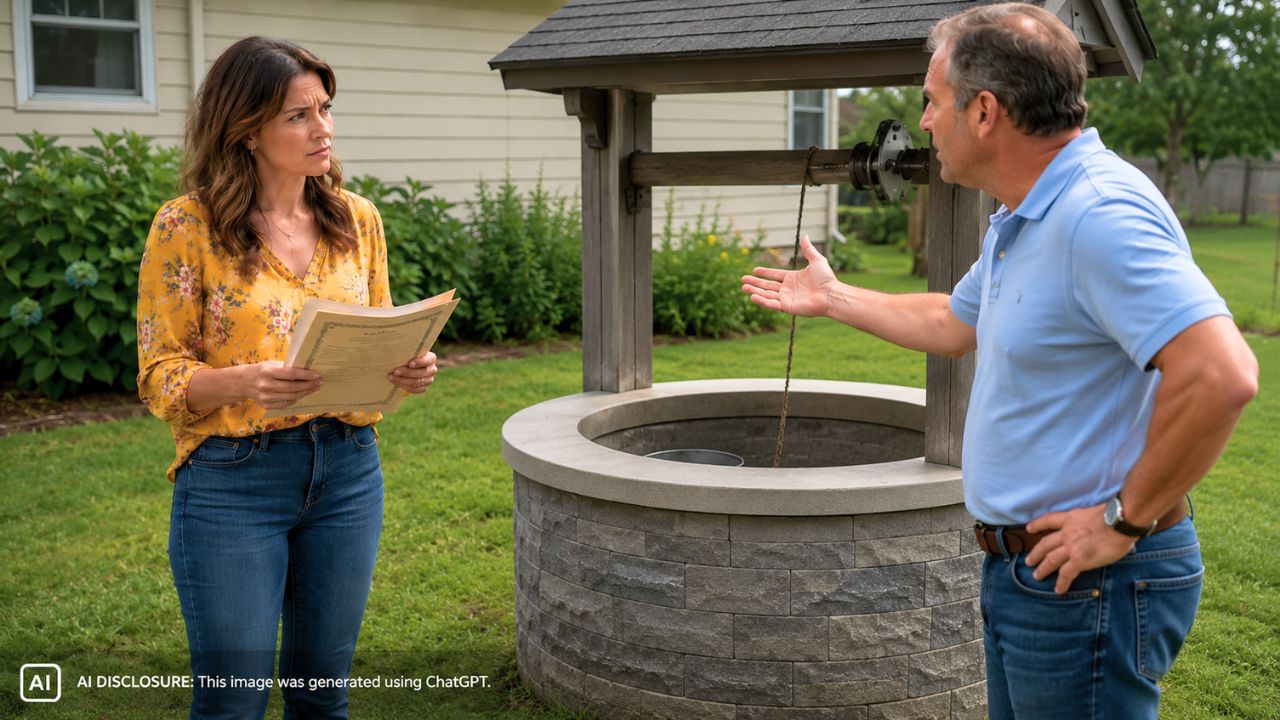
Photo credit: AI-generated image created using ChatGPT. Illustrative only.
Buying a new place comes with the usual surprises: a sticky door, a mystery switch, maybe a shed full of someone else’s junk. This homeowner’s surprise was bigger and buried underground—an old deal that let the neighbor dig a well on what is now her land, and keep using that water.
In the original post, the new owner explained that the neighbor once had an agreement with the previous owners to drill his own well on their property and use it. Later, he connected to the public water supply anyway. But he never stopped pulling water from the well on her property—because it was free.
The “old agreement” didn’t stay in the past
The neighbor’s arrangement might have felt normal back when the same people lived on both sides of the property line. A handshake deal, a written agreement, a casual understanding—whatever it was, it functioned as long as nobody questioned it.
But ownership changes everything. The new homeowner now has her own well “next to his well” on her property, and she plans to actually use it. That’s when the neighbor suddenly got nervous about water levels—worried her household use could reduce the supply available to him.
Instead of treating that fear as a reason to pay for his own water usage, he treated it like her problem to solve.
Then came the demand: pay to connect so he can keep using yours
The neighbor already has access to public water. He’s connected. The twist is that he still wants the free well water too—and he wants the homeowner to make sacrifices so he can keep it that way.
Her home sits about 150 meters uphill from the public water supply, which makes connecting expensive. According to the homeowner, the neighbor insisted she should pay to hook her house up to municipal water so she’d stop using her own well. The goal, in his mind: preserve enough well output for him to keep drinking and using water that comes from a well located on her land.
It’s the kind of demand that doesn’t even hide the math. He has public water available, but doesn’t want to pay for it. If she switches to municipal, he gets to keep the free supply without competition.
Water is where the money fights start
On a homestead or rural property, water isn’t just a utility—it’s daily life. It’s showers, laundry, gardens, livestock, pressure tanks, filtration systems, and dry-season stress. When a neighbor is drawing from the same source, it turns into a quiet form of shared infrastructure, whether you agreed to it or not.
That’s why the homeowner’s mention of “not enough water” lands hard. Wells don’t behave like a predictable monthly bill. If supply is limited or seasonal, one household’s use can feel like the other household’s loss. And when someone is pulling water for free, the imbalance gets personal fast.
Even without anyone yelling, the practical stakes are real: reduced well yield, pump strain, unexpected maintenance, and the ugly question of who pays when something breaks. If his usage contributes to wear on equipment or lowers the water table, the homeowner could be left holding the costs while the neighbor enjoys the benefit.
It wasn’t just the well—there were other “creative” requests
The homeowner added an edit that made the dynamic clearer. The neighbor had floated another idea: she should buy fish and stock her pond for him, and he’d buy the fish food. His reason was that his pond gets water “from me” too, and runs low during summer.
It’s not the fish that’s the point—it’s the pattern. The neighbor seems to view the homeowner’s land and water as a shared resource he can negotiate for, even when the costs and effort land on her side.
That’s what makes these disputes so exhausting. It’s not one request. It’s the sense that every improvement you make to your property becomes an opportunity for someone else to ask what they’re getting out of it.
People focused on paperwork, boundaries, and stopping the “free ride”
The homeowner didn’t paste in the full comment thread, but the tone of the post hints at what homeowners usually jump to in disputes like this: proof and boundaries before politeness becomes permission.
When water rights and old agreements come up, people tend to start asking the same questions. Is the agreement written and recorded with the property? Is there an easement? Does the neighbor have any legal right to access, maintain, or draw from that well now that the land has a new owner? And if he’s connected to municipal, why is he still tapping the well at all?
Because even in the friendliest neighbor relationships, shared water becomes a liability. If contamination happens, if a pump fails, if someone gets sick—suddenly “we’ve always done it this way” isn’t comforting. It’s terrifying.
Practical-minded homeowners also tend to think about documentation: getting the property survey, locating the wellheads accurately, keeping communication in writing, and avoiding a casual “sure, go ahead” that turns into a permanent expectation.
The silence afterward said a lot
In the update, the homeowner said that after she told him she would not hook up to municipal water, the neighbor stopped communicating with her.
That kind of cutoff is familiar to anyone who’s dealt with a boundary-pushing neighbor. When the answer becomes “no,” the friendliness disappears. And silence becomes its own pressure tactic—meant to make the homeowner second-guess herself, or to punish her socially until she gives in.
But the quiet also clarifies what the relationship was built on. If the neighbor’s willingness to talk depends on getting free water from someone else’s land, that’s not neighborly cooperation. That’s a transaction—one where only one side pays.
For the new homeowner, the immediate problem isn’t just an awkward conversation. It’s living next to someone who feels entitled to her property’s resources, and who reacted to a reasonable boundary by shutting down communication entirely. And the longer it goes unresolved, the more likely it is that the next “request” won’t be phrased as a request at all.
Like Fix It Homestead’s content? Be sure to follow us.