Texas Landowner Sends Photos of a Dozen Cow-Calf Pairs Trampling His Crops for a Month — Then the Cattleman’s Only Reply Is a One-Word “Ok”
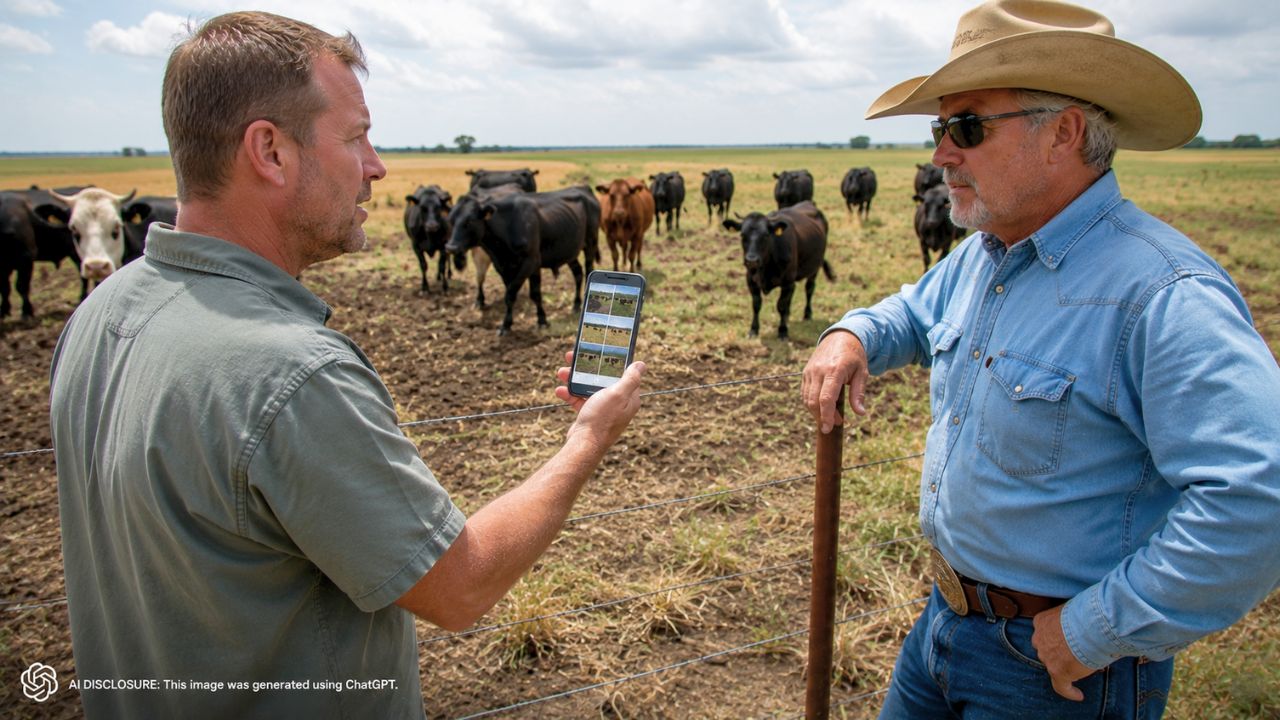
Photo credit: AI-generated image created using ChatGPT. Illustrative only.
It starts the way a lot of rural property headaches start: you look out and see somebody else’s livestock where it absolutely shouldn’t be. Except this wasn’t one stray heifer nosing around a fence line. A Texas landowner said there were more than a dozen cow-calf pairs camped out in row crops being farmed on his leased ground, and it didn’t get cleaned up in a day or two—it dragged on for nearly a month.
When he tried to handle it like a normal neighbor, the responses got colder. He texted photos, asked for action, and eventually said the cattleman’s replies dwindled down to a single word: “ok.” The full rundown is in the original post, where he asked for advice because he feels boxed in between protecting his land and not wanting to start a small-town feud.
The fence line everyone pretends isn’t their problem
The landowner says he’s in Texas but not in an open range county—meaning, in his understanding, the cattle are supposed to be fenced in, not casually tolerated wherever they wander. The trouble is a long shared boundary: about a mile of fence with neighbors whose fences are “terrible,” and those neighbors lease their place to a guy running a beef herd.
That setup is where things get messy fast. The person who owns the land isn’t necessarily the person who owns the cattle. And the person who owns the cattle can always point at the fence, while the landowner who’s losing crops and forage is the one who has to look at the damage every day.
A month of cows in crops turns into real money
The post describes the most expensive kind of trespass: the slow kind. The cattle didn’t just cross over and leave. They stayed—more than a dozen cow-calf pairs in row crops on the portion of land leased to a farmer—and the landowner said it went on for nearly a month, “causing havoc” to the crop.
That’s not a couple of hoofprints you can smooth over with a drag. That’s compaction, broken plants, feed loss, and the kind of uneven stand that shows up later when the harvest doesn’t match what was planted. He also said the cattle fouled one of his ponds, which is the kind of damage that feels personal because it changes how you can use your own place.
And it didn’t resolve quickly because he couldn’t even get the right person on the phone at first. He said it took “determination and detective work” just to figure out who was running the cattle and get them to come retrieve them after being notified.
Repairs got done—just not the ones that mattered
After that, there were repairs. But not in a way that inspires confidence. The landowner and the farmer who leases from him both did fence work, even though he stressed it wasn’t their responsibility. He said the cattleman also made repairs, but called them “token” fixes that ignore the spots where cows actually get through.
Anyone who’s dealt with livestock knows how that goes. A patch that looks fine from the road might not stop a cow that already knows the weak point. Once a herd has a habit trail—especially cow-calf pairs—they’ll keep checking the same places, leaning, pushing, and widening every gap.
What really stands out is that the landowner tried to head off the whole argument by offering to split the cost of a new fence anyway. He didn’t frame it as charity. He framed it as wanting the problem gone. And he still couldn’t get consistent buy-in.
Then it wasn’t just crops—it was feeders, pond muck, and strangers
As summer wore on, he said the trespass got more frequent and more disruptive. The cows increasingly came over, knocked over his deer feeders, fouled his pond again, and ate his forage. That’s the kind of daily grind that wears a person down because it’s not one big disaster you can fix—it’s constant cleanup and constant vigilance.
Then the story took a turn that made it feel less like an annoyance and more like a security issue. His cameras picked up strangers on his property: a vehicle and someone walking around. He texted the cattleman to ask if a black Ford pickup was his.
The answer he got wasn’t reassurance or even curiosity. It was: “don’t know, I’m in another state.” The landowner added that the cattleman knows he’s had problems with poaching and trespassing, which made the lack of concern sting even more.
The texts got shorter until they stopped being a conversation
In the beginning, he could at least get some response. Over time, he said, the cattleman’s replies got shorter and shorter until they were basically one-word acknowledgments: “ok.” No apology. No “I’m sending someone.” No “They’ll be off by tonight.” No confirmation once they were supposedly retrieved.
That’s the part that turns a fence problem into a neighbor war. It’s not only the damage—it’s the feeling of being dismissed while you’re dealing with the mess. The landowner said he felt like he was being treated as the problem for wanting cattle on the correct side of the fence.
He’s also stuck with the politics of it. In his words, calling the sheriff to report estrays or taking the cattleman to court for damages are the legal routes he can see, but they’re not what he wants. In a small community, he said, that kind of dispute can get you shunned, even if you’re technically right.
How readers framed it: document everything, but don’t eat the cost quietly
Even without a long comment thread included in the source material, the pressure points in a story like this are familiar to anyone who’s lived next to livestock: proof, timelines, and who pays when “not my fence” turns into “my losses.” The landowner is already doing the first part—photos, cameras, texts—because once there’s real crop damage and repeated pond fouling, it stops being a handshake problem.
At the same time, his post makes clear why people hesitate. He doesn’t want to be the new villain in town over something as basic as keeping animals contained. But he also doesn’t want to keep bankrolling repairs that don’t hold, or wake up to more strangers on his place while the person responsible is out of state and uninterested.
That’s the trap: if you fix it all yourself, you train everyone involved that you’ll always fix it. If you escalate, you risk the social blowback. And while you’re weighing those options, the cattle keep coming, the feeders keep getting knocked over, and the ground keeps taking the hits.
He ended his post with the question a lot of landowners eventually arrive at when “being reasonable” doesn’t change behavior: practically speaking, what can he do? Because when the only reply you get after a month of crop damage is “ok,” you’re not just dealing with cattle. You’re dealing with someone who has decided your property line is optional.
Like Fix It Homestead’s content? Be sure to follow us.