New Homeowner Notifies Friendly Neighbors Before Removing a Laurel Bush Rooted Almost Entirely on Her Own Property — Then the Neighbor Trespasses Onto Her Porch Two Days Later to Forbid the Removal
Photo credit: AI-generated image created using ChatGPT. Illustrative only.
Buying your first house comes with a mental list of “we’ll fix that right away” projects. For one new homeowner and her husband, that list started at the back property line: a laurel bush that ran about seven feet deep and ate up space in a yard that already felt tight.
They weren’t looking for a fight. In fact, the homeowner says she walked over to notify the neighbors in advance—just a courtesy heads-up before removing the laurel and replacing an old chicken-wire fence with something that matched the rest of their property. The full play-by-play is in the original post, and it’s the kind of neighbor drama that makes you understand why people get so serious about surveys and paperwork.
A friendly hello turned into a porch-side power move
At first, it went the way you’d hope a first meeting would go. The neighbors were “super nice,” welcoming the couple into the neighborhood. No demands, no warnings—just normal small talk and the polite back-and-forth that makes you think you chose a good block.
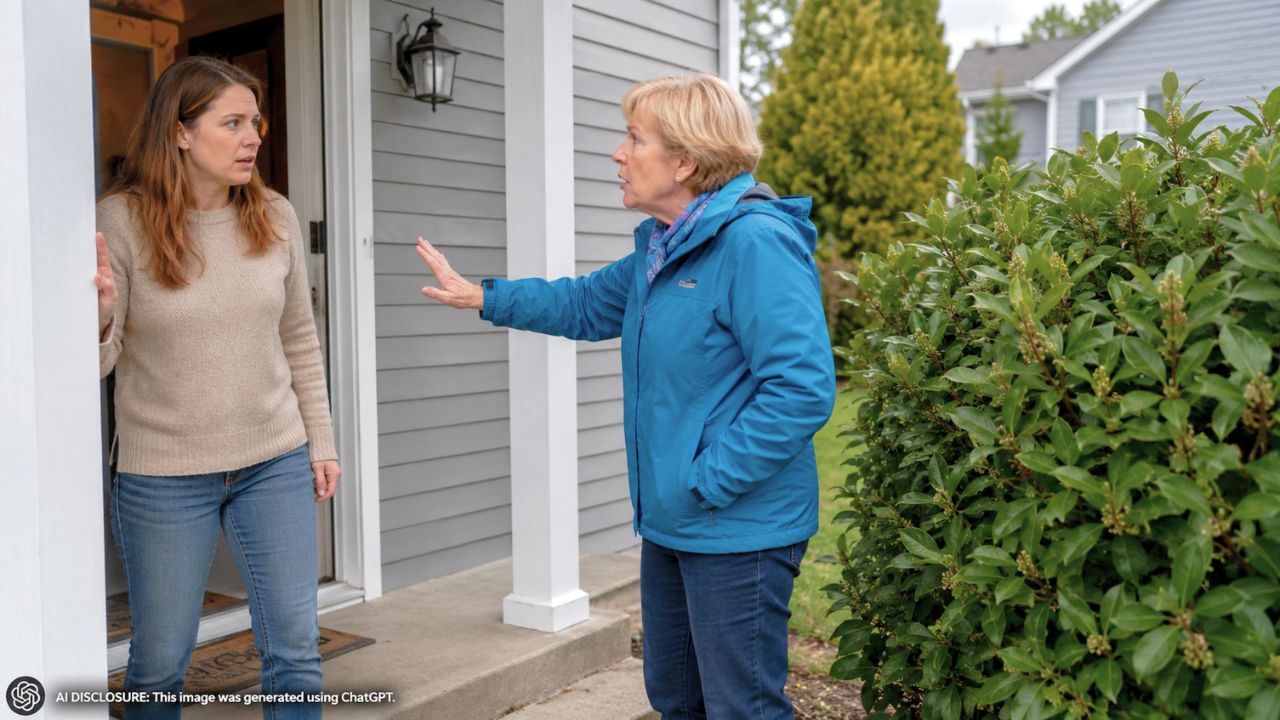
Two days later, that tone was gone. The neighbor’s husband showed up knocking on the back door after, according to the homeowner, he had tried the front and didn’t get an answer. The homeowner describes it as trespassing, and the message was blunt: the neighbors now didn’t agree with the fence, and they said the couple couldn’t cut down the laurels.
One argument the neighbor used was that the previous owners “didn’t mind the laurels.” In other words: the last people let it slide, so you should too. For a lot of new homeowners, that’s where the stress spikes—because you realize you’re not just dealing with plants and lumber, you’re dealing with someone else’s idea of how your property should look.
The roots of the issue were literally underground
The laurel wasn’t a small ornamental shrub. It was established, deep, and sitting on the back property line. The homeowner says 99% of the roots were on their side, which matters when you’re talking about removal and fence placement.
Instead of arguing over the fence line in the yard, the couple decided to get it documented. They’re both attorneys, and they didn’t want a drawn-out back-and-forth based on feelings and assumptions. So they hired a surveyor to confirm the property line before moving forward.
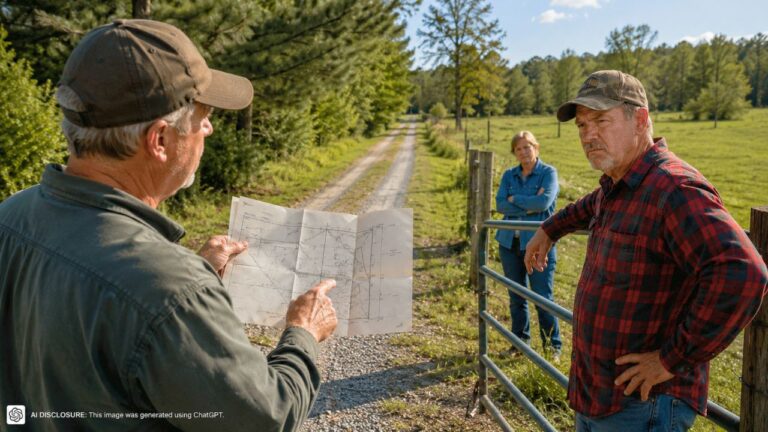
The survey results backed up what they suspected: almost all the laurel roots were in fact on their property. With that confirmation, they told the neighbors they were proceeding with the fence.
Survey stakes in the ground, tension in the air
If you’ve ever had a survey done, you know the little flags and markers can change the mood fast. They’re small, but they’re physical proof. And in this case, the homeowner says that once the neighbors saw the markers, they were angry.
When it was time to build, the couple had family help. A cousin and uncle assisted with putting up the fence, and the neighbor’s husband hovered nearby from his side of the property line. The homeowner describes him as rude, standing about a foot away and “breathing down their necks” while they worked.
That kind of close-range monitoring is the part that wears people down. Even when you’re doing everything by the book, it’s hard to swing a post-hole digger or stretch a line while someone is stationed inches away, trying to make you feel like you’re stealing something that isn’t theirs.
A year later, the favor request arrived
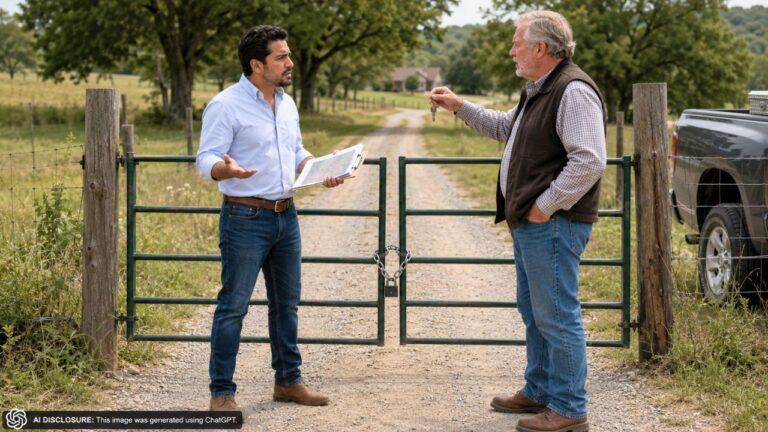
Time passed, but the relationship didn’t improve. Then, a year later, the neighbor’s husband reached out by text asking to talk. They met at the fence—neutral ground, at least in theory.
This time, the neighbor had a project of his own: a massive cedar tree on his property, close to the fence, around seven feet in diameter. He wanted it removed. The catch was access. He didn’t have a way to get equipment into his backyard from the street.
So the request wasn’t small. He wanted the removal done from the couple’s side: remove a portion of their fence, bring a cherry picker and wood chipper down their driveway into their backyard, and perform the work on their property. The homeowner’s husband, despite the history, was still polite—but clearly stunned. He told the neighbor it was “a really big ask.”
According to the homeowner, the neighbor responded with “why?” and then added pressure: if the couple said no, the neighbors wouldn’t be able to afford the project. Only after laying that out did he circle back with an apology for how the fence fight had gone, saying he hoped they could move forward.
Why a simple “sure” can become a liability nightmare
The homeowner’s husband floated a compromise: maybe agree if the neighbors paid them and signed something stating the neighbors would be liable for anything stemming from the work. That’s the kind of sentence that sounds simple until you picture what “anything stemming from it” might include when heavy equipment is rolling through a residential yard.
Fence panels removed and reinstalled. Ruts in the lawn. Damage to a driveway. A chipper tossing debris. A cherry picker getting too close to a line. And then there’s the tree itself—cedars that size don’t come down like a casual weekend trim. If anything goes wrong, the question becomes whose insurance gets the first phone call.
The homeowner didn’t even entertain the paid option. She says no amount of money would convince her to say yes. They declined. The neighbors didn’t respond, and the relationship stayed exactly where it had been: cold, distant, and defined by that strip of fence line.
How readers sized it up: document first, say less
The post reads like the kind of story homeowners swap when the conversation turns to boundaries—literal and otherwise. The couple’s decision to hire a surveyor before escalating arguments is the part many people latch onto, because it turns a “he said, she said” into measured lines on a map.
The other moment that stands out is the attempted leverage: first trying to block the laurel removal, then later asking for major access and accommodation for an expensive tree removal. It’s a common pattern in neighbor disputes—rules for you, flexibility for me—and it’s why so many homeowners become cautious about granting yard access without clear terms.
In the end, the couple got the yard space they wanted and installed the fence they planned. What they didn’t get was the peaceful neighbor relationship they tried to start with. And once a neighbor is comfortable walking onto your porch to “forbid” a project on your own side of the line, it’s hard to unsee what you’re dealing with.
Like Fix It Homestead’s content? Be sure to follow us.